

Solar manufacturing is scaling quickly, and cassette selection now affects more than simple wafer storage. The IEA PVPS Trends 2024 report states that global photovoltaic capacity exceeded 1.6 terawatts by the end of 2023. This expansion increases pressure on factories to improve throughput, yield, and material handling consistency. A suitable Solar Cell Cassette must protect fragile wafers while matching modern production speeds.
Small details matter. Wafer size, thickness, slot pitch, and cassette rigidity can influence breakage and alignment. The International Technology Roadmap for Photovoltaic (ITRPV) continues to track larger wafer formats and thinner silicon trends. These changes make older cassette designs less reliable in automated lines. A cassette designed for 156 mm wafers may not safely support 182 mm or 210 mm formats. Fit is not enough.
Practical selection should also consider cleanroom compatibility, ESD control, chemical resistance, robot access, and loading orientation. Fraunhofer ISE’s Photovoltaics Report highlights the industry’s continuing focus on higher efficiency and advanced cell architectures. Such processes often require tighter contamination control and more stable handling conditions. The right choice depends on the complete workflow, not only the purchase price. A reusable engineering-grade cassette may reduce damage, but its cleaning requirements can increase operating effort. That assumption fails.
This guide compares critical specifications, supplier reliability, and lifecycle costs. It also recognizes an uncomfortable reality: no cassette performs perfectly in every factory. Production teams should validate samples under real temperatures, transport distances, and robotic movements before making a large purchase. Reliable data, operator experience, and documented testing provide a stronger basis than attractive catalog claims.
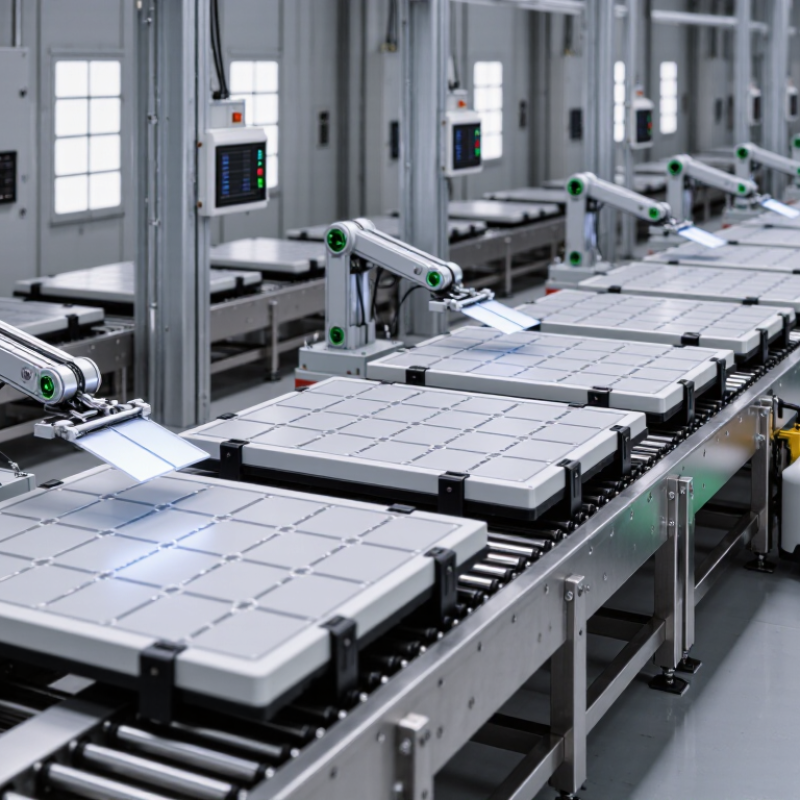
A solar cell cassette is more than a storage box. It is a controlled carrier that protects fragile wafers during loading, cleaning, diffusion, coating, and inspection. Its slots maintain wafer spacing, reduce contact damage, and support stable airflow during thermal processes. In high-volume production, even small alignment errors can create scratches or handling losses.
The scale of modern manufacturing makes this role more important. The IEA PVPS Trends 2024 report recorded about 456 GW of new solar capacity installed globally in 2023. This growth increases pressure on factories to reduce defects and maintain repeatable movement between process stations. A suitable cassette should match wafer size, thickness, slot pitch, chemical exposure, and process temperature. Material cleanliness also matters, because particles may become defects on sensitive surfaces. The ITRPV 2024 report highlights continuing wafer-thinning and advanced cell technology trends, leaving less tolerance for rough handling.
Selection should begin with real process conditions, not only the purchase price. Check thermal stability, chemical resistance, flatness, cleaning compatibility, and loading accuracy. Ask for measurable particle and dimensional data. A practical trial with production wafers is more reliable than a catalog promise.
The perfect cassette does not exist. A design that works in wet cleaning may perform poorly near high heat. I have seen teams overlook slot wear and discover problems later. That mistake is easy to repeat. Periodic inspection, documented cleaning, and careful handling records help reveal when a cassette needs replacement.
Choosing the right solar cell cassette starts with measurable requirements, not appearance. IEA PVPS Trends 2024 reports that global photovoltaic additions reached about 456 GW in 2023. At this scale, a small handling error can multiply quickly. Define the cell or wafer dimensions, thickness range, slot pitch, maximum load, and cassette capacity before requesting quotations. A cassette designed for 156 mm wafers may not safely support larger formats or thinner cells.
Material selection also matters. Use low-particle, chemically resistant materials when cleaning agents or high-temperature processes are involved. Confirm ESD control, surface roughness, edge support, and contact pressure. The 2024 International Technology Roadmap for Photovoltaics indicates continued wafer thinning, with commercial wafers moving toward roughly 120–130 micrometres. That trend increases the risk of bending, chipping, and microcracks during loading. Tight tolerances are essential.
Check compatibility with robots, conveyors, vision systems, and storage racks. Ask for dimensional drawings, load testing, cleaning instructions, and inspection records. In production trials, measure insertion force, wafer movement, particle generation, and breakage rate over repeated cycles. Do not trust a perfect datasheet alone. A cassette can pass static testing yet fail after hundreds of transfers. I would also challenge the assumed capacity; more slots may improve throughput, but they can reduce access and increase contact risk. Some requirements will remain uncertain until real cells and actual process conditions are tested.
Identifying key cassette specifications and requirements for common silicon wafer formats.
Wafer diameter determines the cassette’s internal clearance, while slot capacity affects handling throughput. A representative 25-slot cassette is commonly used as a baseline for automated wafer handling. Select the cassette only after confirming wafer thickness, slot pitch, edge exclusion, material compatibility, cleanliness requirements, and the equipment’s load-port dimensions.
How to Choose the Right Solar Cell Cassette?
Material selection affects cleanliness, durability, and wafer safety. Polypropylene suits many standard handling environments because it is lightweight and chemically resistant. Polycarbonate can offer greater stiffness, but it may require careful cleaning and particle control. For high-temperature processes, specialized engineering plastics may perform better. Always check thermal limits, surface finish, and cleanroom compatibility.
Capacity must match the production flow. A 25-slot cassette may reduce wafer waiting time and handling weight. A 50-slot design can improve transport efficiency, but it increases load and potential vibration. More slots are not always better. Confirm wafer diameter, thickness, slot pitch, and equipment interface before ordering. Small dimensional differences can cause costly interruptions.
Wafer protection depends on contact points and cassette geometry. Smooth slot edges help reduce scratches and chipping. Adequate spacing prevents wafers from touching during movement. A stable base also matters when operators place cassettes on carts or processing stations. Static control should be reviewed for sensitive cell structures. Do not judge protection by appearance alone. Inspect sample cassettes under real operating conditions, including wet cleaning, vibration, and repeated loading. Testing may reveal weaknesses that specifications miss. A perfect cassette is unlikely; documented trial results are more reliable than assumptions.
A solar cell cassette must match the production equipment, not just the wafer dimensions. Confirm the cell length, width, thickness, and edge profile before purchasing. A small mismatch can cause loading errors or surface scratches. Check the pocket pitch carefully. It must suit the robot’s vertical movement and the machine’s sensor positions. Too little clearance is risky. Too much clearance may reduce alignment accuracy.
Inspect the cassette interface with the actual tool. Review load-port dimensions, locating pins, clamping points, and transfer height. Automatic equipment may also require specific optical targets or identification areas. Run a trial with dummy wafers. Watch how the robot enters each pocket, especially at the lowest and highest positions. Listen for contact. It often reveals problems that drawings miss.
Cleanliness is equally important. Select materials that resist particles, chemicals, heat, and repeated washing. Static control may also matter in dry production areas.
A specification sheet can look correct and still fail on the factory floor. I have seen teams focus on wafer size while overlooking cassette stiffness. That mistake caused slight sagging during transport. Not ideal. Ask the equipment engineer to review sample measurements and tolerance limits.
Record every test result, including damaged edges, sensor alarms, and transfer time. Some assumptions will be wrong. Revise the cassette design only after observing real production movements. This evidence-based approach improves compatibility and supports stable, repeatable operation.
Choosing a solar cell cassette by purchase price alone can distort the real cost. A low-cost frame may require frequent cleaning, manual adjustment, or early replacement. In a working line, those minutes accumulate beside every loading station. The better question is simple: how many stable cycles will the cassette deliver? Small details matter.
Compare the cassette’s price with its expected service life, maintenance hours, and scrap risk. Check pocket dimensions against the cell’s thickness and edge design. A loose fit can cause movement during transfer, while excessive pressure may create microcracks. Ask for material data, thermal limits, cleaning instructions, and documented cycle-test results. These records support a more reliable purchasing decision. Do not accept vague durability claims.
During line trials, inspect worn contact points after repeated loading, not just after installation. Discoloration, burrs, and warped pockets often reveal future downtime. Long-term value also depends on replacement parts and staff training. If one damaged insert forces disposal of the entire cassette, the apparent saving quickly disappears. Standardized components can simplify repairs and reduce inventory pressure.
Still, durability is not automatically better. A heavy cassette may last longer but increase handling effort and equipment load. I sometimes favor the cheaper option for a low-volume line, although that choice deserves review after real operating data. That reflection matters.


For those larger-sized parts, or smaller quantity runs, we have 2 independent powder coat booths and ovens. The quality, durability and affordability of today’s powder coating finishes make this the process of choice for world-class companies.
Powder coating advantages over other forms of coating are many. Materials used in the Powder coating process can be metals and non-metals that come in a multitude of thicknesses, textures, colors, etc. Another of Powder coating’s biggest advantages over conventional coatings is its ability to create finishes in many different textures. Powder Coating Booths allow us the ability to apply these advantages to large products.
Tri-State Fabricators runs a full-service conveyor line for painting. Wet painting can provide protection or decoration to many different part styles. From start to finish, every project is easier to undergo random and point-based inspection by our skilled painting team.
Advantages to our Wet Paint Line are these lines start with product prep and ends with a thorough inspection of a high quality finished product. Our ability to complete large and small projects with a superior finish and doing so in a timely and economical fashion. This passes along the savings in production to our customers. When powder coating ins not an option, our Wet Paint Line gets the job done right the first time.
When the parts get big and heavy we roll-out our custom paint racks and oversize booth. By utilizing our partnerships with all the major paint brands, we can match virtually any color with wet paint.
The advantages of having access to a Wet Paint Booth are many. Large projects of many different shapes can be loaded into the booth. The Wet Paint Booth offers an environment that is much more controlled than a typical parts painting operation.
Not only are they used because of their controlled environment, but they’re are also advantageous when it comes to applying paint to parts that are needed in industries that require specialty coatings such as medical, aerospace, etc.
Our military forces have some very high standards when it comes to the finish of their vehicles and equipment. From the first pre-treatment step to final coat, it takes a great deal of knowledge and experience to protect the men and women of our armed forces. They deserve only the best, and Tri-State Fabricators provides it.
All of our processes are closely monitored by our staff and management teams. Both of which are highly trained in the processes of metal fabrication and finishing. Tri-State Fabricators’ goal is to always fully satisfy each and every customer, including the military. We will always put a 110% into what we do.
Abrasive media blasting is an excellent way to remove old paint, rust, and increase the paint/powder adhesion. Glass beads produce a much smoother and brighter finish than angular abrasives; leaving the part clean yet without any dimensional change. Chemically inert and environmentally friendly, we can recycle our beads approximately 30 times; making them a more preferred method of metal cleaning or surface finishing.
Advantages to Glass Bead Blasting are many. Glass bead blast media is used when a project is needing rough surfaces need to become smooth for applications of coatings such as paint. It is typically used to clean paint and rust from a product surface without deforming the surface it is being used on. Overall, compared to many other blasting media, Glass Bead Blasting is a very economical choice and those savings are always passed on to our customers.
Tri-State Fabricators utilize a zinc phosphate wash to clean and etch the material to ensure the best paint adhesion possible. The unique design of our 3-stage wash system does the work like a 5-stage. From Cleaning and rinsing to conversion coating and post-treatment, Our Part Washing process is a complete service and works throughout the fabrication service and the finishing service.
Along with the previously mentioned benefits, Curing is a vital chemical reaction that leaves the product finish hard and relatively safe from mild abrasion and aggressive corrosion. This process can be done in more than one way; ambient air-dry or in curing ovens at temps that exceed 240°.
From fixing paint mistakes (someone else’s of course) to simply cleaning our paint line hooks, our burn-off oven is put to good use. After a quick burn-off, a little clean up, and a fresh coat of paint, your parts will look better than new.
Why does our Burn-Off Oven work so well? Because super heating the air around parts turns the materials into ashes. From paint and powder coatings to rubber and machining oils, high temps do the job without degrading the integrity of the part.
Masking is a vital part of producing high quality products. We have die-cut masking patterns to protect machined surfaces as well as a wide range of plugs and caps to protect threaded holes and bolts. We provide permanent and temporary masking.
Masking allows the selected sections of a product to be protected from a fabrication or finishing service. This can be with both chemicals when etching and tapes, paints when only finishing just a section of the product. Masking is great in aiding the customization process of a project.
Screen printing is a photographic process that transfers artwork onto a porous nylon screen which allows colored ink to flow through the screen and be deposited on an aluminum or plastic component. We can generally have just about any design created onto a screen for your parts.
Some of the advantages of Screen Printing are, brand recognition for your business displaying on your products, assembly instructions, product warnings/hazards, etc. Tri-State Fabricators produces Screen Printing of the highest quality so you know it’s durable.
Metal Finishing is the art of treating the exterior portion of product, often metal but can also be made of other materials, so that the surface is clean and free of any debris. Then the process of applying coats or either paint of powder coat takes place. This coating process improves the quality of the product in both appearance and resistance to wear and corrosion.
Tri-State Fabricators, Inc., understands that a project typically isn’t complete until a high-quality finish has been added to your product. This is why our painting and powder coating teams continuously inspect the products throughout the Metal Finishing process.