How to Choose the Right Thread Steel Bar Supplier?

Choosing the right Thread Steel Bar supplier starts with evidence, not attractive catalogues or confident sales claims. World Steel Association’s World Steel in Figures 2024 reported 1.892 billion tonnes of crude steel production in 2023. This scale shows a competitive market, but it also creates quality differences between suppliers. A low quotation may hide weaker traceability, inconsistent threading, or limited inspection capacity.

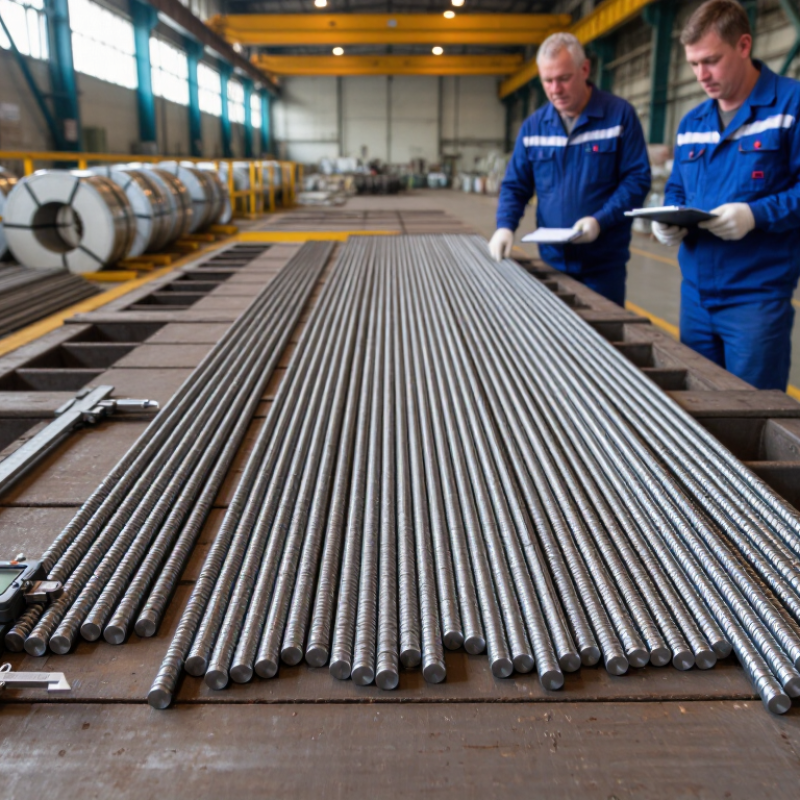
Look for suppliers who identify steel grade, diameter tolerance, thread profile, coating, and load performance clearly. Their technical files should include mill certificates, heat numbers, dimensional reports, and independent test results. For prestressed applications, ASTM A722 may be relevant, while construction reinforcement may require different regional standards. The supplier must explain the correct standard for your project. Do not accept a generic certificate.

Ask for recent batch records.

The OECD Steel Market Developments reports continue to highlight pressure from demand changes, production costs, and global trade uncertainty. These factors can affect lead times and material pricing. A reliable supplier should therefore provide realistic production schedules, packaging details, and contingency plans. Check whether threaded bars arrive with protected threads, dry surfaces, and readable labels. One damaged thread can delay installation and increase site waste.

Experience matters. Request samples, verify references, and inspect the supplier’s factory or audit records when possible. However, even a successful audit has limits; conditions can change after approval. That is worth remembering. The strongest decision combines technical compliance, transparent communication, stable capacity, and independent verification. A supplier should not merely sell steel. They should help you reduce installation risk, rework, and uncertainty.

How to Choose the Right Thread Steel Bar Supplier?

Define Your Thread Steel Bar Requirements

Choosing the right thread steel bar supplier starts with a precise requirement sheet. Define the bar diameter, thread profile, total length, steel grade, and required tensile strength. State whether the bar will support structural loads, anchor equipment, or resist repeated vibration. Include the working temperature and exposure conditions. Coastal projects may need corrosion-resistant protection. Underground projects may need special coating controls.

Do not write “standard threaded bar.” That phrase hides important differences. Specify thread pitch, thread tolerance, straightness, cut-end condition, and permitted dimensional variation. Request mill certificates, chemical analysis, mechanical test results, and heat-number traceability. Relevant standards may include ASTM, ISO, or project-specific specifications. ISO 898-1 classifies mechanical properties for many carbon and alloy steel fasteners, but it may not cover every structural application. Check the scope carefully.

Industry scale also affects supplier evaluation. The World Steel Association reported approximately 1.89 billion tonnes of crude steel production globally in 2023. Large output does not guarantee consistent threaded bar quality. Production control matters more than impressive capacity. Ask for inspection records and sampling methods. The International Energy Agency estimates steelmaking creates roughly 7% of global energy-related emissions. If environmental reporting matters, request recycled-content data or an environmental product declaration. A requirement can still be incomplete. Recheck it against the installation drawing, loading calculation, and actual site conditions.

How to Choose the Right Thread Steel Bar Supplier? – Define Your Thread Steel Bar Requirements

Requirement Dimension Data to Define Reference Data or Example Verification Method Why It Matters
Application State whether the bar is for prestressing, anchoring, rock bolting, tie rods, structural connections, or another use. Prestressed concrete applications may require compliance with ASTM A722 or an applicable national prestressing-steel standard. Review the project drawings, design calculations, and governing construction specification. The application determines the required strength, ductility, corrosion protection, and inspection level.
Nominal Diameter Specify the nominal outside diameter or bar diameter required by the design. Common metric thread designations include M20, M24, M30, M36, M42, and M48. The nominal diameter is the number after “M,” expressed in millimetres. Check the product drawing and measure samples with a calibrated micrometer or vernier caliper. Diameter affects tensile capacity, nut compatibility, bearing area, and installation clearance.
Thread Profile Define thread form, thread pitch, thread direction, and whether the thread is continuous or end-threaded. For ISO metric coarse threads, M20 uses a 2.5 mm pitch, M24 uses 3.0 mm, M30 uses 3.5 mm, M36 uses 4.0 mm, M42 uses 4.5 mm, and M48 uses 5.0 mm. Confirm the thread designation on the drawing and inspect pitch with a thread gauge or optical measuring equipment. A mismatched pitch or profile can prevent nut engagement and may create unsafe load transfer.
Bar Length Specify the required finished length, allowable length tolerance, and whether cut ends must be chamfered. State the length in millimetres or metres, for example 3,000 mm finished length, rather than relying on a general “standard length.” Measure finished bars from end to end using a calibrated steel rule or length-measuring system. Correct length is necessary for embedment, splice positioning, nut engagement, and installation planning.
Steel Grade and Strength Define the material standard, minimum yield strength, minimum tensile strength, and required elongation. ASTM A722 includes high-strength prestressing steel bars with Grade 150 and Grade 120 strength classifications. Grade 150 corresponds to a minimum tensile strength of 150 ksi, approximately 1,035 MPa. Require heat-number traceability and review certified tensile-test results from an accredited laboratory. Strength values must match the structural design and should not be inferred from diameter or appearance.
Chemical Composition Specify maximum limits for carbon, manganese, silicon, sulfur, phosphorus, and any alloying elements required by the standard. The applicable material standard and project specification should control the chemical limits; no universal composition applies to every threaded steel bar. Request a mill test certificate and, when required, verify composition through positive material identification or laboratory analysis. Chemistry influences weldability, hardenability, strength, toughness, and resistance to brittle failure.
Thread Fit and Nut Compatibility Define the thread tolerance class, matching nut specification, washer dimensions, and minimum nut engagement. An M24 × 3.0 bar must be paired with a compatible M24 × 3.0 nut; the nominal diameter alone is not sufficient to confirm compatibility. Perform a full-length nut-run test or use calibrated thread gauges before shipment. Proper fit reduces installation problems, thread stripping, eccentric loading, and rejected batches.
Surface Condition State whether the bar should be plain, black oxide, galvanized, epoxy-coated, or supplied with another protection system. Hot-dip galvanizing is commonly specified using ISO 1461 or an equivalent applicable standard; coating requirements must include the threaded areas and nuts when relevant. Inspect for rust, laps, cracks, damaged threads, and coating continuity; measure coating thickness when specified. Surface treatment affects service life, thread fit, friction, and performance in corrosive environments.
Straightness and Appearance Define permissible bow, surface defects, end damage, and thread deformation. Acceptance limits should be taken from the purchase specification or approved product drawing because tolerances vary by product and application. Use visual inspection, a straightedge, and dimensional checks over the full bar length. Straight bars support easier alignment and more uniform load transfer during assembly.
Inspection Documents List the required certificates, test reports, inspection plan, and traceability information. Typical documents include a certificate of conformity, mill test certificate, tensile-test report, dimensional inspection report, and coating report where applicable. Check that heat numbers, batch numbers, test results, and shipping labels are consistent. Complete documentation helps demonstrate compliance and supports quality investigations.
Packaging and Delivery Define bundle quantity, protective caps, lifting points, marking, delivery sequence, and required arrival date. Thread protectors should be specified where threads may be damaged during transport or handling; bundle markings should identify size, grade, length, and heat or batch number. Inspect packaging and labels at receipt and record any transit damage before unloading. Good logistics control protects threads and reduces sorting, downtime, and installation delays.
Specification note: Reference values shown above are examples based on recognized engineering standards and common metric thread designations. The applicable project specification, design code, and material standard should take precedence over any example value.

Verify Supplier Quality Standards and Product Certifications

Choosing the right thread steel bar supplier starts with evidence, not polished promises. In practice, I ask for the supplier’s quality manual, certification numbers, and product test records. A valid quality certification should show the issuing body, approval scope, issue date, and expiry date. ISO 9001 may indicate controlled processes, but it does not automatically certify every steel bar.

Product certification deserves closer attention. Check whether the certificate covers the exact thread bar grade, diameter range, coating, and intended application. Request mill test certificates for recent batches. They should list heat numbers, chemical composition, tensile strength, yield strength, elongation, and dimensional results. Match those heat numbers with labels on bundles and shipping documents. Small details matter. Ask for proof. An independent laboratory can verify samples when the project carries serious structural demands.

During a factory review, observe how inspectors measure thread profiles and record nonconforming bars. Ask how calibration tools are maintained and how complaints are investigated. I once found a supplier with excellent paperwork but inconsistent thread dimensions in a sample; the gap was uncomfortable, yet useful. It reminded me that documents need physical verification. Suppliers should explain traceability from raw steel to finished bundles. Be careful with certificates copied from older orders. A fresh report is more convincing than a perfect-looking file. Compare audit findings, sampling methods, and corrective-action records before approving a supplier.

How to Choose the Right Thread Steel Bar Supplier?

Verify that the supplier can provide current, traceable quality documents for each shipment. The chart shows a practical five-point verification priority based on commonly used international quality and steel-testing standards. These scores are procurement guidance, not certification ratings.

Compare Materials, Sizes, Threads, and Customization Options

How to Choose the Right Thread Steel Bar Supplier?

Material selection should begin with service conditions, not price. I once treated matching diameter as enough. It was not. Carbon steel suits many indoor assemblies, while alloy steel performs better under higher loads and temperatures. Stainless steel helps resist moisture, chemicals, and recurring corrosion. The World Steel Association reported approximately 1.89 billion tonnes of crude steel production in 2023. That scale makes traceability essential. Request mill certificates, heat numbers, chemical analysis, tensile strength, yield strength, and elongation data.

Size accuracy matters. Confirm the nominal diameter, finished length, thread pitch, and dimensional tolerance. A 20-millimeter bar with the wrong pitch can delay installation immediately. Choose metric, UNC, or UNF threads according to the mating nut and engineering drawings. Thread quality should be checked through gauges, visual inspection, and sampling records. ISO 898-1 provides mechanical property classifications for carbon and alloy steel fasteners, but the supplier must state the actual grade clearly. Standards alone do not guarantee consistent production.

Customization may include cut-to-length bars, double-ended threads, special pitches, chamfers, surface treatments, or corrosion-resistant finishes. Ask whether these processes occur in-house or through subcontractors. The 2024 U.S. Geological Survey Mineral Commodity Summaries emphasizes steel’s dependence on complex raw-material supply chains, so delivery claims deserve evidence. Request production samples and a realistic lead-time schedule. A perfect quotation is suspiciously easy. Supplier evaluation should leave room for revision, especially when drawings, coatings, or inspection requirements change.

Assess Manufacturing Capacity, Delivery, and Technical Support

A dependable thread steel bar supplier should prove capacity, not merely advertise it. The World Steel Association reported 1.89 billion tonnes of crude steel production in 2023. That scale shows a crowded market, but it does not confirm consistent threading quality. Request monthly output, available bar diameters, machine capacity, and recent production records. Check whether the supplier controls rolling, heat treatment, threading, and inspection. Mill test certificates should match each batch, including yield strength, tensile strength, chemical composition, and dimensional results. A large factory can still become a bottleneck.

Delivery deserves equal scrutiny. UNCTAD’s Review of Maritime Transport 2024 notes that over 80% of global merchandise trade by volume moves by sea. Port congestion, vessel changes, and customs delays can quickly affect project schedules. Ask for realistic lead times, stock levels, packaging photographs, and previous on-time delivery data. Confirm how the supplier handles damaged bundles or short shipments. “Fast delivery” is too vague. Require dates.

Tips: Compare promised capacity with shipped orders. Ask for references from similar projects. Verify certificates with the testing laboratory when possible. For technical support, request shop drawings, thread compatibility checks, installation guidance, and responses from qualified engineers. ASTM or ISO references should appear clearly in quotations and inspection plans. My checklist is not perfect; I once focused too heavily on price and overlooked thread-gauge control. That small omission could have created costly site rework. Recognize the gap before signing.

Review Pricing, Service Terms, and Supplier Reliability

When choosing a threaded steel bar supplier, pricing is only the first comparison. A useful quote should show bar diameter, grade, thread length, coating, packaging, and delivery costs. Request current test certificates and heat-number traceability for each batch. Verify these details against your project standards.

I have learned that a low quote can still be the wrong quote. My early comparisons focused too heavily on price. Hidden charges for cutting, loading, inspection, or urgent freight later changed the budget. Ask whether the price is fixed, how long it remains valid, and which payment terms apply. Read the small print. Also clarify replacement procedures for damaged bars, incorrect dimensions, or missing documents.

Service quality often reveals supplier reliability before production begins. Does the sales team answer technical questions clearly? Can they provide a realistic production schedule? Ask for recent delivery records, factory capacity, packaging photos, and a sample quality report. A reliable supplier should explain delays early, not after the truck misses its booking. Independent inspection may add cost, but it can protect a large order. I would also test communication with one small trial order. It is not perfect evidence, yet slow replies and vague paperwork are practical warning signs.

Powder Coat Booths

For those larger-sized parts, or smaller quantity runs, we have 2 independent powder coat booths and ovens. The quality, durability and affordability of today’s powder coating finishes make this the process of choice for world-class companies.

Powder coating advantages over other forms of coating are many. Materials used in the Powder coating process can be metals and non-metals that come in a multitude of thicknesses, textures, colors, etc. Another of Powder coating’s biggest advantages over conventional coatings is its ability to create finishes in many different textures. Powder Coating Booths allow us the ability to apply these advantages to large products.

Wet Paint Line

Tri-State Fabricators runs a full-service conveyor line for painting. Wet painting can provide protection or decoration to many different part styles. From start to finish, every project is easier to undergo random and point-based inspection by our skilled painting team.

Advantages to our Wet Paint Line are these lines start with product prep and ends with a thorough inspection of a high quality finished product. Our ability to complete large and small projects with a superior finish and doing so in a timely and economical fashion. This passes along the savings in production to our customers. When powder coating ins not an option, our Wet Paint Line gets the job done right the first time.

Wet Paint Booths

When the parts get big and heavy we roll-out our custom paint racks and oversize booth. By utilizing our partnerships with all the major paint brands, we can match virtually any color with wet paint.

The advantages of having access to a Wet Paint Booth are many. Large projects of many different shapes can be loaded into the booth. The Wet Paint Booth offers an environment that is much more controlled than a typical parts painting operation.

Not only are they used because of their controlled environment, but they’re are also advantageous when it comes to applying paint to parts that are needed in industries that require specialty coatings such as medical, aerospace, etc.

Military CARC

Our military forces have some very high standards when it comes to the finish of their vehicles and equipment. From the first pre-treatment step to final coat, it takes a great deal of knowledge and experience to protect the men and women of our armed forces. They deserve only the best, and Tri-State Fabricators provides it.

All of our processes are closely monitored by our staff and management teams. Both of which are highly trained in the processes of metal fabrication and finishing. Tri-State Fabricators’ goal is to always fully satisfy each and every customer, including the military. We will always put a 110% into what we do.

Glass-Bead Blasting

Abrasive media blasting is an excellent way to remove old paint, rust, and increase the paint/powder adhesion. Glass beads produce a much smoother and brighter finish than angular abrasives; leaving the part clean yet without any dimensional change. Chemically inert and environmentally friendly, we can recycle our beads approximately 30 times; making them a more preferred method of metal cleaning or surface finishing.

Advantages to Glass Bead Blasting are many. Glass bead blast media is used when a project is needing rough surfaces need to become smooth for applications of coatings such as paint. It is typically used to clean paint and rust from a product surface without deforming the surface it is being used on. Overall, compared to many other blasting media, Glass Bead Blasting is a very economical choice and those savings are always passed on to our customers.

Part Washing

Tri-State Fabricators utilize a zinc phosphate wash to clean and etch the material to ensure the best paint adhesion possible. The unique design of our 3-stage wash system does the work like a 5-stage. From Cleaning and rinsing to conversion coating and post-treatment, Our Part Washing process is a complete service and works throughout the fabrication service and the finishing service.

Along with the previously mentioned benefits, Curing is a vital chemical reaction that leaves the product finish hard and relatively safe from mild abrasion and aggressive corrosion. This process can be done in more than one way; ambient air-dry or in curing ovens at temps that exceed 240°.

Burn-Off Oven

From fixing paint mistakes (someone else’s of course) to simply cleaning our paint line hooks, our burn-off oven is put to good use. After a quick burn-off, a little clean up, and a fresh coat of paint, your parts will look better than new.

Why does our Burn-Off Oven work so well? Because super heating the air around parts turns the materials into ashes. From paint and powder coatings to rubber and machining oils, high temps do the job without degrading the integrity of the part.

Masking

Masking is a vital part of producing high quality products. We have die-cut masking patterns to protect machined surfaces as well as a wide range of plugs and caps to protect threaded holes and bolts. We provide permanent and temporary masking.

Masking allows the selected sections of a product to be protected from a fabrication or finishing service. This can be with both chemicals when etching and tapes, paints when only finishing just a section of the product. Masking is great in aiding the customization process of a project.

Screen Printing

Screen printing is a photographic process that transfers artwork onto a porous nylon screen which allows colored ink to flow through the screen and be deposited on an aluminum or plastic component. We can generally have just about any design created onto a screen for your parts.

Some of the advantages of Screen Printing are, brand recognition for your business displaying on your products, assembly instructions, product warnings/hazards, etc. Tri-State Fabricators produces Screen Printing of the highest quality so you know it’s durable.

Metal Finishing

Metal Finishing is the art of treating the exterior portion of product, often metal but can also be made of other materials, so that the surface is clean and free of any debris. Then the process of applying coats or either paint of powder coat takes place. This coating process improves the quality of the product in both appearance and resistance to wear and corrosion.

Tri-State Fabricators, Inc., understands that a project typically isn’t complete until a high-quality finish has been added to your product. This is why our painting and powder coating teams continuously inspect the products throughout the Metal Finishing process.