

Choosing among China’s top Tube Benders manufacturers requires more than comparing prices or browsing polished factory websites. The real question is simple: can the machine produce accurate bends repeatedly, under your actual production conditions?
“Reliable bending begins with repeatable control, not impressive specifications,” says tube-forming engineer Michael Reed. This practical observation matters when evaluating Chinese suppliers. A machine may promise high speed, but your workshop may need stable results on stainless steel, aluminum, or thin-wall tubing. Check the material range, tube diameter, wall thickness, bending radius, and maximum production length.
Ask manufacturers for sample parts made from your own tubes. Inspect the ovality, surface marks, springback, and dimensional consistency. A clean-looking sample proves little if it was produced slowly by a senior technician. Request cycle-time data from repeated tests.
Control systems deserve close attention. Confirm whether the Tube Benders use CNC or NC control, and identify the software’s compatibility with your drawings. Ask about tooling changes, angle compensation, remote support, spare parts, and operator training. These details often decide whether a machine earns money or creates delays.
Factory audits can reveal useful facts. Look at calibration records, welding quality, assembly areas, and finished-machine testing. However, a visit is not a guarantee. I have seen attractive workshops hide weak after-sales systems. That part is easy to underestimate.
Compare total ownership cost, not only the quotation. Include tooling, shipping, installation, maintenance, electricity, and downtime. The cheapest supplier may become expensive after one failed production week. Choose a manufacturer that documents limitations honestly. That is less exciting, but usually more trustworthy.
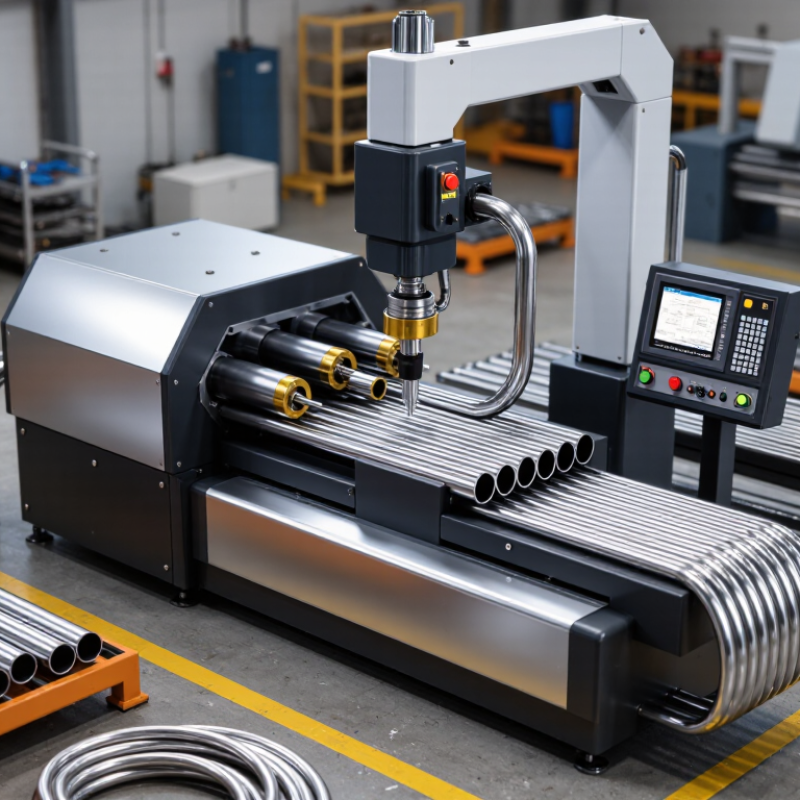
Tube benders are easier to compare when classified by tube outside diameter (OD). Small machines may handle thin tubes for furniture, heat exchangers, or light frames. Heavy-duty models can process larger steel or stainless-steel tubes. Check the maximum OD, wall thickness, material strength, and ovality control. A stated capacity alone can mislead. A 50 mm tube may bend well in thin aluminum but struggle with thick stainless steel.
Bend radius is equally important. A tight radius saves space but demands stronger tooling and better material control. For example, a 25 mm tube with a 30 mm centerline radius needs more precision than a gentle 75 mm radius.
Ask whether the quoted radius is measured to the centerline, inside wall, or outside wall. This detail is often overlooked. Request sample bends from the manufacturer and inspect wrinkles, flattening, and springback.
Two-axis equipment may suit repeated single-plane bends. Three-axis or multi-axis systems can control rotation, feeding, and bending with fewer manual adjustments. More axes do not always mean better production. They can increase programming time, maintenance needs, and operator training.
During evaluation, check actual cycle time, tool-change procedures, software support, and service response. I would also verify accuracy after several hundred bends, not only after a clean showroom demonstration.
China Top Tube Benders Manufacturers: How to Choose?
When auditing Chinese tube bender suppliers, verify compliance rather than trusting catalog claims. GB/T 26955 should be checked against the machine’s exact type, application, and current edition. Request test records for bending accuracy, repeatability, surface damage, and tube ovality. During a factory visit, watch a trial bend using your material, wall thickness, and target radius. Inspect welds, guides, tooling alignment, and emergency-stop functions. Small deviations can become expensive production defects.
ISO 9001 shows whether a supplier controls its quality system. Review process documents, incoming inspection records, calibration certificates, corrective-action reports, and staff training logs. Ask how rejected parts are isolated. A certificate alone is not enough. CE compliance also requires careful verification. The supplier should identify applicable EU directives, complete a risk assessment, prepare technical documentation, and issue a valid Declaration of Conformity. Check whether the delivered configuration matches those documents. An impressive showroom proves little.
Tips: Use a written audit checklist and score every supplier consistently. Ask for three recent production records, not selected samples. Confirm certificate numbers with the issuing body when possible. Measure five consecutive bends during acceptance testing. Record springback and dimensional results. Leave room for doubt. Even experienced auditors can miss undocumented software changes or outdated drawings. A second technical review is often worthwhile.
When choosing a Chinese tube bender, compare measured performance, not brochure claims. A ±0.1° bending accuracy can control visible angle variation on short elbows. However, repeatability matters more during repeated production. A ±0.05 mm repeatability target helps maintain tube length, clamp position, and fixture alignment. These figures should be verified across multiple cycles, not one successful sample.
The International Federation of Robotics reported 541,302 industrial robot installations worldwide in 2023, a 10% annual increase. This growth reflects stronger demand for stable, automated manufacturing. It does not prove every bender can hold tight tolerances. Ask suppliers for test reports using calibrated angle gauges, laser measurement, or coordinate measuring machines. ISO 230-2:2014 also stresses defined measurement conditions and positioning-error evaluation. Material hardness, wall thickness, lubrication, and springback can still change results. That assumption is easy, and often wrong.
During factory evaluation, request a trial using your actual tube grade and diameter. Check at least 30 repeated bends, then inspect the first and last parts. Record angle deviation, end-length variation, tooling changes, and machine temperature. I would also review maintenance records and calibration intervals. A polished report can hide unstable production. Sometimes a slightly slower machine delivers better repeatability than a faster model. Performance should be judged beside real samples, not impressive numbers alone.
Choosing a top tube bender manufacturer requires measurable capacity, not polished photographs. Request documented ranges for outside diameter, wall thickness, and material type. A machine bending 50 mm stainless steel tube may handle only 2 mm wall thickness reliably. Ask for actual sample results, including ovality, wrinkles, and springback. Thin-wall work demands controlled pressure dies and accurate mandrel positioning.
CLR, or centerline radius, also reveals practical capability. A tight CLR can require rotary-draw control, advanced tooling, and slower acceleration. Confirm the smallest radius for each tube size, not one impressive specification. Cycle time matters too. A supplier should state whether its cycle time includes loading, clamping, bending, unloading, and tool repositioning. A ten-second claim may exclude manual handling.
Tooling range often exposes hidden costs. Check whether the manufacturer supports round, square, and rectangular sections, plus different bend directions. Ask how quickly dies, mandrels, and pressure tooling can be changed. A five-minute changeover sounds useful, but production data should support it. Inspect test parts from your own material and wall thickness. One overlooked variable can distort the result. I would also review maintenance records, operator training, and measurement reports. Capacity tables are helpful, but they are not proof. A careful trial remains necessary.
China Top Tube Benders Manufacturers How to Choose?
When comparing Chinese tube bender manufacturers, the purchase price is only the visible number. Practical factory evaluations should include tooling, shipping, installation, training, spare parts, energy use, and scheduled maintenance. Ask for a detailed total-cost sheet, not a polished quotation. A machine priced 10% lower may require custom tooling or longer commissioning time. That difference can quickly disappear.
Warranty language needs careful reading. Confirm coverage for the control system, motor, hydraulics, tooling, and labor. Check whether international service is included or billed separately. A useful agreement states response times, remote diagnosis procedures, replacement-part availability, and escalation contacts. Request recent service records and speak with comparable users. Their comments about missed deadlines may be more valuable than a sales presentation. Small details matter.
ROI should connect machine performance with real production data. Compare cycle time, bend accuracy, scrap rate, setup time, and operator requirements against your current process. Request sample bending trials using your tube material, diameter, wall thickness, and required radii. Measure the results independently. Be cautious with optimistic output claims; production floors are rarely perfect. I have seen estimates fail because changeover time was ignored. Recalculate ROI with conservative utilization, unexpected downtime, and exchange-rate changes. A reliable manufacturer will discuss these weaknesses openly and provide test evidence rather than promising effortless savings.
| Supplier Profile | Typical Machine Configuration | Maximum Tube OD | Bending Accuracy | Estimated Purchase Price | Tooling & Accessories | Freight, Installation & Training | 3-Year Maintenance Budget | 3-Year Total Cost of Ownership | Warranty | Initial Service Response | Estimated Annual Operating Benefit | 3-Year ROI | Estimated Payback |
|---|---|---|---|---|---|---|---|---|---|---|---|---|---|
| Entry-Level CNC | 3-axis CNC electric bender For light and medium production | 38 mm | ±0.5° | US$18,000 | US$2,500 | US$2,800 | US$4,500 | US$27,800 | 12 months | Within 48 hours | US$21,000 | 126.6% | 15.9 months |
| Standard Production | 5-axis CNC electric bender Automatic feeding and rotation | 60 mm | ±0.35° | US$32,000 | US$4,000 | US$4,200 | US$6,000 | US$46,200 | 18 months | Within 36 hours | US$32,000 | 107.8% | 17.3 months |
| High-Precision CNC | 8-axis CNC bender Servo-controlled mandrel and booster | 80 mm | ±0.25° | US$48,000 | US$6,000 | US$5,500 | US$8,000 | US$67,500 | 24 months | Within 24 hours | US$48,000 | 113.3% | 16.9 months |
| Heavy-Duty Production | Multi-stack CNC bender For automotive and industrial tubing | 100 mm | ±0.20° | US$72,000 | US$9,000 | US$7,000 | US$11,000 | US$99,000 | 24 months | Within 24 hours | US$68,000 | 106.1% | 17.5 months |
| Automated Cell | Fully integrated CNC bending cell Robotic loading, inspection, and unloading | 120 mm | ±0.15° | US$110,000 | US$14,000 | US$9,500 | US$16,000 | US$149,500 | 36 months | Within 12 hours | US$95,000 | 90.6% | 18.9 months |
| Evaluation basis: Costs are benchmark estimates in USD for comparison purposes and include machine purchase, standard tooling, delivery-related expenses, training, and scheduled maintenance over three years. ROI is calculated as [(Annual Operating Benefit × 3) − 3-Year Total Cost of Ownership] ÷ 3-Year Total Cost of Ownership × 100. Actual results depend on tube material, labor rates, production volume, tooling requirements, energy consumption, local taxes, and negotiated warranty terms. | |||||||||||||


For those larger-sized parts, or smaller quantity runs, we have 2 independent powder coat booths and ovens. The quality, durability and affordability of today’s powder coating finishes make this the process of choice for world-class companies.
Powder coating advantages over other forms of coating are many. Materials used in the Powder coating process can be metals and non-metals that come in a multitude of thicknesses, textures, colors, etc. Another of Powder coating’s biggest advantages over conventional coatings is its ability to create finishes in many different textures. Powder Coating Booths allow us the ability to apply these advantages to large products.
Tri-State Fabricators runs a full-service conveyor line for painting. Wet painting can provide protection or decoration to many different part styles. From start to finish, every project is easier to undergo random and point-based inspection by our skilled painting team.
Advantages to our Wet Paint Line are these lines start with product prep and ends with a thorough inspection of a high quality finished product. Our ability to complete large and small projects with a superior finish and doing so in a timely and economical fashion. This passes along the savings in production to our customers. When powder coating ins not an option, our Wet Paint Line gets the job done right the first time.
When the parts get big and heavy we roll-out our custom paint racks and oversize booth. By utilizing our partnerships with all the major paint brands, we can match virtually any color with wet paint.
The advantages of having access to a Wet Paint Booth are many. Large projects of many different shapes can be loaded into the booth. The Wet Paint Booth offers an environment that is much more controlled than a typical parts painting operation.
Not only are they used because of their controlled environment, but they’re are also advantageous when it comes to applying paint to parts that are needed in industries that require specialty coatings such as medical, aerospace, etc.
Our military forces have some very high standards when it comes to the finish of their vehicles and equipment. From the first pre-treatment step to final coat, it takes a great deal of knowledge and experience to protect the men and women of our armed forces. They deserve only the best, and Tri-State Fabricators provides it.
All of our processes are closely monitored by our staff and management teams. Both of which are highly trained in the processes of metal fabrication and finishing. Tri-State Fabricators’ goal is to always fully satisfy each and every customer, including the military. We will always put a 110% into what we do.
Abrasive media blasting is an excellent way to remove old paint, rust, and increase the paint/powder adhesion. Glass beads produce a much smoother and brighter finish than angular abrasives; leaving the part clean yet without any dimensional change. Chemically inert and environmentally friendly, we can recycle our beads approximately 30 times; making them a more preferred method of metal cleaning or surface finishing.
Advantages to Glass Bead Blasting are many. Glass bead blast media is used when a project is needing rough surfaces need to become smooth for applications of coatings such as paint. It is typically used to clean paint and rust from a product surface without deforming the surface it is being used on. Overall, compared to many other blasting media, Glass Bead Blasting is a very economical choice and those savings are always passed on to our customers.
Tri-State Fabricators utilize a zinc phosphate wash to clean and etch the material to ensure the best paint adhesion possible. The unique design of our 3-stage wash system does the work like a 5-stage. From Cleaning and rinsing to conversion coating and post-treatment, Our Part Washing process is a complete service and works throughout the fabrication service and the finishing service.
Along with the previously mentioned benefits, Curing is a vital chemical reaction that leaves the product finish hard and relatively safe from mild abrasion and aggressive corrosion. This process can be done in more than one way; ambient air-dry or in curing ovens at temps that exceed 240°.
From fixing paint mistakes (someone else’s of course) to simply cleaning our paint line hooks, our burn-off oven is put to good use. After a quick burn-off, a little clean up, and a fresh coat of paint, your parts will look better than new.
Why does our Burn-Off Oven work so well? Because super heating the air around parts turns the materials into ashes. From paint and powder coatings to rubber and machining oils, high temps do the job without degrading the integrity of the part.
Masking is a vital part of producing high quality products. We have die-cut masking patterns to protect machined surfaces as well as a wide range of plugs and caps to protect threaded holes and bolts. We provide permanent and temporary masking.
Masking allows the selected sections of a product to be protected from a fabrication or finishing service. This can be with both chemicals when etching and tapes, paints when only finishing just a section of the product. Masking is great in aiding the customization process of a project.
Screen printing is a photographic process that transfers artwork onto a porous nylon screen which allows colored ink to flow through the screen and be deposited on an aluminum or plastic component. We can generally have just about any design created onto a screen for your parts.
Some of the advantages of Screen Printing are, brand recognition for your business displaying on your products, assembly instructions, product warnings/hazards, etc. Tri-State Fabricators produces Screen Printing of the highest quality so you know it’s durable.
Metal Finishing is the art of treating the exterior portion of product, often metal but can also be made of other materials, so that the surface is clean and free of any debris. Then the process of applying coats or either paint of powder coat takes place. This coating process improves the quality of the product in both appearance and resistance to wear and corrosion.
Tri-State Fabricators, Inc., understands that a project typically isn’t complete until a high-quality finish has been added to your product. This is why our painting and powder coating teams continuously inspect the products throughout the Metal Finishing process.