


Choosing Tungsten Carbide Welding Rods in 2026 requires more than comparing prices or reading hardness numbers. The right rod must match the base metal, welding process, working temperature, and expected wear conditions. A rod used for mining teeth may fail on agricultural blades. Context matters.
Experienced fabricators examine carbide grain size, cobalt content, rod diameter, and the bonding alloy. They also check whether the product suits oxy-acetylene, brazing, or another approved application. Small details matter. A two-millimeter difference can affect heat control and deposit thickness. Before purchasing, request technical data, batch information, and practical application guidance from a traceable supplier.
This guide explains how to compare Tungsten Carbide Welding Rods with a more practical approach. It considers abrasion, impact, surface preparation, operator skill, and total operating cost. Reliable selection should include independent verification where possible, not only supplier claims. Product labels can be incomplete. Even a respected brand may offer several grades for different conditions.
There is no perfect selection chart. Field results can change with contamination, uneven heating, or poor joint preparation. That weakness deserves attention. Testing a small sample first may prevent expensive rework later. By combining manufacturer documentation, workshop observations, and measurable performance requirements, buyers can make a safer and more defensible choice in 2026.
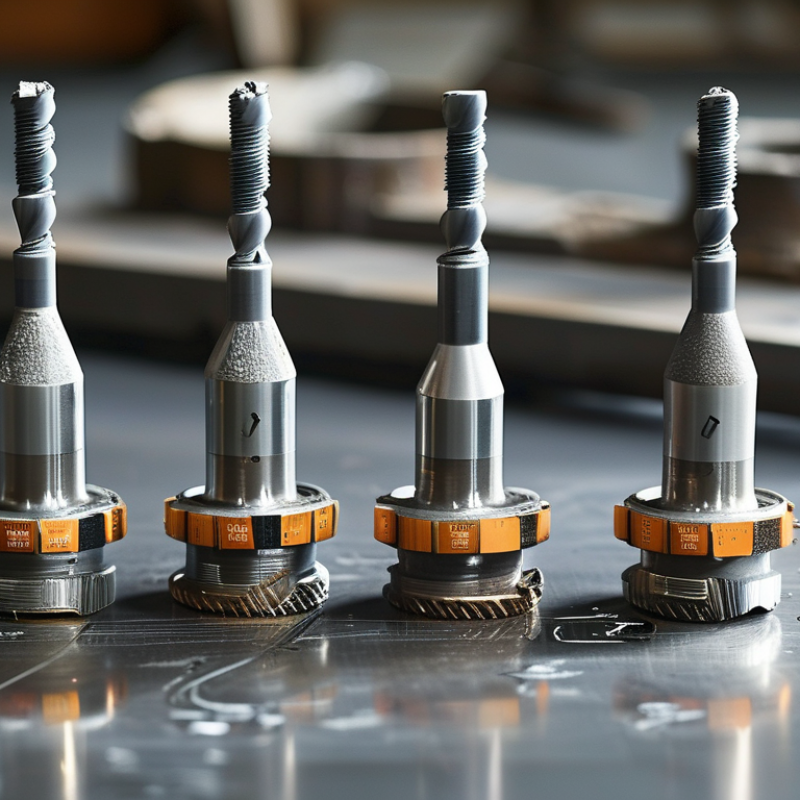
How to Choose Tungsten Carbide Welding Rods in 2026?
Understanding Tungsten Carbide Welding Rod Composition and Grades
Tungsten carbide welding rods combine hard carbide particles with a ductile metal matrix. The carbide usually consists of tungsten carbide, while cobalt, nickel, or iron-based binders improve wetting and impact resistance. This balance matters. More carbide can increase abrasion resistance, but it may reduce toughness during impact. In workshop repairs, a rod with coarse, angular grains often performs well against sand and rock. Fine grains can create a smoother deposit and better edge control. However, grain size alone does not predict service life.
Rod grades may indicate carbide percentage, particle size, or binder chemistry. These labels are not fully standardized, so read the technical sheet carefully. A 40% carbide rod may suit moderate wear, while a higher-content grade can handle severe sliding abrasion. Hardness figures also need context. A very hard deposit may crack when the base part flexes. I have seen this mistake on scraper edges. The selected rod was impressive on paper, but unsuitable for repeated impact.
Tips: Match the grade to the dominant wear pattern, not just the highest hardness. Check carbide size, matrix composition, operating temperature, and substrate compatibility. Ask for test data when the supplier provides only broad grade names. Keep heat controlled during welding. Excessive dilution can weaken the deposit, and rushed cooling may create cracks. Small trials are worthwhile.
This chart compares the theoretical mass composition of common WC–Co cemented-carbide reference blends. Pure stoichiometric tungsten carbide contains approximately 93.9% tungsten and 6.1% carbon by mass. Increasing the cobalt binder content generally improves toughness, while a higher WC proportion generally provides greater wear resistance.
Welding-rod grades are not standardized by one universal composition. In practice, selection should also consider WC particle size, carbide morphology, matrix alloy, welding method, impact conditions, and the type of abrasive wear. Commercial hardfacing rods may use iron-, nickel-, or copper-based matrices instead of cobalt.
Tungsten carbide welding rods should match the actual wear mechanism, not just the hardness number. For sand, soil, and slurry, choose angular carbide particles with strong metallurgical bonding. Their sharp edges resist cutting abrasion. For sliding metal contact, finer carbide grains often create a smoother, more stable overlay. The U.S. Geological Survey’s Mineral Commodity Summaries 2024 reports about 84,000 metric tons of tungsten mine production in 2023. That scale supports tungsten’s importance, but it does not make every rod suitable for every repair.
Heat changes the decision. High torch temperature can soften the metallic binder and increase carbide cracking. Select a rod with controlled carbide content and a matrix designed for the service temperature. Follow the procedure carefully. Excessive dilution can quietly reduce wear resistance. It happens.
Impact conditions require a different balance. Large carbides can resist severe abrasion, yet they may fracture under repeated hammering or vibration. A tougher matrix, smaller particle distribution, and moderate carbide loading can perform better on crusher teeth, drill tools, or conveyor edges. ASTM G65 testing can compare dry-sand abrasion resistance, but it cannot fully predict field impact. That limitation matters. Review hardness, carbide size, bond strength, heat exposure, and impact frequency together before choosing the rod. Record the failed overlay’s crack pattern and wear direction; those details often reveal more than a catalog claim.
Choosing a tungsten carbide welding rod starts with the joint, not the catalogue. Rod diameter controls heat demand, bead width, and dilution. A practical starting point is 2–3 mm for thin edges and 4–6 mm for wider wear zones. Larger rods need slower heating. They can also trap unmelted carbide. That detail is often missed.
Shape affects deposition. Cylindrical rods suit manual oxy-fuel brazing and controlled bead placement. Crushed carbide in a nickel- or cobalt-based matrix spreads differently, while sintered rods offer more predictable geometry. AWS A5.13 and A5.21 provide useful surfacing classifications, but they do not replace a procedure test. The 2025 USGS Mineral Commodity Summaries report estimated that China supplied about 83% of reported 2024 tungsten mine output. Supply concentration makes traceable chemistry and batch records important, not merely price.
Match the rod to the process. Oxy-fuel works for localized repairs when the base metal can tolerate prolonged heating. Plasma transferred arc suits repeatable overlays and controlled dilution. Laser cladding limits the heat-affected zone, but it demands tighter powder or rod control. For carbide-rich deposits, excessive arc energy can dissolve particles and reduce abrasion resistance. Keep travel speed steady. It sounds simple. In practice, operators often overheat the first pass. A cross-section check, hardness test, and abrasion comparison should decide the final diameter and shape. The “best” rod is sometimes the one that deposits less metal, but survives longer.
Bonding quality deserves close inspection before price or hardness. In practical repairs, loose carbide grains often reveal weak bonding. Rub the rod gently over clean steel and watch for shedding particles. A sound rod should show evenly distributed grains within the filler matrix. The surface should not contain deep cracks, hollow pockets, or unusually smooth sections. Short samples can mislead. Inspect several rods from the same batch.
Compatibility depends on more than the base metal. Check the rod’s matrix composition, carbide size, application temperature, and recommended joining method. Fine carbide suits controlled wear layers, while larger particles may resist aggressive abrasion better. However, larger particles can create a rougher deposit and weaker edges. Match the rod with the joint clearance, heat source, and suitable flux. Do not guess.
Manufacturer standards should be visible in documents, not only in sales claims. Request batch identification, chemical composition, carbide grading, dimensional tolerances, and inspection records. Reliable producers explain storage conditions and provide consistent technical data across shipments. Look for evidence of controlled mixing, temperature management, and final inspection. My own checks are not perfect, especially under workshop pressure. That is why traceability matters. If the paperwork changes between batches, pause before welding. A small inconsistency can become premature wear, cracking, or an uneven working surface.
How to Choose Tungsten Carbide Welding Rods in 2026?
Price per kilogram can mislead. Tungsten remains a strategically important material, according to the U.S. Geological Survey’s Mineral Commodity Summaries 2025. Raw-material volatility can affect rod costs. Therefore, compare cost per operating hour, not purchase price alone. A rod that lasts 40 hours may outperform a cheaper rod lasting 15 hours.
Service life depends on carbide size, concentration, matrix hardness, and welding temperature. Coarse particles usually resist heavy impact better. Fine particles can provide smoother, more uniform protection against sliding abrasion. In a shop trial, record wear depth after fixed operating hours. Also record deposition time and repair frequency. Small details matter.
Match the rod to the failure mode. Soil-contact tools may need strong abrasion resistance. Crusher components may need impact tolerance. High-temperature applications require a stable matrix and controlled heat input. The International Tungsten Industry Association highlights tungsten carbide’s high hardness, but hardness alone does not guarantee field performance. That assumption is easy to make. It is also incomplete.
Ask for carbide grain size, carbide percentage, matrix composition, recommended amperage, and test conditions. Compare technical data with your actual workload. A laboratory wear result may not predict performance in wet sand, sharp gravel, or repeated impact. The best selection is sometimes less hard, but tougher and easier to repair.
The following comparison uses generic tungsten carbide welding-rod categories rather than company or brand data. Actual results depend on carbide size, binder alloy, dilution, deposit thickness, heat input, and operating conditions.
| Rod Type / Generic Grade | Typical Carbide Structure | Typical Particle Size | Indicative Material Cost | Relative Wear-Life Index* | Impact Resistance | Recommended Applications | Main Selection Consideration |
|---|---|---|---|---|---|---|---|
| Cast Tungsten Carbide Rod | Fused cast WC particles in a nickel-, iron-, or steel-based matrix | 0.8–3.0 mm | Approximately US$35–90 per kg | 8–12× | Moderate | Oilfield stabilizers, augers, drill tools, wear edges, and mineral-processing components exposed mainly to abrasive wear | Strong abrasion resistance and broad availability; avoid excessive impact or repeated shock loading |
| Spherical Cast WC Rod | Spherical fused WC particles with relatively uniform geometry and lower sharp-edge concentration | 0.5–2.5 mm | Approximately US$45–110 per kg | 7–11× | Moderate to good | Drill collars, agricultural wear parts, cutting edges, and components requiring a smoother, more uniform deposit | Good balance between wear resistance, deposition consistency, and reduced risk of particle fracture |
| Macrocrystalline WC Rod | Coarser, angular WC crystals with high carbide continuity | 1.5–4.0 mm | Approximately US$55–130 per kg | 10–15× | Moderate | Severe sliding abrasion on hard rock, sand, gravel, cement, and mineral-handling equipment | High wear performance when abrasion dominates; requires controlled heating and adequate matrix support |
| Fine-Grain WC Rod | Fine, densely distributed WC particles in a metallic matrix | 0.2–0.8 mm | Approximately US$40–100 per kg | 6–10× | Good | Thin edges, small tooling, valve seats, pump parts, and components needing a smoother, more machinable deposit | Better deposit uniformity and edge control, but generally lower maximum abrasion resistance than coarse WC |
| WC-Co Composite Rod | Crushed or sintered WC particles held in a cobalt-containing matrix | 0.5–3.0 mm | Approximately US$70–160 per kg | 9–14× | Good | High-load wear surfaces, hard-rock tooling, and applications combining abrasion with moderate impact | High performance potential; confirm compatibility with the welding process and workplace controls for cobalt-containing materials |
| Tubular Composite WC Rod | WC granules or particles enclosed in a steel or nickel-based tube | 0.8–3.5 mm | Approximately US$30–85 per kg | 6–11× | Good to very good | Large-area hardfacing, buckets, crusher components, conveyor parts, and field repairs where deposition rate is important | Usually economical per deposited area; matrix composition and dilution strongly affect final hardness and wear life |
| Ni-Cr-B-Si Matrix WC Rod | WC particles in a nickel-based self-fluxing alloy matrix containing chromium, boron, and silicon | 0.3–2.5 mm | Approximately US$60–150 per kg | 7–12× | Good | Corrosive and abrasive service, pump sleeves, slurry-handling parts, and components requiring a dense, relatively smooth deposit | Better corrosion resistance and deposit density; higher material cost and greater sensitivity to heat control |
*Relative wear-life index: indicative comparison against a conventional low-alloy steel hardfacing deposit rated as 1.0 under predominantly abrasive service. It is not a guaranteed operating life. For final selection, prioritize the wear mechanism: use coarse WC for severe abrasion, finer particles for thin or smoother deposits, and tougher matrix systems where impact and abrasion occur together.


For those larger-sized parts, or smaller quantity runs, we have 2 independent powder coat booths and ovens. The quality, durability and affordability of today’s powder coating finishes make this the process of choice for world-class companies.
Powder coating advantages over other forms of coating are many. Materials used in the Powder coating process can be metals and non-metals that come in a multitude of thicknesses, textures, colors, etc. Another of Powder coating’s biggest advantages over conventional coatings is its ability to create finishes in many different textures. Powder Coating Booths allow us the ability to apply these advantages to large products.
Tri-State Fabricators runs a full-service conveyor line for painting. Wet painting can provide protection or decoration to many different part styles. From start to finish, every project is easier to undergo random and point-based inspection by our skilled painting team.
Advantages to our Wet Paint Line are these lines start with product prep and ends with a thorough inspection of a high quality finished product. Our ability to complete large and small projects with a superior finish and doing so in a timely and economical fashion. This passes along the savings in production to our customers. When powder coating ins not an option, our Wet Paint Line gets the job done right the first time.
When the parts get big and heavy we roll-out our custom paint racks and oversize booth. By utilizing our partnerships with all the major paint brands, we can match virtually any color with wet paint.
The advantages of having access to a Wet Paint Booth are many. Large projects of many different shapes can be loaded into the booth. The Wet Paint Booth offers an environment that is much more controlled than a typical parts painting operation.
Not only are they used because of their controlled environment, but they’re are also advantageous when it comes to applying paint to parts that are needed in industries that require specialty coatings such as medical, aerospace, etc.
Our military forces have some very high standards when it comes to the finish of their vehicles and equipment. From the first pre-treatment step to final coat, it takes a great deal of knowledge and experience to protect the men and women of our armed forces. They deserve only the best, and Tri-State Fabricators provides it.
All of our processes are closely monitored by our staff and management teams. Both of which are highly trained in the processes of metal fabrication and finishing. Tri-State Fabricators’ goal is to always fully satisfy each and every customer, including the military. We will always put a 110% into what we do.
Abrasive media blasting is an excellent way to remove old paint, rust, and increase the paint/powder adhesion. Glass beads produce a much smoother and brighter finish than angular abrasives; leaving the part clean yet without any dimensional change. Chemically inert and environmentally friendly, we can recycle our beads approximately 30 times; making them a more preferred method of metal cleaning or surface finishing.
Advantages to Glass Bead Blasting are many. Glass bead blast media is used when a project is needing rough surfaces need to become smooth for applications of coatings such as paint. It is typically used to clean paint and rust from a product surface without deforming the surface it is being used on. Overall, compared to many other blasting media, Glass Bead Blasting is a very economical choice and those savings are always passed on to our customers.
Tri-State Fabricators utilize a zinc phosphate wash to clean and etch the material to ensure the best paint adhesion possible. The unique design of our 3-stage wash system does the work like a 5-stage. From Cleaning and rinsing to conversion coating and post-treatment, Our Part Washing process is a complete service and works throughout the fabrication service and the finishing service.
Along with the previously mentioned benefits, Curing is a vital chemical reaction that leaves the product finish hard and relatively safe from mild abrasion and aggressive corrosion. This process can be done in more than one way; ambient air-dry or in curing ovens at temps that exceed 240°.
From fixing paint mistakes (someone else’s of course) to simply cleaning our paint line hooks, our burn-off oven is put to good use. After a quick burn-off, a little clean up, and a fresh coat of paint, your parts will look better than new.
Why does our Burn-Off Oven work so well? Because super heating the air around parts turns the materials into ashes. From paint and powder coatings to rubber and machining oils, high temps do the job without degrading the integrity of the part.
Masking is a vital part of producing high quality products. We have die-cut masking patterns to protect machined surfaces as well as a wide range of plugs and caps to protect threaded holes and bolts. We provide permanent and temporary masking.
Masking allows the selected sections of a product to be protected from a fabrication or finishing service. This can be with both chemicals when etching and tapes, paints when only finishing just a section of the product. Masking is great in aiding the customization process of a project.
Screen printing is a photographic process that transfers artwork onto a porous nylon screen which allows colored ink to flow through the screen and be deposited on an aluminum or plastic component. We can generally have just about any design created onto a screen for your parts.
Some of the advantages of Screen Printing are, brand recognition for your business displaying on your products, assembly instructions, product warnings/hazards, etc. Tri-State Fabricators produces Screen Printing of the highest quality so you know it’s durable.
Metal Finishing is the art of treating the exterior portion of product, often metal but can also be made of other materials, so that the surface is clean and free of any debris. Then the process of applying coats or either paint of powder coat takes place. This coating process improves the quality of the product in both appearance and resistance to wear and corrosion.
Tri-State Fabricators, Inc., understands that a project typically isn’t complete until a high-quality finish has been added to your product. This is why our painting and powder coating teams continuously inspect the products throughout the Metal Finishing process.

