Why Choose a Wok Induction Hob for Commercial Kitchens?
Why Choose a Wok Induction Hob for Commercial Kitchens?
Commercial kitchens need speed, control, and safer working conditions. A Wok Induction Hob can heat a compatible wok quickly while keeping the surrounding surface cooler. That matters during a busy lunch service, when chefs move between boiling, stir-frying, and plating.
The U.S. Department of Energy reports that induction transfers about 85% of its energy into cookware. Gas cooking transfers roughly 32%, according to ENERGY STAR guidance. These figures can mean less wasted heat and a cooler kitchen, although real savings depend on ventilation, wok size, power settings, and staff habits. Grand View Research also identifies rising demand for energy-efficient commercial cooking equipment, driven by operating-cost pressure and sustainability targets.
Chef Thomas Keller has described induction cooking as offering “precision and control.” That principle becomes practical beside a commercial wok station. Heat responds almost immediately. Sauce thickens without a visible flame. A cook can reduce power before garlic burns.
Clean-up is simpler, too. A flat glass surface leaves fewer grease traps than an open burner. Yet the equipment is not perfect. Round-bottom woks may require a dedicated induction ring or compatible bowl. Electrical capacity must also be checked before installation.
The best choice depends on workflow.
A Wok Induction Hob rewards disciplined cooking, suitable cookware, and correct commissioning. It should not be selected from efficiency claims alone. Kitchen trials, energy records, chef feedback, and service-temperature checks provide stronger evidence than brochures.
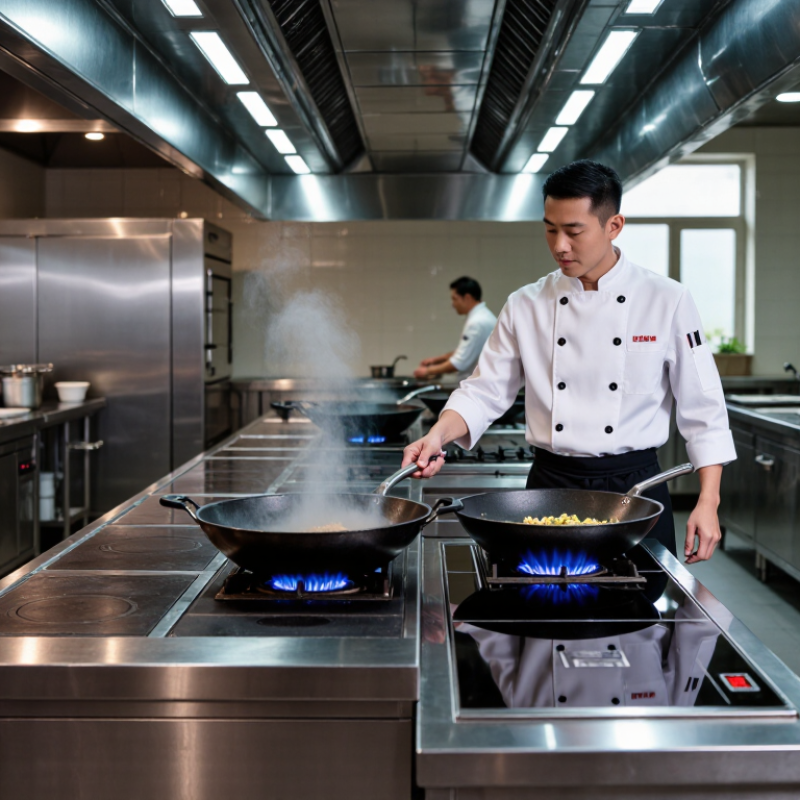
What Is a Commercial Wok Induction Hob and How Does It Work?
Why Choose a Wok Induction Hob for Commercial Kitchens?
A commercial wok induction hob creates heat inside a magnetic wok, rather than beneath it. An induction coil carries alternating electrical current. This produces a rapidly changing electromagnetic field. When a compatible steel wok sits above the coil, the field generates electric currents in the metal. The wok heats directly. The glass surface remains comparatively cooler.
The U.S. Department of Energy reports that induction cooking can transfer about 85% of input energy to cookware.
Gas cooking transfers roughly 32%, according to ENERGY STAR guidance.
This difference matters during busy service, when several woks run beside staff. Less wasted heat can improve kitchen comfort and reduce cooling demand. Heat appears quickly. Control feels almost immediate. A cook can lower power before sauce scorches.
Commercial models usually include power inverters, temperature sensors, pan detection, and overload protection. Some systems deliver concentrated heat to the wok base, while others use shaped coils for broader contact. The wok must contain magnetic material. A simple magnet test helps, but it is not perfect. Poorly matched cookware may heat unevenly. Curved wok bottoms can also reduce contact with flat induction zones.
Real kitchens reveal the trade-offs. Operators need stable electrical capacity, trained cooks, and regular cleaning around the control panel. The Foodservice Equipment & Supplies industry commonly emphasizes lifecycle cost, ventilation, and service access when evaluating commercial cooking equipment. Induction is efficient, but efficiency alone does not guarantee better food. Technique still matters.
Why 85% Induction Efficiency Outperforms Gas at About 32% (ENERGY STAR)
Commercial kitchens lose money through heat that never reaches the pan. ENERGY STAR estimates induction can transfer about 85% of energy into cookware, while gas delivers roughly 32%. That difference matters during long wok shifts. A busy station may feel cooler, even while cooking at high heat.
In practical use, a wok induction hob sends heat through the pan base instead of warming the surrounding air first. Staff can adjust power quickly when switching from searing beef to simmering sauce. The cooking surface is also easier to wipe after service. Less open flame can reduce combustion gases near the line, although proper ventilation remains necessary.
There is a catch. Not every wok performs well on a flat induction surface. Compatibility matters. Kitchens should test pan shape, load size, recovery time, and control response before replacing gas equipment. Electricity rates, installation capacity, and peak demand can change the financial result. I have seen efficiency claims look impressive on paper, yet poor pan contact reduced real-world performance. That deserves honest measurement. Recording energy use during normal service gives managers stronger evidence than relying on specifications alone.
How High-Power Induction Delivers Precise Wok Heat and Faster Recovery
Why Choose a Wok Induction Hob for Commercial Kitchens?
A high-power wok induction hob puts heat directly into the pan base. This creates a fast, focused heating zone beneath the wok. The U.S. Department of Energy reports that induction transfers about 85% of energy to cookware, compared with roughly 32% for gas cooking. Less heat escapes into the room. That matters during a long service, when several burners run beside the pass.
The U.S. Department of Energy reports that induction transfers about 85% of energy to cookware, compared with roughly 32% for gas cooking.
Recovery speed is the practical advantage. After adding cold noodles, stock, or vegetables, the hob can restore heat almost immediately. A steady control dial also helps chefs move from a hard sear to gentle simmering without fighting flame fluctuations. The result is a crisp vegetable edge, a hotter wok surface, and fewer watery sauces. In compact kitchens, lower ambient heat can also support staff comfort and ventilation performance. The U.S. Environmental Protection Agency identifies efficient cooking equipment as one route toward reducing commercial kitchen energy demand.
Real kitchens are less tidy.
Pan size, metal quality, loading, and operator habits still affect recovery. A powerful hob cannot correct an overloaded wok or poor heat distribution. Trials should measure recovery time with the actual wok, recipe, and service volume. That small test often reveals the truth better than a specification sheet. Safety controls, cleaning access, and electrical capacity deserve equal attention before installation.
How Induction Reduces Kitchen Heat, Combustion Risks, and Ventilation Demand
Why Choose a Wok Induction Hob for Commercial Kitchens?
A wok induction hob transfers energy directly into compatible cookware. The cooking surface stays much cooler than an open flame. In a busy kitchen, this can reduce the heavy heat that builds around cooks, walls, and storage areas. Staff may notice less sweating during long service periods. The difference is especially clear during stir-frying, when flames usually push hot air toward the hood.
There is no open flame or fuel combustion beneath the wok. That reduces flame-related ignition risks and removes combustion gases from the cooking process. However, induction is not risk-free. Hot oil, steam, electrical faults, and poor maintenance still need proper controls. Ventilation demand may also decrease because less heat enters the room, but smoke, grease, and cooking vapors still require effective extraction. A qualified ventilation assessment remains important. It should reflect the menu, cooking volume, and equipment layout.
Tips:
Keep the wok base clean and properly centered. Use cookware designed for induction. Train staff to adjust power early, not after oil overheats. Clean filters and inspect electrical connections regularly. Measure kitchen temperatures during peak service, rather than relying on impressions. Small details matter. One limitation deserves attention: some teams may find the heating response unfamiliar at first. I have seen cooks change techniques too quickly, then blame the equipment. A short training period usually reveals what needs adjustment.
Which Power, Pan, Safety, and ROI Factors Should Buyers Compare?
Why Choose a Wok Induction Hob for Commercial Kitchens?
Power should match the menu, service speed, and available electrical capacity. A busy wok station may need 5–12 kW, but peak power is not continuous power. Ask for measured output under real cooking loads. My first comparison focused only on maximum wattage. That was a mistake. Heat recovery after adding cold ingredients matters more during a lunch rush. Check whether the unit supports stable low heat for sauces and rapid recovery for stir-frying.
Pan compatibility is equally important. A round wok may need a dedicated induction bowl or a stable adaptor system. Flat-bottom pans usually provide more consistent contact. Test the actual pans used by your cooks. Confirm heating zones, handle clearance, and cleaning access. Safety features should include pan detection, overheat protection, residual-heat indicators, and controls that remain readable near steam and oil splashes. Local electrical requirements must also be verified by a qualified professional.
Tips: Compare cooking tests, not brochures. Record heat-up time, recovery time, noise, and energy use. Include staff feedback.
ROI involves more than electricity savings. A responsive hob can reduce waiting time, kitchen heat, and cleaning effort. Calculate installation costs, ventilation changes, maintenance, and possible downtime. Then compare output per service hour. A cheaper unit may become expensive if controls fail during peak service. Still, energy estimates can be imperfect. Keep a short trial log before making a final purchase.
Why Choose a Wok Induction Hob for Commercial Kitchens?
Compare rated power, electrical demand, pan requirements, safety features, and operating cost before selecting a commercial wok induction hob.
Power and recovery
Higher-rated units generally recover heat faster after cold ingredients are added. Confirm the available electrical supply, phase configuration, breaker size, and duty cycle.
Pan compatibility
Induction requires ferromagnetic cookware, typically cast iron or magnetic stainless steel. Check the recommended wok base diameter and whether the pan sits securely on the cooking zone.
Safety and ROI
Compare over-temperature protection, pan-detection shutdown, residual-heat indicators, splash resistance, cleaning time, ventilation requirements, and expected maintenance costs.
Cost model: 300 operating days per year, 6 hours per day at continuous rated load, and an electricity rate of $0.15/kWh. Actual costs will be lower when the hob cycles below maximum power.





