


10 Electrical Parking Lift Buying Tips for Global Buyers

Urban land is becoming more valuable, while vehicle ownership continues to pressure limited parking space. The United Nations projects that nearly 68% of the world’s population will live in urban areas by 2050. This trend makes vertical parking increasingly relevant for apartments, offices, hotels, and transport facilities.

Electric mobility adds another layer of complexity. The International Energy Agency reported that global electric car sales exceeded 14 million in 2023, with China, Europe, and the United States leading adoption. An Electrical Parking Lift must therefore support more than vehicle storage. Buyers should examine electrical capacity, charging compatibility, platform dimensions, noise levels, drainage, emergency lowering, and maintenance access.

Small details matter.

A lift installed in a coastal garage may face corrosion, humidity, and salt exposure. A basement system may require careful attention to ceiling height, ventilation, fire protection, and water drainage. Local building codes and recognized safety standards, such as EN 14010 or applicable ASME requirements, should guide the technical review. Requirements vary by country, so a supplier’s certificate alone may not prove local compliance.

The following ten buying tips focus on practical decisions that global buyers often underestimate. Total cost includes installation, inspection, spare parts, downtime, and electricity consumption. A low purchase price can become expensive after repeated service visits. Catalog images also hide weaknesses. They do not show platform movement, control-panel usability, or recovery procedures during a power failure.

That is the uncomfortable part.

No single lift suits every site. Buyers should compare verified load tests, warranty terms, factory quality records, and local service capability before signing a contract. A careful, evidence-based purchase protects safety, investment value, and daily convenience.
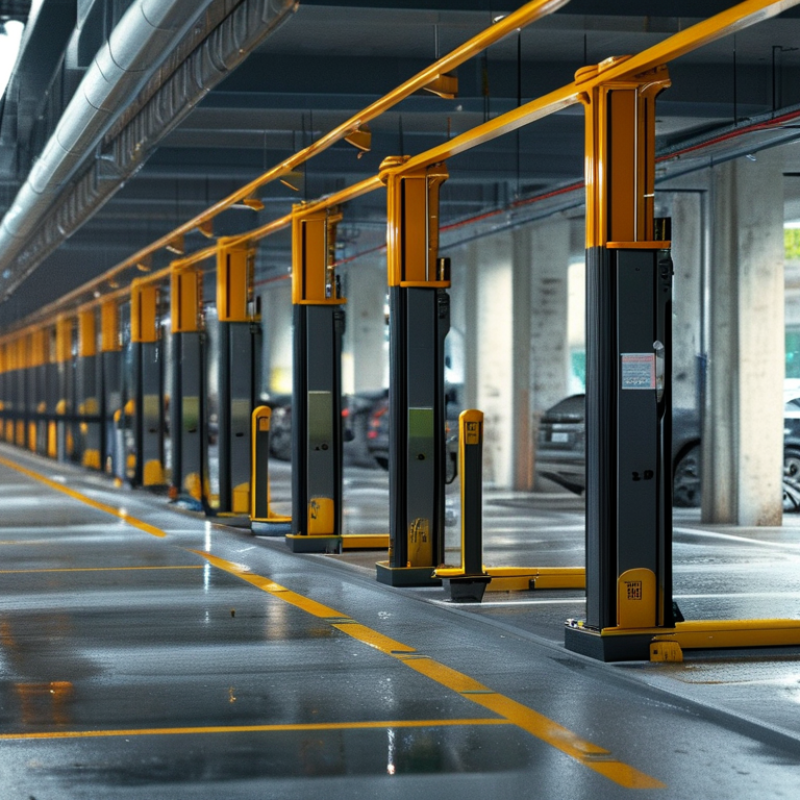
10 Electrical Parking Lift Buying Tips for Global Buyers

Define Your Parking Needs and Available Space

Before comparing an electrical parking lift, define the vehicles it must serve. Record each vehicle’s length, width, height, wheelbase, and weight. Do not rely on catalog averages. A family SUV can exceed a compact car’s height by several hundred millimeters. Measure the tallest vehicle with roof rails installed. Small details matter.

Inspect the proposed installation area carefully. Measure ceiling height, doorway width, turning space, and the distance from nearby walls. Leave room for doors, mirrors, drainage, and routine maintenance. Check the floor slab’s thickness and condition with a qualified structural professional. Electrical capacity also needs confirmation. The lift may require a dedicated circuit, suitable protection, and reliable grounding. Local electrical and building requirements should guide the design.

Think about daily operation, not only maximum capacity. Will drivers park at night? Is lighting adequate? Can users safely reach the controls? Consider water, dust, temperature, and possible flooding in the garage. A lift installed near a drain may need additional protection. I have seen planning errors caused by measuring the vehicle but ignoring the driver’s walking path. That mistake is easy to repeat. Recheck every dimension on site, preferably with the vehicles present. Record measurements in writing and allow practical clearance, because a design that fits on paper may feel cramped in real use.

10 Electrical Parking Lift Buying Tips for Global Buyers - Define Your Parking Needs and Available Space
No. Buying Dimension What to Check Practical Benchmark or Data Recommended Action
1 Define the number of vehicles Confirm how many vehicles must be stored, whether they will be parked simultaneously, and whether the system is intended for private, residential, commercial, or public use. A two-level lift generally creates one additional parking position above the floor-level position. Higher-capacity systems require more structural and operational planning. Prepare a vehicle inventory and calculate the required number of parking spaces before comparing lift models.
2 Measure the available footprint Measure clear length, width, columns, walls, doors, ramps, drainage channels, and the access route into the installation area. Passenger-car parking spaces are commonly planned at approximately 2.4–2.7 m wide and 4.8–5.5 m long, but local codes and the selected lift platform determine the final requirement. Measure the usable area, not the nominal room size, and add clearance for doors, controls, and vehicle alignment.
3 Verify total height and lifting clearance Check ceiling height, beams, lighting, sprinklers, ventilation ducts, garage doors, and the height of the vehicle on the upper platform. Required height varies with vehicle height and lift design. A compact car may be about 1.5 m high, while SUVs and vans can exceed 1.8 m; the platform must also provide safe overhead clearance. Measure from the finished floor to the lowest obstruction and compare it with the lift supplier’s minimum ceiling-height requirement.
4 Match platform size to the vehicle fleet Compare platform length and width with the longest, widest, and highest vehicles, including mirrors, roof rails, spoilers, and accessories. Typical passenger vehicles range from approximately 1.7–2.0 m in body width and 4.0–5.3 m in length, excluding certain commercial vans and specialist vehicles. Use the largest intended vehicle as the design reference and maintain the manufacturer’s stated edge and wheel-position clearances.
5 Confirm rated load capacity Check the maximum permitted vehicle mass, axle-load distribution, loading position, and whether the rating includes accessories or stored cargo. Many passenger-car lifts are offered in capacity classes around 2,000–3,500 kg, while heavier vehicles require equipment specifically rated for that load. Select a rated capacity above the heaviest planned vehicle and never rely on average vehicle weight.
6 Assess electrical compatibility Review supply voltage, frequency, phase configuration, circuit capacity, grounding, isolation, and the electrical regulations in the destination country. Electrical systems commonly use regional supplies such as 220–240 V or 110–120 V, with 50 Hz or 60 Hz frequency depending on the country. Exact requirements depend on the lift motor and control system. Have a qualified local electrician verify the supply and install the required protective devices before commissioning.
7 Check floor strength and foundation conditions Inspect concrete thickness, compressive strength, cracks, reinforcement, levelness, drainage, and anchoring conditions. Required foundation specifications differ by lift type, load rating, anchor design, and local construction rules; surface appearance alone cannot confirm suitability. Obtain the installation drawings and arrange a structural assessment before drilling, anchoring, or placing concentrated loads.
8 Review safety and access features Look for mechanical locks, anti-fall protection, emergency stop controls, obstruction detection, overload protection, non-slip surfaces, and controlled descent. Safety functions should prevent unintended lowering and should remain effective during power interruption. Emergency procedures must be available to operators. Request the complete safety-function list, operating instructions, inspection schedule, and conformity documents for the destination market.
9 Plan traffic flow and operating time Determine how often vehicles will enter and exit, whether the upper position must be accessed first, and whether queues or shared access lanes are possible. A lift may increase parking density but can reduce convenience when one vehicle blocks another. Frequent commercial use places greater demands on controls, duty cycle, and maintenance. Map the entry, exit, turning, and waiting areas, then choose a layout that suits the actual daily parking sequence.
10 Budget for installation and lifecycle costs Include transport, unloading, foundation work, electrical installation, permits, commissioning, inspections, spare parts, and periodic maintenance. Total ownership cost is more than the equipment price. Local labor, taxes, standards, site preparation, and service availability can materially change the final budget. Request a site-specific quotation with a clear scope of supply, warranty terms, maintenance intervals, response times, and excluded costs.
Planning note: Dimensions and capacity ranges shown above are general planning references, not approval values. Final selection must be based on the lift’s technical documentation, vehicle specifications, local building and electrical regulations, and a site assessment by qualified professionals.

Compare Lift Types, Capacity, and Vehicle Compatibility

Electrical parking lifts differ in structure, movement, and vehicle fit. Two-post lifts suit many sedans and compact SUVs, but door clearance can become restrictive. Four-post lifts provide better stability and often support longer vehicles. They also need more floor space. Scissor lifts save visual space, although their platforms may limit tire positions and underbody access.

Capacity numbers require careful reading. A lift rated for 3,500 kilograms may not suit every 3,500-kilogram vehicle. Load distribution matters. A heavy battery pack can shift the center of gravity. Check axle loads, wheelbase, tire width, and ground clearance together. Measure the tallest vehicle, including roof rails. Small errors cause large problems.

Vehicle compatibility should be tested against real parking conditions. Record ceiling height, ramp angle, column spacing, and platform length before comparing prices. A compact hatchback may fit easily, while a long-wheelbase van may overhang the platform. That detail is often missed. Ask for drawings, anchor requirements, emergency lowering procedures, and electrical specifications. Local installers should verify voltage, drainage, fire access, and structural conditions. Requirements vary by country and building type.

In practical evaluations, buyers sometimes trust maximum capacity too much. I have seen suitable-looking lifts fail the everyday test: mirrors, doors, and charging cables needed extra room. Leave operating clearance, not just storage clearance. A careful comparison may reveal that the less compact lift is the safer long-term choice.

Check Safety Systems, Certifications, and Build Quality

An electrical parking lift should be judged by its safety systems, not its polished finish. During site inspections, I check emergency stops, door locks, anti-drop devices, and upper-limit switches. Each control should respond without delay. A clear control panel helps operators avoid hurried mistakes. Test it repeatedly.

Ask for certification documents that match the exact lift model. Certificates should come from recognized testing bodies and cover electrical safety, structural strength, and lifting performance. Requirements differ between countries, so confirm approval with the local authority before purchase. A copied document or unclear test number deserves careful questioning. A neat brochure is not proof.

Build quality appears in small details. Inspect welds for consistent penetration, not rough patches hidden under paint. Check platform thickness, cable protection, drainage, and corrosion-resistant treatment. The motor should lift smoothly without sharp vibration or unusual noise. Listen closely. Request the rated load, testing method, inspection interval, and spare-part availability in writing. A useful supplier should explain failure procedures, including manual lowering during power loss. I have seen buyers focus on capacity and overlook maintenance access. That mistake can make routine servicing slow and unsafe. Leave room around the lift for inspection, cleaning, and emergency movement. Good engineering is visible, but reliable records matter just as much.

Evaluate Power Requirements, Installation, and Maintenance

Electrical Parking Lift Buying Tips for Global Buyers

Power requirements should be checked before comparing lift prices. Ask for the rated voltage, phase, frequency, starting current, and maximum operating load. A lift may need a dedicated circuit, correctly sized cables, and protective devices. Do not rely on a nearby wall outlet. It may not support motor startup. I have seen projects delayed because the available supply was measured too late. The first estimate is not always right.

Confirm whether the site has single-phase or three-phase power. Then compare the lift’s electrical data with local supply conditions and applicable installation codes. A qualified electrician should verify grounding, breaker capacity, cable routes, and emergency isolation. Keep the control panel away from standing water and vehicle impact. Leave enough working space for inspection. Small spaces create big problems.

Installation quality affects daily reliability. Check floor strength, ceiling clearance, drainage, lighting, and access for service tools. Ask how the platform is leveled and how mechanical locks engage. Maintenance should include cables, chains, hydraulic parts, limit switches, bolts, and safety sensors. Request a written service schedule and clear fault records. Monthly checks may suit heavy use, while lighter use still needs regular inspection. A clean lift can hide wear. Operators should report unusual noise, slow movement, oil marks, or uneven travel immediately. Some buyers focus too heavily on lifting capacity and overlook maintenance access. That mistake can become expensive.

Assess Supplier Reliability, Warranty, and Total Ownership Cost

When buying an electrical parking lift, supplier reliability deserves more attention than a polished catalog. Request factory records, installation references, and maintenance data from similar projects. Paper is not enough. Ask how many lifting cycles the equipment completes under normal daily use. A dependable supplier should explain motor performance, safety controls, spare-parts availability, and technician response times clearly. Contact recent customers, not only selected references. Their experience may reveal delayed shipments or weak after-sales support.

Examine the warranty line by line. Confirm coverage for motors, control boards, sensors, structural components, and labor. Check whether the warranty begins at shipment, installation, or commissioning. That difference can affect real protection. Ask who pays for travel, replacement freight, and emergency service. Some warranties exclude damage caused by voltage fluctuations or poor installation, so define these conditions before signing. Keep every promise in the contract. Verbal assurances disappear too easily.

Calculate total ownership cost over at least five years. Include purchase price, civil work, electrical upgrades, inspections, lubrication, software updates, and replacement parts. Estimate electricity use from expected daily cycles, not showroom figures. Downtime hurts. A lower-priced lift may become expensive after repeated service calls. I have seen buyers compare equipment prices while ignoring local labor rates and delivery delays. That approach feels efficient, but it is incomplete. Build a simple cost model with optimistic and difficult scenarios. Then test whether the supplier can support both. Reliability sometimes costs more upfront, yet poor support costs more quietly.

Powder Coat Booths

For those larger-sized parts, or smaller quantity runs, we have 2 independent powder coat booths and ovens. The quality, durability and affordability of today’s powder coating finishes make this the process of choice for world-class companies.

Powder coating advantages over other forms of coating are many. Materials used in the Powder coating process can be metals and non-metals that come in a multitude of thicknesses, textures, colors, etc. Another of Powder coating’s biggest advantages over conventional coatings is its ability to create finishes in many different textures. Powder Coating Booths allow us the ability to apply these advantages to large products.

Wet Paint Line

Tri-State Fabricators runs a full-service conveyor line for painting. Wet painting can provide protection or decoration to many different part styles. From start to finish, every project is easier to undergo random and point-based inspection by our skilled painting team.

Advantages to our Wet Paint Line are these lines start with product prep and ends with a thorough inspection of a high quality finished product. Our ability to complete large and small projects with a superior finish and doing so in a timely and economical fashion. This passes along the savings in production to our customers. When powder coating ins not an option, our Wet Paint Line gets the job done right the first time.

Wet Paint Booths

When the parts get big and heavy we roll-out our custom paint racks and oversize booth. By utilizing our partnerships with all the major paint brands, we can match virtually any color with wet paint.

The advantages of having access to a Wet Paint Booth are many. Large projects of many different shapes can be loaded into the booth. The Wet Paint Booth offers an environment that is much more controlled than a typical parts painting operation.

Not only are they used because of their controlled environment, but they’re are also advantageous when it comes to applying paint to parts that are needed in industries that require specialty coatings such as medical, aerospace, etc.

Military CARC

Our military forces have some very high standards when it comes to the finish of their vehicles and equipment. From the first pre-treatment step to final coat, it takes a great deal of knowledge and experience to protect the men and women of our armed forces. They deserve only the best, and Tri-State Fabricators provides it.

All of our processes are closely monitored by our staff and management teams. Both of which are highly trained in the processes of metal fabrication and finishing. Tri-State Fabricators’ goal is to always fully satisfy each and every customer, including the military. We will always put a 110% into what we do.

Glass-Bead Blasting

Abrasive media blasting is an excellent way to remove old paint, rust, and increase the paint/powder adhesion. Glass beads produce a much smoother and brighter finish than angular abrasives; leaving the part clean yet without any dimensional change. Chemically inert and environmentally friendly, we can recycle our beads approximately 30 times; making them a more preferred method of metal cleaning or surface finishing.

Advantages to Glass Bead Blasting are many. Glass bead blast media is used when a project is needing rough surfaces need to become smooth for applications of coatings such as paint. It is typically used to clean paint and rust from a product surface without deforming the surface it is being used on. Overall, compared to many other blasting media, Glass Bead Blasting is a very economical choice and those savings are always passed on to our customers.

Part Washing

Tri-State Fabricators utilize a zinc phosphate wash to clean and etch the material to ensure the best paint adhesion possible. The unique design of our 3-stage wash system does the work like a 5-stage. From Cleaning and rinsing to conversion coating and post-treatment, Our Part Washing process is a complete service and works throughout the fabrication service and the finishing service.

Along with the previously mentioned benefits, Curing is a vital chemical reaction that leaves the product finish hard and relatively safe from mild abrasion and aggressive corrosion. This process can be done in more than one way; ambient air-dry or in curing ovens at temps that exceed 240°.

Burn-Off Oven

From fixing paint mistakes (someone else’s of course) to simply cleaning our paint line hooks, our burn-off oven is put to good use. After a quick burn-off, a little clean up, and a fresh coat of paint, your parts will look better than new.

Why does our Burn-Off Oven work so well? Because super heating the air around parts turns the materials into ashes. From paint and powder coatings to rubber and machining oils, high temps do the job without degrading the integrity of the part.

Masking

Masking is a vital part of producing high quality products. We have die-cut masking patterns to protect machined surfaces as well as a wide range of plugs and caps to protect threaded holes and bolts. We provide permanent and temporary masking.

Masking allows the selected sections of a product to be protected from a fabrication or finishing service. This can be with both chemicals when etching and tapes, paints when only finishing just a section of the product. Masking is great in aiding the customization process of a project.

Screen Printing

Screen printing is a photographic process that transfers artwork onto a porous nylon screen which allows colored ink to flow through the screen and be deposited on an aluminum or plastic component. We can generally have just about any design created onto a screen for your parts.

Some of the advantages of Screen Printing are, brand recognition for your business displaying on your products, assembly instructions, product warnings/hazards, etc. Tri-State Fabricators produces Screen Printing of the highest quality so you know it’s durable.

Metal Finishing

Metal Finishing is the art of treating the exterior portion of product, often metal but can also be made of other materials, so that the surface is clean and free of any debris. Then the process of applying coats or either paint of powder coat takes place. This coating process improves the quality of the product in both appearance and resistance to wear and corrosion.

Tri-State Fabricators, Inc., understands that a project typically isn’t complete until a high-quality finish has been added to your product. This is why our painting and powder coating teams continuously inspect the products throughout the Metal Finishing process.

