


Buying Carbon Graphite Rods requires more than comparing diameter and price. The correct rod must match the furnace, electrical circuit, machining process, and expected service life. A rod used near 500°C faces different demands from one exposed to 2,000°C. Grade, density, purity, grain size, porosity, and oxidation resistance can change performance significantly.
Carbon materials researcher Dr. Bor Jang has expressed a practical principle: “Structure controls performance.” This idea matters when examining a supplier’s technical sheet. Ask whether the rod is extruded, molded, or isostatically pressed. Check dimensional tolerance, electrical resistivity, bulk density, and ash content. A clean, square-cut end should not show deep cracks, loose particles, or unusual discoloration. Small details matter.
Do not treat the cheapest quotation as the best decision. A low-cost rod may wear quickly, consume more power, or fail under thermal shock. Request a batch certificate, test data, and clear packaging details. Confirm the actual length, diameter, and storage conditions. Moisture and careless handling can damage exposed graphite surfaces. Also ask how the supplier manages oxidation during use, because graphite reacts with air at elevated temperatures.
This guide presents ten practical tips for evaluating Carbon Graphite Rods. It also admits an uncomfortable truth: specifications do not predict every result. Installation, atmosphere, heating rate, and operator habits can alter performance. When uncertain, test a small batch first. That modest step may prevent a costly replacement later.
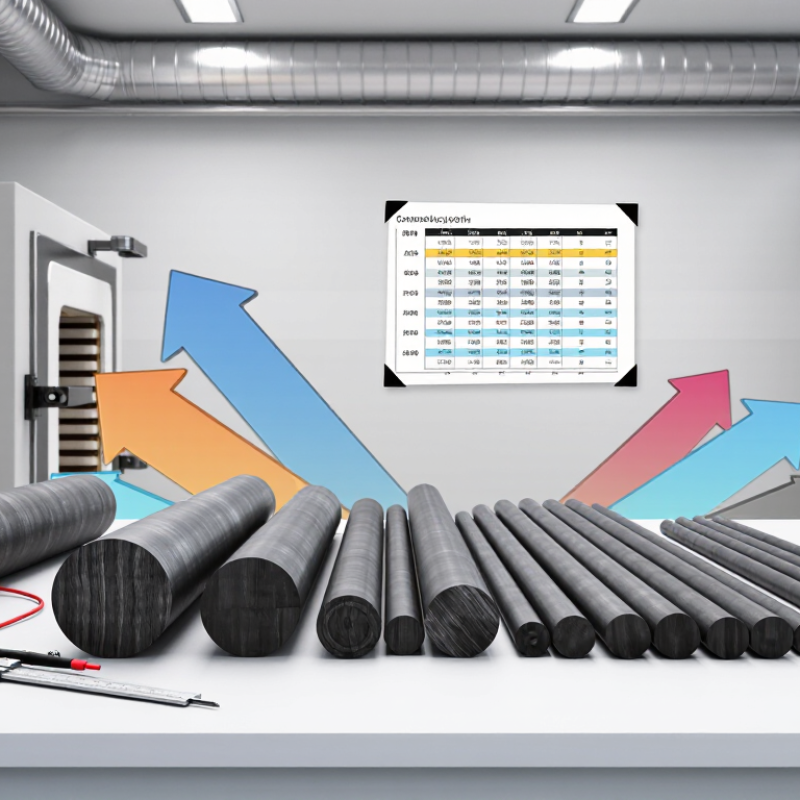
Carbon graphite rods are not interchangeable, even when their dimensions look identical. Extruded rods usually offer consistent shapes and practical electrical conductivity. They suit furnace supports, heating elements, laboratory electrodes, and general machining. Molded rods are often denser and stronger across larger sizes. They can perform well where mechanical stability matters. Isostatic graphite provides more uniform structure and properties in different directions. It is useful for demanding thermal, electrical, and precision applications.
Grain size also affects performance. Fine-grain graphite can produce smoother machined surfaces and better dimensional control. Coarse-grain material may cost less but can show a rougher texture. Impregnated rods resist gas or liquid penetration more effectively. However, treatment can change machinability and electrical behavior. Check density, ash content, resistivity, and maximum service temperature before buying. A supplier should provide measurable specifications, not vague claims.
Application conditions determine the right choice. A rod inside an oxidizing furnace needs protection because graphite reacts with oxygen at elevated temperatures. An electrode requires suitable conductivity, diameter tolerance, and reliable end machining. For chemical use, confirm compatibility with the process fluid. Inspect rods for chipped ends, deep cracks, and uneven surfaces. Small defects can become failures during heating. I have seen buyers focus only on price and diameter. That approach often misses grain structure and purity. No single rod type fits every setup. Test a small sample when the application is critical.
| No. | Buying Tip | Rod Type or Grade | Typical Technical Data | Common Applications | Selection Considerations |
|---|---|---|---|---|---|
| 1 | Define the operating purpose first | General-purpose molded or extruded graphite rod | Bulk density commonly about 1.65–1.85 g/cm³; electrical resistivity often about 8–20 μΩ·m, depending on grade and orientation. | Laboratory fixtures, furnace supports, electrical contacts, machining blanks, and general thermal applications. | Confirm whether the rod will carry current, support a load, contact molten material, or operate in a vacuum or inert atmosphere. |
| 2 | Choose the manufacturing process carefully | Extruded, molded, or vibration-molded graphite | Extruded rods usually have directional properties; molded grades can provide more uniform cross-sections. Grain sizes commonly range from fine powder grades to several millimeters. | Electrodes, heating elements, structural supports, crucible components, and machined parts. | Use extruded material when a continuous rod profile is economical; select molded or fine-grain material when dimensional stability and machinability are more important. |
| 3 | Match purity to contamination limits | Standard, high-purity, or ultra-high-purity graphite | Commercial grades may contain ash in the tenths-of-a-percent range, while high-purity grades can be specified below 0.1% ash and, in some cases, below 0.01% after purification. | Semiconductor processing, vacuum furnaces, analytical equipment, high-temperature crystal growth, and chemical processing. | Request the ash measurement method and impurity list. High purity is useful only when contamination control justifies the additional cost. |
| 4 | Check temperature and atmosphere limits | Industrial graphite for inert, vacuum, or reducing atmospheres | Graphite can remain solid above 2,500°C in suitable inert or vacuum conditions, but it oxidizes in air; significant oxidation can begin at approximately 400–600°C depending on grade and exposure. | Vacuum furnaces, inert-gas heat treatment, high-temperature fixtures, and thermal insulation components. | Do not use unprotected graphite in air at elevated temperature. Consider a coating, shielding gas, or another material when oxygen exposure is unavoidable. |
| 5 | Compare grain size and surface finish | Fine-grain graphite rod | Fine-grain grades generally offer smoother machined surfaces, lower permeability, and improved detail reproduction compared with coarse-grain grades. | Precision electrodes, EDM tooling, semiconductor fixtures, laboratory parts, and close-tolerance components. | Choose fine grain for small diameters, sharp features, tight tolerances, or improved surface quality. Coarser grades may be adequate for large structural parts. |
| 6 | Verify mechanical strength and density | High-density, high-strength graphite rod | Typical room-temperature flexural strength may range from approximately 20–80 MPa, with higher values available in specialized grades; properties decrease with temperature and oxidation. | Mechanical supports, furnace fixtures, electrodes, lifting components, and rotating or sliding parts. | Review flexural strength, compressive strength, modulus, and allowable stress rather than relying only on density. Graphite is brittle and should not be exposed to impact or bending overload. |
| 7 | Evaluate thermal shock resistance | Low-CTE graphite with good thermal conductivity | Thermal expansion is commonly around 2–8 × 10⁻⁶/K, while thermal conductivity may range from roughly 50–170 W/m·K depending on grade and direction. | Rapid-heating furnace fixtures, thermal shields, crucibles, heat spreaders, and high-temperature tooling. | Lower thermal expansion and higher thermal conductivity generally improve resistance to thermal gradients. Always consider grain direction in anisotropic grades. |
| 8 | Specify electrical performance | Electrode-grade or electrically conductive graphite | Electrical resistivity commonly falls between about 5 and 20 μΩ·m; resistance increases with length and decreases with cross-sectional area. | Electrolysis electrodes, resistance-heating components, arc-furnace parts, electrical contacts, and EDM electrodes. | Calculate voltage drop and heat generation using the actual rod dimensions. Ask for resistivity in the required direction when the material is anisotropic. |
| 9 | Consider impregnation or coating | Resin-impregnated, metal-impregnated, or coated graphite | Impregnation can reduce open porosity and fluid permeability; coatings can improve oxidation resistance or chemical compatibility, but may change dimensions and thermal behavior. | Mechanical seals, pump components, chemical-processing parts, furnace fixtures, and applications involving liquids or corrosive vapors. | Check coating temperature limits, adhesion, compatibility with the process fluid, and whether machining after treatment is permitted. |
| 10 | Confirm dimensions, tolerances, and packaging | Precision-cut or custom-machined graphite rod | Specify diameter, length, straightness, concentricity, end condition, surface roughness, and allowable dimensional tolerance. Graphite dust and edge chipping require careful handling. | Replacement shafts, laboratory electrodes, custom furnace parts, wear components, and precision assemblies. | Provide a technical drawing when fit is critical. Request protective packaging, dry storage, and clean handling to prevent chips, moisture uptake, and contamination. |
Technical note: Values shown are typical industry ranges for carbon graphite materials, not universal specifications. Actual performance depends on grade, grain structure, forming method, impregnation, orientation, dimensions, atmosphere, temperature, and test method.
10 Tips for Buying Carbon Graphite Rods
Purity should match the application, not simply the seller’s headline percentage. Ask for a certificate of analysis showing fixed carbon, ash, sulfur, iron, and other trace elements. ASTM C561 provides a recognized method for measuring ash in graphite. Request recent test results, not a generic template. The USGS Mineral Commodity Summaries 2024 estimated global natural graphite mine production at 1.6 million metric tons in 2023. Supply scale does not prove rod quality. It only adds context. I have seen rods with excellent surfaces but unexpectedly high ash content.
Grade affects strength, conductivity, machinability, and thermal behavior. Confirm whether the rod is extruded, molded, or isotropic. Fine-grain grades usually provide smoother machining and more consistent dimensions. Coarse grains may suit less demanding thermal uses. Check bulk density, electrical resistivity, flexural strength, and maximum service temperature. The International Energy Agency reported in 2024 that China supplied more than 90% of battery-grade graphite anode material. This highlights supply concentration, but battery-grade material is not automatically suitable for industrial rods.
Measure size at several points. Use a calibrated micrometer for diameter and a granite surface plate for straightness. Check length, roundness, concentricity, and chamfer details. A rod can meet diameter tolerance while bending during installation. Request the dimensional tolerance in writing, such as ±0.05 mm, rather than accepting “precision made.” Compare the inspection report with your drawing. I sometimes overlook end squareness. That small error can create poor contact, uneven heating, or assembly stress. Buy a small sample first, then verify purity, grade, and dimensions under real operating conditions.
Nominal purity thresholds converted into maximum non-carbon content. Lower values indicate a cleaner graphite rod.
When buying carbon graphite rods, compare electrical, thermal, and mechanical performance together. Check the datasheet for electrical resistivity, not only conductivity claims. Lower resistivity usually supports steadier current flow and reduced energy loss. Ask for test conditions and measurement standards. Values can change with temperature, grain direction, and moisture. Inspect the rod’s diameter tolerance before ordering. Small dimensional errors can affect resistance and assembly fit. Measure twice.
Thermal performance deserves equal attention. Review maximum operating temperature, thermal conductivity, and thermal expansion. A rod that transfers heat quickly may reduce local hot spots. However, rapid heat movement can stress nearby components. Consider the heating and cooling cycle, not just the peak temperature. Request information about oxidation protection when the rod faces air. Test a sample under similar airflow and load. Real conditions matter.
Mechanical data should include flexural strength, compressive strength, hardness, and density. Higher strength may improve handling, but it does not guarantee better electrical behavior. Examine the surface for chips, cracks, and uneven machining. I once compared rods using resistance alone and overlooked brittle edges. That shortcut caused avoidable fitting problems. Review grain structure when machining precision matters. Ask for inspection records, batch consistency, and packaging details. A low price can hide extra waste. My own judgment still needs checking against independent test results and the actual application.
Choosing carbon graphite rods requires more than comparing price per kilogram. Start by examining the supplier’s technical knowledge and production history. Ask how they control raw material selection, mixing, forming, baking, and graphitization. Request batch records, inspection reports, and clear dimensional tolerances. Ask for samples from the actual production line. Small details matter. A rod with uneven diameter may cause poor contact or unstable heating. Check bulk density, ash content, electrical resistivity, flexural strength, and visible porosity. These values should match your application, not merely a general catalog range.
Supplier reliability also depends on traceability and communication. Each shipment should carry a batch number, production date, material grade, and certificate of analysis. Verify whether the supplier operates under ISO 9001, and review the certificate’s scope and expiration date. Depending on the market, request relevant declarations for restricted substances, packaging, or chemical safety. Certifications are useful evidence, but they are not proof of perfect performance. Audit records and test methods still deserve attention. Ask whether testing occurs internally or through an independent laboratory. Get it in writing. I would recheck critical measurements after delivery, even when documents look complete. A supplier may have strong paperwork but weak process control. That uncomfortable possibility is worth considering before a large purchase.
Buying carbon graphite rods requires more than comparing price per kilogram. Ask for grade, diameter tolerance, density, ash content, and machining allowance. A quote at $8 per kilogram can become $12 after cutting, drilling, packaging, and freight. Prices mislead. Request a written calculation. Check whether taxes, insurance, and unloading fees are included. I once overlooked a small minimum-order charge, so the “cheap” shipment was not cheap. That mistake still influences my purchasing checklist.
Delivery terms deserve equal attention. Confirm production time, dispatch date, transport method, and the point where risk transfers. “Delivered” is not precise enough. Specify the destination, shipping term, documents, and responsibility for damage. For urgent furnace maintenance, air freight may protect production, but it can erase material savings. Inspect rods on arrival, photographing cartons, labels, and visible cracks. Keep a small reserve for critical applications.
Long-term value depends on service life, not purchase price alone. Compare oxidation resistance, thermal shock performance, electrical behavior, and dimensional stability at your operating temperature. Ask for test data tied to the actual grade, not a generic certificate. A rod lasting twice as long may reduce downtime and machining waste. Still, projections are imperfect. Trial a modest batch before committing to annual volume. Record breakage, consumption, and replacement intervals, then revise the calculation with real operating evidence.


For those larger-sized parts, or smaller quantity runs, we have 2 independent powder coat booths and ovens. The quality, durability and affordability of today’s powder coating finishes make this the process of choice for world-class companies.
Powder coating advantages over other forms of coating are many. Materials used in the Powder coating process can be metals and non-metals that come in a multitude of thicknesses, textures, colors, etc. Another of Powder coating’s biggest advantages over conventional coatings is its ability to create finishes in many different textures. Powder Coating Booths allow us the ability to apply these advantages to large products.
Tri-State Fabricators runs a full-service conveyor line for painting. Wet painting can provide protection or decoration to many different part styles. From start to finish, every project is easier to undergo random and point-based inspection by our skilled painting team.
Advantages to our Wet Paint Line are these lines start with product prep and ends with a thorough inspection of a high quality finished product. Our ability to complete large and small projects with a superior finish and doing so in a timely and economical fashion. This passes along the savings in production to our customers. When powder coating ins not an option, our Wet Paint Line gets the job done right the first time.
When the parts get big and heavy we roll-out our custom paint racks and oversize booth. By utilizing our partnerships with all the major paint brands, we can match virtually any color with wet paint.
The advantages of having access to a Wet Paint Booth are many. Large projects of many different shapes can be loaded into the booth. The Wet Paint Booth offers an environment that is much more controlled than a typical parts painting operation.
Not only are they used because of their controlled environment, but they’re are also advantageous when it comes to applying paint to parts that are needed in industries that require specialty coatings such as medical, aerospace, etc.
Our military forces have some very high standards when it comes to the finish of their vehicles and equipment. From the first pre-treatment step to final coat, it takes a great deal of knowledge and experience to protect the men and women of our armed forces. They deserve only the best, and Tri-State Fabricators provides it.
All of our processes are closely monitored by our staff and management teams. Both of which are highly trained in the processes of metal fabrication and finishing. Tri-State Fabricators’ goal is to always fully satisfy each and every customer, including the military. We will always put a 110% into what we do.
Abrasive media blasting is an excellent way to remove old paint, rust, and increase the paint/powder adhesion. Glass beads produce a much smoother and brighter finish than angular abrasives; leaving the part clean yet without any dimensional change. Chemically inert and environmentally friendly, we can recycle our beads approximately 30 times; making them a more preferred method of metal cleaning or surface finishing.
Advantages to Glass Bead Blasting are many. Glass bead blast media is used when a project is needing rough surfaces need to become smooth for applications of coatings such as paint. It is typically used to clean paint and rust from a product surface without deforming the surface it is being used on. Overall, compared to many other blasting media, Glass Bead Blasting is a very economical choice and those savings are always passed on to our customers.
Tri-State Fabricators utilize a zinc phosphate wash to clean and etch the material to ensure the best paint adhesion possible. The unique design of our 3-stage wash system does the work like a 5-stage. From Cleaning and rinsing to conversion coating and post-treatment, Our Part Washing process is a complete service and works throughout the fabrication service and the finishing service.
Along with the previously mentioned benefits, Curing is a vital chemical reaction that leaves the product finish hard and relatively safe from mild abrasion and aggressive corrosion. This process can be done in more than one way; ambient air-dry or in curing ovens at temps that exceed 240°.
From fixing paint mistakes (someone else’s of course) to simply cleaning our paint line hooks, our burn-off oven is put to good use. After a quick burn-off, a little clean up, and a fresh coat of paint, your parts will look better than new.
Why does our Burn-Off Oven work so well? Because super heating the air around parts turns the materials into ashes. From paint and powder coatings to rubber and machining oils, high temps do the job without degrading the integrity of the part.
Masking is a vital part of producing high quality products. We have die-cut masking patterns to protect machined surfaces as well as a wide range of plugs and caps to protect threaded holes and bolts. We provide permanent and temporary masking.
Masking allows the selected sections of a product to be protected from a fabrication or finishing service. This can be with both chemicals when etching and tapes, paints when only finishing just a section of the product. Masking is great in aiding the customization process of a project.
Screen printing is a photographic process that transfers artwork onto a porous nylon screen which allows colored ink to flow through the screen and be deposited on an aluminum or plastic component. We can generally have just about any design created onto a screen for your parts.
Some of the advantages of Screen Printing are, brand recognition for your business displaying on your products, assembly instructions, product warnings/hazards, etc. Tri-State Fabricators produces Screen Printing of the highest quality so you know it’s durable.
Metal Finishing is the art of treating the exterior portion of product, often metal but can also be made of other materials, so that the surface is clean and free of any debris. Then the process of applying coats or either paint of powder coat takes place. This coating process improves the quality of the product in both appearance and resistance to wear and corrosion.
Tri-State Fabricators, Inc., understands that a project typically isn’t complete until a high-quality finish has been added to your product. This is why our painting and powder coating teams continuously inspect the products throughout the Metal Finishing process.