


10 Tips for Choosing an Industrial Communication Module?

Choosing an Industrial Communication Module is rarely a simple matter of selecting the fastest protocol. A factory floor can contain legacy PLCs, noisy motors, long cable runs, and equipment from several vendors. One wrong assumption may create unstable data exchange, difficult maintenance, or expensive downtime.

Thomas J. Burke, a longtime industrial networking specialist and former ODVA president, stated, “EtherNet/IP is the world’s leading industrial Ethernet network.” His comment highlights an important point: popularity matters, but it should not decide every project. A module must match the controller, field devices, network architecture, data rate, and environmental conditions. Check protocol support carefully. Confirm connector types. Review voltage limits and operating temperatures. Then test the module with real devices, not only a laboratory simulator.

The following ten tips examine practical selection factors, including compatibility, communication speed, cybersecurity features, diagnostics, installation space, vendor support, and total ownership cost. They also consider less obvious details, such as replacement availability and how clearly the status LEDs identify a fault. A polished product sheet can hide limitations. I have seen teams choose a module by price, then discover that its diagnostic tools were too basic for a remote production line. That mistake is avoidable, though not always obvious. A reliable Industrial Communication Module should support today’s equipment while leaving room for future expansion. No checklist is perfect.现场 conditions still matter.
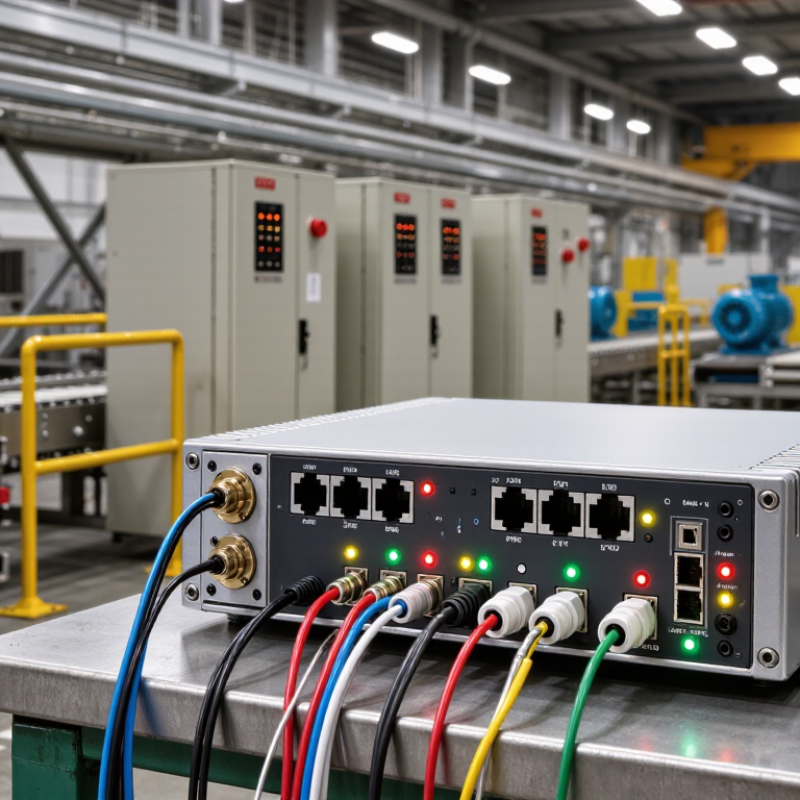
10 Tips for Choosing an Industrial Communication Module?

Define the Role of an Industrial Communication Module

Define the Role of an Industrial Communication Module

An industrial communication module is the translator between machines, controllers, sensors, and higher-level software. It converts protocols, manages data flow, and preserves timing across harsh factory networks. IoT Analytics reported 16.6 billion active connected IoT devices worldwide in 2023. That scale makes protocol planning a practical engineering decision, not a purchasing detail.

Tip 1: Define the module’s job before comparing specifications. Will it connect legacy equipment, isolate networks, or provide real-time control? A gateway for monitoring needs differ from one supporting motion control. Check cycle time, jitter, data volume, and recovery behavior. A missed packet may be harmless for temperature logging, but costly during coordinated machine movement. NIST SP 800-82 recommends separating industrial control functions from ordinary enterprise traffic. The module should support that architecture through segmentation, diagnostics, and controlled access.

Tip 2: Match the module to the actual plant environment. Review voltage limits, vibration, temperature, mounting space, and maintenance access.

Tip 3: Verify interoperability with documented tests, not marketing claims. Confirm supported protocols, firmware update methods, and event logs. IEC 62443 guidance emphasizes secure development and protection zones, yet security features can complicate commissioning. That trade-off deserves honest review. I have seen technically capable modules fail because their diagnostics were difficult to read at the cabinet door. A perfect module rarely exists. Choose the one operators can understand at 6 a.m. on a production day.


Identify Required Protocols, Interfaces, and Network Standards

Choosing an industrial communication module starts with the machine’s real communication requirements. List every device, protocol, and data exchange before comparing hardware. A controller may require Modbus RTU over RS-485, while a supervisory system may use Modbus TCP or OPC UA. Do not assume one protocol can serve every layer. Check message size, update rate, addressing, and diagnostic functions. Small details matter.

Tip: Match the interface to the installation. RS-485 suits long, noisy cable runs with proper termination. Industrial Ethernet supports higher throughput and easier integration, but it needs suitable connectors, shielding, and network planning. CAN or CANopen may fit compact machines with many distributed nodes. I once underestimated cable routing and spent more time correcting signal noise than configuring software. That mistake was avoidable.

Tip: Verify network standards and environmental limits together. Check support for IPv4 or IPv6, time-sensitive networking, VLANs, and relevant industrial security practices. Confirm operating temperature, vibration resistance, isolation, and power requirements. A module can support the correct protocol yet fail in a harsh control cabinet. Review the datasheet, installation guide, and certification records from reliable sources. Test interoperability with the actual controller and switch, not only with a laboratory simulator. Perfect compatibility on paper is not enough.

Compare Performance, Compatibility, and Data Processing Capacity

Choosing an industrial communication module starts with the machine, not the datasheet. In field testing, I compare latency, packet loss, throughput, and recovery time under electrical noise. Cisco’s 2020–2025 Annual Internet Report projected 29.3 billion networked devices by 2023. That scale makes stable communication essential. A fast interface is useless when it drops packets during motor startup.

Compatibility needs equal attention. Check Ethernet, serial, fieldbus, wireless, voltage, connectors, and protocol support. Confirm whether the module handles real-time traffic, diagnostics, and firmware updates. The Industrial Internet Consortium stresses interoperability and trustworthy data exchange in connected industrial systems. Still, compatibility claims can be vague. Test the exact controller, cable length, switch, and operating temperature before purchase. Bench results may look better than factory results.

Data processing capacity is more than a processor number. Compare message rates, buffer size, memory, filtering, protocol conversion, and edge analytics. IDC’s Global DataSphere research projected global data creation and replication would reach 175 zettabytes by 2025. Your module may process only a small fraction, but unnecessary cloud transfers increase delay and cost. Measure actual cycle time. Leave processing headroom. I once underestimated diagnostic traffic, and the system became sluggish after maintenance features were enabled. That mistake was avoidable.

Evaluate Environmental Protection, Reliability, and Security Features

Choosing an industrial communication module requires more than checking protocol compatibility. Inspect the installation site first. Dust, condensation, vibration, salt air, and heat can quietly shorten service life. IEC 60529 defines IP protection ratings, but an IP code does not prove resistance to chemicals or vibration. Ask for test evidence under IEC 60068, including temperature cycling, shock, and humidity exposure. A sealed cabinet may still fail when its cable glands are poorly fitted.

Reliability also depends on practical details. Check the rated operating temperature, restart behavior, watchdog function, isolation voltage, and mean time between failures. Request failure-rate assumptions, not only attractive laboratory figures. NIST SP 800-82 Rev. 3 recommends risk-based security for operational technology, including asset inventory, network segmentation, controlled remote access, and tested recovery procedures. Secure boot, signed firmware, role-based access, and audit logs should be clearly documented. Small omissions matter.

Security deserves hard evidence. The 2024 Verizon Data Breach Investigations Report found human involvement in 68% of breaches, so shared passwords and unclear permissions remain serious weaknesses. IBM’s 2024 Cost of a Data Breach Report placed the global average breach cost at 4.88 million US dollars. That figure is not an industrial-specific forecast, but it signals the financial pressure of weak controls. Test updates before deployment. Verify downgrade protection. Do not assume encryption alone solves every risk. A perfect checklist does not exist. Field conditions change, and maintenance teams may expose gaps that design reviews miss.

Assess Installation, Maintenance, Scalability, and Total Cost

10 Tips for Choosing an Industrial Communication Module

Assess Installation, Maintenance, Scalability, and Total Cost

Installation conditions often decide whether a module performs well. Check cabinet space, connector access, mounting orientation, and heat exposure. A compact unit may still require extra clearance for wiring. Confirm voltage, network type, cable length, and environmental ratings before ordering. Test one module on the actual production floor, not only on a clean workbench. Small details matter.

Maintenance should be practical during a busy shift. Look for clear status indicators, accessible terminals, event logs, and diagnostic software. Ask how firmware updates are controlled and documented. Replacement procedures should require ordinary tools and minimal downtime. Keep a spare module if a stoppage would affect safety or delivery. I once underestimated labeling work; technicians lost time tracing identical cables. That mistake was avoidable.

Scalability needs evidence, not optimistic promises. Review supported nodes, message capacity, response time, and expansion limits. Leave space in the cabinet and reserve network addresses for future equipment. Check whether new modules can join the existing system without major rewiring. Calculate total cost across purchase, engineering, installation, training, energy, licenses, spares, and downtime. The cheapest module may create expensive service calls. Compare five-year operating costs, using measured estimates where possible. Some assumptions will be wrong. Revisit them after a pilot, operator feedback, and the first maintenance cycle.

Powder Coat Booths

For those larger-sized parts, or smaller quantity runs, we have 2 independent powder coat booths and ovens. The quality, durability and affordability of today’s powder coating finishes make this the process of choice for world-class companies.

Powder coating advantages over other forms of coating are many. Materials used in the Powder coating process can be metals and non-metals that come in a multitude of thicknesses, textures, colors, etc. Another of Powder coating’s biggest advantages over conventional coatings is its ability to create finishes in many different textures. Powder Coating Booths allow us the ability to apply these advantages to large products.

Wet Paint Line

Tri-State Fabricators runs a full-service conveyor line for painting. Wet painting can provide protection or decoration to many different part styles. From start to finish, every project is easier to undergo random and point-based inspection by our skilled painting team.

Advantages to our Wet Paint Line are these lines start with product prep and ends with a thorough inspection of a high quality finished product. Our ability to complete large and small projects with a superior finish and doing so in a timely and economical fashion. This passes along the savings in production to our customers. When powder coating ins not an option, our Wet Paint Line gets the job done right the first time.

Wet Paint Booths

When the parts get big and heavy we roll-out our custom paint racks and oversize booth. By utilizing our partnerships with all the major paint brands, we can match virtually any color with wet paint.

The advantages of having access to a Wet Paint Booth are many. Large projects of many different shapes can be loaded into the booth. The Wet Paint Booth offers an environment that is much more controlled than a typical parts painting operation.

Not only are they used because of their controlled environment, but they’re are also advantageous when it comes to applying paint to parts that are needed in industries that require specialty coatings such as medical, aerospace, etc.

Military CARC

Our military forces have some very high standards when it comes to the finish of their vehicles and equipment. From the first pre-treatment step to final coat, it takes a great deal of knowledge and experience to protect the men and women of our armed forces. They deserve only the best, and Tri-State Fabricators provides it.

All of our processes are closely monitored by our staff and management teams. Both of which are highly trained in the processes of metal fabrication and finishing. Tri-State Fabricators’ goal is to always fully satisfy each and every customer, including the military. We will always put a 110% into what we do.

Glass-Bead Blasting

Abrasive media blasting is an excellent way to remove old paint, rust, and increase the paint/powder adhesion. Glass beads produce a much smoother and brighter finish than angular abrasives; leaving the part clean yet without any dimensional change. Chemically inert and environmentally friendly, we can recycle our beads approximately 30 times; making them a more preferred method of metal cleaning or surface finishing.

Advantages to Glass Bead Blasting are many. Glass bead blast media is used when a project is needing rough surfaces need to become smooth for applications of coatings such as paint. It is typically used to clean paint and rust from a product surface without deforming the surface it is being used on. Overall, compared to many other blasting media, Glass Bead Blasting is a very economical choice and those savings are always passed on to our customers.

Part Washing

Tri-State Fabricators utilize a zinc phosphate wash to clean and etch the material to ensure the best paint adhesion possible. The unique design of our 3-stage wash system does the work like a 5-stage. From Cleaning and rinsing to conversion coating and post-treatment, Our Part Washing process is a complete service and works throughout the fabrication service and the finishing service.

Along with the previously mentioned benefits, Curing is a vital chemical reaction that leaves the product finish hard and relatively safe from mild abrasion and aggressive corrosion. This process can be done in more than one way; ambient air-dry or in curing ovens at temps that exceed 240°.

Burn-Off Oven

From fixing paint mistakes (someone else’s of course) to simply cleaning our paint line hooks, our burn-off oven is put to good use. After a quick burn-off, a little clean up, and a fresh coat of paint, your parts will look better than new.

Why does our Burn-Off Oven work so well? Because super heating the air around parts turns the materials into ashes. From paint and powder coatings to rubber and machining oils, high temps do the job without degrading the integrity of the part.

Masking

Masking is a vital part of producing high quality products. We have die-cut masking patterns to protect machined surfaces as well as a wide range of plugs and caps to protect threaded holes and bolts. We provide permanent and temporary masking.

Masking allows the selected sections of a product to be protected from a fabrication or finishing service. This can be with both chemicals when etching and tapes, paints when only finishing just a section of the product. Masking is great in aiding the customization process of a project.

Screen Printing

Screen printing is a photographic process that transfers artwork onto a porous nylon screen which allows colored ink to flow through the screen and be deposited on an aluminum or plastic component. We can generally have just about any design created onto a screen for your parts.

Some of the advantages of Screen Printing are, brand recognition for your business displaying on your products, assembly instructions, product warnings/hazards, etc. Tri-State Fabricators produces Screen Printing of the highest quality so you know it’s durable.

Metal Finishing

Metal Finishing is the art of treating the exterior portion of product, often metal but can also be made of other materials, so that the surface is clean and free of any debris. Then the process of applying coats or either paint of powder coat takes place. This coating process improves the quality of the product in both appearance and resistance to wear and corrosion.

Tri-State Fabricators, Inc., understands that a project typically isn’t complete until a high-quality finish has been added to your product. This is why our painting and powder coating teams continuously inspect the products throughout the Metal Finishing process.
