


How to Find Top Motor Spare Parts Suppliers in China?

Finding top Motor Spare parts suppliers in China takes more than comparing prices or browsing polished product pages. A dependable supplier should understand the application, explain material and manufacturing choices, and provide clear evidence of quality control. For example, a buyer sourcing motor shafts, bearings, or housings should confirm dimensions, tolerances, materials, and compatible equipment before requesting a quotation. Small mismatches can cause costly delays.

Start by checking the supplier’s product range, production capabilities, and experience with similar components. Ask for current specifications, sample availability, inspection records, and realistic lead times. If a supplier claims to manufacture parts in-house, clarify which processes are performed at its facility and which are subcontracted. Details matter. Consistent answers across technical documents, samples, and commercial terms are more useful than broad promises. A short video call can also reveal whether the team can discuss drawings and production steps with confidence.

Communication deserves close attention. A responsive contact who flags unclear requirements may be more valuable than the lowest quote. Compare packaging, minimum order quantities, payment terms, and after-sales support alongside unit cost. When possible, test samples under suitable operating conditions before approving a larger order. Keep written records of agreed specifications and revisions. No checklist removes every risk, and supplier profiles can leave important questions unanswered. That is worth remembering. Careful verification, practical testing, and measured expectations help buyers make a more informed choice.
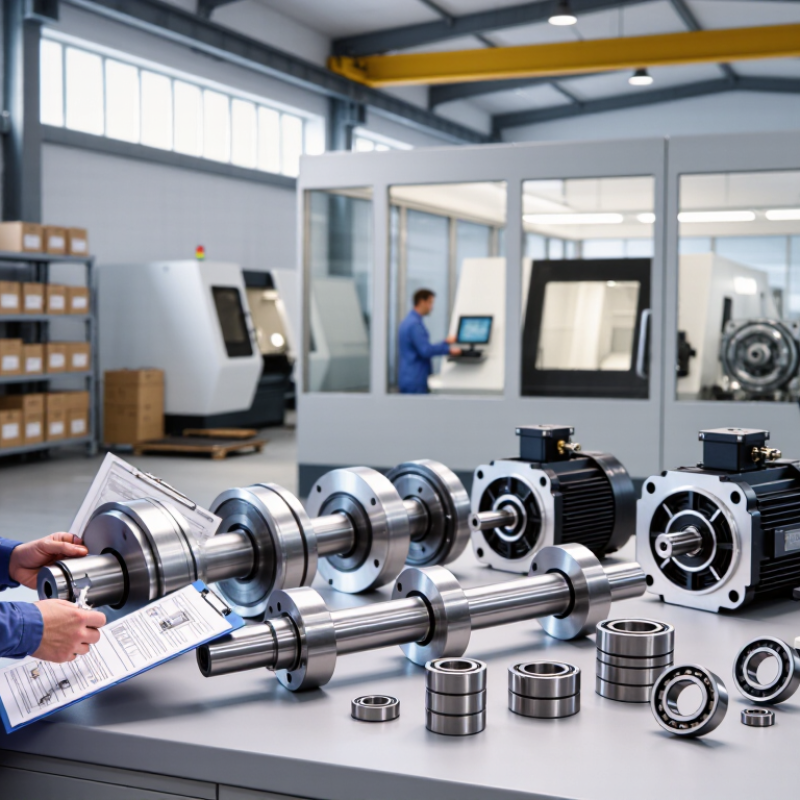
How to Find Top Motor Spare Parts Suppliers in China?

Define Your Motor Spare Parts Requirements

Before contacting motor spare parts suppliers, write down the motor’s type, frame size, rated voltage, power, speed, and mounting arrangement. Note the exact part you need, such as a fan, terminal block, bearing, or shaft. Add readable nameplate details, part numbers, and measurements, including shaft diameter and keyway dimensions. A photo helps, but it is not a specification. Small differences matter. A bearing with matching dimensions may still have an unsuitable clearance or load rating. For a damaged part, record where it failed and what the surrounding components look like.

Describe how and where the motor operates. Include ambient temperature, dust or moisture exposure, operating hours, and whether the motor starts frequently or runs continuously. State your required quantity, delivery schedule, and any acceptable alternatives. If compatibility is uncertain, ask the supplier to confirm fit against the motor’s documentation before ordering. Request relevant material or inspection records, and clarify how parts are identified and packed. This level of detail can feel fussy, especially for a familiar repair. Yet one missing dimension can turn a low-cost purchase into wasted downtime. Your requirements may still need revision after inspection; mark uncertain measurements rather than guessing.


How to Find Top Motor Spare Parts Suppliers in China? — Define Your Motor Spare Parts Requirements

Before contacting suppliers, specify the motor’s required ingress-protection level. Under IEC 60529, the first IP code digit covers access to hazardous parts and solid-object ingress (0–6); the second covers water ingress (0–9).

The bars show the available code-digit ranges, not directly comparable protection scores. Confirm the required IP rating for the installation environment, then include it alongside the motor model, part number, electrical ratings, dimensions, quantity, and documentation requirements in your RFQ.

Identify Supplier Types and Manufacturing Hubs in China

Choosing a motor spare parts supplier in China starts with understanding what each supplier actually makes. Specialized factories focus on items such as shafts, bearings, housings, or electrical components. They may offer deeper process knowledge, but usually cover fewer product categories. Integrated manufacturers can coordinate several parts, while trading companies may combine products from different factories. Ask who controls production and inspection.

Regional clusters can help narrow your search. Zhejiang, including areas around Ningbo and Taizhou, has a broad base of motor and component manufacturers. Jiangsu, with cities such as Changzhou and Wuxi, is known for electrical equipment and motor-related production. Guangdong has extensive manufacturing networks, including suppliers for compact motors and appliances. These are useful starting points, not guarantees of quality. A supplier’s location alone proves little.

Tips: Request a component list, material specifications, and recent inspection records. Ask for photos of the actual workshop, not only a polished showroom. Compare sample dimensions with your drawings, and check how defects are handled. One detail is easy to miss: confirm whether quoted parts are made in-house or sourced elsewhere. I have seen sourcing plans become less clear at this point. Keep the first order manageable.

Verify Supplier Credentials, Experience, and Production Capacity

A supplier’s website can look convincing, but documents deserve closer attention. Request its business registration details, facility address, and relevant quality certificates. Check that the company name matches across records. Ask who issued each certificate and whether it remains valid. Small mismatches matter.

Experience should be specific, not just a number of years. Ask which motor spare parts the factory regularly makes, what materials it processes, and how it controls dimensions. Request sample inspection records or anonymized production documents. A useful reference can confirm delivery consistency and communication, not just product quality. Verify it independently when possible. Keep the questions practical.

Production capacity needs evidence on the factory floor. Ask for monthly output by part type, current machine utilization, staffing on key shifts, and typical lead times. If possible, compare these figures with equipment lists and recent production schedules. A busy workshop is not automatically a capable one. A neat factory tour can still hide bottlenecks, and one sample may not represent a full batch. That is easy to overlook. Start with a trial order and agree on measurable inspection criteria before scaling up. Some suppliers may resist sharing detailed records; note the gap and ask what they can verify instead.

Assess Parts Quality, Testing, and Compliance

Quality checks should begin with the exact part specification, not a supplier’s broad catalog description. Confirm material grade, dimensions, tolerances, heat treatment, and intended application against your drawing. Ask for a sample and inspect machined surfaces, threads, seals, and connector fit under good light. Small details matter. For wear-sensitive parts, request test records linked to the sample’s batch number. Where practical, compare the results with an independent measurement; paperwork can look tidy while a part falls short.

Testing should match the component’s likely failure risks. Ask which methods were used, what acceptance limits apply, and whether results cover production lots or only prototypes. Load, leakage, vibration, and corrosion checks may be relevant, but not every test suits every part. Be specific. Review traceability, inspection frequency, calibration dates, and corrective-action records—not just a certificate on a wall. Check that materials and labeling meet your destination market’s requirements, and verify current rules with a qualified compliance professional. A factory audit can help, though access and records need clear agreement. Test conditions may still differ from real service.

Compare Quotations and Select a Reliable Supplier

When comparing motor spare parts quotations, make sure each supplier is pricing the same specification. Check the part number, material, dimensions, tolerance, surface treatment, and quantity. A low unit price can hide extra tooling, packaging, or inspection charges. Ask for these costs in writing. Small details matter.

Use a simple comparison sheet. Record unit price, minimum order quantity, sample cost, production lead time, shipping terms, and payment schedule. Ask whether the quoted lead time starts after deposit, drawing approval, or sample confirmation. These starting points differ. That can make two similar offers less comparable than they appear. A spreadsheet helps, but it cannot explain every hesitation in a supplier’s reply.

Reliability needs evidence, not just a polished quotation. Request a sample and inspect critical measurements with suitable tools, such as calipers or a micrometer. Ask for material records, inspection results, and a clear process for handling defects. Notice how quickly the supplier answers technical questions, and whether answers remain consistent. Short replies are not always a warning sign, but repeated vagueness deserves attention. I would not choose on price alone. That rule is easy to say and harder to follow when budgets are tight.

How to Find Top Motor Spare Parts Suppliers in China? - Compare Quotations and Select a Reliable Supplier

Supplier comparison template. Enter details from current written quotations and verify documents directly with each supplier. Prices, lead times, and terms vary by part, specification, order quantity, and shipment destination.

Comparison criterion Supplier A Supplier B Supplier C How to verify / compare
Part identification Part number, drawing, or sample reference: ______ Part number, drawing, or sample reference: ______ Part number, drawing, or sample reference: ______ Ensure every quotation covers the same part and revision.
Specification and material Material, dimensions, tolerances: ______ Material, dimensions, tolerances: ______ Material, dimensions, tolerances: ______ Compare against your drawing, sample, and required technical specifications.
Quoted unit price and currency Amount / currency: ______ Amount / currency: ______ Amount / currency: ______ Check the quoted quantity, currency, price basis, and quotation validity.
Minimum order quantity (MOQ) Units: ______ Units: ______ Units: ______ Confirm whether the MOQ applies per part number, order, or production run.
Tooling, setup, and sample charges Charges and refund terms: ______ Charges and refund terms: ______ Charges and refund terms: ______ Separate one-time charges from recurring unit costs; clarify tooling ownership.
Production lead time Calendar days and start point: ______ Calendar days and start point: ______ Calendar days and start point: ______ Confirm when the lead time begins and whether it includes inspection and packing.
Shipping term and destination Incoterm, named place, version: ______ Incoterm, named place, version: ______ Incoterm, named place, version: ______ Compare quotations on the same Incoterms® 2020 basis and named location.
Payment terms Deposit, balance, payment method: ______ Deposit, balance, payment method: ______ Deposit, balance, payment method: ______ Record payment milestones and confirm the beneficiary matches the contracting entity.
Quality control and inspection Inspection plan / records offered: ______ Inspection plan / records offered: ______ Inspection plan / records offered: ______ Agree acceptance criteria, inspection stages, and handling of nonconforming parts.
Traceability and documentation Batch records / certificates available: ______ Batch records / certificates available: ______ Batch records / certificates available: ______ Request documents relevant to the part and verify their scope and issuing organization.
Warranty and remedy Period, exclusions, remedy: ______ Period, exclusions, remedy: ______ Period, exclusions, remedy: ______ Get warranty coverage and claims process in writing before placing an order.
Supplier verification Legal entity and verification notes: ______ Legal entity and verification notes: ______ Legal entity and verification notes: ______ Check the registered entity, business scope, facility capability, and contract details.
Evaluation result Strengths / open issues: ______ Strengths / open issues: ______ Strengths / open issues: ______ Select based on specification fit, total landed cost, evidence, and manageable risk—not unit price alone.

Article Source:

Powder Coat Booths

For those larger-sized parts, or smaller quantity runs, we have 2 independent powder coat booths and ovens. The quality, durability and affordability of today’s powder coating finishes make this the process of choice for world-class companies.

Powder coating advantages over other forms of coating are many. Materials used in the Powder coating process can be metals and non-metals that come in a multitude of thicknesses, textures, colors, etc. Another of Powder coating’s biggest advantages over conventional coatings is its ability to create finishes in many different textures. Powder Coating Booths allow us the ability to apply these advantages to large products.

Wet Paint Line

Tri-State Fabricators runs a full-service conveyor line for painting. Wet painting can provide protection or decoration to many different part styles. From start to finish, every project is easier to undergo random and point-based inspection by our skilled painting team.

Advantages to our Wet Paint Line are these lines start with product prep and ends with a thorough inspection of a high quality finished product. Our ability to complete large and small projects with a superior finish and doing so in a timely and economical fashion. This passes along the savings in production to our customers. When powder coating ins not an option, our Wet Paint Line gets the job done right the first time.

Wet Paint Booths

When the parts get big and heavy we roll-out our custom paint racks and oversize booth. By utilizing our partnerships with all the major paint brands, we can match virtually any color with wet paint.

The advantages of having access to a Wet Paint Booth are many. Large projects of many different shapes can be loaded into the booth. The Wet Paint Booth offers an environment that is much more controlled than a typical parts painting operation.

Not only are they used because of their controlled environment, but they’re are also advantageous when it comes to applying paint to parts that are needed in industries that require specialty coatings such as medical, aerospace, etc.

Military CARC

Our military forces have some very high standards when it comes to the finish of their vehicles and equipment. From the first pre-treatment step to final coat, it takes a great deal of knowledge and experience to protect the men and women of our armed forces. They deserve only the best, and Tri-State Fabricators provides it.

All of our processes are closely monitored by our staff and management teams. Both of which are highly trained in the processes of metal fabrication and finishing. Tri-State Fabricators’ goal is to always fully satisfy each and every customer, including the military. We will always put a 110% into what we do.

Glass-Bead Blasting

Abrasive media blasting is an excellent way to remove old paint, rust, and increase the paint/powder adhesion. Glass beads produce a much smoother and brighter finish than angular abrasives; leaving the part clean yet without any dimensional change. Chemically inert and environmentally friendly, we can recycle our beads approximately 30 times; making them a more preferred method of metal cleaning or surface finishing.

Advantages to Glass Bead Blasting are many. Glass bead blast media is used when a project is needing rough surfaces need to become smooth for applications of coatings such as paint. It is typically used to clean paint and rust from a product surface without deforming the surface it is being used on. Overall, compared to many other blasting media, Glass Bead Blasting is a very economical choice and those savings are always passed on to our customers.

Part Washing

Tri-State Fabricators utilize a zinc phosphate wash to clean and etch the material to ensure the best paint adhesion possible. The unique design of our 3-stage wash system does the work like a 5-stage. From Cleaning and rinsing to conversion coating and post-treatment, Our Part Washing process is a complete service and works throughout the fabrication service and the finishing service.

Along with the previously mentioned benefits, Curing is a vital chemical reaction that leaves the product finish hard and relatively safe from mild abrasion and aggressive corrosion. This process can be done in more than one way; ambient air-dry or in curing ovens at temps that exceed 240°.

Burn-Off Oven

From fixing paint mistakes (someone else’s of course) to simply cleaning our paint line hooks, our burn-off oven is put to good use. After a quick burn-off, a little clean up, and a fresh coat of paint, your parts will look better than new.

Why does our Burn-Off Oven work so well? Because super heating the air around parts turns the materials into ashes. From paint and powder coatings to rubber and machining oils, high temps do the job without degrading the integrity of the part.

Masking

Masking is a vital part of producing high quality products. We have die-cut masking patterns to protect machined surfaces as well as a wide range of plugs and caps to protect threaded holes and bolts. We provide permanent and temporary masking.

Masking allows the selected sections of a product to be protected from a fabrication or finishing service. This can be with both chemicals when etching and tapes, paints when only finishing just a section of the product. Masking is great in aiding the customization process of a project.

Screen Printing

Screen printing is a photographic process that transfers artwork onto a porous nylon screen which allows colored ink to flow through the screen and be deposited on an aluminum or plastic component. We can generally have just about any design created onto a screen for your parts.

Some of the advantages of Screen Printing are, brand recognition for your business displaying on your products, assembly instructions, product warnings/hazards, etc. Tri-State Fabricators produces Screen Printing of the highest quality so you know it’s durable.

Metal Finishing

Metal Finishing is the art of treating the exterior portion of product, often metal but can also be made of other materials, so that the surface is clean and free of any debris. Then the process of applying coats or either paint of powder coat takes place. This coating process improves the quality of the product in both appearance and resistance to wear and corrosion.

Tri-State Fabricators, Inc., understands that a project typically isn’t complete until a high-quality finish has been added to your product. This is why our painting and powder coating teams continuously inspect the products throughout the Metal Finishing process.
