What Is a Fire Pump Hose and How Does It Work?

A Fire Pump Hose is more than a flexible tube attached to emergency equipment. It is a critical link between a fire pump, a water source, and the people controlling the response. When pressure rises, the hose must carry large volumes of water without twisting, bursting, or losing its connection. The details matter.

Fire protection engineer Russ Sanders has often emphasized a practical principle: “A fire pump is only as reliable as the system supporting it.” That observation applies directly to every Fire Pump Hose. The pump may generate strong pressure, but the hose, couplings, gaskets, and valves must work together. A damaged lining can restrict flow. A loose coupling can create a dangerous spray. Poor storage can leave permanent bends in the hose.

Inside this guide, we will examine what a Fire Pump Hose is, how it transfers pressurized water, and which components influence its performance. We will also consider hose diameter, working pressure, temperature limits, connection methods, inspection routines, and common installation mistakes. These details may seem basic. They are not.

A practical inspection might reveal cracked rubber, flattened sections, or corrosion around a coupling. Any of these warning signs deserves attention before an emergency occurs. Still, no hose system is perfectly protected from aging, misuse, or human error. That is worth admitting. Reliable fire protection depends on regular testing, competent installation, clear maintenance records, and decisions based on recognized safety standards rather than appearance alone.
What Is a Fire Pump Hose and How Does It Work?

What a Fire Pump Hose Is and Its Role in Firefighting

What Is a Fire Pump Hose and How Does It Work?

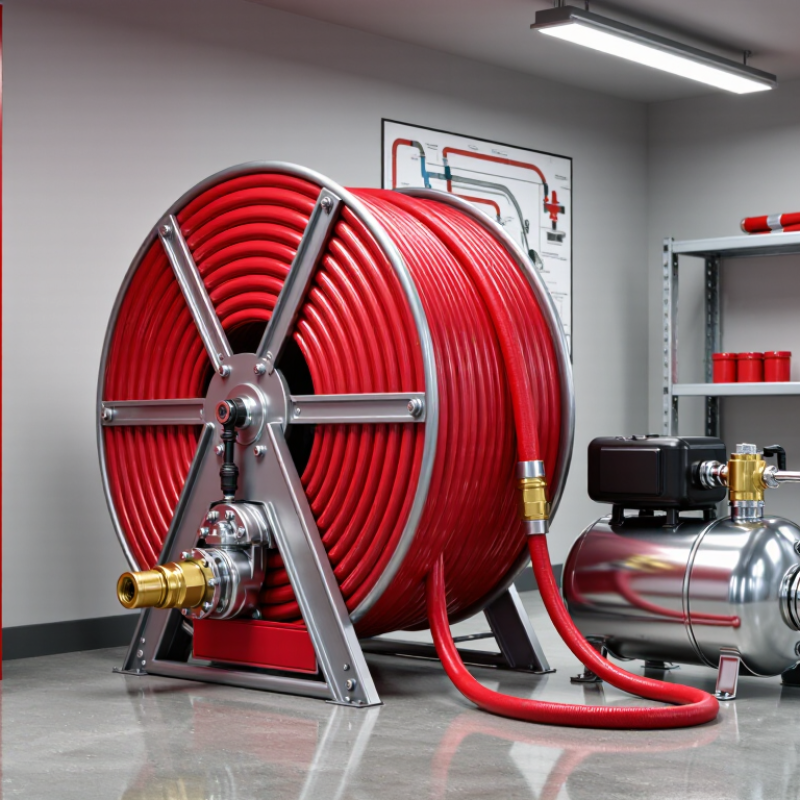
A fire pump hose carries pressurized water from a pump to attack lines, standpipes, or other firefighting equipment. It is not simply a larger garden hose. Its jacket, lining, couplings, and pressure rating must match the pump system. Suction hose is built differently because it must resist collapse while drawing water from a tank, hydrant, or open source. Discharge hose carries water away from the pump under pressure.

The operating principle is direct. The pump raises water pressure, and the hose transfers that flow to the fireground. Couplings must lock securely, while the lining should limit friction and preserve usable flow. NFPA 1961, Standard on Fire Hose, addresses hose construction, testing, and performance. That matters because NFPA estimated 1,388,500 fires in the United States during 2023, causing 3,670 civilian deaths and about 22.1 billion dollars in direct property damage. The figures come from NFPA’s Fire Loss in the United States During 2023 report.

Small defects matter. A kink can restrict flow. A damaged coupling can leak under pressure. Field crews commonly inspect hoses for cuts, abrasion, heat damage, and weak gaskets before deployment. Testing schedules still vary by department, which deserves honest review. A hose may look serviceable while hiding internal wear. USFA guidance also emphasizes inspection, maintenance, and documented testing as part of reliable fireground equipment management.

Key Components and Materials of a Fire Pump Hose

A fire pump hose transfers pressurized water from the pump to a hydrant line, standpipe, or firefighting appliance. Its construction matters more than appearance. The National Fire Protection Association reported 1,504,500 fires in the United States during 2022, showing why dependable water delivery remains critical (NFPA, Fire Loss in the United States During 2022).

The inner tube carries water and must resist heat, pressure, and chemical degradation. Common materials include EPDM rubber, nitrile rubber, and thermoplastic compounds. EPDM performs well with water and outdoor exposure. Nitrile can offer stronger resistance to oils and fuels. Thermoplastic liners may reduce weight, but flexibility can change in cold conditions. Material choice is never universal.

The reinforcement layer usually contains woven polyester, nylon, or similar high-strength fibers. It controls expansion under pressure. The outer cover protects against abrasion, sunlight, moisture, and rough concrete. Couplings connect the hose to the pump and discharge equipment. They typically use corrosion-resistant metal, with gaskets that maintain a watertight seal. Small defects matter. A damaged gasket can waste pressure quickly.

NFPA 1961 establishes performance and testing requirements for fire hose, while pump installations must also follow NFPA 20 requirements. Actual working pressure depends on the complete assembly, not the hose alone. Field inspections should check cover cuts, coupling deformation, stiffness, and stored moisture. A hose may look serviceable while hiding internal damage. Inspection records are sometimes incomplete, and that weakness deserves attention. Tests must follow the applicable standard and manufacturer instructions.

How Water Moves Through the Hose During Pumping

What Is a Fire Pump Hose and How Does It Work?

A fire pump hose carries pressurized water from the pump toward a nozzle or sprinkler system. Water enters through the suction side, where the pump creates a lower-pressure zone. The impeller then accelerates the water and raises its pressure. At the discharge outlet, the hose receives a fast-moving stream.

The movement is not perfectly smooth. Hose walls resist the flow, and every coupling, bend, and valve adds friction loss. A longer hose usually needs more pump pressure to maintain the same discharge. The Hydraulic Institute identifies friction, elevation, and flow demand as core factors in pump system calculations. A 90-degree bend can seem minor, but several bends may noticeably reduce pressure at the nozzle.

NFPA 20 requires a centrifugal fire pump to deliver 150% of its rated flow at no less than 65% of rated pressure.

For example, a pump rated at 1,000 gallons per minute should provide about 1,500 gallons per minute while maintaining at least 65% of its rated pressure. This benchmark helps technicians evaluate real performance.

However, field conditions are less tidy than test curves. A partially closed valve, trapped air, or a kinked hose can change the result. Pressure may look acceptable near the pump but fall sharply at the nozzle. That difference deserves careful checking.

How Firefighters Deploy and Control the Hose

A fire pump hose carries pressurized water from the pump to the nozzle. Its work is mechanical, but deployment is tactical. Firefighters select hose diameter, length, and nozzle type according to the building, fire load, and available water supply. NFPA’s Fire Loss in the United States During 2022 reported about 1.5 million fires nationwide. That scale makes disciplined hose handling essential, not optional.

The pump operator establishes pressure while the nozzle firefighter controls the stream. Teams stretch the hose along clear paths, remove sharp bends, and keep couplings away from door edges. A charged hose can become heavy and difficult to move. Nozzle reaction also pushes backward, so firefighters brace their stance and communicate before changing flow. Short commands matter. Water on. Shut down. Advance.

Pressure must match the hose, nozzle, elevation, and required flow. Excessive pressure can increase nozzle reaction and reduce control. Insufficient pressure can weaken reach and cooling performance. NFPA 1960 addresses fire hose, couplings, and nozzles through performance and testing requirements. Field crews still inspect hoses for cuts, abrasion, damaged couplings, and poor drainage after each use. A clean-looking hose may hide internal damage. That detail is easy to miss. Reports and standards guide decisions, but real buildings remain unpredictable, so firefighters continually reassess smoke, heat, water movement, and team stability.

What Is a Fire Pump Hose and How Does It Work?

How firefighters deploy and control hose lines

Firefighters select hose diameter according to the job. Smaller attack lines are easier to handle near the fire, while larger supply hoses move substantially more water from a hydrant or fire pump to the operation. Actual flow depends on hose length, nozzle size, elevation, friction loss, and pump pressure.


Inspection, Maintenance, and Safe Use of Fire Pump Hoses

What Is a Fire Pump Hose and How Does It Work?

Inspection, Maintenance, and Safe Use of Fire Pump Hoses

A fire pump hose carries pressurized water from a pump to a nozzle, hydrant, or temporary supply line. The pump creates flow, while the hose contains and directs that pressure. During use, operators should check the jacket, couplings, gasket, and nozzle connection. Look for cuts, soft spots, exposed fibers, and crushed sections. Small defects can become dangerous under pressure. Keep the hose straight where possible. Sharp bends may restrict flow or damage the lining.

Inspection must follow the manufacturer’s instructions and applicable fire-service standards. NFPA 1962 requires fire hose to receive regular visual inspection, cleaning, drying, and service testing. After use, flush out grit and chemicals, then dry the hose completely before storage. Wet hose stored in darkness can develop mildew and hidden weakening. That detail is easy to miss. Service testing should use controlled pressure, trained personnel, and a safe exclusion area.

The need for readiness is measurable. NFPA’s U.S. Fire Loss 2023 report estimated 1,388,500 fires and 3,670 civilian fire deaths in the United States. Reliable equipment matters when seconds disappear. During deployment, operators should secure the hose, communicate before opening the valve, and avoid standing over couplings. Pressure changes can move a hose violently. I would also record inspection dates, defects, repairs, and test results. Records sometimes look repetitive, but missing one entry can hide a pattern. Never use hose that fails inspection, even if the damage appears minor.

Powder Coat Booths

For those larger-sized parts, or smaller quantity runs, we have 2 independent powder coat booths and ovens. The quality, durability and affordability of today’s powder coating finishes make this the process of choice for world-class companies.

Powder coating advantages over other forms of coating are many. Materials used in the Powder coating process can be metals and non-metals that come in a multitude of thicknesses, textures, colors, etc. Another of Powder coating’s biggest advantages over conventional coatings is its ability to create finishes in many different textures. Powder Coating Booths allow us the ability to apply these advantages to large products.

Wet Paint Line

Tri-State Fabricators runs a full-service conveyor line for painting. Wet painting can provide protection or decoration to many different part styles. From start to finish, every project is easier to undergo random and point-based inspection by our skilled painting team.

Advantages to our Wet Paint Line are these lines start with product prep and ends with a thorough inspection of a high quality finished product. Our ability to complete large and small projects with a superior finish and doing so in a timely and economical fashion. This passes along the savings in production to our customers. When powder coating ins not an option, our Wet Paint Line gets the job done right the first time.

Wet Paint Booths

When the parts get big and heavy we roll-out our custom paint racks and oversize booth. By utilizing our partnerships with all the major paint brands, we can match virtually any color with wet paint.

The advantages of having access to a Wet Paint Booth are many. Large projects of many different shapes can be loaded into the booth. The Wet Paint Booth offers an environment that is much more controlled than a typical parts painting operation.

Not only are they used because of their controlled environment, but they’re are also advantageous when it comes to applying paint to parts that are needed in industries that require specialty coatings such as medical, aerospace, etc.

Military CARC

Our military forces have some very high standards when it comes to the finish of their vehicles and equipment. From the first pre-treatment step to final coat, it takes a great deal of knowledge and experience to protect the men and women of our armed forces. They deserve only the best, and Tri-State Fabricators provides it.

All of our processes are closely monitored by our staff and management teams. Both of which are highly trained in the processes of metal fabrication and finishing. Tri-State Fabricators’ goal is to always fully satisfy each and every customer, including the military. We will always put a 110% into what we do.

Glass-Bead Blasting

Abrasive media blasting is an excellent way to remove old paint, rust, and increase the paint/powder adhesion. Glass beads produce a much smoother and brighter finish than angular abrasives; leaving the part clean yet without any dimensional change. Chemically inert and environmentally friendly, we can recycle our beads approximately 30 times; making them a more preferred method of metal cleaning or surface finishing.

Advantages to Glass Bead Blasting are many. Glass bead blast media is used when a project is needing rough surfaces need to become smooth for applications of coatings such as paint. It is typically used to clean paint and rust from a product surface without deforming the surface it is being used on. Overall, compared to many other blasting media, Glass Bead Blasting is a very economical choice and those savings are always passed on to our customers.

Part Washing

Tri-State Fabricators utilize a zinc phosphate wash to clean and etch the material to ensure the best paint adhesion possible. The unique design of our 3-stage wash system does the work like a 5-stage. From Cleaning and rinsing to conversion coating and post-treatment, Our Part Washing process is a complete service and works throughout the fabrication service and the finishing service.

Along with the previously mentioned benefits, Curing is a vital chemical reaction that leaves the product finish hard and relatively safe from mild abrasion and aggressive corrosion. This process can be done in more than one way; ambient air-dry or in curing ovens at temps that exceed 240°.

Burn-Off Oven

From fixing paint mistakes (someone else’s of course) to simply cleaning our paint line hooks, our burn-off oven is put to good use. After a quick burn-off, a little clean up, and a fresh coat of paint, your parts will look better than new.

Why does our Burn-Off Oven work so well? Because super heating the air around parts turns the materials into ashes. From paint and powder coatings to rubber and machining oils, high temps do the job without degrading the integrity of the part.

Masking

Masking is a vital part of producing high quality products. We have die-cut masking patterns to protect machined surfaces as well as a wide range of plugs and caps to protect threaded holes and bolts. We provide permanent and temporary masking.

Masking allows the selected sections of a product to be protected from a fabrication or finishing service. This can be with both chemicals when etching and tapes, paints when only finishing just a section of the product. Masking is great in aiding the customization process of a project.

Screen Printing

Screen printing is a photographic process that transfers artwork onto a porous nylon screen which allows colored ink to flow through the screen and be deposited on an aluminum or plastic component. We can generally have just about any design created onto a screen for your parts.

Some of the advantages of Screen Printing are, brand recognition for your business displaying on your products, assembly instructions, product warnings/hazards, etc. Tri-State Fabricators produces Screen Printing of the highest quality so you know it’s durable.

Metal Finishing

Metal Finishing is the art of treating the exterior portion of product, often metal but can also be made of other materials, so that the surface is clean and free of any debris. Then the process of applying coats or either paint of powder coat takes place. This coating process improves the quality of the product in both appearance and resistance to wear and corrosion.

Tri-State Fabricators, Inc., understands that a project typically isn’t complete until a high-quality finish has been added to your product. This is why our painting and powder coating teams continuously inspect the products throughout the Metal Finishing process.