


Flat Lock looks simple on a sample table. In production, it can reveal tension errors, skipped stitches, seam grin, and uncomfortable bulk. Global buyers must inspect more than appearance. They need evidence from fabric behavior, machine settings, operator skill, and quality records.
Textile Exchange’s 2024 Materials Market Report estimates that global fiber production reached 124 million tonnes in 2023. That scale increases pressure on suppliers to control waste, consistency, and traceability. McKinsey’s State of Fashion reporting also highlights continuing supply-chain volatility, with buyers demanding greater resilience and faster decisions. These conditions make Flat Lock specifications commercially important. A seam that looks clean under showroom lighting may fail after washing, stretching, or repeated abrasion. The buyer’s hands often notice problems before a laboratory report does.
Apparel manufacturing consultant David Birnbaum offers a practical warning: “A seam should be judged after movement, not before it.” That principle deserves attention. Ask suppliers for stitch samples, stretch tests, wash results, and machine details. Check the thread path. Feel the seam against skin. Compare the first piece with the hundredth piece. Small differences matter. Sometimes, buyers trust a polished sample too quickly. That is a weakness worth admitting. This guide presents ten Flat Lock tips for evaluating suppliers, negotiating specifications, and reducing avoidable quality surprises across international orders. It will not replace technical testing. It can help buyers ask sharper questions before production begins.
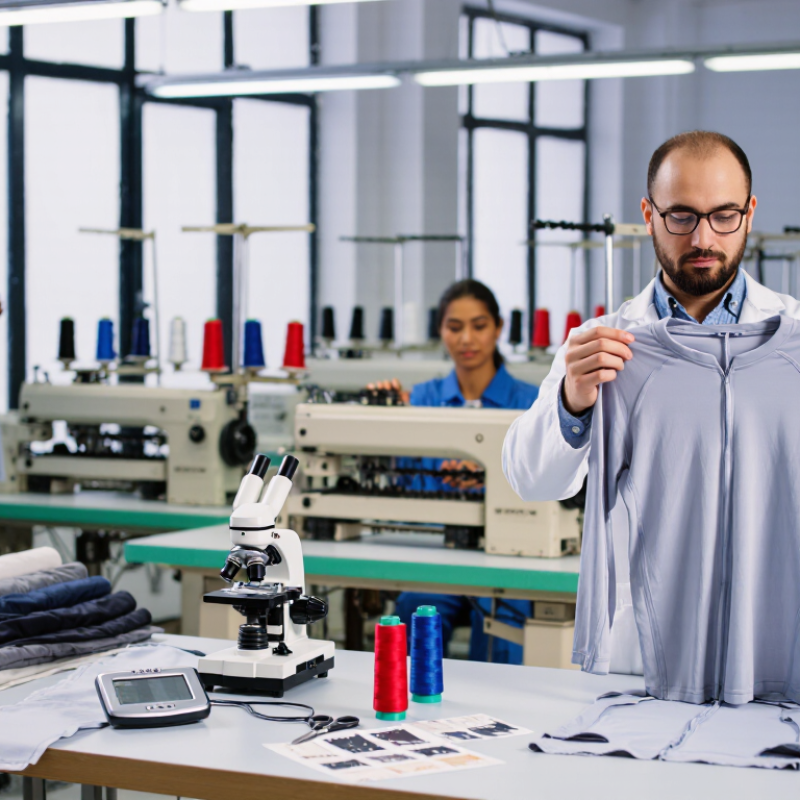
What Flat Lock Stitching Is and Where It Is Used
Flat lock stitching joins two fabric panels with a nearly flat seam. The fabric edges meet or slightly overlap. Needles and loopers form a strong, flexible stitch with minimal bulk. Unlike a raised overlock seam, flat lock construction feels smoother against the skin. It can also create a clean decorative line on the outside.
It is widely used in activewear, underwear, base layers, swimwear, and lightweight children’s clothing. It works well where movement and comfort matter. A runner may notice the difference around the shoulder or inner thigh. A buyer should check stitch width, thread tension, seam stretch, and fabric recovery. Small errors become obvious after repeated washing. Test real garment samples, not only fabric swatches.
Ten practical checks help reduce purchasing risks: confirm the machine setup, inspect skipped stitches, measure seam allowance, test stretch in both directions, and examine thread color under daylight. Check abrasion resistance and shrinkage after washing. Ask for tolerance ranges. Review production samples before bulk approval. Keep the approved sample accessible during inspection. Do not assume every flat seam is equally comfortable. Some seams feel soft at first but become rough after wear. That detail is easy to miss. A technically strong seam may still suit the wrong fabric, so buyers should assess hand feel, recovery, and end use together.
10 Flat Lock Tips Every Global Buyer Should Know
How to Match Flat Lock Machines with Your Production Needs
Choosing a flat lock machine starts with the product, not the machine catalog. Map each seam first: waistband, armhole, hem, or decorative panel. For lightweight jersey, a two-needle, four-thread configuration can provide flexible, clean seams. Heavier fleece may need stronger feed control and wider thread coverage. Stitch classes 605 and 607, referenced under ISO 4915, should be checked against your technical specifications.
Material planning matters more than many buyers expect. Textile Exchange’s Materials Market Report 2024 estimates global fiber production reached 124 million tonnes in 2023. It projects about 160 million tonnes by 2030. More volume does not mean identical sewing behavior. Recycled polyester, cotton, and elastane blends can react differently under heat, tension, and washing. Test the actual fabric lot. Always.
Production speed must match operator skill and quality checks. Measure pieces per minute during a full shift, not during a showroom trial. Check skipped stitches, seam puckering, thread breaks, and needle heating. A machine with automatic thread trimming may reduce handling time, but it cannot fix poor fabric preparation. I still test too late sometimes. That mistake is expensive.
Ask suppliers for sample seams at your target speed, thread size, needle system, and stitch density. Record power requirements, spare-part access, training time, and maintenance intervals. A wider gauge is not automatically better. The correct choice leaves stable seams, manageable changeovers, and fewer rejected garments.
Match the machine configuration to the seam purpose: fewer needles suit lighter decorative or narrow seams, while three- and four-needle configurations provide broader coverage for high-stretch sportswear, underwear, and cover hems. Thread counts and needle layouts shown are common industrial configurations; confirm the final choice with fabric, stitch density, seam width, and production-speed trials.
10 Flat Lock Tips Every Global Buyer Should Know
Flatlock performance starts with stitch selection, not machine speed. For lightweight sportswear, a two-needle, three-thread configuration can create a flatter seam with lower bulk. Heavier knits may need a wider multi-thread construction for stronger coverage. Check the stitch class against ISO 4915 before approving samples. Mislabeling happens, even in experienced factories.
Thread choice must match fabric recovery. Textured polyester thread usually offers useful strength and abrasion resistance, while softer core-spun options can reduce skin irritation. Do not select by ticket size alone. Compare elongation, seam slippage, and wash performance. A seam that feels smooth on the table may twist after laundering. Testing should include repeated stretch cycles and at least three wash conditions. The American Association of Textile Chemists and Colorists provides standardized methods for colorfastness and dimensional change.
Tip: Test the finished seam, not only the fabric.
Textile Exchange’s Materials Market Report 2024 estimated global fiber production at 124 million tonnes in 2023, with polyester representing about 57%. This scale makes polyester-rich fabrics common, but not automatically suitable. Recycled fibers can vary in surface friction and strength, so adjust needle size, thread tension, and differential feed. Interlock, elastane jersey, and brushed fleece each respond differently. I once trusted a successful first sample too quickly; the seam later showed rippling near the hip curve. That mistake was avoidable. Use fabric-specific trials, record settings, and inspect ten garments from different production batches.
| No. | Flat-Lock Tip | Recommended Stitch Type | Thread Selection | Suitable Fabrics | Why It Works | Buyer Quality Check |
|---|---|---|---|---|---|---|
| 1 | Match the stitch to the stretch level | Two- or three-needle flat seam with a flexible looper configuration | Textured polyester loopers; fine spun polyester needle threads | Jersey, interlock, rib knit, elastane blends | Allows the seam to extend with the garment instead of restricting movement. | Stretch the finished seam in both directions. It should recover without popped stitches or distortion. |
| 2 | Use a true flat seam for skin-contact areas | Three-needle flatlock or cover-style flat seam with the seam allowance opened or covered | Soft-textured polyester or low-friction polyester; avoid abrasive, oversized thread | Base layers, underwear, sportswear, babywear | Creates a low-profile seam that reduces rubbing and pressure points. | Check the inside surface by hand and against the skin. No raised ridge, skipped stitch, or loose thread should be present. |
| 3 | Choose thread size according to fabric weight | Flatlock with balanced needle and looper tension | Fine apparel thread for lightweight fabric; medium-strength polyester for heavier knitwear | Light jersey through medium-weight fleece and performance knits | A proportionate thread prevents bulky seams, needle damage, and unnecessary stiffness. | Review a sewn sample for seam bulk, needle holes, thread breakage, and visible tension imbalance. |
| 4 | Control differential feed on stretch knits | Flatlock with adjustable differential feed and presser-foot pressure | Elastic polyester thread system; use a consistent thread package across the order | Lightweight jersey, mesh, modal blends, rayon blends | Reduces waviness, stretching, and seam puckering during sewing. | Inspect long seam panels under normal lighting. The seam should lie flat without ripples along the fabric edge. |
| 5 | Select needles for the fiber and construction | Flatlock using ball-point needles for knitted fabrics | Polyester thread with a size compatible with the needle and fabric thickness | Knits, brushed fleece, technical stretch fabrics | A suitable point helps pass between knit loops and lowers the risk of cuts or runs. | Hold the fabric up to light and inspect for needle cuts, broken yarns, holes, or laddering after sewing. |
| 6 | Increase seam coverage for high-stress zones | Three-needle flatlock or reinforced flat seam at shoulders, armholes, and crotches | High-tenacity polyester or durable core-spun polyester, selected after testing | Compression knit, swimwear fabric, fleece, heavy athletic jersey | Additional stitch coverage distributes load and improves seam durability. | Perform repeated extension and recovery tests at stress points; check for thread fraying and seam opening. |
| 7 | Use textured thread where softness and coverage matter | Flatlock with textured looper thread and standard sewing thread in the needles | Air-textured polyester for loopers; avoid excessive bulk that can cause thread nesting | Light and medium knits, mesh, breathable sports fabrics | Textured loopers provide coverage and a softer feel while using less tension on the fabric surface. | Check underside coverage, softness, lint buildup, and consistency after laundering. |
| 8 | Adjust stitch density for fabric stability | Flatlock with a tested stitch density commonly starting around 10–14 stitches per inch | Use the same thread size during density trials to isolate machine and fabric effects | Stable interlock, rib, jersey, fleece, and performance knits | Balanced density supports strength without creating a rigid or perforated seam. | Confirm the approved stitch-density range on the production sample and inspect for tunneling or fabric perforation. |
| 9 | Match seam finish to fabric recovery | Flexible two-needle or three-needle flatlock with controlled thread tension | Polyester with adequate elongation; avoid brittle threads for high-stretch garments | Elastane blends, compression fabric, swimwear, cycling apparel | A flexible seam preserves fit and appearance after repeated stretching and washing. | Measure seam recovery after extension and after laundering. Compare the result with the approved sample. |
| 10 | Approve fabric, thread, and machine settings together | Production-specific flatlock setup documented with stitch type, density, tension, and feed settings | Record fiber content, thread construction, color, size, and lot information | Any export garment requiring repeatable quality across multiple production lots | A complete sewing specification reduces variation between operators, machines, and shipment batches. | Require a signed reference sample, seam specification, wash test, stretch test, and final random inspection. |
Practical starting ranges should be validated with the actual fabric, thread, machine, and garment construction before bulk production.
Global buyers often compare flat lock suppliers by unit price, but that number rarely tells the full story. A reliable comparison begins with the machine’s stitch consistency, seam strength, production speed, and suitability for the target fabric. Ask each supplier for identical samples, not selected showroom pieces. Test stretch recovery, thread tension, skipped stitches, and seam appearance after washing.
Tip: Request clear quality records. Check inspection methods, defect limits, calibration dates, and traceability for key components. Recognized quality systems can support consistency, but certification alone is not proof of good production. An on-site audit or independent inspection may reveal practical issues, such as poor storage, unstable staffing, or rushed final testing. Small details matter.
Total cost includes more than the quoted equipment price. Add shipping, customs charges, installation, operator training, spare parts, maintenance, energy use, and possible downtime. Compare warranty terms carefully, especially response time and replacement procedures. A cheaper supplier may become expensive when technical support is slow. I have seen buyers overlook training costs, then lose production time because operators adjusted thread tension incorrectly. That mistake is avoidable, but not always obvious during negotiations.
Tip: Use a simple cost sheet with identical assumptions for every supplier. Record lead time, payment terms, inspection fees, packaging, and expected service life. Leave room for uncertainty. Forecasts are useful, but real factory conditions can be less tidy.
10 Flat Lock Tips Every Global Buyer Should Know
Before ordering a flat lock machine, define the production task precisely. Confirm stitch type, needle system, gauge, differential feed, fabric range, motor rating, and required air pressure. Ask for a complete technical datasheet, not only a sales photograph. The World Bank’s 2023 Logistics Performance Index used 4,090 professional assessments across 139 countries. Its findings show that shipment reliability and border processes can vary widely. Therefore, request packing dimensions, gross weight, HS classification, country of origin, and realistic lead times before payment. One overlooked detail can delay customs clearance or inflate inland transport costs.
Import documents need careful checking. Match the invoice, packing list, serial numbers, and insurance terms. Confirm the agreed Incoterm, destination voltage, plug standard, and spare-parts availability. UNCTAD’s Review of Maritime Transport 2023 projected global maritime trade growth of 2.4% that year, but port disruption can still change delivery schedules. Build a buffer. I have seen buyers plan installation around an arrival date that was never contractually guaranteed. That assumption deserves review.
Installation is not a quick plug-in task. Prepare a level floor, reliable grounding, suitable lighting, compressed-air filtration, and accessible emergency controls. Test the machine with the actual fabric and thread combination. Record stitch quality, noise, vibration, and oil leakage. The International Labour Organization estimated 2.93 million work-related deaths globally in 2019. Safety checks are not decorative paperwork. Operator training should cover threading, needle changes, guarding, cleaning, and lockout procedures. Even experienced technicians can miss a loose guard when production pressure rises.


For those larger-sized parts, or smaller quantity runs, we have 2 independent powder coat booths and ovens. The quality, durability and affordability of today’s powder coating finishes make this the process of choice for world-class companies.
Powder coating advantages over other forms of coating are many. Materials used in the Powder coating process can be metals and non-metals that come in a multitude of thicknesses, textures, colors, etc. Another of Powder coating’s biggest advantages over conventional coatings is its ability to create finishes in many different textures. Powder Coating Booths allow us the ability to apply these advantages to large products.
Tri-State Fabricators runs a full-service conveyor line for painting. Wet painting can provide protection or decoration to many different part styles. From start to finish, every project is easier to undergo random and point-based inspection by our skilled painting team.
Advantages to our Wet Paint Line are these lines start with product prep and ends with a thorough inspection of a high quality finished product. Our ability to complete large and small projects with a superior finish and doing so in a timely and economical fashion. This passes along the savings in production to our customers. When powder coating ins not an option, our Wet Paint Line gets the job done right the first time.
When the parts get big and heavy we roll-out our custom paint racks and oversize booth. By utilizing our partnerships with all the major paint brands, we can match virtually any color with wet paint.
The advantages of having access to a Wet Paint Booth are many. Large projects of many different shapes can be loaded into the booth. The Wet Paint Booth offers an environment that is much more controlled than a typical parts painting operation.
Not only are they used because of their controlled environment, but they’re are also advantageous when it comes to applying paint to parts that are needed in industries that require specialty coatings such as medical, aerospace, etc.
Our military forces have some very high standards when it comes to the finish of their vehicles and equipment. From the first pre-treatment step to final coat, it takes a great deal of knowledge and experience to protect the men and women of our armed forces. They deserve only the best, and Tri-State Fabricators provides it.
All of our processes are closely monitored by our staff and management teams. Both of which are highly trained in the processes of metal fabrication and finishing. Tri-State Fabricators’ goal is to always fully satisfy each and every customer, including the military. We will always put a 110% into what we do.
Abrasive media blasting is an excellent way to remove old paint, rust, and increase the paint/powder adhesion. Glass beads produce a much smoother and brighter finish than angular abrasives; leaving the part clean yet without any dimensional change. Chemically inert and environmentally friendly, we can recycle our beads approximately 30 times; making them a more preferred method of metal cleaning or surface finishing.
Advantages to Glass Bead Blasting are many. Glass bead blast media is used when a project is needing rough surfaces need to become smooth for applications of coatings such as paint. It is typically used to clean paint and rust from a product surface without deforming the surface it is being used on. Overall, compared to many other blasting media, Glass Bead Blasting is a very economical choice and those savings are always passed on to our customers.
Tri-State Fabricators utilize a zinc phosphate wash to clean and etch the material to ensure the best paint adhesion possible. The unique design of our 3-stage wash system does the work like a 5-stage. From Cleaning and rinsing to conversion coating and post-treatment, Our Part Washing process is a complete service and works throughout the fabrication service and the finishing service.
Along with the previously mentioned benefits, Curing is a vital chemical reaction that leaves the product finish hard and relatively safe from mild abrasion and aggressive corrosion. This process can be done in more than one way; ambient air-dry or in curing ovens at temps that exceed 240°.
From fixing paint mistakes (someone else’s of course) to simply cleaning our paint line hooks, our burn-off oven is put to good use. After a quick burn-off, a little clean up, and a fresh coat of paint, your parts will look better than new.
Why does our Burn-Off Oven work so well? Because super heating the air around parts turns the materials into ashes. From paint and powder coatings to rubber and machining oils, high temps do the job without degrading the integrity of the part.
Masking is a vital part of producing high quality products. We have die-cut masking patterns to protect machined surfaces as well as a wide range of plugs and caps to protect threaded holes and bolts. We provide permanent and temporary masking.
Masking allows the selected sections of a product to be protected from a fabrication or finishing service. This can be with both chemicals when etching and tapes, paints when only finishing just a section of the product. Masking is great in aiding the customization process of a project.
Screen printing is a photographic process that transfers artwork onto a porous nylon screen which allows colored ink to flow through the screen and be deposited on an aluminum or plastic component. We can generally have just about any design created onto a screen for your parts.
Some of the advantages of Screen Printing are, brand recognition for your business displaying on your products, assembly instructions, product warnings/hazards, etc. Tri-State Fabricators produces Screen Printing of the highest quality so you know it’s durable.
Metal Finishing is the art of treating the exterior portion of product, often metal but can also be made of other materials, so that the surface is clean and free of any debris. Then the process of applying coats or either paint of powder coat takes place. This coating process improves the quality of the product in both appearance and resistance to wear and corrosion.
Tri-State Fabricators, Inc., understands that a project typically isn’t complete until a high-quality finish has been added to your product. This is why our painting and powder coating teams continuously inspect the products throughout the Metal Finishing process.

