

What Is Galvanized Carbon Steel Pipe and How Is It Used?

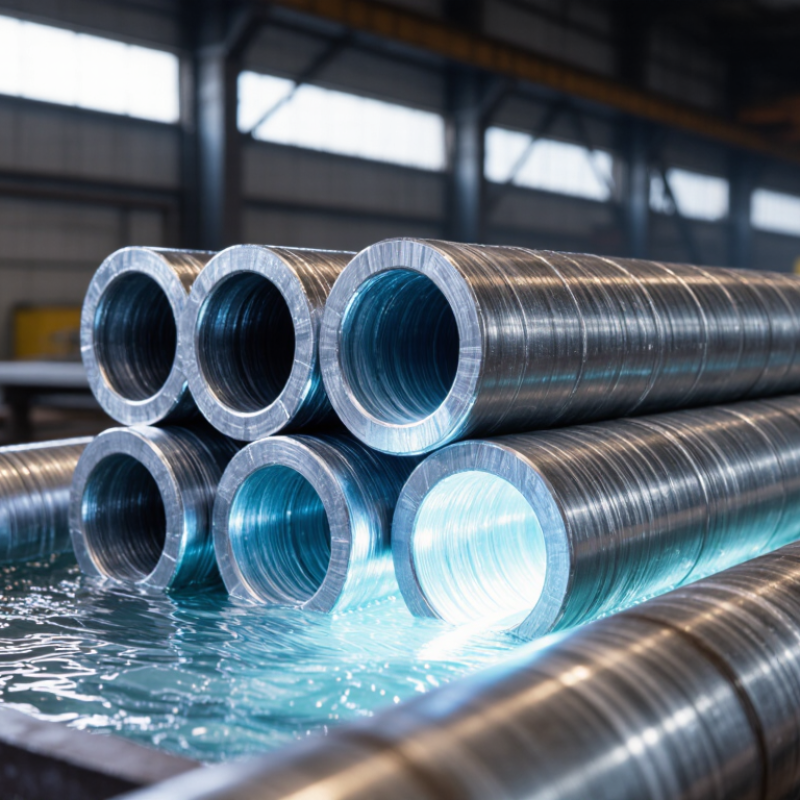
Galvanized Carbon Steel Pipe combines a strong carbon-steel core with a protective zinc coating. The coating is commonly applied through hot-dip galvanizing, where cleaned pipe enters a bath of molten zinc. A metallic bond forms across the surface. It looks simple. The protection is not.

The NACE IMPACT study estimated that global corrosion costs reached approximately US$2.5 trillion annually, equal to about 3.4% of global gross domestic product. World Steel Association data also recorded roughly 1.89 billion tonnes of crude steel production in 2023. These figures explain why corrosion control remains an engineering priority, not merely a finishing choice. Galvanized Carbon Steel Pipe is widely used for water distribution, structural supports, agricultural systems, fencing, and industrial service lines. Engineers still need to verify pressure ratings, fluid compatibility, temperature limits, and local installation requirements.

“Corrosion is the deterioration of a material, usually a metal, by reaction with its environment,” wrote corrosion authority Dr. Mars G. Fontana in Corrosion Engineering. His definition remains practical when assessing zinc-coated pipe in wet soil, outdoor racks, or humid mechanical rooms. The American Galvanizers Association reports that coating life depends heavily on zinc thickness and environmental exposure. That point is easy to overlook. A galvanized surface is not permanent armor. Cut edges, threaded joints, trapped moisture, and damaged coatings can reduce service life. ASTM A123 and ISO 1461 provide useful coating and inspection frameworks, but field judgment still matters. This guide examines what Galvanized Carbon Steel Pipe is, how galvanizing works, where the pipe performs well, and which limitations deserve closer attention.
What Is Galvanized Carbon Steel Pipe and How Is It Used?

Definition and Basic Composition of Galvanized Carbon Steel Pipe

Galvanized carbon steel pipe is a carbon steel tube protected by a zinc coating. Its steel core usually contains iron, carbon, manganese, and small amounts of silicon. Carbon supports strength and hardness, while the remaining chemistry affects weldability, toughness, and forming. The zinc is not mixed throughout the pipe. It forms a separate protective layer on the surface.

Manufacturers commonly apply zinc by hot-dip galvanizing, immersing cleaned pipe in molten zinc. This creates an outer zinc layer and iron-zinc alloy layers beneath it. Together, they slow moisture and oxygen from reaching the steel. Zinc also provides sacrificial protection. If a small scratch exposes steel, nearby zinc can corrode first. The surface may look bright silver at installation, then develop a dull gray patina.

In practical use, galvanized carbon steel pipe can carry water, compressed air, and other fluids, depending on design standards. It also appears in outdoor supports, frames, and service lines. Wall thickness, pipe schedule, thread condition, and coating quality matter more than appearance alone. A cut end deserves attention because it has less factory protection. Field touch-up can help, but it cannot perfectly reproduce the original coating. The term “galvanized pipe” is not perfectly precise. It may describe different zinc thicknesses and production methods, so project documents should identify the required standard and service conditions.

How the Galvanizing Process Protects Carbon Steel

Galvanized carbon steel pipe begins as ordinary carbon steel with a zinc coating added for protection. The main method is hot-dip galvanizing. Workers clean the pipe to remove oil, rust, and scale. After fluxing, the pipe enters a bath of molten zinc. Heat allows zinc to react with the steel surface. This creates several bonded layers, not simply a thin paint film. The outer layer contains mostly zinc, while the inner layers form a strong metallurgical bond.

That bond matters during transport and service. Zinc protects carbon steel in two ways. It forms a physical barrier against moisture and oxygen. It also acts sacrificially when the surface is scratched. Zinc corrodes before the exposed steel does, although this protection has limits. In damp air, zinc develops a thin protective film that slows further attack. Not magic. Salt spray, acidic liquids, and trapped water can consume zinc quickly. Pipe ends, threads, and cut edges deserve careful inspection.

In practice, galvanized carbon steel pipe suits outdoor frameworks, drainage systems, agricultural facilities, and selected water applications. The coating helps where condensation and handling damage are expected. Installers still need proper drainage and sound joint design. Trapped water may cause localized corrosion, especially near connections. Coating thickness should be checked against project requirements, not judged by appearance. A bright surface is not proof of uniform protection. That is an easy mistake. Field cuts may need compatible repair treatment. Galvanizing reduces maintenance, but it never makes pipe maintenance-free.

How the Galvanizing Process Protects Carbon Steel

Hot-dip galvanizing protects carbon steel pipe by applying a metallurgically bonded zinc coating. The zinc layer acts as a barrier and also provides sacrificial protection, corroding preferentially when the steel is exposed. The chart shows the minimum average coating thickness specified by ISO 1461 for different carbon-steel thickness ranges.

Key Properties and Performance Characteristics

Hot-dip galvanized carbon steel pipe combines a steel core with a metallurgically bonded zinc coating. The zinc layer protects exposed steel through a sacrificial electrochemical reaction. Small scratches can remain protected, although deep damage still needs inspection and repair. ISO 1461:2022 specifies minimum average zinc thicknesses of 55 to 85 micrometres, depending on steel thickness. These values provide a measurable quality benchmark.

The pipe offers strong load capacity, practical installation, and useful resistance to outdoor moisture. It is commonly used for water distribution, fire-suppression systems, handrails, fencing, and structural supports. In continuously wet, acidic, or high-salt environments, performance can decline sharply. A professional corrosion assessment should examine drainage, water chemistry, coating thickness, and contact with dissimilar metals. The NACE IMPACT study estimated global corrosion costs at 2.5 trillion dollars annually, equal to about 3.4% of global GDP. It also reported that 15% to 35% of corrosion costs could be avoided through improved control practices. That figure deserves caution, because real savings depend on design and maintenance. Zinc is durable. It is not permanent.

What Is Galvanized Carbon Steel Pipe and How Is It Used? - Key Properties and Performance Characteristics

Category Property or Dimension Typical Value or Description Performance or Application Significance
Material Structure Base material Carbon steel pipe with a zinc protective coating Combines the mechanical strength of carbon steel with improved atmospheric corrosion resistance.
Manufacturing Common galvanizing process Hot-dip galvanizing, in which cleaned steel is immersed in molten zinc at approximately 450°C Produces a metallurgically bonded zinc-iron coating that provides both barrier and sacrificial protection.
Corrosion Protection Zinc coating function Zinc corrodes preferentially to exposed steel, including at small scratches or cut edges Helps protect the underlying steel where limited mechanical damage occurs; severe damage still requires repair.
Coating Thickness Typical hot-dip coating range Often approximately 45–100 µm or more, depending on steel thickness and the applicable standard A thicker zinc layer generally provides longer service life in comparable environments.
Mechanical Strength Yield and tensile strength Varies with the carbon-steel grade; common structural and utility grades may have yield strengths around 200–350 MPa and tensile strengths around 330–550 MPa Suitable grades can withstand internal pressure, external loads, and structural service requirements.
Dimensional Range Nominal pipe sizes Commonly available from approximately 15 mm to 300 mm nominal size, with larger sizes available for specific projects Size selection depends on flow rate, pressure, support spacing, and connection requirements.
Wall Thickness Available wall schedules Common schedules include light, standard, and heavier-wall options; actual thickness varies by nominal size and specification Heavier walls improve pressure capacity and resistance to impact, bending, and abrasion.
Temperature Capability Recommended service temperature Generally used for moderate-temperature service; prolonged exposure above approximately 200°C can reduce coating performance High-temperature systems may require uncoated alloy steel, specialized coatings, or engineering review.
Pressure Service Pressure rating Not a single fixed value; depends on diameter, wall thickness, steel grade, temperature, joints, and design code Pipe must be selected and tested according to the intended fluid service and governing standard.
Joining Methods Typical connections Threaded fittings, grooved couplings, flanges, mechanical fittings, and welding where permitted Threads and mechanical couplings preserve the coating more easily; welding requires coating removal and post-weld protection.
Service Life Expected durability Can provide several decades of service in many rural or moderate environments; life is shorter in severe marine or industrial exposure Actual life depends on coating mass, humidity, salt, pollutants, abrasion, drainage, and maintenance.
Water Distribution Typical use Cold-water lines, service connections, irrigation, and utility piping where approved by local regulations Durable and mechanically robust, but water chemistry and applicable drinking-water requirements must be considered.
Construction Structural and utility applications Handrails, guardrails, posts, scaffolding components, frames, and supports The zinc coating reduces routine painting needs in outdoor environments.
Agriculture Farm and irrigation systems Irrigation piping, livestock facilities, greenhouse supports, and fencing structures Useful where moderate corrosion resistance and impact strength are needed.
Fire Protection Sprinkler and standpipe systems May be used in selected fire-protection systems when the pipe, coating, fittings, and installation comply with the applicable fire code Approval depends on system design, fluid compatibility, corrosion conditions, and local regulations.
Limitations Chemical and environmental resistance Zinc can be attacked by strong acids, strong alkalis, prolonged wet storage, stagnant moisture, and some aggressive chemicals Alternative materials or protective systems may be required for highly corrosive or high-temperature service.
Inspection Quality checks Verify dimensions, coating continuity, coating mass or thickness, thread condition, straightness, and pressure-test documentation Inspection confirms that the pipe meets the specified standard and is suitable for the intended service.

Common Applications Across Industries

What Is Galvanized Carbon Steel Pipe and How Is It Used?

Galvanized carbon steel pipe combines a strong steel core with a protective zinc coating. The coating slows corrosion when moisture reaches the surface. ASTM A53/A53M includes requirements for certain galvanized steel pipe used in mechanical and pressure applications. Field inspection still matters. The material is not maintenance-free.

Common Applications Across Industries

Construction crews use galvanized pipe for handrails, scaffolding, fence posts, and structural supports. Its silver surface suits exposed walkways and utility areas. Agricultural facilities use it for irrigation supports, animal enclosures, and compressed-air lines. In factories, it may carry non-corrosive fluids or protect cables in rugged spaces.

Water systems need more careful selection. Older buildings often contain galvanized plumbing, but internal rust can reduce flow and release particles. Local codes and water chemistry should guide replacement decisions. Fire protection, heating, and ventilation systems may also use galvanized pipe where specifications permit.

The scale of steel use is substantial. The World Steel Association reported about 1.89 billion metric tons of crude steel production in 2023. Zinc remains equally important to corrosion control. The U.S. Geological Survey reported global zinc mine production near 12 million metric tons that year. These figures show the industrial reach behind galvanized products, not guaranteed service life. The American Galvanizers Association notes that zinc coatings can protect steel for decades, depending on exposure. Rural air is gentler than coastal air. Results vary.

Installation, Maintenance, and Service Limitations

Galvanized carbon steel pipe combines a strong steel core with a protective zinc coating. The zinc layer slows external corrosion by acting as a sacrificial barrier. This pipe is often used for water distribution, compressed air, fencing, drainage, and exposed utility lines. Its silver-gray surface also makes damage easier to spot.

During installation, confirm the pipe size, wall thickness, pressure rating, and local code requirements. Measure twice. Threaded connections need clean, correctly sized fittings and suitable sealant. Cutting or threading removes zinc from the exposed edge, so repair the area with an approved zinc-rich coating. Avoid forcing misaligned joints, because stress can create leaks later. Welding requires trained workers, ventilation, and proper safety controls because heated coatings produce hazardous fumes. Keep it dry.

Maintenance begins with regular visual inspections, especially around threads, supports, valves, and low points where water collects. Look for white corrosion deposits, red rust, damp insulation, and pinhole leaks. A small leak can indicate internal corrosion, not only a loose fitting. Drain systems where freezing is possible, and replace badly damaged sections rather than applying temporary patches repeatedly. Galvanized pipe has limits. It may perform poorly with highly acidic water, aggressive chemicals, trapped moisture, or certain soils. High temperatures can accelerate coating degradation. Potable-water use should follow current health standards, water chemistry guidance, and inspection requirements. Pressure and service life must be verified from the actual design, not guessed from appearance.

Powder Coat Booths

For those larger-sized parts, or smaller quantity runs, we have 2 independent powder coat booths and ovens. The quality, durability and affordability of today’s powder coating finishes make this the process of choice for world-class companies.

Powder coating advantages over other forms of coating are many. Materials used in the Powder coating process can be metals and non-metals that come in a multitude of thicknesses, textures, colors, etc. Another of Powder coating’s biggest advantages over conventional coatings is its ability to create finishes in many different textures. Powder Coating Booths allow us the ability to apply these advantages to large products.

Wet Paint Line

Tri-State Fabricators runs a full-service conveyor line for painting. Wet painting can provide protection or decoration to many different part styles. From start to finish, every project is easier to undergo random and point-based inspection by our skilled painting team.

Advantages to our Wet Paint Line are these lines start with product prep and ends with a thorough inspection of a high quality finished product. Our ability to complete large and small projects with a superior finish and doing so in a timely and economical fashion. This passes along the savings in production to our customers. When powder coating ins not an option, our Wet Paint Line gets the job done right the first time.

Wet Paint Booths

When the parts get big and heavy we roll-out our custom paint racks and oversize booth. By utilizing our partnerships with all the major paint brands, we can match virtually any color with wet paint.

The advantages of having access to a Wet Paint Booth are many. Large projects of many different shapes can be loaded into the booth. The Wet Paint Booth offers an environment that is much more controlled than a typical parts painting operation.

Not only are they used because of their controlled environment, but they’re are also advantageous when it comes to applying paint to parts that are needed in industries that require specialty coatings such as medical, aerospace, etc.

Military CARC

Our military forces have some very high standards when it comes to the finish of their vehicles and equipment. From the first pre-treatment step to final coat, it takes a great deal of knowledge and experience to protect the men and women of our armed forces. They deserve only the best, and Tri-State Fabricators provides it.

All of our processes are closely monitored by our staff and management teams. Both of which are highly trained in the processes of metal fabrication and finishing. Tri-State Fabricators’ goal is to always fully satisfy each and every customer, including the military. We will always put a 110% into what we do.

Glass-Bead Blasting

Abrasive media blasting is an excellent way to remove old paint, rust, and increase the paint/powder adhesion. Glass beads produce a much smoother and brighter finish than angular abrasives; leaving the part clean yet without any dimensional change. Chemically inert and environmentally friendly, we can recycle our beads approximately 30 times; making them a more preferred method of metal cleaning or surface finishing.

Advantages to Glass Bead Blasting are many. Glass bead blast media is used when a project is needing rough surfaces need to become smooth for applications of coatings such as paint. It is typically used to clean paint and rust from a product surface without deforming the surface it is being used on. Overall, compared to many other blasting media, Glass Bead Blasting is a very economical choice and those savings are always passed on to our customers.

Part Washing

Tri-State Fabricators utilize a zinc phosphate wash to clean and etch the material to ensure the best paint adhesion possible. The unique design of our 3-stage wash system does the work like a 5-stage. From Cleaning and rinsing to conversion coating and post-treatment, Our Part Washing process is a complete service and works throughout the fabrication service and the finishing service.

Along with the previously mentioned benefits, Curing is a vital chemical reaction that leaves the product finish hard and relatively safe from mild abrasion and aggressive corrosion. This process can be done in more than one way; ambient air-dry or in curing ovens at temps that exceed 240°.

Burn-Off Oven

From fixing paint mistakes (someone else’s of course) to simply cleaning our paint line hooks, our burn-off oven is put to good use. After a quick burn-off, a little clean up, and a fresh coat of paint, your parts will look better than new.

Why does our Burn-Off Oven work so well? Because super heating the air around parts turns the materials into ashes. From paint and powder coatings to rubber and machining oils, high temps do the job without degrading the integrity of the part.

Masking

Masking is a vital part of producing high quality products. We have die-cut masking patterns to protect machined surfaces as well as a wide range of plugs and caps to protect threaded holes and bolts. We provide permanent and temporary masking.

Masking allows the selected sections of a product to be protected from a fabrication or finishing service. This can be with both chemicals when etching and tapes, paints when only finishing just a section of the product. Masking is great in aiding the customization process of a project.

Screen Printing

Screen printing is a photographic process that transfers artwork onto a porous nylon screen which allows colored ink to flow through the screen and be deposited on an aluminum or plastic component. We can generally have just about any design created onto a screen for your parts.

Some of the advantages of Screen Printing are, brand recognition for your business displaying on your products, assembly instructions, product warnings/hazards, etc. Tri-State Fabricators produces Screen Printing of the highest quality so you know it’s durable.

Metal Finishing

Metal Finishing is the art of treating the exterior portion of product, often metal but can also be made of other materials, so that the surface is clean and free of any debris. Then the process of applying coats or either paint of powder coat takes place. This coating process improves the quality of the product in both appearance and resistance to wear and corrosion.

Tri-State Fabricators, Inc., understands that a project typically isn’t complete until a high-quality finish has been added to your product. This is why our painting and powder coating teams continuously inspect the products throughout the Metal Finishing process.