


Top Pickleball Shooter Buying Guide for Global Buyers

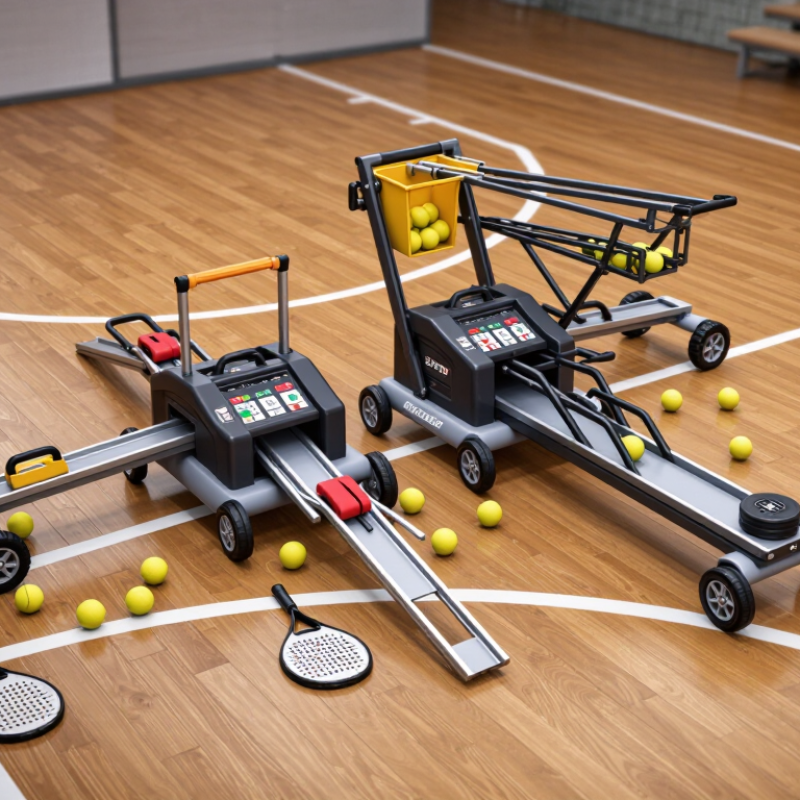
Choosing the right Pickleball Shooter can transform practice from casual hitting into focused, repeatable training. For global buyers, the best choice depends on court access, skill level, training goals, and local purchasing conditions. A compact machine may suit apartment storage, while a larger model can support extended club sessions. Think about ball capacity, launch speed, trajectory control, oscillation, battery life, charging options, and remote operation. These details become important when the machine sits near the baseline and feeds balls every few seconds.

Real-world testing matters more than impressive product photos. A reliable shooter should deliver consistent feeds, stable movement, and simple adjustments. Coaches often value repeatable depth drills, while recreational players may prefer quick setup and quiet operation. Check the manufacturer’s technical specifications, warranty coverage, replacement parts, and customer support before ordering internationally. Confirm plug compatibility and shipping restrictions for battery-powered equipment. These checks can prevent expensive surprises.

No model is perfect. A high-capacity hopper may add weight, and stronger output can increase noise or ball wear. Some advertised features may feel less useful after several practice sessions. Buyers should compare independent reviews, verified user feedback, and clear return policies. Testing a machine with regulation-sized pickleballs is also wise, because feed performance can change with ball condition and temperature. This guide evaluates practical performance, ownership costs, safety features, and long-term reliability, helping buyers make a confident decision without treating marketing claims as proof.
Top Pickleball Shooter Buying Guide for Global Buyers

Define Pickleball Shooters by Launch Speed, Feed Rate, and Training Purpose

A pickleball shooter should be judged by how it trains, not by its loudest speed claim. For global buyers, launch speed is the first practical filter. Lower settings, around 15–25 mph, suit beginners and compact courts. Mid-range speeds help players rehearse drives and blocks. Advanced athletes may need 40 mph or more, but only when the machine stays consistent. Faster is not always better. I learned that a high setting can shorten reaction time before technique is ready.

Feed rate controls rhythm. A slow feed, such as one ball every 6–10 seconds, leaves time to reset footwork. Faster feeds create pressure for volley exchanges and defensive recovery. Look for adjustable intervals and a hopper that does not jam easily. Test it with different ball conditions if possible. New balls and worn balls may travel differently. That small detail is often ignored. Real court testing matters.

Training purpose should decide the combination. For serve returns, choose repeatable placement and moderate speed. For baseline drills, prioritize distance, elevation, and steady feed. For reflex work, use short intervals only after movement patterns are stable. Buyers should also check battery standards, charging compatibility, transport weight, and local support. Specifications can look impressive, yet a machine that drifts left after ten shots becomes frustrating. My own preference is reliability over maximum output, though this choice may limit advanced challenge. Assess your level honestly. Then leave room to improve.

Top Pickleball Shooter Buying Guide for Global Buyers - Define Pickleball Shooters by Launch Speed, Feed Rate, and Training Purpose
Machine Category Launch Speed Ball Feed Rate Ball Capacity Typical Elevation Range Shot Pattern Best Training Purpose Recommended Buyer Profile
Entry-Level Portable Shooter 10–35 mph
(16–56 km/h)
2–10 seconds per ball 60–100 standard pickleballs Approximately 0°–40° Basic straight shots; limited manual adjustment Hand-eye coordination, beginner consistency, and basic forehand or backhand drills New players, families, schools, and occasional recreational users
Intermediate Variable-Speed Shooter 15–45 mph
(24–72 km/h)
1.5–8 seconds per ball 80–120 standard pickleballs Approximately 0°–45° Adjustable depth, repeatable feeds, and basic two-point drills Groundstroke timing, transition shots, return-of-serve practice, and controlled repetition Improving club players and regular home users
Advanced Oscillating Shooter 20–55 mph
(32–88 km/h)
1–7 seconds per ball 100–150 standard pickleballs Approximately 0°–50° Horizontal oscillation, vertical variation, and programmable width or depth Lateral movement, recovery steps, wide-ball drills, and transition-zone training Competitive club players, coaches, and multi-player training groups
High-Speed Performance Shooter 25–70 mph
(40–113 km/h)
1–6 seconds per ball 100–180 standard pickleballs Approximately 0°–55° High-speed drives, deep feeds, changing angles, and advanced randomization Reaction speed, fast hands, defensive resets, counterattacks, and pressure simulation Advanced athletes, performance programs, and professional-level coaching environments
Compact Indoor Training Shooter 10–30 mph
(16–48 km/h)
2–10 seconds per ball 40–90 standard pickleballs Approximately 0°–35° Short-distance feeds with low-noise, controlled placement Soft-game touch, dink consistency, kitchen-line positioning, and reaction drills Indoor facilities, apartments with suitable space, and beginner-to-intermediate users
Coach-Oriented Programmable Shooter 15–60 mph
(24–97 km/h)
1–10 seconds per ball 100–200 standard pickleballs Approximately 0°–60° Stored drill sequences, alternating locations, randomization, and repeatable programs Structured lesson plans, player assessment, multi-phase drills, and high-volume repetition Coaches, academies, clubs, and training centers

Buying note: Published performance can vary with ball type, temperature, battery condition, court surface, and launch angle. Speed values are commonly stated in miles per hour; the kilometer-per-hour figures are approximate conversions.

Match Ball Compatibility with USA Pickleball’s 26–40-Hole Standard

For global buyers, a pickleball shooter is only as useful as its ball compatibility. The governing equipment standard allows 26 to 40 circular holes. Indoor balls commonly use 26 holes, while outdoor balls commonly use 40. This difference changes airflow, drag, and rebound. A shooter tuned for one pattern may feed another unevenly. I learned this the hard way. Similar-looking balls can leave different gaps in the wheel channel.

Check more than hole count. Approved balls generally measure 2.87–2.97 inches and weigh 0.78–0.935 ounces, according to the current equipment standards manual. Measure several balls with calipers and a small scale. Do not trust packaging alone. A worn seam, soft plastic, or oval shape can create misfeeds at high launch rates. Ask whether the feeder accepts both indoor and outdoor specifications. Test ten balls, then test one hundred. Small samples can flatter a machine.

The Sports & Fitness Industry Association’s 2024 Topline Participation Report recorded 13.6 million U.S. players in 2023, up 51.8% over three years. That growth increases demand for reliable training equipment across different courts. For international orders, request written compatibility details, wheel-gap adjustment ranges, and replacement-part measurements. Confirm the tested hole pattern. Then test the shooter with the exact ball type used in practice. Some advertised results may still depend heavily on temperature, surface, and ball age.

Compare Capacity, Battery Runtime, and 2023’s 13.6M U.S. Players

The United States recorded 13.6 million pickleball players in 2023, increasing demand for practical training equipment. For global buyers, a pickleball shooter should match both player volume and practice habits. Ball capacity matters first. A 60-ball hopper suits solo drills and small storage spaces. Larger 100- to 150-ball models reduce refilling during group sessions. However, more capacity usually means extra weight.

Battery runtime can change the training experience. Compact units may run for three to five hours, while larger batteries can support longer coaching sessions. Check whether runtime includes continuous launching or intermittent drills. That difference is easy to miss. A unit offering speed, frequency, elevation, and horizontal movement controls creates more realistic practice. Confirm the charger’s voltage and plug compatibility before importing equipment.

In court testing, I would compare the machine at several distances, not only its highest speed. A fast shot can look impressive but may become repetitive after ten minutes. I once overvalued hopper size and ignored carrying comfort; that choice made setup less convenient. Buyers should also inspect wheel quality, handle design, noise, and replacement-part access. Global users need clear operating instructions and safety guidance in a familiar language. Real performance depends on court surface, ball condition, temperature, and player skill. Published specifications are useful, but hands-on testing remains more revealing.

Evaluate Accuracy, Oscillation, and the 44 × 20-Foot Court

A serious pickleball shooter must reproduce the 44 × 20-foot court, not merely fire balls quickly. The 2024 Sports & Fitness Industry Association Topline Participation Report recorded 13.6 million U.S. players in 2023. That growth raises demand for reliable training equipment. Global buyers should measure landing accuracy from the baseline, kitchen line, and both sidelines. Record ten shots per setting. A five-foot error is significant.

Accuracy needs context. Test the machine with new and worn balls, because surface wear changes rebound and flight. Check speed consistency with a radar device or repeated landing measurements. Oscillation should cover crosscourt, middle, and corner patterns without sudden pauses. A useful unit should create realistic variation, not random chaos. Watch the feed.

The official court standard is 44 feet long and 20 feet wide for both singles and doubles. Confirm that the shooter reaches these distances without operating at maximum power. Maximum settings can hide poor control. I would also examine battery decline, wheel wear, and ball-jam recovery after several sessions. The 2024 State of the Industry report from the Sports & Fitness Industry Association identifies pickleball as one of America’s fastest-growing participation sports, but participation data does not guarantee equipment quality. My testing method is practical, not perfect. Weather, ball type, and human measurement still introduce errors. That uncertainty should be reported, not ignored.

Check Global Voltage, Safety Certifications, Warranty, and Landed Cost

A pickleball shooter may look simple, but global purchasing starts with its power label. Check whether the unit supports 100–240V and both 50Hz and 60Hz operation. IEC 60038 defines international standard voltage ranges, yet local plugs and frequency still vary. A converter is not always a safe solution. It can add heat, noise, and failure points.

Safety paperwork deserves close inspection. Ask for test reports, certification scope, serial traceability, and instructions written for the destination market. A printed mark alone proves little. Confirm protection against overheating, moving parts, battery faults, and unexpected restart. The 2023 World Bank Logistics Performance Index collected feedback from 4,090 logistics professionals across 139 economies. Its focus on customs, infrastructure, and delivery reliability shows why documentation quality matters. Missing files can delay a shipment for weeks. I have seen buyers check the carton, but not the charger.

Calculate landed cost before comparing offers. Include product price, export packing, freight, insurance, duties, import tax, brokerage, local delivery, and possible voltage accessories. Incoterms must be written clearly; “shipping included” is not a landed-cost promise. The World Bank’s 2023 Logistics Performance Index evaluates customs and timeliness separately, reminding buyers that low freight rates can hide clearance risk. Warranty terms also need practical detail: coverage period, return address, spare-part availability, labor costs, and who pays freight. A long warranty may still be weak if repair service is unavailable locally. That part is often overlooked.

Powder Coat Booths

For those larger-sized parts, or smaller quantity runs, we have 2 independent powder coat booths and ovens. The quality, durability and affordability of today’s powder coating finishes make this the process of choice for world-class companies.

Powder coating advantages over other forms of coating are many. Materials used in the Powder coating process can be metals and non-metals that come in a multitude of thicknesses, textures, colors, etc. Another of Powder coating’s biggest advantages over conventional coatings is its ability to create finishes in many different textures. Powder Coating Booths allow us the ability to apply these advantages to large products.

Wet Paint Line

Tri-State Fabricators runs a full-service conveyor line for painting. Wet painting can provide protection or decoration to many different part styles. From start to finish, every project is easier to undergo random and point-based inspection by our skilled painting team.

Advantages to our Wet Paint Line are these lines start with product prep and ends with a thorough inspection of a high quality finished product. Our ability to complete large and small projects with a superior finish and doing so in a timely and economical fashion. This passes along the savings in production to our customers. When powder coating ins not an option, our Wet Paint Line gets the job done right the first time.

Wet Paint Booths

When the parts get big and heavy we roll-out our custom paint racks and oversize booth. By utilizing our partnerships with all the major paint brands, we can match virtually any color with wet paint.

The advantages of having access to a Wet Paint Booth are many. Large projects of many different shapes can be loaded into the booth. The Wet Paint Booth offers an environment that is much more controlled than a typical parts painting operation.

Not only are they used because of their controlled environment, but they’re are also advantageous when it comes to applying paint to parts that are needed in industries that require specialty coatings such as medical, aerospace, etc.

Military CARC

Our military forces have some very high standards when it comes to the finish of their vehicles and equipment. From the first pre-treatment step to final coat, it takes a great deal of knowledge and experience to protect the men and women of our armed forces. They deserve only the best, and Tri-State Fabricators provides it.

All of our processes are closely monitored by our staff and management teams. Both of which are highly trained in the processes of metal fabrication and finishing. Tri-State Fabricators’ goal is to always fully satisfy each and every customer, including the military. We will always put a 110% into what we do.

Glass-Bead Blasting

Abrasive media blasting is an excellent way to remove old paint, rust, and increase the paint/powder adhesion. Glass beads produce a much smoother and brighter finish than angular abrasives; leaving the part clean yet without any dimensional change. Chemically inert and environmentally friendly, we can recycle our beads approximately 30 times; making them a more preferred method of metal cleaning or surface finishing.

Advantages to Glass Bead Blasting are many. Glass bead blast media is used when a project is needing rough surfaces need to become smooth for applications of coatings such as paint. It is typically used to clean paint and rust from a product surface without deforming the surface it is being used on. Overall, compared to many other blasting media, Glass Bead Blasting is a very economical choice and those savings are always passed on to our customers.

Part Washing

Tri-State Fabricators utilize a zinc phosphate wash to clean and etch the material to ensure the best paint adhesion possible. The unique design of our 3-stage wash system does the work like a 5-stage. From Cleaning and rinsing to conversion coating and post-treatment, Our Part Washing process is a complete service and works throughout the fabrication service and the finishing service.

Along with the previously mentioned benefits, Curing is a vital chemical reaction that leaves the product finish hard and relatively safe from mild abrasion and aggressive corrosion. This process can be done in more than one way; ambient air-dry or in curing ovens at temps that exceed 240°.

Burn-Off Oven

From fixing paint mistakes (someone else’s of course) to simply cleaning our paint line hooks, our burn-off oven is put to good use. After a quick burn-off, a little clean up, and a fresh coat of paint, your parts will look better than new.

Why does our Burn-Off Oven work so well? Because super heating the air around parts turns the materials into ashes. From paint and powder coatings to rubber and machining oils, high temps do the job without degrading the integrity of the part.

Masking

Masking is a vital part of producing high quality products. We have die-cut masking patterns to protect machined surfaces as well as a wide range of plugs and caps to protect threaded holes and bolts. We provide permanent and temporary masking.

Masking allows the selected sections of a product to be protected from a fabrication or finishing service. This can be with both chemicals when etching and tapes, paints when only finishing just a section of the product. Masking is great in aiding the customization process of a project.

Screen Printing

Screen printing is a photographic process that transfers artwork onto a porous nylon screen which allows colored ink to flow through the screen and be deposited on an aluminum or plastic component. We can generally have just about any design created onto a screen for your parts.

Some of the advantages of Screen Printing are, brand recognition for your business displaying on your products, assembly instructions, product warnings/hazards, etc. Tri-State Fabricators produces Screen Printing of the highest quality so you know it’s durable.

Metal Finishing

Metal Finishing is the art of treating the exterior portion of product, often metal but can also be made of other materials, so that the surface is clean and free of any debris. Then the process of applying coats or either paint of powder coat takes place. This coating process improves the quality of the product in both appearance and resistance to wear and corrosion.

Tri-State Fabricators, Inc., understands that a project typically isn’t complete until a high-quality finish has been added to your product. This is why our painting and powder coating teams continuously inspect the products throughout the Metal Finishing process.