Top 10 Heavy Duty Hydraulic Press Types for Global Buyers

Choosing the right Heavy Duty Hydraulic Press is rarely a simple capacity decision. Global buyers must compare force, stroke length, daylight, bed size, control systems, and working speed. A 1,000-ton press may sound impressive, yet it can fail a buyer’s needs if its frame lacks rigidity or its hydraulic circuit responds slowly. Pressure matters.

This guide examines ten major hydraulic press types used across metal forming, forging, molding, straightening, compaction, and industrial assembly. Each type serves a different production reality. A four-column press offers broad stability for large components, while a C-frame press improves access for smaller workpieces. Deep drawing presses demand controlled movement and accurate blank-holder pressure. Forging presses require exceptional frame strength, reliable pumps, and carefully managed thermal conditions.

The evaluation also considers installation space, energy consumption, maintenance access, operator visibility, tooling compatibility, and after-sales support. These details often determine whether a machine performs well after five years, not just during a factory demonstration. Experienced buyers should request load charts, cycle data, material records, inspection reports, and references from comparable plants. Details matter.

Safety and compliance require equal attention. Buyers should verify guarding, emergency stops, hydraulic hose protection, documentation, and applicable local machinery requirements. ISO-based safety practices can provide useful guidance, but regional rules still require professional review. No ranking can fit every factory. Some recommendations may change when production volume, material thickness, or labor conditions differ. That uncertainty deserves honest discussion, not polished sales language.
Top 10 Heavy Duty Hydraulic Press Types for Global Buyers

Hydraulic Press Fundamentals and Global Market Terminology

Top 10 Heavy Duty Hydraulic Press Types for Global Buyers

Hydraulic press selection starts with basic terms, not impressive tonnage figures. A press converts hydraulic pressure into ram force through a pump, cylinder, and control system. Tonnage describes maximum force, while working pressure describes the force available within the circuit. They are related, but not identical.

Global quotations often mention daylight, stroke, bed size, throat depth, and approach speed. Daylight is the open space between the bed and ram. Stroke is the ram’s travel distance. Throat depth matters when sheet material must reach deep inside the frame. C-frame, H-frame, four-column, straight-side, and gantry presses suit different loading patterns. Deep-drawing, forging, forming, powder-compacting, briquetting, trimming, and laminating presses require different tooling and control accuracy.

Ask whether the quoted force is nominal or continuous. This detail is easy to miss. Check oil temperature limits, pump flow, pressure-holding performance, die height, and ram guidance. A faster approach stroke may not improve production if return speed remains slow. In my view, buyers sometimes compare motor power too quickly and overlook cycle time. That judgment can be wrong.

Terms such as PLC control, proportional valve, emergency stop, guarding, and overload protection should appear clearly in technical documents. Request drawings, load diagrams, inspection records, and maintenance intervals. Metric dimensions may conflict with inch-based tooling, creating costly surprises. A careful buyer verifies every unit, tolerance, and interface before approving the final specification.

Top 10 Heavy-Duty Hydraulic Press Types for Global Buyers

Representative nominal pressing-force benchmarks for widely used hydraulic press configurations. Values are typical reference points rather than universal limits; actual ratings vary by application, frame design, stroke, and operating standard.

Hydraulic press capacity is commonly specified in metric tonnes or meganewtons. Forging, straight-side, and tire presses generally occupy the highest-capacity segment, while C-frame and laminating presses are commonly selected for lower-force forming and assembly work.

The Ten Heavy-Duty Hydraulic Press Types Explained by Function

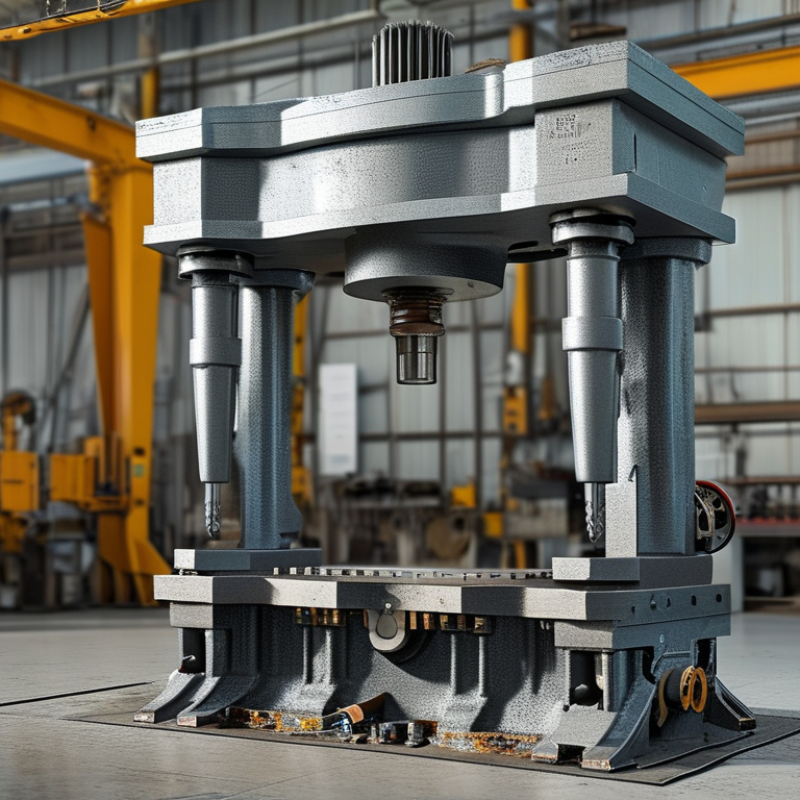
Heavy-duty hydraulic presses should be selected by function, not tonnage alone. An H-frame workshop press handles straightening, bearing removal, and controlled assembly. A C-frame press offers three-sided access for punching, notching, and small forming jobs. Four-column presses distribute pressure evenly across large sheets, supporting molding and compression work. Straight-side presses reduce frame deflection during demanding production cycles. Alignment matters. A powerful machine can still produce uneven parts.

Deep-draw presses shape cups, tanks, and housings through controlled material flow.

Forging presses compress heated billets into dense components with repeatable force. Extrusion presses push metal through dies to create profiles, tubes, and rods. Laminating presses bond layered materials under measured heat and pressure. Rubber molding presses cure seals, mats, and technical parts between heated platens. Powder compacting presses form measured material into blocks, gears, or filters before sintering.

Each function requires different controls, tooling, stroke length, and dwell time. More force is not always better.

Check daylight, bed size, pressure accuracy, cycle speed, guarding, and service access. During factory trials, monitor oil temperature and part consistency across repeated cycles. Specifications look clean on paper. Real production is less forgiving.

Test the actual material and tooling. A press suited to one process may disappoint in another.

Verify electrical requirements, operator training, and local safety compliance before purchase.

How Capacity, Design, and Automation Distinguish Each Press Type

Top 10 Heavy Duty Hydraulic Press Types for Global Buyers

How Capacity, Design, and Automation Distinguish Each Press Type

Heavy duty hydraulic presses differ by force, frame layout, and production method. The main ten include H-frame, C-frame, four-column, straight-side, forging, deep-drawing, compression-molding, punching, laminating, and specialized forming presses. Capacity may range from several hundred to several thousand tonnes. A larger tonnage is not always better. It can increase energy use, foundation costs, and tooling stress.

H-frame presses suit general forming and workshop repairs. Four-column designs provide balanced pressure across broad dies. Straight-side presses offer strong lateral support for demanding stamping work. C-frame machines improve access, but their open structure may deflect under uneven loads. Deep-drawing presses need controlled slide movement and reliable blank holding. Forging presses require high force, rigid frames, and careful heat management. Small details matter.

Automation separates a flexible press from a costly bottleneck. Servo-controlled pumps can reduce idle power. Load sensors help detect uneven material placement. Robotic loading, die carts, automatic lubrication, and recipe storage support repeatable production. In field inspections, I check guarding, emergency stops, pressure stability, and maintenance access before reviewing speed claims. Operators often value simple controls more than impressive software. That lesson is easy to overlook. Buyers should compare useful daylight, stroke length, bolster size, cycle time, and service support, not tonnage alone.

Global Buyer Criteria: Materials, Standards, and Safety Requirements

Selecting a heavy-duty hydraulic press starts with the material, not the catalog photograph. Four-column presses suit deep drawing and forming. C-frame models improve side access for stamping and straightening. H-frame presses handle repair work and flexible tooling. Forging, extrusion, lamination, and rubber-pad operations need different pressure curves and platen designs.

The World Steel Association reported 1,892.2 million tonnes of crude steel production in 2023. That scale exposes a practical issue: steel grades vary widely in yield strength and springback. Buyers should request verified load calculations, platen deflection data, and material certificates. A 1,000-ton rating alone proves little. Fit matters. Check daylight, stroke, bolster thickness, ram alignment, and cycle temperature. ISO 16092-3:2017 addresses safety requirements for hydraulic presses used in metalworking. It should guide technical specifications, not decorate them.

Safety verification must include guarding, emergency stops, two-hand controls, hydraulic hose protection, and safe die access. OSHA 1910.212 requires guarding against machine hazards, while the U.S. Bureau of Labor Statistics recorded 5,283 fatal work injuries in 2023. The number is not press-specific, but it shows why assumptions are expensive. Small gaps matter. Ask for risk assessments, pressure-relief test records, electrical compliance documents, and operator training procedures. Standards may be available, yet installation quality can still fail. A neglected hose, poorly supported die, or rushed commissioning can defeat a well-designed machine. No checklist is perfect. Recheck it on the factory floor.

Comparing Applications, Costs, and Suppliers Across Global Markets

Top 10 Heavy Duty Hydraulic Press Types for Global Buyers

Global buyers should compare application fit before tonnage. The ten common categories include four-column, H-frame, C-frame, forging, extrusion, deep-drawing, straight-side, rubber-pad, hot-forming, and multi-action presses. Four-column machines suit controlled stamping and compression. Forging presses demand rigid frames, high flow, and repeatable pressure. C-frame units cost less, but frame deflection can limit precision. According to Grand View Research, the global hydraulic press market reached about USD 15.3 billion in 2023. Forecasts differ.

Regional costs depend on tooling, freight, power, and service. A basic H-frame may appear inexpensive, yet installation, oil filtration, and dies can add 20–40% to project cost. This estimate is not universal. A 1,000-ton press may require reinforced foundations and lengthy commissioning. Suppliers should disclose cycle time, pressure stability, spare-part lead times, and acceptance-test methods.

MarketsandMarkets identifies automation and energy efficiency as major manufacturing investment themes. Variable-displacement pumps and servo controls can reduce idle losses, but savings depend on duty cycle. The International Energy Agency reports that industry consumed roughly 37% of global final energy in 2022. Therefore, buyers should compare kilowatt-hours per cycle, not motor horsepower alone. Local technicians matter more than polished brochures. Sometimes, the cheapest quote becomes the slowest asset.


Powder Coat Booths

For those larger-sized parts, or smaller quantity runs, we have 2 independent powder coat booths and ovens. The quality, durability and affordability of today’s powder coating finishes make this the process of choice for world-class companies.

Powder coating advantages over other forms of coating are many. Materials used in the Powder coating process can be metals and non-metals that come in a multitude of thicknesses, textures, colors, etc. Another of Powder coating’s biggest advantages over conventional coatings is its ability to create finishes in many different textures. Powder Coating Booths allow us the ability to apply these advantages to large products.

Wet Paint Line

Tri-State Fabricators runs a full-service conveyor line for painting. Wet painting can provide protection or decoration to many different part styles. From start to finish, every project is easier to undergo random and point-based inspection by our skilled painting team.

Advantages to our Wet Paint Line are these lines start with product prep and ends with a thorough inspection of a high quality finished product. Our ability to complete large and small projects with a superior finish and doing so in a timely and economical fashion. This passes along the savings in production to our customers. When powder coating ins not an option, our Wet Paint Line gets the job done right the first time.

Wet Paint Booths

When the parts get big and heavy we roll-out our custom paint racks and oversize booth. By utilizing our partnerships with all the major paint brands, we can match virtually any color with wet paint.

The advantages of having access to a Wet Paint Booth are many. Large projects of many different shapes can be loaded into the booth. The Wet Paint Booth offers an environment that is much more controlled than a typical parts painting operation.

Not only are they used because of their controlled environment, but they’re are also advantageous when it comes to applying paint to parts that are needed in industries that require specialty coatings such as medical, aerospace, etc.

Military CARC

Our military forces have some very high standards when it comes to the finish of their vehicles and equipment. From the first pre-treatment step to final coat, it takes a great deal of knowledge and experience to protect the men and women of our armed forces. They deserve only the best, and Tri-State Fabricators provides it.

All of our processes are closely monitored by our staff and management teams. Both of which are highly trained in the processes of metal fabrication and finishing. Tri-State Fabricators’ goal is to always fully satisfy each and every customer, including the military. We will always put a 110% into what we do.

Glass-Bead Blasting

Abrasive media blasting is an excellent way to remove old paint, rust, and increase the paint/powder adhesion. Glass beads produce a much smoother and brighter finish than angular abrasives; leaving the part clean yet without any dimensional change. Chemically inert and environmentally friendly, we can recycle our beads approximately 30 times; making them a more preferred method of metal cleaning or surface finishing.

Advantages to Glass Bead Blasting are many. Glass bead blast media is used when a project is needing rough surfaces need to become smooth for applications of coatings such as paint. It is typically used to clean paint and rust from a product surface without deforming the surface it is being used on. Overall, compared to many other blasting media, Glass Bead Blasting is a very economical choice and those savings are always passed on to our customers.

Part Washing

Tri-State Fabricators utilize a zinc phosphate wash to clean and etch the material to ensure the best paint adhesion possible. The unique design of our 3-stage wash system does the work like a 5-stage. From Cleaning and rinsing to conversion coating and post-treatment, Our Part Washing process is a complete service and works throughout the fabrication service and the finishing service.

Along with the previously mentioned benefits, Curing is a vital chemical reaction that leaves the product finish hard and relatively safe from mild abrasion and aggressive corrosion. This process can be done in more than one way; ambient air-dry or in curing ovens at temps that exceed 240°.

Burn-Off Oven

From fixing paint mistakes (someone else’s of course) to simply cleaning our paint line hooks, our burn-off oven is put to good use. After a quick burn-off, a little clean up, and a fresh coat of paint, your parts will look better than new.

Why does our Burn-Off Oven work so well? Because super heating the air around parts turns the materials into ashes. From paint and powder coatings to rubber and machining oils, high temps do the job without degrading the integrity of the part.

Masking

Masking is a vital part of producing high quality products. We have die-cut masking patterns to protect machined surfaces as well as a wide range of plugs and caps to protect threaded holes and bolts. We provide permanent and temporary masking.

Masking allows the selected sections of a product to be protected from a fabrication or finishing service. This can be with both chemicals when etching and tapes, paints when only finishing just a section of the product. Masking is great in aiding the customization process of a project.

Screen Printing

Screen printing is a photographic process that transfers artwork onto a porous nylon screen which allows colored ink to flow through the screen and be deposited on an aluminum or plastic component. We can generally have just about any design created onto a screen for your parts.

Some of the advantages of Screen Printing are, brand recognition for your business displaying on your products, assembly instructions, product warnings/hazards, etc. Tri-State Fabricators produces Screen Printing of the highest quality so you know it’s durable.

Metal Finishing

Metal Finishing is the art of treating the exterior portion of product, often metal but can also be made of other materials, so that the surface is clean and free of any debris. Then the process of applying coats or either paint of powder coat takes place. This coating process improves the quality of the product in both appearance and resistance to wear and corrosion.

Tri-State Fabricators, Inc., understands that a project typically isn’t complete until a high-quality finish has been added to your product. This is why our painting and powder coating teams continuously inspect the products throughout the Metal Finishing process.