


How to Choose a Heat Recirculation Pump in 2026?

Choosing a Heat Recirculation Pump in 2026 is no longer a simple flow-rate decision. Modern homes demand quieter operation, lower electricity use, and more reliable hot-water delivery. A pump that looks suitable on paper may still create noise, wasted energy, or uneven temperatures at the tap.

Dan Holohan, a respected hydronic heating educator, wrote, “Pumping away is not a slogan; it is a design strategy.” His observation remains useful when evaluating domestic hot-water systems. Pipe length, return-line resistance, water temperature, pump controls, and insulation must work together. A stronger motor does not automatically produce better circulation.

Real-world details matter. Imagine a kitchen tap located twelve meters from the water heater. The first liters may run cold each morning, even when the pump operates continuously. That delay can signal poor control settings, inadequate insulation, or an incorrectly sized pump. It may not mean the pump is too weak.

This guide examines how to choose a Heat Recirculation Pump for 2026 applications. It considers variable-speed technology, smart timers, temperature sensors, corrosion-resistant materials, maintenance access, and lifecycle cost. Certification and manufacturer documentation also deserve careful attention. Marketing claims can sound impressive.

There is no perfect selection for every building. A compact apartment, a hotel corridor, and a large family home have different demands. Even experienced installers can overlook balancing. Measure the system carefully. Then question the obvious choice.
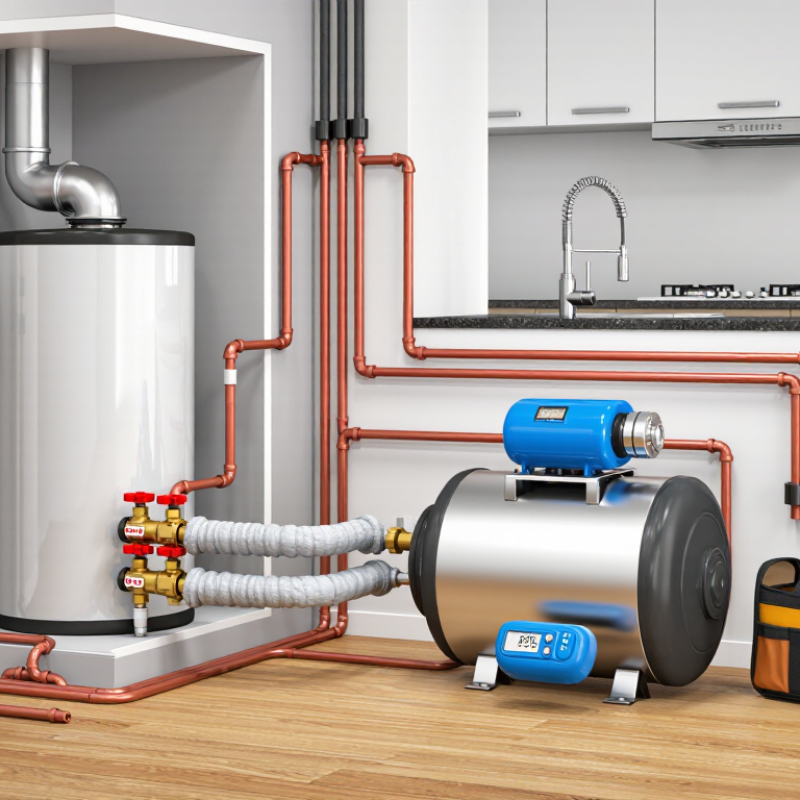
How to Choose a Heat Recirculation Pump in 2026?

What a Heat Recirculation Pump Does and Why It Matters

How to Choose a Heat Recirculation Pump in 2026?

What a Heat Recirculation Pump Does and Why It Matters

A heat recirculation pump keeps hot water moving through a dedicated return line or approved bypass path. When you open a tap, warm water arrives sooner. Without circulation, cold water may sit inside the pipe for several minutes.

That delay wastes water and tests patience. A recirculation pump can reduce the wait from two minutes to roughly twenty seconds, depending on pipe length and insulation. It does not create heat. It moves heated water from the source back toward the fixtures. This difference matters when sizing the system.

Choose a pump by checking flow rate, pipe resistance, water temperature, connection size, and control method. A small apartment may need gentle circulation, while a large home needs more head pressure. Timers, temperature sensors, and demand buttons can limit unnecessary operation. Continuous running is convenient, but it may increase energy use and accelerate pipe heat loss.

Look for construction suitable for domestic hot water and verify local plumbing requirements. A qualified installer should confirm the return path, valve direction, and insulation quality. The calculation is rarely perfect. Oversizing the pump can create noise, waste electricity, and cause uncomfortable temperature changes. I have found that insulation often deserves as much attention as the pump itself. A powerful pump cannot repair a poorly planned loop.


A heat recirculation pump is selected mainly by required flow rate and system resistance, not by motor size alone. The chart shows the theoretical heat-carrying capacity of water at a 10°C temperature rise, calculated from Q = m × c × ΔT. In a real domestic hot-water loop, choose a pump that can deliver the required flow at the calculated system head while maintaining quiet operation and avoiding excessive energy use.

How to Identify Your System’s Heat Recirculation Requirements

How to Choose a Heat Recirculation Pump in 2026?

How to Identify Your System’s Heat Recirculation Requirements

Begin with the building’s actual hot-water demand. Count every fixture, including showers, sinks, kitchens, and process outlets. Record their distance from the heat source. A long pipe run usually loses more heat. Pipe diameter and insulation quality matter too. A poorly insulated line can stay warm briefly, then cool quickly. That creates longer waiting times and unnecessary pump operation.

Measure the required flow rather than guessing from pipe size. List how many outlets may operate together during peak use. Then calculate the flow needed to maintain acceptable delivery time. Check the system’s temperature range and the heat source’s recovery capacity. The pump must overcome pipe resistance, valves, fittings, and elevation changes. This is the pump head requirement. A pressure gauge and temperature readings can reveal conditions that drawings miss. Small details matter.

Avoid selecting the largest pump “for safety.” Oversizing may increase noise, energy use, and pipe wear. Undersizing can leave distant fixtures cold. An adjustable control system may better match morning peaks and quiet overnight periods. Review local plumbing requirements and the pump’s certified performance data before installation. One estimate may still be wrong. Recheck it after measuring the return temperature and wait time. A practical trial can expose poor assumptions, especially in older buildings with hidden pipe changes. Short cycles are not always efficient. Steady circulation can also waste heat when demand is low.

How to Compare Pump Types, Sizes, and Performance Ratings

How to Choose a Heat Recirculation Pump in 2026?

Pump selection should begin with system behavior, not motor wattage. The U.S. Department of Energy estimates water heating represents about 18% of household energy use. The EIA Residential Energy Consumption Survey also identifies water heating as a major residential load. Small efficiency gains can therefore matter.

Compare pump types by duty and fluid.

A constant-speed pump suits simple, steady circulation. A variable-speed model can reduce flow when demand falls. Demand-controlled systems activate after a user requests hot water.

For potable water, select materials approved for drinking-water service.

Cast iron is usually unsuitable because oxygenated water can accelerate corrosion. Stainless steel or approved bronze construction is safer.

Size from pipe heat loss, required temperature, and total head.

Do not size from fixture flow alone. A pump curve should show the target flow near its efficient operating range. Check shutoff head, power input, noise, and minimum flow. The Hydraulic Institute recommends evaluating pumps through the complete system curve, not isolated catalog values. A 2024 field assessment may show excellent laboratory efficiency but poor real-world savings when controls are badly set. That criticism is fair.

Measure the return-line temperature after stabilization.

Check whether the pump short-cycles. A timer can waste energy during vacant hours. Insulation also changes the answer.

I would not select the largest pump “for safety.” Oversizing can create noise, erosion, and unnecessary electricity use. Start with calculated losses, then verify performance onsite. Measure twice. Judge once.

Which Materials, Controls, and Energy Features to Evaluate

How to Choose a Heat Recirculation Pump in 2026?

Choosing a heat recirculation pump in 2026 requires more than matching pipe size. Start with the water chemistry, operating temperature, and required flow rate. Stainless steel suits many potable-water systems and resists corrosion. Bronze may perform well, but compatibility must be checked carefully. Seals also matter. EPDM handles many hot-water applications, while other elastomers may suit different fluids or temperatures. Never assume one material fits every loop. Small mistakes become expensive.

Controls should match the building’s usage pattern. A temperature sensor can activate circulation only when the return line cools. Timers work well for predictable schedules, but they may waste energy during unusual occupancy. Adaptive controls can respond to demand, although poor sensor placement can cause unnecessary cycling. Put sensors close to the actual return flow. That matters. A clear display and manual override also help technicians diagnose problems during service visits.

For energy performance, consider an electronically commutated motor with variable-speed control. It can reduce electrical use when full flow is unnecessary. Insulated pipes, efficient check valves, and low standby consumption further improve performance. Size the pump for the system’s head loss, not simply the largest available capacity. Oversizing can create noise and wear. In field evaluations, installers sometimes focus on purchase price and overlook lifetime electricity costs. That shortcut deserves reconsideration. Record operating hours, measured flow, and return temperature before final selection.

How to Select, Install, and Maintain the Right Pump in 2026

How to Choose a Heat Recirculation Pump in 2026?

Selecting a heat recirculation pump starts with measured demand, not guesswork. Check flow rate, head pressure, pipe length, water temperature, and peak usage. A small pump may leave distant taps cold. An oversized pump wastes electricity and increases pipe noise.

The International Energy Agency reports that electric motors consume about 50% of global electricity. Pump efficiency therefore deserves serious attention. Choose variable-speed control when demand changes during the day. Confirm that seals, casing materials, and temperature ratings match the system.

My first selection mistake was trusting the pipe diameter alone. It was not enough.

Installation quality can decide real performance. Fit the pump on the return line, following the system’s approved flow direction. Install isolation valves for easier servicing. A check valve can prevent unwanted reverse circulation. Insulate hot-water pipes, especially near storage tanks and exterior walls.

The U.S. Department of Energy states that optimized pumping systems can often reduce energy use by 20% to 50%.

That saving depends on correct commissioning, not promises. Set a practical temperature schedule. Continuous operation may feel convenient, but it can create needless heat loss.

Maintenance should be simple and documented. Inspect for vibration, leaks, unusual noise, and rising electricity use each month. Clean strainers according to site conditions. Verify temperature at the farthest outlet, not only beside the pump.

The Hydraulic Institute emphasizes system-level assessment because pump problems often involve controls, piping, or valves. Keep a service record. Recheck settings after renovations. Small systems are not automatically trouble-free. Even experienced installers can overlook air in the line.

Powder Coat Booths

For those larger-sized parts, or smaller quantity runs, we have 2 independent powder coat booths and ovens. The quality, durability and affordability of today’s powder coating finishes make this the process of choice for world-class companies.

Powder coating advantages over other forms of coating are many. Materials used in the Powder coating process can be metals and non-metals that come in a multitude of thicknesses, textures, colors, etc. Another of Powder coating’s biggest advantages over conventional coatings is its ability to create finishes in many different textures. Powder Coating Booths allow us the ability to apply these advantages to large products.

Wet Paint Line

Tri-State Fabricators runs a full-service conveyor line for painting. Wet painting can provide protection or decoration to many different part styles. From start to finish, every project is easier to undergo random and point-based inspection by our skilled painting team.

Advantages to our Wet Paint Line are these lines start with product prep and ends with a thorough inspection of a high quality finished product. Our ability to complete large and small projects with a superior finish and doing so in a timely and economical fashion. This passes along the savings in production to our customers. When powder coating ins not an option, our Wet Paint Line gets the job done right the first time.

Wet Paint Booths

When the parts get big and heavy we roll-out our custom paint racks and oversize booth. By utilizing our partnerships with all the major paint brands, we can match virtually any color with wet paint.

The advantages of having access to a Wet Paint Booth are many. Large projects of many different shapes can be loaded into the booth. The Wet Paint Booth offers an environment that is much more controlled than a typical parts painting operation.

Not only are they used because of their controlled environment, but they’re are also advantageous when it comes to applying paint to parts that are needed in industries that require specialty coatings such as medical, aerospace, etc.

Military CARC

Our military forces have some very high standards when it comes to the finish of their vehicles and equipment. From the first pre-treatment step to final coat, it takes a great deal of knowledge and experience to protect the men and women of our armed forces. They deserve only the best, and Tri-State Fabricators provides it.

All of our processes are closely monitored by our staff and management teams. Both of which are highly trained in the processes of metal fabrication and finishing. Tri-State Fabricators’ goal is to always fully satisfy each and every customer, including the military. We will always put a 110% into what we do.

Glass-Bead Blasting

Abrasive media blasting is an excellent way to remove old paint, rust, and increase the paint/powder adhesion. Glass beads produce a much smoother and brighter finish than angular abrasives; leaving the part clean yet without any dimensional change. Chemically inert and environmentally friendly, we can recycle our beads approximately 30 times; making them a more preferred method of metal cleaning or surface finishing.

Advantages to Glass Bead Blasting are many. Glass bead blast media is used when a project is needing rough surfaces need to become smooth for applications of coatings such as paint. It is typically used to clean paint and rust from a product surface without deforming the surface it is being used on. Overall, compared to many other blasting media, Glass Bead Blasting is a very economical choice and those savings are always passed on to our customers.

Part Washing

Tri-State Fabricators utilize a zinc phosphate wash to clean and etch the material to ensure the best paint adhesion possible. The unique design of our 3-stage wash system does the work like a 5-stage. From Cleaning and rinsing to conversion coating and post-treatment, Our Part Washing process is a complete service and works throughout the fabrication service and the finishing service.

Along with the previously mentioned benefits, Curing is a vital chemical reaction that leaves the product finish hard and relatively safe from mild abrasion and aggressive corrosion. This process can be done in more than one way; ambient air-dry or in curing ovens at temps that exceed 240°.

Burn-Off Oven

From fixing paint mistakes (someone else’s of course) to simply cleaning our paint line hooks, our burn-off oven is put to good use. After a quick burn-off, a little clean up, and a fresh coat of paint, your parts will look better than new.

Why does our Burn-Off Oven work so well? Because super heating the air around parts turns the materials into ashes. From paint and powder coatings to rubber and machining oils, high temps do the job without degrading the integrity of the part.

Masking

Masking is a vital part of producing high quality products. We have die-cut masking patterns to protect machined surfaces as well as a wide range of plugs and caps to protect threaded holes and bolts. We provide permanent and temporary masking.

Masking allows the selected sections of a product to be protected from a fabrication or finishing service. This can be with both chemicals when etching and tapes, paints when only finishing just a section of the product. Masking is great in aiding the customization process of a project.

Screen Printing

Screen printing is a photographic process that transfers artwork onto a porous nylon screen which allows colored ink to flow through the screen and be deposited on an aluminum or plastic component. We can generally have just about any design created onto a screen for your parts.

Some of the advantages of Screen Printing are, brand recognition for your business displaying on your products, assembly instructions, product warnings/hazards, etc. Tri-State Fabricators produces Screen Printing of the highest quality so you know it’s durable.

Metal Finishing

Metal Finishing is the art of treating the exterior portion of product, often metal but can also be made of other materials, so that the surface is clean and free of any debris. Then the process of applying coats or either paint of powder coat takes place. This coating process improves the quality of the product in both appearance and resistance to wear and corrosion.

Tri-State Fabricators, Inc., understands that a project typically isn’t complete until a high-quality finish has been added to your product. This is why our painting and powder coating teams continuously inspect the products throughout the Metal Finishing process.
