


How to Choose an ELCB Circuit Breaker in 2026?

Choosing an Elcb Circuit Breaker in 2026 requires more than comparing prices or reading a current rating. Modern buildings contain heat pumps, solar inverters, battery chargers, data equipment, and compact switching power supplies. These loads can produce leakage patterns that older protection assumptions may not cover. The International Energy Agency’s Electricity 2024 report expects global electricity demand to grow by about 4% annually from 2024 to 2026. More connected equipment means more opportunities for insulation faults, nuisance tripping, and poorly matched protection.

The selection process should begin with the installation’s earthing arrangement, rated voltage, load current, prospective fault conditions, and required residual-current sensitivity. IEC 61008-1 covers residual current operated circuit-breakers without overcurrent protection, while IEC 61009-1 addresses RCBOs with overcurrent protection. That distinction matters. A residual-current device does not automatically replace short-circuit protection. Type AC, A, F, or B performance must also match the connected equipment, especially variable-speed drives and photovoltaic systems. Check the manufacturer’s test conditions, not just the front label.

Real sites often reveal the weakness of a tidy specification. A workshop may trip after a motor starts. A home charger may expose leakage from filters. A humid distribution board may fail long before its calculated load is exceeded. No checklist is perfect. Installation quality, periodic testing, ambient temperature, and cable termination still influence safety. NFPA 70 and applicable national wiring rules provide useful reference points, but local certification remains decisive. The best 2026 choice is therefore a documented, tested, and maintainable device—not merely the newest Elcb Circuit Breaker on the market.
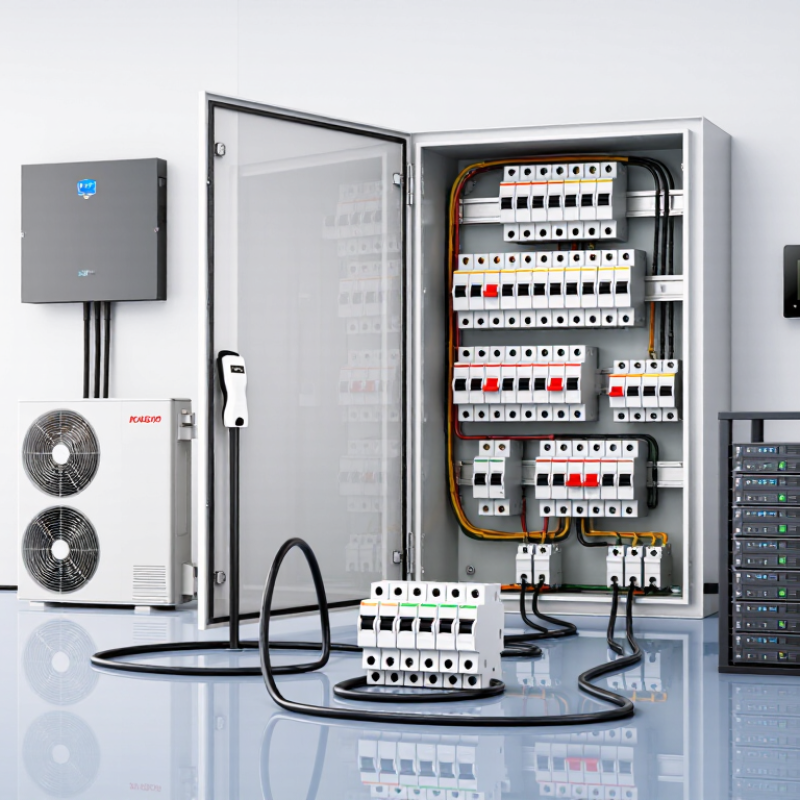
How to Choose an ELCB Circuit Breaker in 2026?

Understanding What an ELCB Circuit Breaker Does

Understanding What an ELCB Circuit Breaker Does

An ELCB circuit breaker monitors unwanted current flowing toward earth. When leakage exceeds its setting, it disconnects the circuit rapidly. This can reduce shock risk and limit fire damage. Modern devices usually use residual-current detection, while older voltage-operated ELCBs work differently. The distinction matters. A current-operated ELCB, commonly called an RCCB or RCD, does not normally protect against overloads or short circuits. It needs coordinated overcurrent protection. NFPA’s Home Structure Fires report recorded about 51,000 annual fires involving electrical distribution and lighting equipment during 2015–2019. That figure makes correct selection more than a technical detail.

Choosing one requires checking sensitivity, device type, poles, rated current, and breaking coordination. A 30 mA device is widely used for additional personal protection, subject to local rules and installation conditions. Type A models can detect pulsating direct residual currents from electronic equipment. Type F or Type B may suit variable-speed drives, medical equipment, or systems producing smoother DC leakage. An incorrect type can remain silent when protection is needed. That is an uncomfortable possibility.

Tips: Compare the ELCB rating with the upstream protective device. Press the test button during scheduled inspections. Investigate repeated trips instead of resetting blindly. In field checks, nuisance tripping often reveals moisture, damaged insulation, or accumulated leakage from several appliances. Selection tables help, but they cannot replace measured leakage current and professional verification. IEC 61008 and IEC 61009 provide relevant product requirements, while IEC 60364 supports installation planning. Local inspection rules still control the final decision.

How to Choose an ELCB Circuit Breaker in 2026? - Understanding What an ELCB Circuit Breaker Does

Selection Dimension What to Check Common or Recognized Values Why It Matters
Device terminology Confirm whether “ELCB” means a residual-current device or an older voltage-operated earth-leakage breaker. Current-operated RCDs are commonly called RCCBs; RCBOs combine residual-current and overcurrent protection. Voltage-operated ELCBs are an older technology. The device type determines the protection method, wiring requirements, testing procedure, and applicable standard.
Protection function Check whether protection against electric shock, earth leakage, overload, and short circuit is required. RCCB/RCD: residual-current protection only. RCBO: residual-current plus overload and short-circuit protection. A separate overcurrent protective device is needed with an RCCB. An RCD does not normally replace a fuse or miniature circuit breaker for overcurrent protection.
Residual operating current, IΔn Select the rated residual operating current according to local electrical rules, circuit use, and risk assessment. 10 mA: very high sensitivity for specific applications. 30 mA: widely used for additional personal protection. 100 mA or 300 mA: commonly used for equipment or fire-risk protection, subject to local requirements. A lower IΔn provides greater sensitivity but can increase unwanted tripping from normal leakage currents.
RCD type Match the RCD type to the current waveform produced by the connected loads. Type AC: sinusoidal AC residual current. Type A: AC and pulsating DC residual current. Type F: selected single-phase frequency-controlled loads. Type B: AC, pulsating DC, and smooth DC residual current for suitable applications. Modern electronic loads may produce pulsating or smooth DC components that are not suitable for a basic Type AC device.
Rated operational voltage, Ue Verify the device voltage and frequency against the supply system. Common low-voltage ratings include 230 V AC single-phase and 400 V AC three-phase systems at 50 or 60 Hz, depending on the installation. Incorrect voltage or frequency selection can prevent proper operation and may create an unsafe installation.
Number of poles Select poles according to the supply arrangement and neutral-switching requirements. 2-pole devices are commonly used for single-phase circuits. 4-pole devices are commonly used for three-phase circuits with a neutral. Pole configurations must follow local wiring rules. All live conductors required by the installation should pass through the sensing circuit; incorrect neutral routing can cause nuisance tripping or loss of protection.
Rated current, In Choose a rated current equal to or greater than the expected continuous load, while coordinating it with the upstream overcurrent device and cable rating. Common ratings include 25 A, 40 A, 63 A, 80 A, and 100 A, but the available range depends on the device design and installation standard. The RCD rated current is not a substitute for cable and circuit-breaker coordination.
Trip-time category Check whether standard, selective, or time-delayed operation is required. Instantaneous devices are commonly used for final circuits. Selective or time-delayed devices may be used upstream to improve discrimination between devices. Proper time coordination can prevent an upstream device from disconnecting an entire installation when only one downstream circuit has a fault.
Short-circuit coordination Review the rated conditional short-circuit current or short-circuit rating and the required backup protective device. The required value depends on the prospective fault current at the installation point and the applicable product standard. An RCD must be installed within its specified short-circuit and backup-protection limits.
Applicable standard Confirm that the product documentation identifies the relevant safety standard for its function. IEC 61008-1: RCCBs without integral overcurrent protection. IEC 61009-1: RCBOs with integral overcurrent protection. National adoptions and local regulations may also apply. A recognized standard provides requirements for construction, electrical performance, testing, and marking.
Nuisance-tripping control Estimate the normal leakage current from filters, power supplies, motors, heating equipment, and long cable runs. Avoid operating too close to the device trip threshold; the acceptable design margin should follow the applicable installation rules and engineering practice. Accumulated leakage can cause unwanted disconnection even when there is no dangerous insulation fault.
Test facility and maintenance Select a device with a clearly marked test button and establish a regular inspection and test schedule. Pressing the test button should disconnect the device when the installation is energized; the exact testing interval is determined by local rules and the equipment instructions. The test button checks the operating mechanism and part of the residual-current sensing circuit, but it does not replace professional electrical testing.
Installation environment Check ambient temperature, humidity, dust, water exposure, enclosure rating, terminal size, and mounting arrangement. Indoor distribution boards usually require a dry, suitable enclosure. Damp, dusty, outdoor, or corrosive locations require equipment and enclosures rated for those conditions. Environmental conditions can affect insulation, mechanical operation, terminal reliability, and service life.
System compatibility Confirm earthing arrangement, neutral connection, downstream circuit layout, and compatibility with generators, inverters, UPS systems, and electronic loads. TT, TN, and IT systems can have different protection and disconnection requirements; some power-conversion equipment may require Type B or another specified RCD type. The correct device depends on the complete electrical system, not only on the nominal current of the load.

Note: Final selection, installation, testing, and compliance verification should be carried out by a qualified electrical professional in accordance with the applicable local regulations.


Matching ELCB Protection to Your Electrical System

How to Choose an ELCB Circuit Breaker in 2026?
Matching ELCB Protection to Your Electrical System

Choosing an ELCB starts with the electrical system, not the product label. Confirm the supply voltage, phase arrangement, rated current, and number of poles. A two-pole device suits many single-phase circuits, while three-phase systems usually need four-pole protection. The ELCB must also match the installation’s earthing arrangement. Incorrect neutral routing can leave protection ineffective.

Residual-current sensitivity matters. For socket outlets and wet areas, 30 mA protection is widely used for additional personal protection. Higher ratings, such as 100 mA or 300 mA, may support fire-risk reduction and selective coordination. They are not substitutes for 30 mA protection. An ELCB also does not replace overcurrent protection. Pair it with the correct circuit breaker or fuse.

Load type changes the decision. Type A can detect alternating and pulsating direct residual currents from modern electronic equipment. Type F or Type B may be necessary for variable-speed drives, heat pumps, or charging equipment. Check the manufacturer’s technical data and local installation rules. IEC 60364-4-41 provides a key reference for protection against electric shock.

NFPA’s Fire Loss in the United States, 2022 reported about 26,100 home structure fires involving electrical distribution and lighting equipment. That figure makes coordination worth serious attention. In field inspections, I have seen installers focus on sensitivity while ignoring nuisance trips, leakage from filters, and shared neutrals. That approach is too narrow. Test the device after installation, document the readings, and review the choice when the system changes.

Comparing ELCB Types, Sensitivity, and Rated Capacity

How to Choose an ELCB Circuit Breaker in 2026?

Choosing an ELCB starts with its sensing method. Older voltage-operated ELCBs respond to voltage on the protective conductor. Modern residual-current devices measure leakage imbalance between live and neutral conductors. IEC 61008-1 and IEC 61009-1 provide the main technical framework for these devices.

Type AC detects sinusoidal alternating leakage. Type A also detects pulsating direct-current leakage from electronic equipment. Type F suits variable-speed appliances, while Type B handles smooth DC components and complex waveforms. IEC 60364-4-41 identifies 30 mA residual-current protection for additional protection in specified final circuits. This value helps protect people, but it does not replace correct earthing or insulation testing. Sensitivity is not capacity.

Rated residual sensitivity and rated current are different numbers. A 30 mA device may carry 40 A, 63 A, or another approved load rating. Select rated current from the circuit’s design current, cable capacity, and coordination with upstream protection. For equipment with inverters, solar conversion, or medical electronics, waveform compatibility matters more than a low price. A 300 mA setting may support fire protection or leakage coordination, but it is not a personal-protection substitute.

A common field mistake is choosing 30 mA for every circuit. That shortcut fails. Excessive nuisance tripping can encourage unsafe bypassing, an unacceptable outcome. Check manufacturer test data, IEC requirements, prospective fault conditions, and local installation rules. The final choice should be verified by a qualified electrician, because real leakage often differs from a clean spreadsheet estimate.

How to Choose an ELCB Circuit Breaker in 2026?

Comparing common ELCB/RCD categories by residual operating current and representative rated capacity. Lower sensitivity provides earlier protection against electric shock, while higher rated capacity supports larger circuits.

Typical reference values: 30 mA is commonly selected for additional personal protection, while 100–300 mA devices are often used for equipment or fire-protection applications. Final selection should follow local wiring regulations, system earthing, load current, and manufacturer certification.

Checking Safety Standards, Installation, and Maintenance Needs

How to Choose an ELCB Circuit Breaker in 2026?

Choosing an ELCB in 2026 starts with the installation, not the catalogue. In field inspections, a recurring mistake is treating every ELCB as identical. Confirm whether it is a voltage-operated device or a residual-current device. For modern protection, check IEC 61008-1 for RCCBs or IEC 61009-1 for RCBOs. IEC 60364 also guides protective measures, earthing, disconnection, and coordination. Ask for test certificates, rated residual operating current, breaking capacity, and temperature limits. A 30 mA setting is commonly used for additional personal protection, but local rules decide. Do not guess. The U.S. Bureau of Labor Statistics recorded 145 workplace fatalities involving electricity in 2022, showing why compliance deserves attention.

Installation quality can defeat a good device. A qualified electrician should verify polarity, earth continuity, conductor sizing, torque, and neutral separation. Shared neutrals often cause nuisance trips, while poor earthing can hide a dangerous fault. For circuits with electronic loads, ask about leakage, Type A or Type F sensing, and selective time delay. The final choice depends on measured conditions, not habit. Press the test button at the interval required by local guidance and the device instructions. Arrange periodic trip-time and insulation checks, especially after flooding, construction, or repeated tripping. Record each test date. I would also review the selection after adding solar equipment or variable-speed drives. This is where advice can age badly. A 2024 inspection may not suit a 2026 load profile.

Choosing the Right ELCB for Your 2026 Requirements

In 2026, choosing the right ELCB starts with the real installation, not the label. Modern residual-current devices monitor leakage between live conductors and earth. Older voltage-operated ELCBs may not detect every dangerous fault. For new work, check compatibility with IEC 61008 or IEC 61009 requirements. Ask an electrician to verify the distribution board, earthing system, and available fault current.

Sensitivity matters. IEC 60364-4-41 commonly uses 30 mA devices for additional protection against electric shock in many final circuits. A 30 mA ELCB suits sockets, bathrooms, outdoor outlets, and portable equipment. However, sensitive protection can trip when several appliances leak small currents together. That nuisance trip is not always a device failure. It may reveal aging insulation or moisture near a garden socket.

The circuit type also affects selection. Use Type A protection where electronic loads can produce pulsating direct current, such as washing machines, heat pumps, or variable-speed equipment. Confirm the required breaking capacity and time delay with the system designer. A 100 mA or 300 mA device may support fire-risk protection upstream, but it is not a substitute for 30 mA personal protection. The NFPA report on home electrical distribution fires estimated 32,920 such fires annually from 2016 to 2020, with about 470 deaths and 1,100 injuries. These figures do not prove that an ELCB prevents every fire. They do show why testing, coordination, and inspection deserve equal attention. A button test each month is useful, but it cannot replace professional measurement.

Powder Coat Booths

For those larger-sized parts, or smaller quantity runs, we have 2 independent powder coat booths and ovens. The quality, durability and affordability of today’s powder coating finishes make this the process of choice for world-class companies.

Powder coating advantages over other forms of coating are many. Materials used in the Powder coating process can be metals and non-metals that come in a multitude of thicknesses, textures, colors, etc. Another of Powder coating’s biggest advantages over conventional coatings is its ability to create finishes in many different textures. Powder Coating Booths allow us the ability to apply these advantages to large products.

Wet Paint Line

Tri-State Fabricators runs a full-service conveyor line for painting. Wet painting can provide protection or decoration to many different part styles. From start to finish, every project is easier to undergo random and point-based inspection by our skilled painting team.

Advantages to our Wet Paint Line are these lines start with product prep and ends with a thorough inspection of a high quality finished product. Our ability to complete large and small projects with a superior finish and doing so in a timely and economical fashion. This passes along the savings in production to our customers. When powder coating ins not an option, our Wet Paint Line gets the job done right the first time.

Wet Paint Booths

When the parts get big and heavy we roll-out our custom paint racks and oversize booth. By utilizing our partnerships with all the major paint brands, we can match virtually any color with wet paint.

The advantages of having access to a Wet Paint Booth are many. Large projects of many different shapes can be loaded into the booth. The Wet Paint Booth offers an environment that is much more controlled than a typical parts painting operation.

Not only are they used because of their controlled environment, but they’re are also advantageous when it comes to applying paint to parts that are needed in industries that require specialty coatings such as medical, aerospace, etc.

Military CARC

Our military forces have some very high standards when it comes to the finish of their vehicles and equipment. From the first pre-treatment step to final coat, it takes a great deal of knowledge and experience to protect the men and women of our armed forces. They deserve only the best, and Tri-State Fabricators provides it.

All of our processes are closely monitored by our staff and management teams. Both of which are highly trained in the processes of metal fabrication and finishing. Tri-State Fabricators’ goal is to always fully satisfy each and every customer, including the military. We will always put a 110% into what we do.

Glass-Bead Blasting

Abrasive media blasting is an excellent way to remove old paint, rust, and increase the paint/powder adhesion. Glass beads produce a much smoother and brighter finish than angular abrasives; leaving the part clean yet without any dimensional change. Chemically inert and environmentally friendly, we can recycle our beads approximately 30 times; making them a more preferred method of metal cleaning or surface finishing.

Advantages to Glass Bead Blasting are many. Glass bead blast media is used when a project is needing rough surfaces need to become smooth for applications of coatings such as paint. It is typically used to clean paint and rust from a product surface without deforming the surface it is being used on. Overall, compared to many other blasting media, Glass Bead Blasting is a very economical choice and those savings are always passed on to our customers.

Part Washing

Tri-State Fabricators utilize a zinc phosphate wash to clean and etch the material to ensure the best paint adhesion possible. The unique design of our 3-stage wash system does the work like a 5-stage. From Cleaning and rinsing to conversion coating and post-treatment, Our Part Washing process is a complete service and works throughout the fabrication service and the finishing service.

Along with the previously mentioned benefits, Curing is a vital chemical reaction that leaves the product finish hard and relatively safe from mild abrasion and aggressive corrosion. This process can be done in more than one way; ambient air-dry or in curing ovens at temps that exceed 240°.

Burn-Off Oven

From fixing paint mistakes (someone else’s of course) to simply cleaning our paint line hooks, our burn-off oven is put to good use. After a quick burn-off, a little clean up, and a fresh coat of paint, your parts will look better than new.

Why does our Burn-Off Oven work so well? Because super heating the air around parts turns the materials into ashes. From paint and powder coatings to rubber and machining oils, high temps do the job without degrading the integrity of the part.

Masking

Masking is a vital part of producing high quality products. We have die-cut masking patterns to protect machined surfaces as well as a wide range of plugs and caps to protect threaded holes and bolts. We provide permanent and temporary masking.

Masking allows the selected sections of a product to be protected from a fabrication or finishing service. This can be with both chemicals when etching and tapes, paints when only finishing just a section of the product. Masking is great in aiding the customization process of a project.

Screen Printing

Screen printing is a photographic process that transfers artwork onto a porous nylon screen which allows colored ink to flow through the screen and be deposited on an aluminum or plastic component. We can generally have just about any design created onto a screen for your parts.

Some of the advantages of Screen Printing are, brand recognition for your business displaying on your products, assembly instructions, product warnings/hazards, etc. Tri-State Fabricators produces Screen Printing of the highest quality so you know it’s durable.

Metal Finishing

Metal Finishing is the art of treating the exterior portion of product, often metal but can also be made of other materials, so that the surface is clean and free of any debris. Then the process of applying coats or either paint of powder coat takes place. This coating process improves the quality of the product in both appearance and resistance to wear and corrosion.

Tri-State Fabricators, Inc., understands that a project typically isn’t complete until a high-quality finish has been added to your product. This is why our painting and powder coating teams continuously inspect the products throughout the Metal Finishing process.
