

Extending a lorawan tracker battery is not achieved by choosing the largest cell alone. Real performance depends on reporting intervals, radio conditions, sensor activity, temperature, and firmware decisions. A tracker inside a steel container behaves differently from one mounted on an outdoor pallet. Small design choices become significant after thousands of transmissions.
Olivier Hersent, founder of Actility and a recognized LoRaWAN industry expert, has said, “Low power is not a feature; it is the foundation of scalable IoT.” That principle guides this practical review. A reliable lorawan tracker battery strategy begins with measured current consumption, not optimistic datasheet estimates. Engineers should test join procedures, uplink frequency, confirmed messages, retransmissions, and deep-sleep recovery. Every unnecessary wake-up consumes energy.
Keep it simple.
This guide examines how adaptive data rate, payload size, antenna placement, and sensor configuration affect operating life. It also considers battery chemistry, cold-weather performance, installation access, and real-world signal loss. Reducing updates from every minute to every fifteen minutes may dramatically extend endurance. However, that change can weaken operational visibility. Longer life is not always better if critical movement data arrives too late.
Some assumptions deserve questioning. A tracker that lasts three years in a laboratory may perform differently in a crowded warehouse. Battery aging, weak coverage, and repeated downlinks can quietly change the result. The following sections offer practical methods for balancing visibility, responsiveness, and energy use. The goal is not a perfect number. It is a dependable tracker that remains useful when conditions become inconvenient.
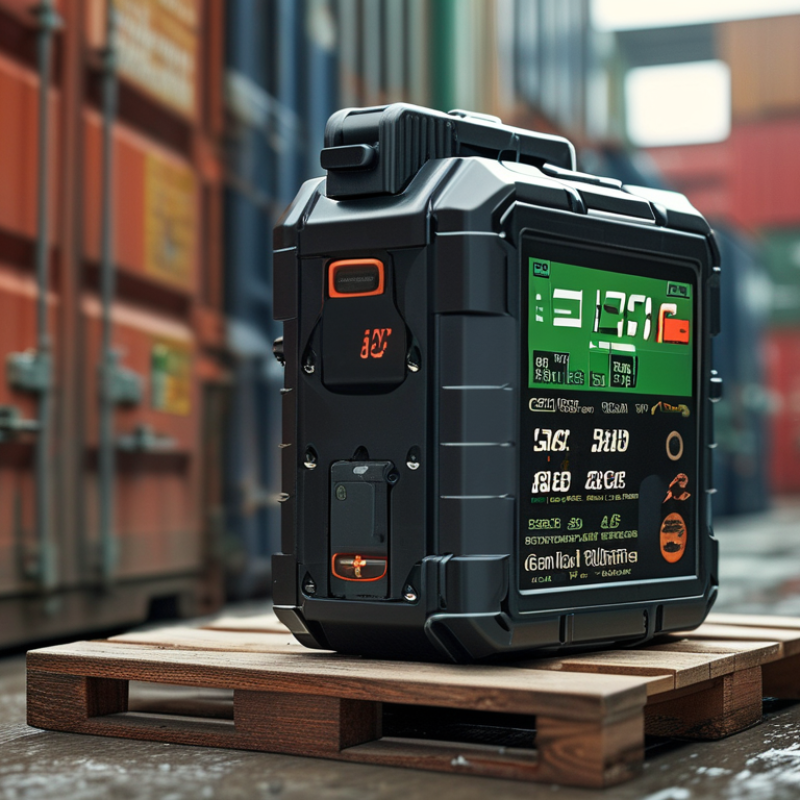
To extend a LoRaWAN tracker’s battery life, start with a measured energy budget, not a hopeful runtime estimate. A 3.6 V, 2.4 Ah battery stores 8.64 Wh under rated conditions. That figure is useful, but it is not fully available to the electronics. Voltage conversion, cold temperatures, aging, and cutoff limits reduce usable energy.
In a field test, record battery voltage under load, not only at rest. Short radio bursts can reveal weaknesses that a simple multimeter misses.
Convert the budget into a time-based target. For 30 days, 8.64 Wh allows 12 mW on average. For 90 days, the ideal limit falls to 4 mW. At 3.6 V, those figures equal about 3.3 mA and 1.1 mA average current. These are whole-system averages. The sensor, microcontroller, regulator, and radio must share them.
A tracker sleeping at 20 µA can still waste energy through frequent uplinks, long receive windows, or weak signal conditions. Keep packets compact and measure each operating state separately.
Use real measurements to correct the spreadsheet. Log sleep current, sensor warm-up time, transmit peaks, and report intervals. A current meter with suitable sampling is valuable here.
My first estimate treated 8.64 Wh as a fixed promise. That assumption was too generous. An 80 percent usable-energy estimate may be safer, giving about 6.9 Wh before further losses. Recheck the estimate after cold-weather testing, because an indoor tracker may behave differently on a winter fence.
How to Extend LoRaWAN Tracker Battery Life?
For battery-powered trackers, selecting Class A is usually the most effective starting point. It keeps the radio asleep during most of the tracking cycle. The device sends an uplink, then briefly opens two receive windows. After that, it sleeps again. This pattern reduces listening time and supports long field operation. In practical deployments, Class A works well for cargo tags, outdoor sensors, and location beacons that do not need instant commands. It is not a magic switch. Battery life still depends on transmission frequency, payload size, network coverage, and temperature. Poor coverage can force repeated transmissions and drain power quickly.
Tips: Use Class A with sensible reporting intervals. Send only necessary data. Avoid confirmed messages unless delivery matters. Keep payloads compact. Test the tracker indoors and outdoors, because real conditions often change battery results. A shorter spreading factor may reduce airtime, but it requires a reliable signal. Measure current consumption instead of trusting estimates.
I once saw a tracker lose power much sooner than expected because its reporting interval was too aggressive. The device worked correctly, but the configuration was wasteful. Class A cannot fix excessive updates or weak antenna placement. Set the transmit power carefully within regional requirements. Schedule configuration changes during planned uplinks. Also review sensor warm-up time, since some sensors consume more energy than the LoRaWAN radio. A field test lasting several weeks is more trustworthy than a single bench measurement. Battery forecasts are useful, but they remain forecasts.
| Evaluation Dimension | Class A | Class B | Class C |
|---|---|---|---|
| Uplink operation | The tracker transmits when it has data, such as a location report, alarm, or sensor reading. | The tracker transmits when needed, while also following scheduled receive opportunities. | The tracker transmits when needed, with the receiver otherwise kept available. |
| Downlink receive behavior | Opens two short, network-configured receive windows after each uplink. | Opens scheduled receive slots in addition to the receive windows after an uplink. | Keeps the receiver available whenever the device is not transmitting. |
| Receiver-on time | Lowest among the three classes because the receiver is normally asleep between transmissions. | Higher than Class A because scheduled listening periods consume additional energy. | Highest because the receiver is generally active except during transmission. |
| Battery-life suitability | Excellent Best choice for long-life, battery-powered trackers. | Moderate Suitable when periodic network-initiated communication is required. | Poor Generally unsuitable for small batteries or multi-year tracker deployments. |
| Typical tracker use case | Asset tracking, vehicle monitoring, logistics, agriculture, and periodic location reporting. | Applications requiring scheduled downlinks, such as timed commands or synchronized control. | Mains-powered equipment or applications requiring frequent, low-latency downlinks. |
| Downlink responsiveness | Limited to the receive windows following an uplink; the device may need to transmit before receiving a command. | More predictable than Class A because receive slots are scheduled, but timing depends on network synchronization. | Fastest response because the device can receive almost continuously. |
| Network synchronization requirement | No periodic beacon synchronization is required for normal Class A operation. | Requires synchronization with network beacons to maintain scheduled receive slots. | Does not require Class B beacon scheduling for its normal receive behavior. |
| LoRaWAN device-class status | Mandatory baseline mode implemented by all LoRaWAN end devices. | Optional mode that adds scheduled receive capability to Class A behavior. | Optional mode that extends Class A behavior with nearly continuous reception. |
| Recommended battery-saving decision | Choose Class A, keep uplinks event-driven or periodic, minimize payload size, and avoid unnecessary downlinks. | Use only when scheduled downlinks justify the additional receive energy. | Use only when rapid downlink response is essential and battery consumption is acceptable. |
Note: Actual battery life also depends on transmission frequency, payload size, spreading factor, signal conditions, temperature, sensor and GNSS usage, battery capacity, and network configuration.
How to Extend LoRaWAN Tracker Battery Life?
Adaptive Data Rate (ADR) reduces airtime across SF7–SF12 links. It adjusts spreading factor and transmit power according to network conditions. Lower spreading factors send the same payload faster. That means less radio activity and lower energy use. Semtech’s LoRa airtime calculator shows a 20-byte payload taking roughly 0.05 seconds at SF7, but about 1.2 seconds at SF12. Actual results depend on bandwidth, coding rate, headers, and regional limits. The LoRaWAN Link Layer Specification recommends ADR for mostly stationary devices with stable radio conditions. Mobile trackers need caution. Their signal changes quickly.
In field testing, ADR can improve battery life, but it is not magic. A tracker may remain at SF12 after entering a basement or rural shadow. Repeated uplinks then consume much more energy. The LoRa Alliance Battery Life white paper models multi-year operation under controlled traffic, payload, and battery assumptions. Real deployments are less tidy. Use confirmed ADR settings only when necessary, and monitor data rate, gateway diversity, retransmissions, and battery voltage. A useful rule is simple: measure before changing.
Tips: Start with SF7 where coverage allows. Keep payloads compact. Avoid frequent confirmed messages. Let the network collect several uplinks before judging ADR. Log every data-rate change. If a moving tracker crosses coverage zones, test ADR beside real roads, buildings, and trees. A perfect lab result can fail outdoors.
How to Extend LoRaWAN Tracker Battery Life?
Limit Retries Under ETSI EN 300 220’s 1% Duty-Cycle Rule
Every failed uplink can drain a tracker twice: once during transmission, then again during recovery. Under ETSI EN 300 220, a 1% duty-cycle limit allows only 36 seconds of airtime per hour. That equals 864 seconds daily, shared across permitted transmissions. A long packet, repeated several times, consumes this allowance quickly. It can also delay nearby devices using the same channel.
A practical design should cap retries by message type. One retry may suit routine temperature data. An alarm needs stronger handling, but unlimited repetition is neither efficient nor compliant. Use confirmed messages sparingly, add random backoff, and record the last transmission time. A short device log can reveal whether failures come from weak coverage, poor antenna placement, or excessive retry settings. Sometimes the retry logic is the real battery problem.
Industry scale makes this detail important. GSMA Intelligence forecasts 34.4 billion IoT connections by 2030, increasing pressure on shared radio resources. The Things Industries’ LoRaWAN Traffic Study also highlights airtime as a key capacity constraint in dense deployments. These figures are not battery measurements, but they support a simple engineering choice: send less, retry carefully, and measure real field behavior. One overlooked issue remains temperature. Cold batteries may deliver less usable capacity, making an acceptable retry policy look inadequate in winter.
How to Extend LoRaWAN Tracker Battery Life?
Validate Runtime Using Sleep Current, TX Peaks, and Temperature Data
Battery-life estimates often fail because they use nominal capacity alone. A better test records sleep current, transmission peaks, packet frequency, and temperature. In field tests, many trackers sleep below 10 µA but briefly draw 40–250 mA during transmission. That short peak can cause voltage sag, especially in cold weather. LoRaWAN Specification 1.0.4 supports long sleep periods, but every uplink, retry, sensor reading, and downlink changes the result.
Calculate average current from measured intervals, not datasheet promises. For example, a device drawing 8 µA for 59 minutes and 120 mA for one minute averages about 42 µA before sensor losses. IEC 60086-2 capacity testing uses controlled temperature and discharge conditions, while real trackers face vibration, weak coverage, and battery aging. Published battery testing commonly shows notable capacity loss below 0°C. My first estimates were too optimistic. I ignored startup current.
Tips: Place a precision shunt or power analyzer beside the battery. Capture the complete transmit waveform, including retries. Repeat tests at 25°C, 0°C, and −20°C. Compare measured capacity with the manufacturer’s rated value. Log voltage during each TX peak. A tracker that resets during transmission may need better power-path design, not a larger battery. Recheck the model after firmware changes. Small changes matter.
Validate runtime by checking sleep current, radio transmission peaks, and operating temperature. The representative validation data below shows how temperature can affect low-power behavior and transmit demand.
Sleep current is measured in microamps, while transmission peaks are measured in milliamps. Lower sleep current extends standby time, and limiting unnecessary transmissions reduces battery stress and total energy consumption. Use the same test temperatures and radio settings when validating the final battery runtime.


For those larger-sized parts, or smaller quantity runs, we have 2 independent powder coat booths and ovens. The quality, durability and affordability of today’s powder coating finishes make this the process of choice for world-class companies.
Powder coating advantages over other forms of coating are many. Materials used in the Powder coating process can be metals and non-metals that come in a multitude of thicknesses, textures, colors, etc. Another of Powder coating’s biggest advantages over conventional coatings is its ability to create finishes in many different textures. Powder Coating Booths allow us the ability to apply these advantages to large products.
Tri-State Fabricators runs a full-service conveyor line for painting. Wet painting can provide protection or decoration to many different part styles. From start to finish, every project is easier to undergo random and point-based inspection by our skilled painting team.
Advantages to our Wet Paint Line are these lines start with product prep and ends with a thorough inspection of a high quality finished product. Our ability to complete large and small projects with a superior finish and doing so in a timely and economical fashion. This passes along the savings in production to our customers. When powder coating ins not an option, our Wet Paint Line gets the job done right the first time.
When the parts get big and heavy we roll-out our custom paint racks and oversize booth. By utilizing our partnerships with all the major paint brands, we can match virtually any color with wet paint.
The advantages of having access to a Wet Paint Booth are many. Large projects of many different shapes can be loaded into the booth. The Wet Paint Booth offers an environment that is much more controlled than a typical parts painting operation.
Not only are they used because of their controlled environment, but they’re are also advantageous when it comes to applying paint to parts that are needed in industries that require specialty coatings such as medical, aerospace, etc.
Our military forces have some very high standards when it comes to the finish of their vehicles and equipment. From the first pre-treatment step to final coat, it takes a great deal of knowledge and experience to protect the men and women of our armed forces. They deserve only the best, and Tri-State Fabricators provides it.
All of our processes are closely monitored by our staff and management teams. Both of which are highly trained in the processes of metal fabrication and finishing. Tri-State Fabricators’ goal is to always fully satisfy each and every customer, including the military. We will always put a 110% into what we do.
Abrasive media blasting is an excellent way to remove old paint, rust, and increase the paint/powder adhesion. Glass beads produce a much smoother and brighter finish than angular abrasives; leaving the part clean yet without any dimensional change. Chemically inert and environmentally friendly, we can recycle our beads approximately 30 times; making them a more preferred method of metal cleaning or surface finishing.
Advantages to Glass Bead Blasting are many. Glass bead blast media is used when a project is needing rough surfaces need to become smooth for applications of coatings such as paint. It is typically used to clean paint and rust from a product surface without deforming the surface it is being used on. Overall, compared to many other blasting media, Glass Bead Blasting is a very economical choice and those savings are always passed on to our customers.
Tri-State Fabricators utilize a zinc phosphate wash to clean and etch the material to ensure the best paint adhesion possible. The unique design of our 3-stage wash system does the work like a 5-stage. From Cleaning and rinsing to conversion coating and post-treatment, Our Part Washing process is a complete service and works throughout the fabrication service and the finishing service.
Along with the previously mentioned benefits, Curing is a vital chemical reaction that leaves the product finish hard and relatively safe from mild abrasion and aggressive corrosion. This process can be done in more than one way; ambient air-dry or in curing ovens at temps that exceed 240°.
From fixing paint mistakes (someone else’s of course) to simply cleaning our paint line hooks, our burn-off oven is put to good use. After a quick burn-off, a little clean up, and a fresh coat of paint, your parts will look better than new.
Why does our Burn-Off Oven work so well? Because super heating the air around parts turns the materials into ashes. From paint and powder coatings to rubber and machining oils, high temps do the job without degrading the integrity of the part.
Masking is a vital part of producing high quality products. We have die-cut masking patterns to protect machined surfaces as well as a wide range of plugs and caps to protect threaded holes and bolts. We provide permanent and temporary masking.
Masking allows the selected sections of a product to be protected from a fabrication or finishing service. This can be with both chemicals when etching and tapes, paints when only finishing just a section of the product. Masking is great in aiding the customization process of a project.
Screen printing is a photographic process that transfers artwork onto a porous nylon screen which allows colored ink to flow through the screen and be deposited on an aluminum or plastic component. We can generally have just about any design created onto a screen for your parts.
Some of the advantages of Screen Printing are, brand recognition for your business displaying on your products, assembly instructions, product warnings/hazards, etc. Tri-State Fabricators produces Screen Printing of the highest quality so you know it’s durable.
Metal Finishing is the art of treating the exterior portion of product, often metal but can also be made of other materials, so that the surface is clean and free of any debris. Then the process of applying coats or either paint of powder coat takes place. This coating process improves the quality of the product in both appearance and resistance to wear and corrosion.
Tri-State Fabricators, Inc., understands that a project typically isn’t complete until a high-quality finish has been added to your product. This is why our painting and powder coating teams continuously inspect the products throughout the Metal Finishing process.