An Industrial Bagging Machine weighs, fills, and closes bags, turning loose product into a consistent, transport-ready package. Depending on the material, it may handle powders, grains, pellets, or other bulk goods. Picture a hopper feeding product into an open bag while sensors monitor the target weight. Small adjustments matter. A few grams can add up across a long production run.
The wider machinery market shows why this equipment deserves careful attention. PMMI’s 2024 State of the Industry report places U.S. packaging machinery shipments at about $10.9 billion in 2023. That figure covers packaging machinery broadly, not bagging machines alone. It signals a substantial sector, but it does not prove that every plant needs automation. As packaging machinery specialist Jorge Izquierdo of PMMI has said, “Automation is no longer a luxury; it is a necessity.” The right lesson is not to automate blindly. It is to identify a real bottleneck, then assess whether a bagging system can address it.
A useful evaluation starts with the product, required output, bag material, and weighing accuracy. Dust control, changeover time, operator access, and cleaning needs deserve equal attention. They are easy to overlook on a polished specification sheet. This guide explains what an Industrial Bagging Machine is, how its main components work, and which questions help buyers compare systems. No machine is perfect. The best choice is the one that fits the actual line, including its awkward corners and daily constraints.
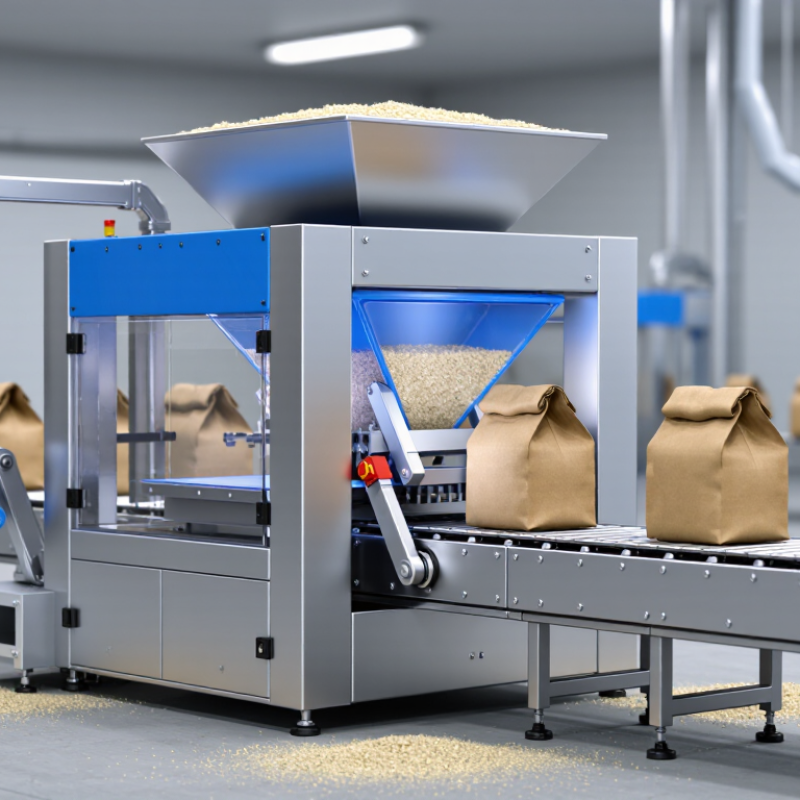
An industrial bagging machine is equipment that measures and fills products into bags, then closes or seals them for handling and shipment. Depending on the product, it may use gravity, an auger, or a weigh scale to feed material. Typical components include a product hopper, bag holder, filling spout, controls, and a sealing unit. Some systems form bags from a roll of film; others fill pre-made sacks. In a plant, operators may adjust settings for bag size, target weight, and product flow. Small details matter: dusty powder behaves differently from free-flowing pellets.
The term covers a range of machines, not one fixed design. A line packing flour may need dust extraction, while a line packing grain may prioritize gentle feeding and accurate weighing. Grand View Research’s Packaging Machinery Market Size, Share & Trends Analysis Report estimated the global packaging machinery market at USD 45.7 billion in 2022, with projected annual growth of 4.7% from 2023 to 2030. That broad figure includes many machine types; it does not measure baggers alone. A useful specification should therefore begin with the material, bag format, target rate, and acceptable weight variation. Real conditions can still expose gaps. Humidity, residue, or a poorly aligned bag can interrupt an otherwise capable system.
An industrial bagging machine fills bags with a measured quantity of product, such as powders, granules, or pellets. The chart compares example target weights for common bag formats; actual capacities vary by product and application.
An industrial bagging machine fills and closes bags with measured quantities of bulk material. Its hopper buffers product before feeding it into a weighing or volumetric dosing system. Load cells can check weight during filling; the result depends on calibration and steady product flow. The bag clamp holds the mouth open beneath the filling spout, while an air-assisted opener may separate flexible bag walls.
Small details matter. A dusty spout can affect both fill accuracy and sealing.
After filling, a sealing unit closes the bag using heat, stitching, or another suitable method. A takeaway conveyor moves it to inspection or palletizing. Sensors monitor bag presence, position, and faults; the controller coordinates each step and lets operators adjust settings. Dust extraction may be needed where fine powders escape, though it adds maintenance and must suit the material.
Automation is growing across industry: the International Federation of Robotics reported 541,302 industrial robot installations worldwide in 2023 in its World Robotics 2024 report. That figure is not specific to bagging, but it reflects wider investment in automated production.
More automation is not always better. Changeovers, cleaning, and operator access deserve equal attention.
Industrial bagging starts when empty bags are placed on a filling spout or held by clamps. A scale or dosing system measures the product, then releases a set amount into each bag. Depending on the material, filling may use gravity, an auger, a belt, or airflow. Powder can raise dust; coarse granules may fall unevenly. Operators match the method to product flow and bag strength. The machine then settles the load, releases the bag, and sends it toward sealing or stitching. Small adjustments matter.
The next steps protect weight accuracy and package integrity. A checkweigher can flag bags outside the target range, while inspection equipment may be added when the process requires it. Sealing jaws need suitable temperature and pressure for the packaging material. Not every line runs perfectly. A bag that looks full can still trap air or wrinkle at the seam, so operators inspect samples and adjust settings. Dust, humidity, and product changes can shift performance during a shift.
Tips: Keep bags dry and aligned before loading. Confirm target weight with test fills, and inspect seals after adjustments. Record recurring jams; the cause may be upstream, not the bagger.
Industrial bagging machines fill and close bags at production scale, but their designs vary with product flow, package size, and handling needs. An open-mouth bagger fills pre-made bags from the top. It suits powders, grains, pellets, and other materials that can be weighed into a waiting bag. A clamp holds the bag beneath the filling spout while a scale checks the target weight. Simple, but bag placement still matters.
Valve baggers fill bags through a small corner opening. The valve can close around the filling nozzle, which helps limit spillage with fine powders such as cement or flour. Dust control needs attention.
A form-fill-seal machine makes bags from a roll of film, fills them, then seals each package. This can reduce manual handling, though film choice and sealing temperature affect package quality.
Bulk bag fillers handle much larger loads, often for powders, granules, or pellets moved by forklift. They may include a frame, weighing system, and lifting attachments to keep the bag stable during filling. Choosing a machine depends on more than speed: check product flow, bag strength, target accuracy, and cleaning access. Even a well-sized machine can disappoint if bag quality varies; that detail is easy to overlook. Operators should test real material, not just rely on a specification sheet. No setup fits every line.
An industrial bagging machine packages products whose flow behavior can vary widely. Common materials include flour, mineral powders, cement, fertilizer, grain, animal feed, plastic pellets, and dried food ingredients. Fine powders can create airborne dust and may bridge inside a hopper. Granules usually flow more freely, but can break or scatter if dropped too quickly. Dust matters.
Material properties guide equipment selection. Bulk density affects the required filling range, while moisture and temperature can change product flow. Abrasive materials may wear contact surfaces faster.
A reliable assessment considers the product, bag type, target weight, and operating environment together. A sample test can reveal problems that a specification sheet misses.
Bagging systems serve agriculture, food processing, construction materials, chemical production, and plastics manufacturing. Food applications may require easy-to-clean surfaces and careful control of product contact. Cement and mineral operations often need dust collection near filling points. Feed and grain plants may prioritize steady throughput and flexible bag sizes. Small details count. Operators should also check how bags are presented, filled, sealed, and moved downstream. The best arrangement depends on actual material behavior; assumptions based on appearance alone can lead to inconsistent weights or messy filling.



For those larger-sized parts, or smaller quantity runs, we have 2 independent powder coat booths and ovens. The quality, durability and affordability of today’s powder coating finishes make this the process of choice for world-class companies.
Powder coating advantages over other forms of coating are many. Materials used in the Powder coating process can be metals and non-metals that come in a multitude of thicknesses, textures, colors, etc. Another of Powder coating’s biggest advantages over conventional coatings is its ability to create finishes in many different textures. Powder Coating Booths allow us the ability to apply these advantages to large products.
Tri-State Fabricators runs a full-service conveyor line for painting. Wet painting can provide protection or decoration to many different part styles. From start to finish, every project is easier to undergo random and point-based inspection by our skilled painting team.
Advantages to our Wet Paint Line are these lines start with product prep and ends with a thorough inspection of a high quality finished product. Our ability to complete large and small projects with a superior finish and doing so in a timely and economical fashion. This passes along the savings in production to our customers. When powder coating ins not an option, our Wet Paint Line gets the job done right the first time.
When the parts get big and heavy we roll-out our custom paint racks and oversize booth. By utilizing our partnerships with all the major paint brands, we can match virtually any color with wet paint.
The advantages of having access to a Wet Paint Booth are many. Large projects of many different shapes can be loaded into the booth. The Wet Paint Booth offers an environment that is much more controlled than a typical parts painting operation.
Not only are they used because of their controlled environment, but they’re are also advantageous when it comes to applying paint to parts that are needed in industries that require specialty coatings such as medical, aerospace, etc.
Our military forces have some very high standards when it comes to the finish of their vehicles and equipment. From the first pre-treatment step to final coat, it takes a great deal of knowledge and experience to protect the men and women of our armed forces. They deserve only the best, and Tri-State Fabricators provides it.
All of our processes are closely monitored by our staff and management teams. Both of which are highly trained in the processes of metal fabrication and finishing. Tri-State Fabricators’ goal is to always fully satisfy each and every customer, including the military. We will always put a 110% into what we do.
Abrasive media blasting is an excellent way to remove old paint, rust, and increase the paint/powder adhesion. Glass beads produce a much smoother and brighter finish than angular abrasives; leaving the part clean yet without any dimensional change. Chemically inert and environmentally friendly, we can recycle our beads approximately 30 times; making them a more preferred method of metal cleaning or surface finishing.
Advantages to Glass Bead Blasting are many. Glass bead blast media is used when a project is needing rough surfaces need to become smooth for applications of coatings such as paint. It is typically used to clean paint and rust from a product surface without deforming the surface it is being used on. Overall, compared to many other blasting media, Glass Bead Blasting is a very economical choice and those savings are always passed on to our customers.
Tri-State Fabricators utilize a zinc phosphate wash to clean and etch the material to ensure the best paint adhesion possible. The unique design of our 3-stage wash system does the work like a 5-stage. From Cleaning and rinsing to conversion coating and post-treatment, Our Part Washing process is a complete service and works throughout the fabrication service and the finishing service.
Along with the previously mentioned benefits, Curing is a vital chemical reaction that leaves the product finish hard and relatively safe from mild abrasion and aggressive corrosion. This process can be done in more than one way; ambient air-dry or in curing ovens at temps that exceed 240°.
From fixing paint mistakes (someone else’s of course) to simply cleaning our paint line hooks, our burn-off oven is put to good use. After a quick burn-off, a little clean up, and a fresh coat of paint, your parts will look better than new.
Why does our Burn-Off Oven work so well? Because super heating the air around parts turns the materials into ashes. From paint and powder coatings to rubber and machining oils, high temps do the job without degrading the integrity of the part.
Masking is a vital part of producing high quality products. We have die-cut masking patterns to protect machined surfaces as well as a wide range of plugs and caps to protect threaded holes and bolts. We provide permanent and temporary masking.
Masking allows the selected sections of a product to be protected from a fabrication or finishing service. This can be with both chemicals when etching and tapes, paints when only finishing just a section of the product. Masking is great in aiding the customization process of a project.
Screen printing is a photographic process that transfers artwork onto a porous nylon screen which allows colored ink to flow through the screen and be deposited on an aluminum or plastic component. We can generally have just about any design created onto a screen for your parts.
Some of the advantages of Screen Printing are, brand recognition for your business displaying on your products, assembly instructions, product warnings/hazards, etc. Tri-State Fabricators produces Screen Printing of the highest quality so you know it’s durable.
Metal Finishing is the art of treating the exterior portion of product, often metal but can also be made of other materials, so that the surface is clean and free of any debris. Then the process of applying coats or either paint of powder coat takes place. This coating process improves the quality of the product in both appearance and resistance to wear and corrosion.
Tri-State Fabricators, Inc., understands that a project typically isn’t complete until a high-quality finish has been added to your product. This is why our painting and powder coating teams continuously inspect the products throughout the Metal Finishing process.

