


Industrial Panel Pc systems are rugged computers designed for demanding factory environments. They combine a display, processor, storage, and industrial interfaces in one sealed enclosure. Unlike office computers, they must tolerate vibration, dust, temperature changes, and continuous operation. The screen may show a machine dashboard, while the computer processes sensor data and sends commands through Ethernet, USB, serial, or fieldbus connections. In practice, an operator can stand beside a packaging line, touch an alarm message, and adjust production settings within seconds.
Market evidence shows why this technology remains relevant. Grand View Research estimates that the global industrial PC market will expand at a compound annual growth rate above 7% through 2030. MarketsandMarkets also identifies manufacturing, energy, and transportation as major application sectors. These reports reflect a broader shift toward connected equipment, edge computing, and real-time operational visibility. However, market forecasts are not guarantees. Actual value depends on installation conditions, software compatibility, cybersecurity controls, and maintenance quality.
A reliable Industrial Panel Pc should therefore be evaluated beyond screen size or processor speed. Engineers examine ingress protection, thermal design, mounting options, sunlight readability, and lifecycle support. A fanless unit may reduce dust intake, but passive cooling can limit performance under extreme heat. That trade-off matters. This guide explains the internal architecture, working process, and practical selection criteria behind these systems. It also questions a common assumption: a stronger computer is not always the better industrial solution.
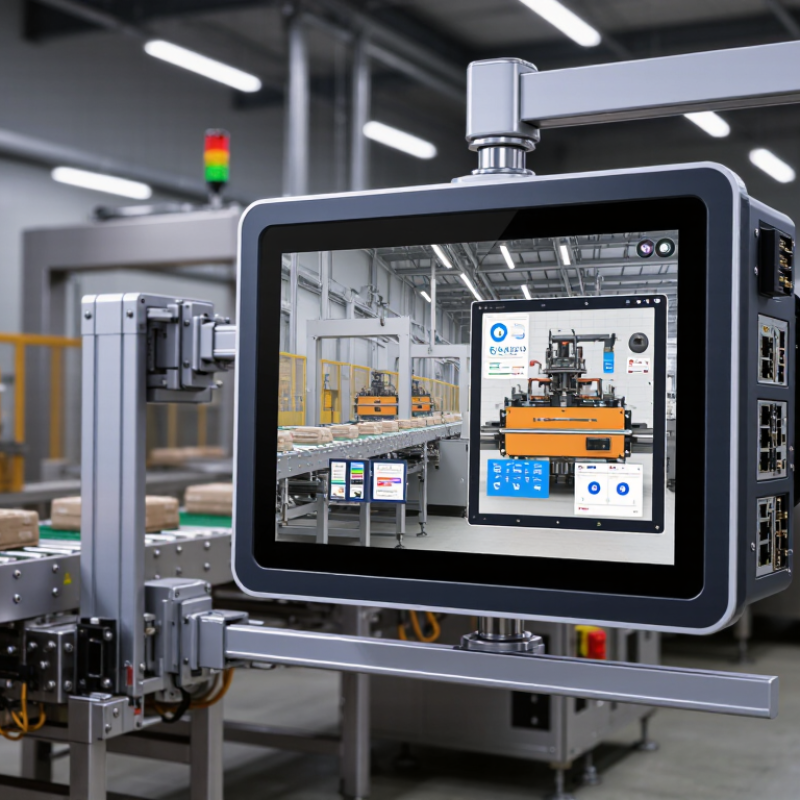
An industrial panel PC combines a computer, display, and enclosure in one operator interface. Its processor runs control software, dashboards, and data collection tasks. The touchscreen usually supports gloves, wet fingers, and repeated inputs. Inside, solid-state storage, industrial memory, cooling systems, and protected connectors support demanding environments. A sealed metal or reinforced housing helps resist dust, vibration, and temperature changes. This is where the definition gets practical.
Industrial panel PCs connect with PLCs, sensors, cameras, drives, and factory networks. They translate machine signals into readable charts, alarms, recipes, and production records. IDC’s 2024 Worldwide Edge Spending Guide forecasts global edge-computing spending will reach 378 billion dollars by 2028. That growth increases demand for local processing near machines. Faster decisions matter when a delayed screen can interrupt a production line.
Nonstop operation requires more than a powerful processor. Engineers check thermal design, storage endurance, brightness, touch accuracy, and long-term component availability. MarketsandMarkets’ 2024 Industrial PC Market report projects continued market growth through 2029, driven partly by automation and connected production. In field commissioning, cable access and screen readability often matter more than impressive specifications. A perfect specification is rare. Maintenance still matters. Dust buildup, unstable power, and software faults can defeat rugged hardware. For reliable 24/7 use, teams need scheduled inspections, backup settings, surge protection, and tested restart procedures.
An industrial panel PC combines a computer, display, and control interface in one rugged enclosure. It processes machine data near the production area, where dust, vibration, and temperature changes are common. Its processor, or CPU, runs operating instructions and calculates responses from connected equipment. A faster CPU can handle several data streams, but speed alone does not guarantee reliable control.
RAM holds temporary data while applications are running. For example, it may store sensor readings, alarm states, and screen updates. More RAM helps when operators monitor multiple machines or use demanding visualization software. However, poorly designed software can still consume memory and cause slow responses. That delay matters. The storage drive keeps the operating system, programs, production records, and configuration files after power is removed. Solid-state storage usually handles vibration better than mechanical drives, although every drive needs suitable temperature and endurance ratings.
The I/O interface connects the panel PC with the physical process. Digital inputs can detect a switch position, while analog inputs measure values such as pressure or temperature. Outputs can activate relays, valves, or warning lights through properly rated control circuits. Communication ports may exchange data with controllers, scanners, and industrial networks. The CPU reads incoming signals, places working values in RAM, applies programmed logic, and sends commands through I/O. Storage records selected events for maintenance review. In practice, timing is not always perfect. Network traffic, software errors, or poor grounding can introduce unexpected delays, so engineers should test the complete data path under realistic operating conditions.
An industrial panel PC combines a display, computer, and touchscreen in one rugged enclosure. It collects data from machines, runs control software, and presents live readings to operators. Unlike office computers, it is designed for dust, vibration, electrical noise, and continuous operation. The IEC 60529 IP65 rating is especially important. The first 6 means the enclosure is dust-tight. The second 5 indicates protection against water jets from any direction. It does not mean the computer can survive immersion.
The stated operating range of -20°C to 60°C supports demanding factory environments, outdoor cabinets, and cold storage areas. However, temperature ratings need careful interpretation. Internal heat from the processor, sunlight, and sealed cabinet design can raise actual temperatures. At low temperatures, displays may respond slowly, and condensation can become a hidden risk. I have seen installations fail because moisture was ignored, even when the enclosure rating looked sufficient. That detail is easy to miss.
Tips: Mount the panel with a proper gasket and tighten fasteners evenly. Keep cable entries sealed. Avoid spraying cleaning fluid directly at connectors. Check airflow, cabinet temperature, and startup behavior during seasonal changes. A thermal test under real workload is more useful than relying only on a specification sheet. One imperfect assumption can become expensive. Also, IP65 protection may weaken after repeated maintenance, damaged seals, or incorrect replacement parts. Record inspections and test the touchscreen with gloves if operators wear them.
An industrial panel PC designed to IEC 60529 IP65 is completely protected against dust and protected against water jets from any direction. Its specified operating range of -20°C to 60°C supports reliable operation across a broad industrial temperature environment.
An industrial panel PC combines a computer, display, and control interface in one rugged enclosure. It often operates near dust, vibration, heat, and electrical noise. The touchscreen presents an HMI, or human-machine interface. Operators can view temperatures, change settings, and acknowledge alarms with a gloved finger. Behind the screen, software processes data and sends commands to connected equipment.
The PLC handles real-time control tasks. It reads sensors, checks programmed conditions, and activates motors or valves. The panel PC usually does not replace the PLC. Instead, it displays PLC information and provides a clearer operating layer. Ethernet protocols connect these devices through structured data exchanges. Depending on the system, communication may carry status values, alarm codes, production counts, or control commands. A short network delay can matter. A wrong address can stop the conversation completely.
Tips: Keep critical safety logic inside the PLC, not only on the touchscreen. Use clear alarm messages and test them under realistic conditions. Separate control traffic from general office traffic when possible. Check cable shielding, connector quality, and network settings during commissioning. The neat diagram is useful, but reality is messier. A beautiful HMI can still confuse operators during a noisy, urgent event. Field experience shows that simple screens often work better. Still, every application needs review, because one interface cannot fit every process.
An industrial panel PC combines a display, computing hardware, storage, and a protective enclosure. It runs software while presenting controls directly on a machine or operator station. Touch input can replace a separate keyboard and mouse. In harsh areas, sealed fronts help resist dust, moisture, vibration, and accidental splashes. Real conditions matter.
Display size should match viewing distance and available panel space. A 7-inch screen suits compact equipment, while a 15-inch or larger display improves visibility for detailed diagrams. Brightness, viewing angle, touch response, and glove compatibility also affect daily use. A larger screen is not automatically better. It may create installation problems.
Performance depends on processor capability, memory, storage type, and operating temperature. Select enough capacity for the control software, dashboards, and future updates, but avoid paying for unused power. Interfaces deserve equal attention. Ethernet, serial ports, USB, digital I/O, and field communication options must match existing equipment. Adapters can work, but they add failure points. MTBF offers a useful reliability estimate, not a guaranteed service life. Review the test conditions, temperature range, and workload behind that figure. I have seen specifications look impressive until those details were checked. Leave room for cooling, cable bends, and maintenance access. Fit matters.
| Selection Dimension | Entry-Level Panel PC | Standard Industrial Panel PC | High-Performance Panel PC | Selection Notes |
|---|---|---|---|---|
| Typical display size | 7–10.1 inches | 12.1–15.6 inches | 17–24 inches | Choose according to viewing distance, available panel space, and the amount of information shown simultaneously. |
| Common resolution | 800 × 480 to 1280 × 800 | 1280 × 800 to 1920 × 1080 | 1920 × 1080 or higher | Higher resolution improves data density, but may increase graphics, power, and software requirements. |
| Touch technology | Projected capacitive or resistive | Projected capacitive; optional resistive | Projected capacitive, resistive, or non-touch | Projected capacitive supports gestures; resistive touch is useful with gloves, tools, or wet conditions. |
| Processor class | Low-power x86 or ARM, typically 2–4 cores | Embedded x86, typically 4–8 cores | Higher-tier x86, typically 6–16 cores | Select based on operating system, HMI software, database load, analytics, and required response time. |
| Typical memory | 4–8 GB RAM | 8–16 GB RAM | 16–64 GB RAM | Memory should allow room for the operating system, HMI application, communication services, and future updates. |
| Storage | 64–256 GB industrial-grade SSD or eMMC | 128–512 GB industrial-grade SSD | 256 GB–2 TB SSD; optional redundant storage | Industrial SSDs are preferred where vibration, temperature variation, or continuous operation may affect consumer storage. |
| Ethernet connectivity | 1 × Gigabit Ethernet | 2 × Gigabit Ethernet | 2–4 × Gigabit or multi-gigabit Ethernet | Multiple ports can separate machine control, plant networks, cameras, and maintenance access. |
| Serial and industrial interfaces | 1–2 × RS-232/422/485; optional GPIO | 2–4 × RS-232/422/485; GPIO; optional CAN | Multiple serial ports, CAN, GPIO, and optional fieldbus expansion | Verify signal type, isolation, connector style, and protocol support for PLCs, drives, sensors, and controllers. |
| USB and display interfaces | 2–4 × USB; HDMI or DisplayPort | 4–6 × USB; HDMI, DisplayPort, or VGA | 6 or more USB ports; multiple digital display outputs | Check connector accessibility, locking options, cable clearance, and the number of external displays required. |
| Cooling method | Fanless | Fanless or controlled fan | Controlled fan or hybrid cooling | Fanless designs reduce dust entry and mechanical wear; active cooling supports higher sustained loads. |
| Typical operating temperature | 0 to 50 °C | -20 to 60 °C | -20 to 60 °C; wider ranges available for specialized designs | Actual limits depend on CPU load, storage type, installation orientation, airflow, and display brightness. |
| Ingress protection | Front IP65 is common | Front IP65 or IP66 is common | Front IP65/IP66; full enclosure protection varies | IP ratings apply only to the tested area and configuration; cable glands, covers, and installation affect protection. |
| Mounting options | Panel mount, VESA, or desktop stand | Panel mount, VESA, wall, or arm mount | Panel, VESA, wall, arm, or rack integration | Confirm cutout dimensions, mounting depth, weight capacity, and service access before installation. |
| Typical MTBF target | Approximately 30,000–50,000 hours | Approximately 50,000–70,000 hours | Approximately 70,000–100,000 hours or more | MTBF is a statistical reliability estimate, not a guaranteed service life. Compare test conditions and calculation methods. |
| Best-fit applications | Basic machine HMI, kiosks, data entry, and equipment monitoring | Production lines, SCADA terminals, warehouse systems, and process control | Machine vision, dashboards, edge computing, analytics, and multi-display control rooms | Match processing capacity and interfaces to the complete automation architecture rather than selecting by screen size alone. |
Note: The specifications above represent realistic industry selection ranges for industrial panel PCs. Exact performance, environmental ratings, interface availability, and MTBF values vary by configuration and operating conditions.


For those larger-sized parts, or smaller quantity runs, we have 2 independent powder coat booths and ovens. The quality, durability and affordability of today’s powder coating finishes make this the process of choice for world-class companies.
Powder coating advantages over other forms of coating are many. Materials used in the Powder coating process can be metals and non-metals that come in a multitude of thicknesses, textures, colors, etc. Another of Powder coating’s biggest advantages over conventional coatings is its ability to create finishes in many different textures. Powder Coating Booths allow us the ability to apply these advantages to large products.
Tri-State Fabricators runs a full-service conveyor line for painting. Wet painting can provide protection or decoration to many different part styles. From start to finish, every project is easier to undergo random and point-based inspection by our skilled painting team.
Advantages to our Wet Paint Line are these lines start with product prep and ends with a thorough inspection of a high quality finished product. Our ability to complete large and small projects with a superior finish and doing so in a timely and economical fashion. This passes along the savings in production to our customers. When powder coating ins not an option, our Wet Paint Line gets the job done right the first time.
When the parts get big and heavy we roll-out our custom paint racks and oversize booth. By utilizing our partnerships with all the major paint brands, we can match virtually any color with wet paint.
The advantages of having access to a Wet Paint Booth are many. Large projects of many different shapes can be loaded into the booth. The Wet Paint Booth offers an environment that is much more controlled than a typical parts painting operation.
Not only are they used because of their controlled environment, but they’re are also advantageous when it comes to applying paint to parts that are needed in industries that require specialty coatings such as medical, aerospace, etc.
Our military forces have some very high standards when it comes to the finish of their vehicles and equipment. From the first pre-treatment step to final coat, it takes a great deal of knowledge and experience to protect the men and women of our armed forces. They deserve only the best, and Tri-State Fabricators provides it.
All of our processes are closely monitored by our staff and management teams. Both of which are highly trained in the processes of metal fabrication and finishing. Tri-State Fabricators’ goal is to always fully satisfy each and every customer, including the military. We will always put a 110% into what we do.
Abrasive media blasting is an excellent way to remove old paint, rust, and increase the paint/powder adhesion. Glass beads produce a much smoother and brighter finish than angular abrasives; leaving the part clean yet without any dimensional change. Chemically inert and environmentally friendly, we can recycle our beads approximately 30 times; making them a more preferred method of metal cleaning or surface finishing.
Advantages to Glass Bead Blasting are many. Glass bead blast media is used when a project is needing rough surfaces need to become smooth for applications of coatings such as paint. It is typically used to clean paint and rust from a product surface without deforming the surface it is being used on. Overall, compared to many other blasting media, Glass Bead Blasting is a very economical choice and those savings are always passed on to our customers.
Tri-State Fabricators utilize a zinc phosphate wash to clean and etch the material to ensure the best paint adhesion possible. The unique design of our 3-stage wash system does the work like a 5-stage. From Cleaning and rinsing to conversion coating and post-treatment, Our Part Washing process is a complete service and works throughout the fabrication service and the finishing service.
Along with the previously mentioned benefits, Curing is a vital chemical reaction that leaves the product finish hard and relatively safe from mild abrasion and aggressive corrosion. This process can be done in more than one way; ambient air-dry or in curing ovens at temps that exceed 240°.
From fixing paint mistakes (someone else’s of course) to simply cleaning our paint line hooks, our burn-off oven is put to good use. After a quick burn-off, a little clean up, and a fresh coat of paint, your parts will look better than new.
Why does our Burn-Off Oven work so well? Because super heating the air around parts turns the materials into ashes. From paint and powder coatings to rubber and machining oils, high temps do the job without degrading the integrity of the part.
Masking is a vital part of producing high quality products. We have die-cut masking patterns to protect machined surfaces as well as a wide range of plugs and caps to protect threaded holes and bolts. We provide permanent and temporary masking.
Masking allows the selected sections of a product to be protected from a fabrication or finishing service. This can be with both chemicals when etching and tapes, paints when only finishing just a section of the product. Masking is great in aiding the customization process of a project.
Screen printing is a photographic process that transfers artwork onto a porous nylon screen which allows colored ink to flow through the screen and be deposited on an aluminum or plastic component. We can generally have just about any design created onto a screen for your parts.
Some of the advantages of Screen Printing are, brand recognition for your business displaying on your products, assembly instructions, product warnings/hazards, etc. Tri-State Fabricators produces Screen Printing of the highest quality so you know it’s durable.
Metal Finishing is the art of treating the exterior portion of product, often metal but can also be made of other materials, so that the surface is clean and free of any debris. Then the process of applying coats or either paint of powder coat takes place. This coating process improves the quality of the product in both appearance and resistance to wear and corrosion.
Tri-State Fabricators, Inc., understands that a project typically isn’t complete until a high-quality finish has been added to your product. This is why our painting and powder coating teams continuously inspect the products throughout the Metal Finishing process.

