What Is a Marble Cutting Disc and How Does It Work?
When a marble slab meets a cutting tool, edge quality depends on more than blade speed. A Marble Cutting Disc uses diamond abrasives fixed along its rim to grind through calcium carbonate stone. As the disc rotates, tiny diamond particles remove material through controlled abrasion, rather than slicing like a knife. The steel core supports the cutting edge and helps maintain a stable path. Some discs have continuous rims for smoother finishes, while segmented designs can cut faster. The choice is not merely technical. Marble type, thickness, moisture, and tool power all affect performance.
In professional workshops, operators check the disc diameter, arbor size, rated RPM, and cutting direction before starting. They mark the line clearly, secure the slab, and apply steady pressure. Water cooling can reduce heat and airborne dust when the equipment permits wet cutting. Dry cutting demands suitable dust control and respiratory protection. Small chips often appear near the exit point, especially when pressure increases too quickly. That detail is easy to overlook. Even experienced users sometimes blame the disc before checking the setup. A reliable result comes from matching the disc to the stone and following the manufacturer’s instructions. This guide examines how a Marble Cutting Disc works, how its construction influences the cut, and why correct handling matters. No disc removes every risk. A perfect edge is never guaranteed.
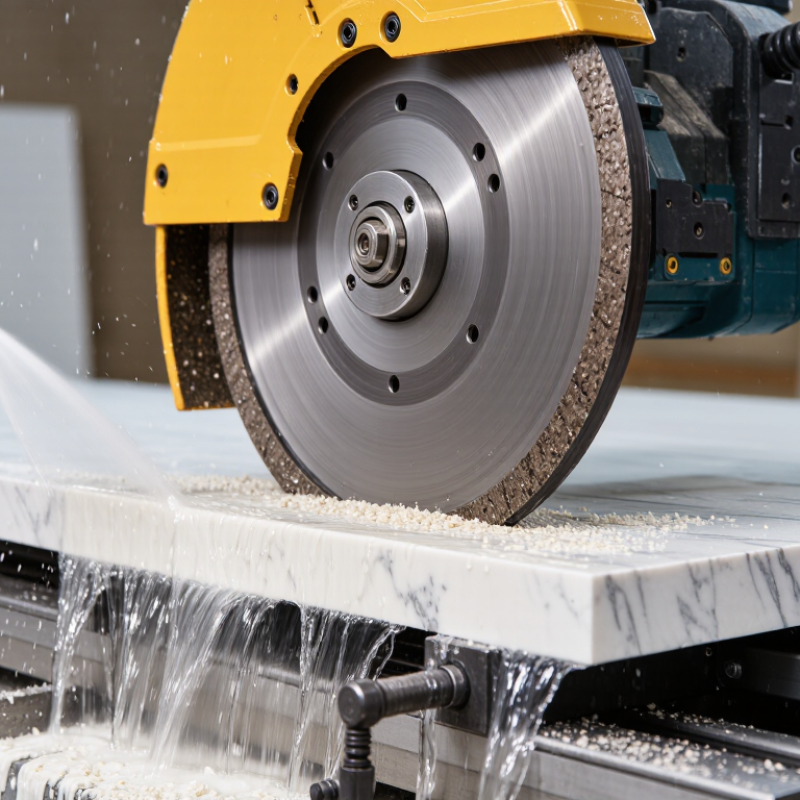
Definition and Purpose of a Marble Cutting Disc
A marble cutting disc is a circular tool designed to cut marble cleanly and accurately. It usually contains diamond particles along its cutting edge. These particles grind through the stone instead of tearing it apart. The disc may be used with a wet saw or a suitable handheld cutter. Its main purpose is to create straight cuts, shaped edges, and openings for sinks or fittings. Marble is softer than granite, but it can still chip easily.
During cutting, the disc rotates at high speed and removes tiny mineral particles from the surface. Water can cool the blade and reduce airborne dust. It also helps protect the marble from heat marks. A steady feed keeps pressure even across the stone. Forcing the disc may cause cracks, rough edges, or premature wear. I have found that slow, controlled movement often produces a better edge than extra pressure.
Small details matter. The disc must match the cutter, cutting method, and marble thickness. A continuous rim often supports smoother decorative cuts. Segmented edges may remove material faster, but they can leave a less polished finish. The operator should inspect the disc for damage before use and secure the marble firmly. Even experienced users can misjudge a fragile corner. That is the part worth reconsidering. A clean cut depends on the tool, the stone, and the person controlling both.
Main Components and Materials Used in Its Construction
What Is a Marble Cutting Disc and How Does It Work?
A marble cutting disc uses controlled abrasion to slice through marble. Its main cutting material is industrial diamond, not ordinary steel. Small diamond particles are fixed around the disc’s outer edge. As the disc rotates, these particles wear away the stone in tiny, repeated contacts. The disc removes material gradually, rather than cutting like a knife.
The disc’s steel core provides strength and keeps the shape stable at high speed. Its outer rim contains a bonding material that holds the diamond particles in place. Common bonds include metal, resin, and sometimes hybrid compounds. Metal bonds usually last longer, while resin bonds can produce smoother cuts. The choice depends on marble hardness, cutting speed, and the required edge quality. It is not always simple.
Some discs include segmented rims, continuous rims, or narrow cooling channels. A continuous rim can reduce edge chipping on polished marble. Segments may improve debris removal and airflow during longer cuts. Cooling holes or water channels help control heat, especially during deep cutting. Excessive heat can weaken the bond and discolor the stone. I have seen operators blame the marble when the real problem was pressure or poor cooling. The disc must also match the machine’s rotation speed, arbor size, and guard. Even a high-quality disc can cut poorly when these details are ignored. Loose handling creates vibration, rough edges, and uneven wear.
How a Marble Cutting Disc Cuts Through Stone
A marble cutting disc uses diamond particles fixed to a steel core or segmented rim. As the disc rotates, exposed diamonds scratch the stone repeatedly. They do not slice marble like a kitchen knife. Instead, thousands of tiny contact points create a controlled groove, called a kerf. The metal bond gradually wears, exposing fresh diamonds beneath the surface.
Water changes the cutting process. It cools the rim, carries away marble dust, and reduces thermal stress around the cut. A steady feed rate matters. Pushing too hard can overload the segments, while moving too slowly can polish the diamonds instead of allowing them to fracture the stone. The U.S. Geological Survey’s 2024 Mineral Commodity Summaries places U.S. dimension-stone production at roughly 1.5 million metric tons in 2023, showing the continuing scale of stone processing. Yet every slab behaves differently. Veins can redirect cracks.
Experienced operators inspect the disc before use, check its rated speed, and support the slab close to the cutting line. The Occupational Safety and Health Administration sets an airborne silica permissible exposure limit of 50 micrograms per cubic meter over an eight-hour shift. Marble usually contains less silica than engineered quartz, but dry cutting can still create hazardous respirable dust. Wet cutting is helpful, not magical. Poor water flow, excessive pressure, or a worn disc can still produce chipping, heat, and an uneven edge. Sometimes the cleanest result requires a slower pass than expected.
Choosing the Right Disc for Different Marble Cutting Tasks
A marble cutting disc uses diamond segments to grind through stone, rather than slicing it like a steel blade. The correct disc depends on marble hardness, thickness, finish, and cutting method. A continuous-rim diamond disc usually gives the cleanest edge for tiles, vanity panels, and visible corners. Its steady rim reduces chipping, although it cuts more slowly. A turbo-rim disc removes material faster and suits general workshop cuts. Its edge can be slightly rougher. Segmented discs work better for thick slabs or aggressive dry cutting, but they may leave more edge damage.
Match the disc diameter and maximum speed with the cutting machine. Never exceed the marked revolutions per minute. For polished marble, use a fine diamond specification and water cooling when the equipment allows it. Wet cutting controls heat and helps capture dust. OSHA’s respirable crystalline silica standard sets an eight-hour exposure limit of 50 micrograms per cubic meter, with an action level of 25 micrograms. Dust control is not optional.
The U.S. Geological Survey’s Mineral Commodity Summaries tracks dimension stone through production volume and value, reminding fabricators that stone waste has a measurable cost. Choose a faster disc only when the edge will be hidden. I still test an offcut first. Veins, fillers, and uneven density can defeat a perfect specification. Keep the feed pressure light. Let the diamonds work. Too much pressure often causes burning, vibration, and chipped corners.
What Is a Marble Cutting Disc and How Does It Work?
Choosing the right diamond cutting disc depends on the marble thickness, required edge quality, and cutting speed. The chart shows the theoretical maximum radial cutting depth for common disc diameters, calculated as half of the disc diameter.
Continuous-rim diamond disc Best for clean, precise marble cuts with reduced edge chipping. Use it for tiles, slabs, countertops, and visible edges.
Turbo-rim diamond disc Provides faster material removal while maintaining relatively good edge quality. Suitable for general-purpose marble cutting.
Segmented diamond disc Cuts aggressively and dissipates heat effectively, but it can produce a rougher edge and more chipping on delicate marble.
The chart values represent geometric maximum depth before accounting for the machine guard, arbor flange, blade design, and cutting clearance. Actual single-pass cutting depth will be lower.
Safe and Effective Use of a Marble Cutting Disc
What Is a Marble Cutting Disc and How Does It Work?
A marble cutting disc uses diamond particles to abrade marble rather than tear through it. As the disc rotates, its cutting rim gradually removes small stone particles. This action creates a clean kerf when the disc stays aligned with the marked line. In workshop use, I have found that steady movement matters more than speed. A sharp-looking cut can still hide small chips along the edge.
Safe and Effective Use of a Marble Cutting Disc
Before cutting, inspect the disc for cracks, uneven wear, or missing segments. Check that its rated speed matches the cutting tool. Secure the marble on a stable, level surface, leaving the cut line fully supported. Wear eye protection, hearing protection, suitable gloves, and a properly fitted dust mask. Marble dust is fine and can remain in the air. Use water only when the disc and equipment are designed for wet cutting. Keep electrical connections away from water. Never twist the disc during a cut, and do not force it through hard areas. Let the diamonds do the work.
Tips: Mark the line clearly. Make a shallow guide pass first. Keep both hands steady. Pause if vibration increases. I sometimes slow down too much when trying to perfect an edge, which can create uneven pressure. A better approach is calm, consistent movement and frequent inspection. Clean the work area afterward, because hidden dust can affect the next measurement or finish.





