


Choosing a Smoke Precipitator in 2026 starts with the particles, not the product label. Oil mist, fine dust, and sticky cooking smoke behave differently inside a collector. A unit that looks impressive on a specification sheet may perform poorly when airflow, temperature, or maintenance needs change.
The U.S. Environmental Protection Agency’s Air Pollution Control Cost Manual explains how electrostatic precipitators charge particles and collect them on plates. Under suitable conditions, collection efficiency can exceed 99 percent. That figure is not a promise for every installation. Duct design, particle properties, and cleaning schedules all matter. WHO air-quality guidance also underscores why fine-particle control deserves attention. WHO expert Dr. Maria Neira has said, “Air pollution is one of the biggest environmental threats to human health, alongside climate change.” The quote concerns air pollution broadly, not one machine type.
Buyers will commonly compare dry plate, tubular, and wet electrostatic precipitators, alongside compact units designed for smaller exhaust streams. Each option has trade-offs. Dry systems suit many dust applications; wet systems can handle sticky particles but require water management. Plate spacing, pressure drop, access for cleaning, and replacement parts deserve close inspection. Small details matter.
A supplier’s test data is useful, but ask what was measured, where, and under which operating conditions. Request particle-size results, not just a single efficiency number. Also verify the expected service interval and local support. There is no universal winner. Even experienced buyers can miss the effect of changing production loads. A careful site assessment is less exciting than a glossy brochure, yet it is often the more reliable starting point.
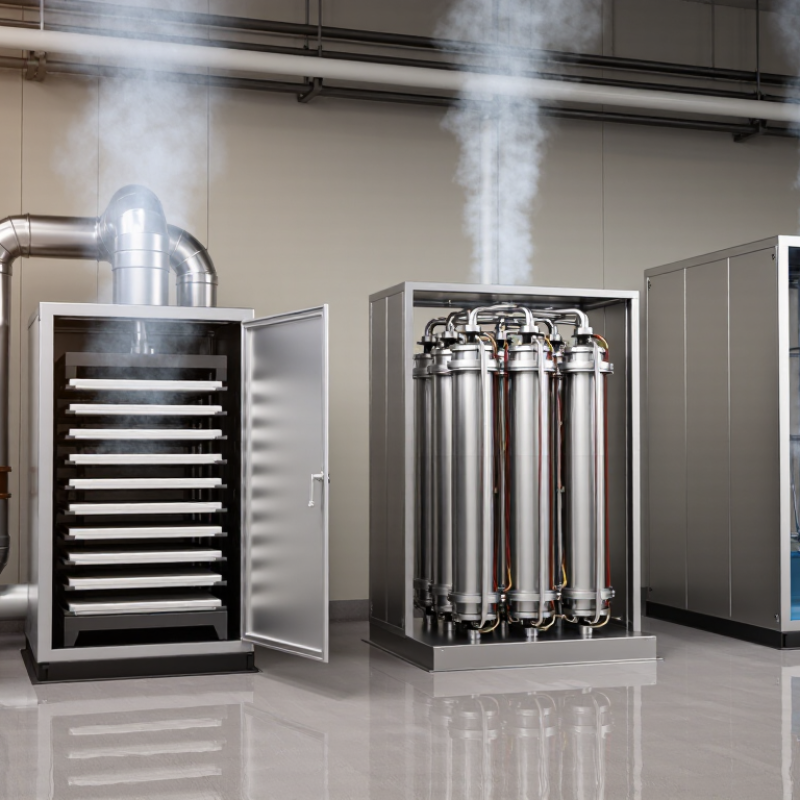
Smoke precipitators remove suspended particles by drawing contaminated air through a collection zone. In an electrostatic unit, particles receive an electrical charge and move toward oppositely charged plates. A mechanical collector instead relies on screens or filters to capture particles as air passes through. The method matters, but particle size matters too.
Very small particles can follow airflow around collection surfaces, making capture more difficult. Larger particles may be easier to trap, though performance still depends on air speed, loading, and equipment design. Efficiency is not one fixed number. It can vary across particle sizes, so buyers should ask for test data across the expected size range—not only a single headline figure. Look for measurements under conditions close to the intended operating airflow.
Check the details. A particle-size report, pressure-drop reading, and stated test method help make comparisons more meaningful. Dust buildup can reduce airflow or collection performance; cleaning access and maintenance intervals deserve attention. Humidity and particle characteristics may also affect results. One assumption can fail: a unit rated highly in a test may perform differently in a room with changing airflow. Match the collector to measured conditions, and verify performance after installation.
Electrostatic precipitators (ESPs) can achieve typical collection efficiencies of 99–99.9% when properly designed and operated. They charge airborne particles, then attract them to collection plates. This makes them useful for controlling particulate emissions in many industrial exhaust systems. The figure describes particle collection, not the removal of every gas or odor. It is a target range, not a promise.
Actual performance depends on particle size, gas temperature, moisture, flow rate, and the electrical condition of the plates. A dusty plate or unstable power supply can reduce collection, even when the equipment was sized well. Site testing matters. I would treat a catalogue estimate as a starting point; without representative inlet and outlet measurements, the real efficiency can be hard to judge. That uncertainty is easy to overlook.
Tips: Ask for the expected efficiency at your actual gas volume and particle profile. Check access for plate cleaning and routine inspections. Keep sampling points practical. A tiny layout detail can complicate verification later.
For buyers comparing smoke precipitators in 2026, the headline difference is particle size. Fabric filters can capture more than 99% of fine dust in well-designed, properly maintained systems. Actual performance depends on filter media, air-to-cloth ratio, leakage, and cleaning settings. Small details matter. A damaged seam or poorly seated bag can let visible dust escape, even when the unit looks sound.
Cyclones typically remove about 70–90% of particles larger than 10 μm, with results shifting by inlet velocity, geometry, and dust characteristics. They are less effective against fine particles because small, light particles tend to follow the gas flow instead of striking the cyclone wall. A cyclone can still serve as a practical pre-cleaner, reducing the heavier load reaching downstream equipment. It is not a like-for-like replacement for fine-dust filtration.
Consider the actual exhaust, not just a brochure number: measure particle sizes, flow rate, temperature, moisture, and dust loading. Ask for the test conditions behind any stated efficiency, then compare pressure drop and maintenance needs. Filters may provide stronger fine-particle control, but require inspection and planned bag changes. Cyclones have fewer moving parts, yet can lose efficiency if flow falls or erosion changes internal surfaces. Reality is messier. A site trial may reveal operating issues that calculations miss.
Wet scrubbers and hybrid systems can report removal efficiencies from about 70% to above 99%, but those figures depend on what is being captured. A scrubber designed for coarse dust may perform poorly on fine particles or soluble gases. Droplet size, contact time, gas flow, and inlet loading all matter. The percentage alone tells little.
Look closely at the test conditions. Ask whether the result applies to your particle-size range and operating temperature, and whether it was measured during steady operation. A venturi scrubber can capture fine particulate matter, but often uses more energy as pressure drop rises. Packed-bed stages can improve gas absorption, provided the liquid chemistry and flow remain controlled. Small details matter.
Hybrid systems combine stages, such as a scrubber with a mist eliminator or another collection device. This can broaden performance, though it adds maintenance points. Check for corrosion-resistant materials, access for cleaning, water-treatment needs, and carryover monitoring. That range is wide. I would treat any “above 99%” claim as a starting point, not a guarantee. Request representative test data and confirm how efficiency changes during start-up, variable loads, and routine maintenance. One overlooked drain or clogged nozzle can undermine an otherwise sound design.
Top Smoke Precipitator Types for Buyers in 2026
Choosing a smoke precipitator starts with the required outlet emissions, not a product label. Ask how performance is measured, including particle size, gas flow, and inlet dust loading. A low reading from one test may not predict results during a cold start or a sudden production change. Details matter.
Electrostatic precipitators can offer relatively low pressure drop, but collection performance depends on particle properties and stable electrical operation. Fabric filters capture fine dust reliably when selected for the actual gas temperature and chemistry. Their pressure drop can rise as dust cake builds, so cleaning cycles and fan capacity deserve close review. Wet electrostatic systems may suit fine or sticky aerosols, yet water use, corrosion control, and wastewater handling add operating demands. Cyclones are often useful as pre-cleaners, but usually should not be assumed to meet fine-particle limits alone.
Compare pressure drop across the full operating range, not just at a clean-filter condition. Check minimum and maximum gas temperatures, moisture, corrosive compounds, and expected load swings. Request test methods and maintenance assumptions alongside quoted emissions figures. A practical detail buyers sometimes miss: access for replacing bags, inspecting electrodes, or clearing hoppers affects real uptime. Vendor data can be incomplete. Treat estimates as estimates, then verify them against site measurements and operating records.
| Technology | Indicative Outlet Particulate Range* | Typical Pressure Drop | Best-Suited Operating Conditions | Key Advantages | Main Limitations and Buyer Checks |
|---|---|---|---|---|---|
| Electrostatic precipitator (ESP) | About 5–50 mg/Nm³ in many installations; results vary with particle properties, gas flow, and collector design. | About 100–300 Pa across the collecting sections. | Large, continuous gas streams; relatively stable flow and temperature; particles that can be electrically charged and collected. | Low gas-side pressure drop and no filter fabric to replace. Can handle high gas volumes and, with suitable design, elevated temperatures. | Collection can be affected by dust resistivity, particle-size distribution, gas chemistry, and rapid load changes. Check electrode maintenance, rapping performance, and performance at minimum and maximum load. |
| Fabric filter (baghouse) | About 1–10 mg/Nm³ is commonly achievable with appropriate media, sealing, and operation; site-specific guarantees may differ. | About 1,000–2,000 Pa during normal operation; the value changes with dust cake and cleaning settings. | Applications where fine-particle capture and consistently low particulate emissions are priorities, provided gas temperature, moisture, and chemistry suit the selected filter media. | High fine-particle collection efficiency and comparatively consistent outlet performance when bags and seals are maintained. | Higher pressure drop and fan energy than an ESP. Confirm maximum temperature, acid or alkali resistance, condensation risk, bag life, cleaning system, and fire or explosion controls where relevant. |
| Wet electrostatic precipitator (WESP) | Often about 1–10 mg/Nm³ for particulate matter in suitable polishing applications; actual performance depends on inlet conditions and design. | About 100–500 Pa, depending on equipment configuration and gas-flow conditions. | Wet or saturated gas streams and polishing duties involving fine particles, aerosols, or acid mist. Often installed downstream of upstream particulate or scrubbing equipment. | Can collect fine droplets and particles that are difficult to capture with some dry systems; avoids dry-dust re-entrainment from rapping. | Requires water management, drainage, and materials compatible with corrosive condensate. Assess wastewater handling, scaling or fouling potential, and performance during start-up and shutdown. |
| Cyclone separator | Often about 50–500 mg/Nm³ as a standalone collector, with performance strongly dependent on particle size and design; generally not a fine-particle polishing device. | About 500–1,500 Pa, depending on the cyclone type and operating point. | Pre-cleaning of relatively coarse, dry dust at steady flow, commonly upstream of a baghouse or ESP. | Simple construction, no filter media, and useful removal of larger particles. Can reduce the dust loading on downstream equipment. | Limited capture of fine particles and potential erosion with abrasive dust. Check inlet velocity, particle-size distribution, wear protection, and pressure-drop impact on the fan. |
| Ceramic or sintered-metal candle filter | About 1–10 mg/Nm³ may be achievable in suitable high-temperature filtration systems; confirm the specified test basis and operating envelope. | Often about 1,000–2,500 Pa, varying with filter elements, dust cake, and pulse-cleaning conditions. | Selected high-temperature processes where gas cooling before filtration is undesirable and the dust and gas chemistry are compatible with the elements. | Fine-particle filtration at temperatures beyond the range of many conventional fabric bags, subject to the element material and system design. | Higher system complexity and potentially higher element replacement costs. Verify thermal-shock resistance, corrosion compatibility, cleaning reliability, and availability of replacement elements. |
Comparison note: The outlet ranges and pressure drops above are indicative screening values, not guaranteed performance or regulatory limits. Particulate results are not directly comparable unless the measurement method, wet or dry basis, reference temperature and pressure, oxygen correction, and operating load are aligned. Buyers should confirm the applicable permit limit and obtain a site-specific performance guarantee for the actual gas composition, temperature, humidity, dust properties, and flow range.


For those larger-sized parts, or smaller quantity runs, we have 2 independent powder coat booths and ovens. The quality, durability and affordability of today’s powder coating finishes make this the process of choice for world-class companies.
Powder coating advantages over other forms of coating are many. Materials used in the Powder coating process can be metals and non-metals that come in a multitude of thicknesses, textures, colors, etc. Another of Powder coating’s biggest advantages over conventional coatings is its ability to create finishes in many different textures. Powder Coating Booths allow us the ability to apply these advantages to large products.
Tri-State Fabricators runs a full-service conveyor line for painting. Wet painting can provide protection or decoration to many different part styles. From start to finish, every project is easier to undergo random and point-based inspection by our skilled painting team.
Advantages to our Wet Paint Line are these lines start with product prep and ends with a thorough inspection of a high quality finished product. Our ability to complete large and small projects with a superior finish and doing so in a timely and economical fashion. This passes along the savings in production to our customers. When powder coating ins not an option, our Wet Paint Line gets the job done right the first time.
When the parts get big and heavy we roll-out our custom paint racks and oversize booth. By utilizing our partnerships with all the major paint brands, we can match virtually any color with wet paint.
The advantages of having access to a Wet Paint Booth are many. Large projects of many different shapes can be loaded into the booth. The Wet Paint Booth offers an environment that is much more controlled than a typical parts painting operation.
Not only are they used because of their controlled environment, but they’re are also advantageous when it comes to applying paint to parts that are needed in industries that require specialty coatings such as medical, aerospace, etc.
Our military forces have some very high standards when it comes to the finish of their vehicles and equipment. From the first pre-treatment step to final coat, it takes a great deal of knowledge and experience to protect the men and women of our armed forces. They deserve only the best, and Tri-State Fabricators provides it.
All of our processes are closely monitored by our staff and management teams. Both of which are highly trained in the processes of metal fabrication and finishing. Tri-State Fabricators’ goal is to always fully satisfy each and every customer, including the military. We will always put a 110% into what we do.
Abrasive media blasting is an excellent way to remove old paint, rust, and increase the paint/powder adhesion. Glass beads produce a much smoother and brighter finish than angular abrasives; leaving the part clean yet without any dimensional change. Chemically inert and environmentally friendly, we can recycle our beads approximately 30 times; making them a more preferred method of metal cleaning or surface finishing.
Advantages to Glass Bead Blasting are many. Glass bead blast media is used when a project is needing rough surfaces need to become smooth for applications of coatings such as paint. It is typically used to clean paint and rust from a product surface without deforming the surface it is being used on. Overall, compared to many other blasting media, Glass Bead Blasting is a very economical choice and those savings are always passed on to our customers.
Tri-State Fabricators utilize a zinc phosphate wash to clean and etch the material to ensure the best paint adhesion possible. The unique design of our 3-stage wash system does the work like a 5-stage. From Cleaning and rinsing to conversion coating and post-treatment, Our Part Washing process is a complete service and works throughout the fabrication service and the finishing service.
Along with the previously mentioned benefits, Curing is a vital chemical reaction that leaves the product finish hard and relatively safe from mild abrasion and aggressive corrosion. This process can be done in more than one way; ambient air-dry or in curing ovens at temps that exceed 240°.
From fixing paint mistakes (someone else’s of course) to simply cleaning our paint line hooks, our burn-off oven is put to good use. After a quick burn-off, a little clean up, and a fresh coat of paint, your parts will look better than new.
Why does our Burn-Off Oven work so well? Because super heating the air around parts turns the materials into ashes. From paint and powder coatings to rubber and machining oils, high temps do the job without degrading the integrity of the part.
Masking is a vital part of producing high quality products. We have die-cut masking patterns to protect machined surfaces as well as a wide range of plugs and caps to protect threaded holes and bolts. We provide permanent and temporary masking.
Masking allows the selected sections of a product to be protected from a fabrication or finishing service. This can be with both chemicals when etching and tapes, paints when only finishing just a section of the product. Masking is great in aiding the customization process of a project.
Screen printing is a photographic process that transfers artwork onto a porous nylon screen which allows colored ink to flow through the screen and be deposited on an aluminum or plastic component. We can generally have just about any design created onto a screen for your parts.
Some of the advantages of Screen Printing are, brand recognition for your business displaying on your products, assembly instructions, product warnings/hazards, etc. Tri-State Fabricators produces Screen Printing of the highest quality so you know it’s durable.
Metal Finishing is the art of treating the exterior portion of product, often metal but can also be made of other materials, so that the surface is clean and free of any debris. Then the process of applying coats or either paint of powder coat takes place. This coating process improves the quality of the product in both appearance and resistance to wear and corrosion.
Tri-State Fabricators, Inc., understands that a project typically isn’t complete until a high-quality finish has been added to your product. This is why our painting and powder coating teams continuously inspect the products throughout the Metal Finishing process.

