


7 Tips to Choose the Best Hydrocarbon Cleaning System

Choosing the right Hydrocarbon Cleaning System is not simply a matter of comparing tank size or purchase price. In a real workshop, oily components arrive with different residues, temperatures, shapes, and production demands. A system that cleans hydraulic valves efficiently may struggle with carbonized deposits inside narrow channels. Small details matter.

Industrial cleaning specialist John B. Durkee often emphasized, “Cleaning is a process, not a product.” That principle remains highly relevant. The solvent, spray pressure, filtration method, drying cycle, ventilation, and operator training must work together. A reliable decision begins with identifying the contaminant, substrate, required cleanliness level, and daily workload. It also requires checking material compatibility before metal surfaces, seals, or coatings are exposed to the cleaning chemistry.

These seven practical tips examine the issues that influence long-term performance. They cover cleaning effectiveness, system capacity, solvent management, safety engineering, energy consumption, maintenance access, and measurable operating costs. Look beyond the first demonstration. A bright surface can hide residue in a blind hole. That is easy to miss.

Experience also teaches caution. Laboratory results may not represent a busy production floor with cold parts, mixed soils, and rushed operators. The best Hydrocarbon Cleaning System should deliver repeatable results under those imperfect conditions. It should include clear controls, documented procedures, accessible filtration, and dependable technical support. Some assumptions may need revision after testing. A controlled trial using actual components remains the most credible step before committing to a major investment.
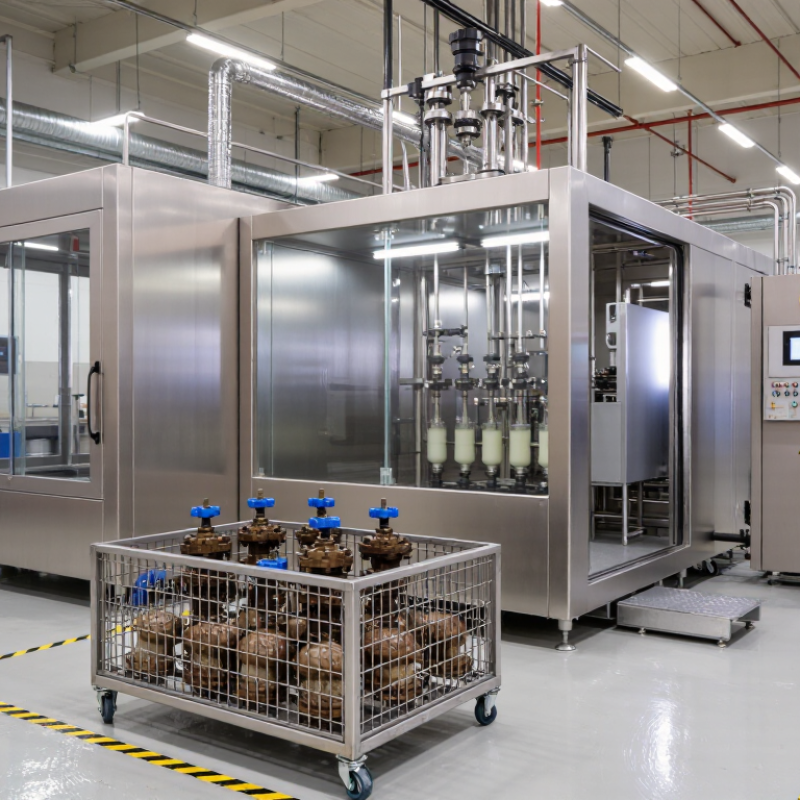
7 Tips to Choose the Best Hydrocarbon Cleaning System

Define Contaminants and Set ≥5 µm Particle Limits Under ISO 16232

7 Tips to Choose the Best Hydrocarbon Cleaning System

Define Contaminants and Set ≥5 µm Particle Limits Under ISO 16232

Choosing a hydrocarbon cleaning system begins with defining what “clean” means. ISO 16232 provides a practical framework for extracting, filtering, and counting particles from automotive components. Set a clear reporting threshold, such as particles ≥5 µm. Smaller particles may matter too, but they require separate justification and measurement capability.

Name the contaminant types before comparing equipment. Metal chips, machining oil, dust, fibers, and abrasive residue behave differently during extraction. A system that removes oily film may not release particles trapped inside a narrow channel. In production trials, inspect the rinse filter under controlled lighting. A clean-looking rinse can still mislead.

Test reality matters.

Use representative parts, not only polished samples. Record solvent volume, pressure, temperature, extraction time, and filter handling. These details support repeatability and make results defensible during audits. Verify that the solvent is compatible with seals, coatings, and sensitive materials. Poor compatibility can create new residues.

Set particle limits by component function and risk. A hydraulic passage may need tighter control than an external bracket. Define counting rules for overlapping particles, fibers, and irregular shapes. Review false positives regularly. Even experienced technicians can disagree when particles cluster near the 5 µm threshold. That uncertainty deserves documentation, not silence.


Compare Solvent Flash Points with NFPA 30’s 37.8°C Class-I Boundary

Choosing a hydrocarbon cleaning system starts with the solvent’s flash point, not its marketing label. NFPA 30, 2024 edition, defines Class I liquids as having flash points below 37.8°C (100°F). Class IA is below 22.8°C, while Class IB and IC extend toward the 37.8°C boundary. A solvent at 36°C still requires Class I controls.

Check the SDS Section 9 value, test method, and measurement conditions. ASTM D56 and ASTM D93 can produce different results. Confirm ventilation, electrical classification, bonding, grounding, container design, and waste handling. OSHA’s Hazard Communication Standard also requires accessible hazard information and worker training. These details matter beside the cleaning machine. They are easy to overlook.

Compare evaporation rate, residue, toxicity, material compatibility, cycle temperature, recovery efficiency, and fire-protection demands. FM Global property-loss guidance emphasizes controlling ignition sources and limiting flammable-liquid vapor accumulation. A higher flash point may reduce risk, but it does not remove it. Vapors can collect near floors, drains, and enclosed equipment. NFPA 30 is a strong design reference, yet local codes may add requirements. My earlier checklist would have treated flash point as the deciding number. That is too simple. Test the actual solvent under operating conditions, including heated parts and open-door cycles. One detail can change the whole assessment.

Match Tank Capacity and Cycle Time to Required Parts per Hour

7 Tips to Choose the Best Hydrocarbon Cleaning System

Tank capacity should follow parts per hour, not appearance. Calculate output with this formula:

parts per basket × cycles per hour × operating efficiency

For example, 40 parts in a 10-minute cycle produce 240 parts hourly at full capacity. At 80% practical efficiency, output falls to 192 parts. That gap matters. Measure it twice.

A larger tank may increase solvent volume without improving production. Check basket clearance, loading time, draining time, and drying time.

The U.S. Department of Energy notes that industrial systems often lose efficiency through idle operation and poor process control. Therefore, a shorter validated cycle can outperform a larger tank.

I have seen teams choose capacity first, then discover that manual loading limits the line.

Automation also deserves attention. The International Federation of Robotics reported 541,302 industrial robots were installed globally in 2023. This growth shows why repeatable handling and cycle monitoring matter.

Sensors can record actual wash, drain, and drying times. Deloitte’s 2023 smart manufacturing survey found that 86% of manufacturers viewed smart manufacturing as a major competitiveness driver.

Still, digital controls cannot repair an unrealistic production target. Test representative parts, including the dirtiest batch, before fixing the specification.

A pilot cycle may expose awkward fixtures, incomplete drying, or unacceptable cleanliness.

Those findings are inconvenient, but useful.

Evaluate Spray, Immersion, and 20–40 kHz Ultrasonic Cleaning Options

Choosing the best hydrocarbon cleaning system starts with the part, not the machine. Examine soil type, material compatibility, geometry, production volume, drying needs, and solvent control. A thin oil film on a flat metal plate may need only a controlled spray. Deep holes and blind cavities require closer attention.

Spray cleaning provides speed and clear process control. Nozzles can reach large surfaces, while pressure helps remove loose grease and chips. However, shadowed areas may remain dirty. Immersion cleaning offers fuller contact, especially for irregular parts and delicate assemblies. Agitation improves results, but the bath can load with soil quickly. Track concentration, temperature, filtration, and replacement intervals. Small details matter.

Ultrasonic systems operating at 20–40 kHz create microscopic bubbles that collapse against contaminated surfaces. Lower frequencies usually deliver stronger cavitation, while higher frequencies can treat finer features more gently. Use test coupons before approving a cycle. A 40 kHz bath may clean narrow passages well, yet stubborn carbon could need stronger mechanical action. I have seen parts look bright while residues remained inside threaded holes. That was a useful warning. Consider basket loading, sound distribution, solvent compatibility, drying time, and worker safeguards. Measure cleanliness with a defined inspection method, not appearance alone. No option wins every application.

Validate ≥95% Soil Removal, Residue Control, and VOC Compliance Before Purchase

7 Tips to Choose the Best Hydrocarbon Cleaning System

Validate performance before discussing price. Tip one: test your actual parts, soils, and production cycle. Measure pre-cleaning and post-cleaning mass, using a documented gravimetric method. Require at least 95% soil removal across repeated trials, not one impressive sample. Tip two: inspect hidden surfaces, threads, blind holes, and delicate finishes. A clean-looking surface can still hold oil.

Tip three: verify residue control after drying. Check white-light inspection, particle counts, and contact-angle changes where relevant. Tip four: review solvent compatibility with metals, elastomers, coatings, and labels. The wrong chemistry may clean well today and damage parts later. Tip five: ask for process capability data, including temperature stability, bath loading, filter performance, and maintenance intervals. ASTM-based laboratory discipline helps, but factory conditions matter more.

Tip six: calculate VOC emissions from solvent usage, evaporation, capture, and waste handling. The U.S. EPA AP-42 guidance treats solvent evaporation as an emissions source, while EPA’s National Emissions Inventory supports site-level reporting decisions. Compare those calculations with local permit limits and safety requirements. OSHA also requires exposure controls based on the specific solvent, not generic claims. Tip seven: demand independent verification, current SDS documents, and operator training records. A vendor’s brochure is not evidence.

A practical trial may reveal inconsistent drying or unexpected residue. That is useful. Recheck the loading pattern, airflow, and inspection method before approval. Document every result, including failures.

Powder Coat Booths

For those larger-sized parts, or smaller quantity runs, we have 2 independent powder coat booths and ovens. The quality, durability and affordability of today’s powder coating finishes make this the process of choice for world-class companies.

Powder coating advantages over other forms of coating are many. Materials used in the Powder coating process can be metals and non-metals that come in a multitude of thicknesses, textures, colors, etc. Another of Powder coating’s biggest advantages over conventional coatings is its ability to create finishes in many different textures. Powder Coating Booths allow us the ability to apply these advantages to large products.

Wet Paint Line

Tri-State Fabricators runs a full-service conveyor line for painting. Wet painting can provide protection or decoration to many different part styles. From start to finish, every project is easier to undergo random and point-based inspection by our skilled painting team.

Advantages to our Wet Paint Line are these lines start with product prep and ends with a thorough inspection of a high quality finished product. Our ability to complete large and small projects with a superior finish and doing so in a timely and economical fashion. This passes along the savings in production to our customers. When powder coating ins not an option, our Wet Paint Line gets the job done right the first time.

Wet Paint Booths

When the parts get big and heavy we roll-out our custom paint racks and oversize booth. By utilizing our partnerships with all the major paint brands, we can match virtually any color with wet paint.

The advantages of having access to a Wet Paint Booth are many. Large projects of many different shapes can be loaded into the booth. The Wet Paint Booth offers an environment that is much more controlled than a typical parts painting operation.

Not only are they used because of their controlled environment, but they’re are also advantageous when it comes to applying paint to parts that are needed in industries that require specialty coatings such as medical, aerospace, etc.

Military CARC

Our military forces have some very high standards when it comes to the finish of their vehicles and equipment. From the first pre-treatment step to final coat, it takes a great deal of knowledge and experience to protect the men and women of our armed forces. They deserve only the best, and Tri-State Fabricators provides it.

All of our processes are closely monitored by our staff and management teams. Both of which are highly trained in the processes of metal fabrication and finishing. Tri-State Fabricators’ goal is to always fully satisfy each and every customer, including the military. We will always put a 110% into what we do.

Glass-Bead Blasting

Abrasive media blasting is an excellent way to remove old paint, rust, and increase the paint/powder adhesion. Glass beads produce a much smoother and brighter finish than angular abrasives; leaving the part clean yet without any dimensional change. Chemically inert and environmentally friendly, we can recycle our beads approximately 30 times; making them a more preferred method of metal cleaning or surface finishing.

Advantages to Glass Bead Blasting are many. Glass bead blast media is used when a project is needing rough surfaces need to become smooth for applications of coatings such as paint. It is typically used to clean paint and rust from a product surface without deforming the surface it is being used on. Overall, compared to many other blasting media, Glass Bead Blasting is a very economical choice and those savings are always passed on to our customers.

Part Washing

Tri-State Fabricators utilize a zinc phosphate wash to clean and etch the material to ensure the best paint adhesion possible. The unique design of our 3-stage wash system does the work like a 5-stage. From Cleaning and rinsing to conversion coating and post-treatment, Our Part Washing process is a complete service and works throughout the fabrication service and the finishing service.

Along with the previously mentioned benefits, Curing is a vital chemical reaction that leaves the product finish hard and relatively safe from mild abrasion and aggressive corrosion. This process can be done in more than one way; ambient air-dry or in curing ovens at temps that exceed 240°.

Burn-Off Oven

From fixing paint mistakes (someone else’s of course) to simply cleaning our paint line hooks, our burn-off oven is put to good use. After a quick burn-off, a little clean up, and a fresh coat of paint, your parts will look better than new.

Why does our Burn-Off Oven work so well? Because super heating the air around parts turns the materials into ashes. From paint and powder coatings to rubber and machining oils, high temps do the job without degrading the integrity of the part.

Masking

Masking is a vital part of producing high quality products. We have die-cut masking patterns to protect machined surfaces as well as a wide range of plugs and caps to protect threaded holes and bolts. We provide permanent and temporary masking.

Masking allows the selected sections of a product to be protected from a fabrication or finishing service. This can be with both chemicals when etching and tapes, paints when only finishing just a section of the product. Masking is great in aiding the customization process of a project.

Screen Printing

Screen printing is a photographic process that transfers artwork onto a porous nylon screen which allows colored ink to flow through the screen and be deposited on an aluminum or plastic component. We can generally have just about any design created onto a screen for your parts.

Some of the advantages of Screen Printing are, brand recognition for your business displaying on your products, assembly instructions, product warnings/hazards, etc. Tri-State Fabricators produces Screen Printing of the highest quality so you know it’s durable.

Metal Finishing

Metal Finishing is the art of treating the exterior portion of product, often metal but can also be made of other materials, so that the surface is clean and free of any debris. Then the process of applying coats or either paint of powder coat takes place. This coating process improves the quality of the product in both appearance and resistance to wear and corrosion.

Tri-State Fabricators, Inc., understands that a project typically isn’t complete until a high-quality finish has been added to your product. This is why our painting and powder coating teams continuously inspect the products throughout the Metal Finishing process.
