


Strap Latches may look simple, but a poor choice can leave a lid rattling, a case difficult to open, or equipment exposed to vibration. Selection matters wherever access panels, storage boxes, and transport cases must stay securely closed. Grand View Research estimated the global industrial fasteners market at USD 90.6 billion in 2023, with continued growth projected through 2030. This broad market is not a direct measure of latch demand. Still, it shows how much industrial work depends on reliable fastening components.
A useful latch should match the job, not just the product photo. Consider the load, mounting surface, operating frequency, and exposure to moisture or dust. Check the strap material, adjustment range, buckle design, and hardware finish. A latch that feels sturdy on a workbench may behave differently on a vibrating machine or a frequently opened enclosure. Details matter.
And real installations can be messy.
The right choice balances secure closure with practical access. It should also fit the available mounting space and remain manageable for the person using it. Before buying, inspect product specifications and ask the supplier about rated loads and environmental limits. Do not assume that similar-looking models perform alike. These seven tips will help compare Strap Latches with greater care, while leaving room for an honest reality: specifications cannot replace testing the latch in its intended setup.
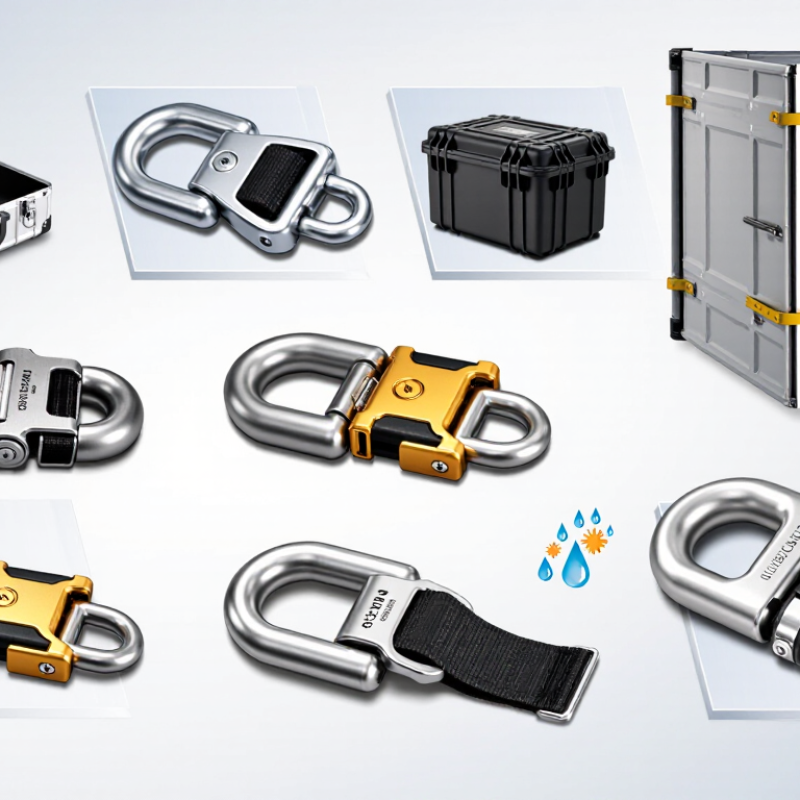
Strap latches use tension to hold panels, lids, or equipment in place, but their designs suit different jobs. Over-center latches pull a strap tight and lock with a lever. They work well on tool cases and access panels that need frequent opening. Ratchet-style latches provide finer tension control for heavier loads. Cam-buckle designs are quicker to release, though they may not hold as firmly under vibration. Small differences matter.
Match the latch to the movement and conditions it will face. A storage-box lid may need only a simple, hand-operated latch. A machine cover that vibrates may need a locking feature and a strap that resists loosening. For outdoor equipment, check whether the strap and hardware tolerate moisture and temperature changes. Measure the available mounting space, too; a strong latch is useless if its lever hits a nearby wall.
Check the load rating and follow the maker’s installation guidance. Uneven mounting can twist a strap, wear its edges, or make tension unreliable. Feel for sharp corners where the strap bends. It is tempting to tighten everything as much as possible, but excess force can strain the strap or distort a lid. A small test under realistic conditions often reveals what a specification sheet cannot. The right choice depends on the actual setup.
| Tip | Strap Latch Type | How It Works | Typical Applications | Main Advantage | Selection Consideration |
|---|---|---|---|---|---|
| 1. Match the latch to the required holding force. | Over-center draw latch with a flexible strap | A lever pulls the strap tight and passes over center to maintain tension. | Equipment covers, access panels, cases, and enclosures that need a firm closure. | Provides repeatable tension and quick operation. | Check the latch’s rated capacity and the strength of its mounting points; do not infer capacity from appearance alone. |
| 2. Choose an adjustable buckle for variable loads. | Cam-buckle strap | A spring-loaded cam grips the webbing; pressing the release lets the strap slide for adjustment. | Light-duty cargo tie-downs, bundled materials, and removable covers. | Easy to adjust and release without a separate tool. | Suitable for lighter-duty securing than many ratchet systems. Follow the stated working-load limit and avoid over-tightening. |
| 3. Use a ratchet style when greater tension is needed. | Ratchet strap latch | A ratcheting handle winds webbing around a spindle to increase tension. | Securing cargo on vehicles or trailers when the strap and anchor points are appropriately rated. | Allows controlled tightening with mechanical advantage. | Use the strap’s working-load limit, not its breaking strength, when planning a tie-down. Protect webbing from sharp edges. |
| 4. Consider quick access for frequently opened closures. | Hook-and-loop strap closure | Hook and loop surfaces press together and separate when peeled apart. | Cable bundles, lightweight covers, removable organizers, and reusable wraps. | Fast to open and close, with no rigid buckle required. | Holding ability can be affected by dirt, wear, moisture, and peel forces; it is not a substitute for a rated cargo restraint. |
| 5. Select stretch only when compliance is useful. | Elastic or rubber strap latch | A flexible strap stretches over a catch, hook, or retaining point and returns toward its original length. | Lightweight lids, tarpaulins, outdoor equipment, and closures that need some movement. | Accommodates small changes in distance and can absorb vibration. | Elastic materials can age or lose tension through exposure and repeated stretching. Inspect regularly and keep clear of snap-back paths. |
| 6. Check strap material against the environment. | Webbing strap latch | A woven textile strap is secured using a buckle, lever, or other compatible latch. | Cases, protective covers, equipment restraints, and general-purpose fastening. | Flexible, lightweight, and available in different widths and materials. | Consider abrasion, UV exposure, moisture, temperature, and chemical contact; choose a material rated for the conditions. |
| 7. Verify fit, anchors, and release access before buying. | Fixed-length or adjustable strap latch | The strap connects two points; length adjustment, end fittings, and latch style determine how it fits and releases. | Replacement closures, storage boxes, machinery guards, and custom assemblies. | A correctly sized assembly can improve fit and make operation more convenient. | Measure the required strap length and attachment spacing, confirm compatible end fittings, and ensure the latch remains accessible after installation. |
Safety note: Strap latch capacity depends on the complete assembly, including the strap, latch, stitching, fittings, and anchor points. Use products within their marked ratings and inspect them for damage before use.
Choosing a strap latch starts with the load it must hold, not just the strap width. Estimate the heaviest load and consider how it may shift during use. A box that stays still on a shelf places different demands on a latch than equipment exposed to bumps or vibration. Check the latch’s rated working load, not merely its breaking strength. Those figures are not interchangeable.
Allow for the direction of pull, too. A latch may hold well when pulled straight but perform differently under a sideways force. Inspect the mounting surface and fasteners; a strong latch cannot compensate for a weak panel or loose screws. Leave a sensible margin above the expected load, especially when movement is likely. Don’t guess from appearance.
For example, a loaded case in a vehicle may jolt when the vehicle turns or stops. The load can briefly rise beyond its resting weight. Check the manufacturer’s guidance for the full assembly, including the strap, latch, and attachment points. Ratings can depend on how parts are installed, and real setups are not always perfect. I’ve found that measuring twice helps, but it does not replace checking the load rating. Look for fraying, bent parts, or fasteners that begin to loosen, and reassess the setup if the load changes.
A strap latch may look simple, but its material affects how reliably it works outdoors. Stainless steel usually resists moisture and rust better than untreated carbon steel. It is a strong choice near rain or coastal air, though salt deposits still need occasional cleaning. Check the grade and finish, not just the word “stainless.” Details matter.
Galvanized steel often costs less and handles ordinary outdoor exposure well. Scratches can expose the base metal, however, so inspect contact points and edges after installation. Aluminum is lighter and naturally resists corrosion, but it may bend more easily under heavy loads. Match the latch strength to the strap tension and the object it secures. A lightweight latch can be the wrong economy.
Consider the whole environment, not only rain. Sunlight can age some plastic parts, while cold may make them less flexible. Industrial cleaners or salty spray may also damage coatings over time. If conditions are harsh, ask for material and temperature ratings, then compare them with your actual use. Test the latch through repeated opening and closing before relying on it. I would not assume a coated part stays protected forever; wear often appears first around the moving joint. Regular checks are worthwhile.
Before choosing a strap latch, measure the strap’s width and thickness, then compare them with the slot dimensions. Check material and load ratings too. A mismatch can cause twisting, abrasion, or incomplete closure. Small gaps matter. Confirm that the latch suits its anchor point and pull direction, especially where grit, moisture, or temperature changes are expected. A snug fit alone does not prove adequate capacity.
Adjustability should suit the actual tensioning task, not just offer a wide range. For cargo securement, the Federal Motor Carrier Safety Administration requires aggregate tiedown working load limits of at least half the cargo weight (49 CFR 393.106). This benchmark applies to cargo securement; other uses need appropriate engineering limits. Leave room for gloves. Check that adjustment stays locked under vibration and that the strap tail can be secured without folding the load-bearing section.
Before installation, review hole spacing, fastener type, substrate strength, tool clearance, and access for future maintenance. The Bureau of Labor Statistics reported 2.6 million nonfatal workplace injuries and illnesses in private industry in 2023 (Employer-Reported Workplace Injuries and Illnesses, 2023). That figure does not single out latches, but it makes pinch points worth checking. A first fit can look right and still bind under load; recheck it with the strap tensioned.
Compare these practical selection factors when checking compatibility, adjustability, and installation requirements.
The scores are an illustrative checklist aid, not measured industry statistics. Confirm dimensions, materials, load requirements, and installation details against the product specifications and your application.
7 Tips for Choosing the Best Strap Latches
Durability, maintenance, and overall value matter more than a low purchase price. Start by matching the latch to its actual load and environment. A latch used outdoors may face rain, grit, and temperature changes, while indoor equipment may need less corrosion resistance. Check the manufacturer’s load rating and leave a sensible safety margin. The strongest-looking latch is not always the right fit. A bulky design can be awkward to operate in a tight space.
Look closely at the contact points, spring, pivot, and finish. Smooth movement and firm engagement are good signs; sticking or sharp edges deserve attention. If possible, operate the latch several times before installation. It should open without excessive force and close securely. Simple maintenance helps: wipe away grit, inspect for rust or looseness, and follow the maker’s lubrication guidance. Not every latch needs oil; some finishes can collect dust when over-lubricated. That detail is easy to miss.
Compare total value, not just the shelf price. A durable latch that is easy to inspect may cost less over time than a cheaper part needing frequent replacement. Consider whether replacement parts are available and whether routine checks are practical. A perfect latch on paper may still be inconvenient in daily use. Test the fit with the strap and mounting surface before committing. Small mismatches matter.


For those larger-sized parts, or smaller quantity runs, we have 2 independent powder coat booths and ovens. The quality, durability and affordability of today’s powder coating finishes make this the process of choice for world-class companies.
Powder coating advantages over other forms of coating are many. Materials used in the Powder coating process can be metals and non-metals that come in a multitude of thicknesses, textures, colors, etc. Another of Powder coating’s biggest advantages over conventional coatings is its ability to create finishes in many different textures. Powder Coating Booths allow us the ability to apply these advantages to large products.
Tri-State Fabricators runs a full-service conveyor line for painting. Wet painting can provide protection or decoration to many different part styles. From start to finish, every project is easier to undergo random and point-based inspection by our skilled painting team.
Advantages to our Wet Paint Line are these lines start with product prep and ends with a thorough inspection of a high quality finished product. Our ability to complete large and small projects with a superior finish and doing so in a timely and economical fashion. This passes along the savings in production to our customers. When powder coating ins not an option, our Wet Paint Line gets the job done right the first time.
When the parts get big and heavy we roll-out our custom paint racks and oversize booth. By utilizing our partnerships with all the major paint brands, we can match virtually any color with wet paint.
The advantages of having access to a Wet Paint Booth are many. Large projects of many different shapes can be loaded into the booth. The Wet Paint Booth offers an environment that is much more controlled than a typical parts painting operation.
Not only are they used because of their controlled environment, but they’re are also advantageous when it comes to applying paint to parts that are needed in industries that require specialty coatings such as medical, aerospace, etc.
Our military forces have some very high standards when it comes to the finish of their vehicles and equipment. From the first pre-treatment step to final coat, it takes a great deal of knowledge and experience to protect the men and women of our armed forces. They deserve only the best, and Tri-State Fabricators provides it.
All of our processes are closely monitored by our staff and management teams. Both of which are highly trained in the processes of metal fabrication and finishing. Tri-State Fabricators’ goal is to always fully satisfy each and every customer, including the military. We will always put a 110% into what we do.
Abrasive media blasting is an excellent way to remove old paint, rust, and increase the paint/powder adhesion. Glass beads produce a much smoother and brighter finish than angular abrasives; leaving the part clean yet without any dimensional change. Chemically inert and environmentally friendly, we can recycle our beads approximately 30 times; making them a more preferred method of metal cleaning or surface finishing.
Advantages to Glass Bead Blasting are many. Glass bead blast media is used when a project is needing rough surfaces need to become smooth for applications of coatings such as paint. It is typically used to clean paint and rust from a product surface without deforming the surface it is being used on. Overall, compared to many other blasting media, Glass Bead Blasting is a very economical choice and those savings are always passed on to our customers.
Tri-State Fabricators utilize a zinc phosphate wash to clean and etch the material to ensure the best paint adhesion possible. The unique design of our 3-stage wash system does the work like a 5-stage. From Cleaning and rinsing to conversion coating and post-treatment, Our Part Washing process is a complete service and works throughout the fabrication service and the finishing service.
Along with the previously mentioned benefits, Curing is a vital chemical reaction that leaves the product finish hard and relatively safe from mild abrasion and aggressive corrosion. This process can be done in more than one way; ambient air-dry or in curing ovens at temps that exceed 240°.
From fixing paint mistakes (someone else’s of course) to simply cleaning our paint line hooks, our burn-off oven is put to good use. After a quick burn-off, a little clean up, and a fresh coat of paint, your parts will look better than new.
Why does our Burn-Off Oven work so well? Because super heating the air around parts turns the materials into ashes. From paint and powder coatings to rubber and machining oils, high temps do the job without degrading the integrity of the part.
Masking is a vital part of producing high quality products. We have die-cut masking patterns to protect machined surfaces as well as a wide range of plugs and caps to protect threaded holes and bolts. We provide permanent and temporary masking.
Masking allows the selected sections of a product to be protected from a fabrication or finishing service. This can be with both chemicals when etching and tapes, paints when only finishing just a section of the product. Masking is great in aiding the customization process of a project.
Screen printing is a photographic process that transfers artwork onto a porous nylon screen which allows colored ink to flow through the screen and be deposited on an aluminum or plastic component. We can generally have just about any design created onto a screen for your parts.
Some of the advantages of Screen Printing are, brand recognition for your business displaying on your products, assembly instructions, product warnings/hazards, etc. Tri-State Fabricators produces Screen Printing of the highest quality so you know it’s durable.
Metal Finishing is the art of treating the exterior portion of product, often metal but can also be made of other materials, so that the surface is clean and free of any debris. Then the process of applying coats or either paint of powder coat takes place. This coating process improves the quality of the product in both appearance and resistance to wear and corrosion.
Tri-State Fabricators, Inc., understands that a project typically isn’t complete until a high-quality finish has been added to your product. This is why our painting and powder coating teams continuously inspect the products throughout the Metal Finishing process.

