Top 10 Aluminum Sunroom Manufacturers in China
Choosing an Aluminum Sunroom manufacturer in China involves more than comparing prices and profile thickness. Buyers must assess frame design, glazing compatibility, drainage, thermal breaks, finish quality, and installation support. These details become visible on rainy days, when water follows a poorly designed track, or during summer, when an exposed roof can trap heat.
The International Energy Agency’s 2023 Buildings report states that building operations account for about 30% of global final energy consumption. This broad figure does not measure sunrooms specifically, but it highlights why insulation, shading, and glazing choices deserve careful attention. A well-designed aluminum frame can support durable construction, yet the complete room’s performance also depends on glass, seals, roof panels, and local climate. Details matter.
This Top 10 guide introduces Chinese manufacturers with attention to product range, engineering information, customization, quality assurance, and export experience. Company claims should be checked against project records, technical specifications, sample finishes, and clear warranty terms. A polished catalog is useful, but it cannot replace evidence of reliable fabrication. Some supplier information may also be difficult to compare directly; not every company publishes the same test data. That is worth remembering. The aim is not to promise a perfect choice, but to help buyers ask sharper questions before requesting quotations or approving drawings.
What Defines an Aluminum Sunroom Manufacturer in China
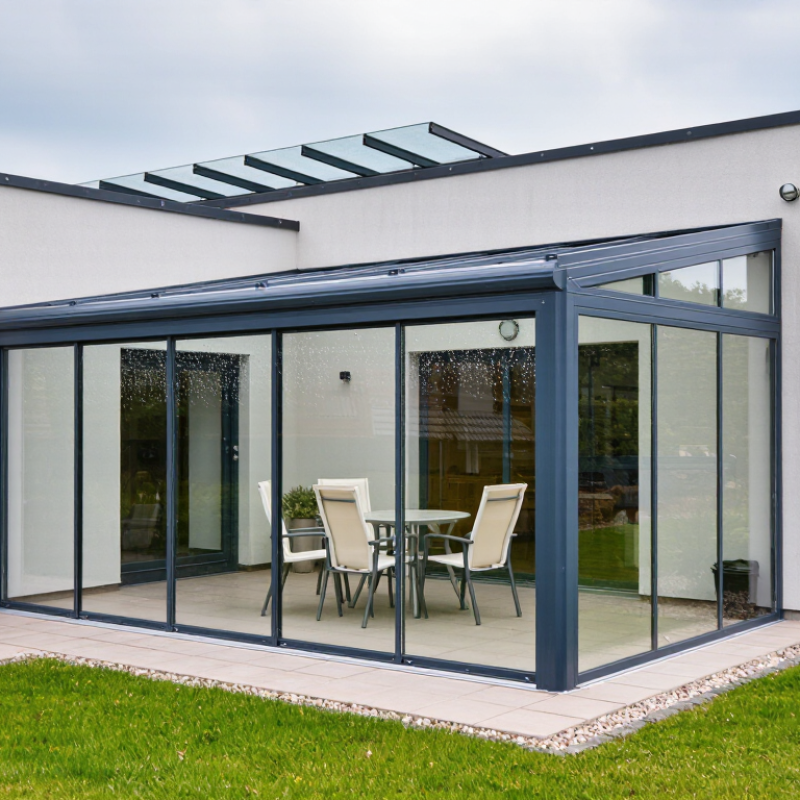
A Chinese aluminum sunroom manufacturer is more than a seller of frames. It should control or document profile design, cutting, corner joining, glazing, drainage, and final inspection. Ask how thermal breaks are specified and how roof panels connect to wall frames. These details matter on site: a poorly drained track can leave water beside a door after heavy rain.
Performance claims need evidence. The International Energy Agency’s 2023 Buildings report says building operations account for about 30% of global final energy consumption. That figure is not sunroom-specific, but it explains why glazing and air leakage deserve scrutiny. Request configuration-matched test reports for U-factor, solar heat gain, air and water penetration, plus structural-load calculations for the project’s location. Check whether the laboratory, sample dimensions, and glass build-up match your order. A polished brochure is not a test.
Tips: Ask for production photos, inspection records, hardware specifications, packing details, and written warranty boundaries. Confirm who provides installation guidance and replacement parts. Compare a sample corner and drainage channel, not just finish swatches. No supplier is flawless; unclear answers deserve a second check.
How the Top 10 Manufacturers Are Selected and Compared
Selecting ten aluminum sunroom manufacturers calls for evidence, not polished catalog images. A useful comparison checks product range, frame design, glazing options, and installation support. We look for clear details on alloy thickness, thermal breaks, surface finishes, and drainage paths. These affect comfort and durability in daily use. Small details matter.
Factory capability also needs practical review. Published equipment lists can show whether a supplier handles cutting, assembly, and quality checks in-house. Project records are more useful when they include photos, locations, dimensions, and weather conditions. We compare sample quotations using the same opening sizes and glass specifications, so prices have context. Warranty terms, spare-part access, lead times, and response quality help distinguish dependable service from attractive promises. Claims still need verification.
No scoring system is perfect. A factory visit may reveal orderly production, but one visit cannot prove consistent output across every order. Online project photos may omit installation challenges or later maintenance. We therefore treat references, technical documents, and direct communication as separate evidence, rather than letting one impressive feature decide the ranking. Some judgments remain subjective, especially when suppliers provide uneven documentation. That uncertainty should be visible in the comparison.
Profiles of 10 Leading Aluminum Sunroom Manufacturers in China
China’s aluminum sunroom manufacturers vary more in engineering focus than showroom photos suggest. The ten profiles are most useful when they compare frame design, glazing options, roof systems, drainage details, and installation support. China’s National Bureau of Statistics reported 41.59 million tonnes of primary aluminum production in 2023. This indicates a substantial material base, not the quality or capacity of any individual sunroom factory. A caveat matters: output volume is not product performance.
Look closely at practical details. Do frame joints use thermal breaks? Are roof panels designed to shed water toward accessible gutters? Can the supplier provide clear specifications for glass thickness and wind-load testing? These questions help distinguish a polished catalogue from a documented production process. Some manufacturers focus on custom residential enclosures; others emphasize standardized components or export-ready fabrication. Still, gaps remain: public data rarely compares sunroom makers using one consistent method. Ask for project references, drawings, test records, and installation instructions before treating a profile as a ranking. A neat finish helps. So does verifiable evidence.
China’s Primary Aluminium Production (2020–2024)
China’s primary aluminium output rose from 37.1 million tonnes in 2020 to 43.4 million tonnes in 2024. This industry-wide production trend provides supply-chain context for aluminum sunroom manufacturing; it does not rank or compare individual manufacturers.
Source: International Aluminium Institute, primary aluminium production statistics.
Products, Customization Options, and Manufacturing Capabilities
China’s aluminum sunroom manufacturers differ less in appearance than in engineering depth. Typical product ranges include framed glass enclosures, insulated roof systems, sliding panels, and screened openings. Buyers can often specify frame color, glazing, panel dimensions, roof pitch, and drainage layout. Ask for section drawings and hardware schedules, not just attractive renderings. Small details matter.
Customization should address the site, not simply add options. The U.S. Department of Energy reports that windows account for about 25%–30% of residential heating and cooling energy use. This figure is not specific to sunrooms, but it highlights why glazing, seals, and frame design deserve scrutiny. Request glass specifications, thermal-break details, water-management drawings, and test records for relevant performance claims. Manufacturing capabilities also vary: some factories offer CNC cutting, controlled coating processes, and project-specific fabrication; others rely more heavily on standard profiles. A custom size is not automatically a better fit. Verify tolerances, packaging, and installation support before comparing quotations. A sunroom can look precise in a catalog and still disappoint at the joints.
Key Factors to Consider When Choosing a Manufacturer
Choosing an aluminum sunroom manufacturer starts with the project, not the catalog. Ask for drawings that show frame dimensions, thermal breaks, glazing, seals, and drainage paths. Details matter. A slim profile may look elegant, but it must suit local wind and snow loads. Request written specifications and confirm which assumptions they use. If the room will connect to an existing home, ask how the junction is flashed and insulated. A clear cross-section is more useful than a broad promise of “weather resistance.”
Review production consistency as well as design. Ask how frame corners are joined, how finishes are checked, and whether test reports apply to the exact system being quoted. Request photos of completed projects with similar spans and roof shapes, then ask what maintenance owners report after a few seasons. Compare quotes line by line, including glass type, hardware, packaging, delivery, and installation support. This is rarely tidy. Different suppliers may exclude different items, so a low price can hide a gap rather than a saving. Check response times with a practical question, such as how a damaged panel is replaced. Clarify warranty coverage, exclusions, and who handles service after delivery. A short, specific answer can reveal more than a polished brochure.