

Heating efficiency is no longer a minor purchasing detail. It affects household costs, indoor comfort, and carbon reduction goals. Eurostat’s Energy Consumption in Households report identifies space heating as the largest household energy use in the European Union, accounting for about 63% in 2022. That figure explains the continued interest in dependable radiator systems.
Double Panel Radiator products remain popular because their two steel panels provide a broader heating surface than single-panel designs. Many models also include convector fins, factory-applied coatings, and adjustable wall brackets. These details influence heat distribution, installation time, and service life. They matter in real rooms, not only in product catalogues.
China has become a major manufacturing base for steel panel radiators. Industry reports from Grand View Research and Fortune Business Insights describe steady growth in the global heating equipment market, supported by renovation demand and energy-efficiency projects. However, market size estimates vary between research firms. Rankings should therefore be treated carefully.
This guide reviews China’s top 10 Double Panel Radiator manufacturers through practical criteria. These include production capacity, steel quality, welding consistency, coating performance, testing procedures, certifications, export experience, and after-sales support. Factory audits and sample comparisons remain valuable. A polished website is not enough.
Details reveal capability.
A reliable manufacturer should provide measurable specifications, such as working pressure, heat output, panel thickness, and corrosion-resistance results. EN 442 testing, ISO 9001 systems, and transparent technical documentation can strengthen buyer confidence. Still, certification alone does not guarantee every shipment will perform equally. Buyers should verify current records, inspect samples, and compare warranty terms before selecting a supplier.
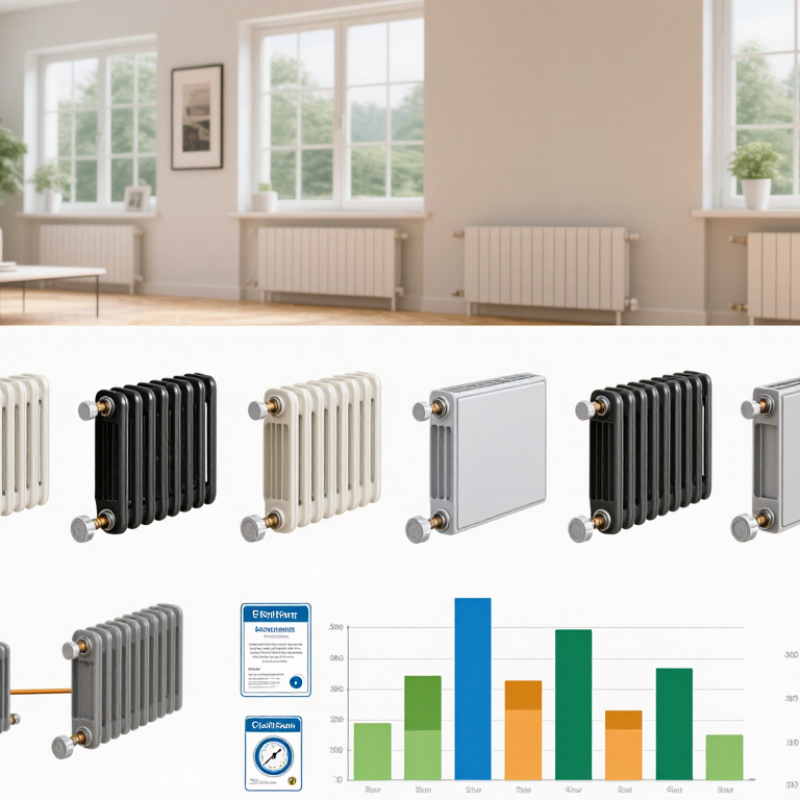
Double panel radiators use two steel panels with rows of convector fins between them. Hot water enters through the valve, warms the metal, and raises the nearby air temperature. Cooler air falls toward the floor, creating a steady circulation pattern. The panels also release gentle radiant heat toward people and surrounding surfaces.
The design is compact but not simple. A double panel usually provides more heating output than a single panel of similar height. Output depends on water temperature, panel size, fin design, wall insulation, and airflow around the radiator. In practical room checks, a radiator placed beneath a window can reduce the effect of cold downdraughts. Avoid tight covers. They restrict convection.
Manufacturers in China typically form steel sheets, weld water channels, attach fins, pressure-test the unit, and apply a protective coating. Reliable production requires consistent steel thickness and careful leak testing. Technical buyers should request output data under stated EN 442 conditions, not rely only on product photos. Installation experience also matters. A poorly balanced heating system can leave one panel hot and another weak, even when both radiators are correctly sized. The calculation may look accurate, yet real rooms contain doors, furniture, drafts, and uneven insulation. That is where specifications sometimes disappoint.
Evaluating the China top 10 double panel radiator manufacturers requires more than comparing prices or catalogue photos. The International Energy Agency’s Energy Efficiency 2023 report states that buildings consume about 30% of global final energy. Therefore, verified heat output matters. Request EN 442 test reports, with output listed at defined water and room temperatures. A radiator rated at ΔT50 should not be compared casually with one tested at ΔT30.
Material and production control deserve equal attention. Check steel thickness, weld consistency, coating adhesion, and corrosion resistance. ISO 9001 certification can indicate controlled processes, but it does not prove every radiator performs well. Ask for batch records, dimensional tolerances, pressure-test results, and samples from current production. A practical factory audit should inspect welding lines, powder-coating ovens, packaging corners, and warehouse humidity.
Compliance documents must match the actual model. The manufacturer should explain applicable requirements under EN 442 and relevant Chinese standards, rather than sending generic certificates. The European Commission’s Product Information reports repeatedly emphasize reliable technical documentation for energy-related products. That principle applies here. Warranty terms also reveal confidence: clarify water quality limits, operating pressure, replacement procedures, and response times. Claims about “high efficiency” remain weak without measured data. I would also question unusually low quotations; thinner steel or reduced coating layers may appear only after installation. No shortlist is perfect. Supplier capacity, testing discipline, and after-sales evidence can change over time.
A standards-based procurement framework for comparing Chinese double panel radiator manufacturers without using company or brand data.
The percentage values are an editorial evaluation model, not manufacturer scores. The criteria reflect commonly used radiator purchasing checkpoints, including EN 442 thermal-performance testing, ISO 9001 quality management, corrosion protection, dimensional consistency, welding quality, and documentation and after-sales support.
China’s Top 10 Double Panel Radiator Manufacturers are often judged by engineering discipline, not catalog appearance. A credible shortlist should examine production records, material traceability, and independent testing evidence. Double panel radiators usually combine two steel panels with convector fins, creating practical heat output for homes, offices, and public buildings. Look closely at panel thickness, weld consistency, coating adhesion, and connection accuracy. Small defects can become costly during installation.
Experienced buyers should request pressure-test reports, dimensional drawings, and heating-output data under stated conditions. Relevant standards, such as EN 442 where applicable, help make performance comparisons more reliable. ISO-certified quality systems may also indicate controlled processes, but certification alone proves little. Factory audits can reveal robotic welding lines, powder-coating booths, curing temperatures, and packaging methods. Ask how rejected units are recorded. That answer often exposes the real quality culture.
The strongest manufacturers usually support custom heights, connection positions, colors, and private-label packaging without weakening technical control. They should explain minimum order quantities, lead times, spare parts, and warranty procedures in clear written terms. Some suppliers offer attractive prices but provide vague heat-output data. That is a warning. Even a respected factory may have uneven batches or communication gaps. I would compare samples, inspect corner welds, and repeat pressure testing before placing a large order. Procurement teams should also calculate freight space, corrosion protection, and local installation requirements. A beautiful radiator is not enough.
China Top 10 Double Panel Radiator Manufacturers
China’s leading double panel radiator manufacturers cover standard, vertical, compact, and low-temperature heating models. Most use cold-rolled steel, usually 1.1–1.5 mm thick, with welded water channels and convector fins. Aluminum versions offer faster heat response, while steel models provide stronger pressure resistance and broader size options. The World Steel Association reported 1.89 billion tonnes of crude steel production worldwide in 2023, with China contributing about 1.02 billion tonnes. This supply depth supports stable sourcing, but material quality still varies between factories.
Manufacturing capability is the real separator. Strong suppliers combine automated resistance welding, robotic fin assembly, phosphate treatment, powder coating, and leak testing. Many factories also support custom heights, connection positions, colors, brackets, and packaging. Testing should reference EN 442, with documented operating pressure, thermal output, coating adhesion, and corrosion performance. The International Energy Agency reported that buildings consumed about 30% of global final energy in 2022. Efficient heat transfer therefore matters, especially in low-temperature systems.
Factory audits remain necessary. Some manufacturers present impressive equipment but outsource coating or pressure testing. That is not automatically poor practice, yet traceability becomes weaker. Ask for batch records, sample reports, and production photographs. Small details matter. A thicker panel may improve durability, but it can increase weight, transport cost, and response time. The best selection depends on the heating system, climate, installation space, and verified test data—not catalogue claims alone.
| Rank | Anonymous Manufacturer Profile | Double Panel Product Range | Common Heights | Common Lengths | Panel and Fin Configuration | Primary Materials | Steel Thickness | Surface Treatment | Connection Options | Manufacturing Capabilities | Typical Quality and Compliance Scope |
|---|---|---|---|---|---|---|---|---|---|---|---|
| 1 | Manufacturer Profile A | Type 22 double-panel radiators for residential, commercial, and renovation projects | 300–900 mm | 400–3000 mm | Two water-carrying panels with one layer of convector fins | Cold-rolled low-carbon steel; galvanized options available | Panel: approximately 1.1–1.3 mm; fin: approximately 0.4–0.5 mm | Degreasing, phosphating, electrophoretic primer, and powder coating | Bottom, side, or six-port connections; standard BSP or metric threads by order | Automated roll forming, robotic welding, pressure testing, and automated coating lines | Commonly produced for EN 442-based testing and ISO 9001 quality systems |
| 2 | Manufacturer Profile B | Compact Type 22 Radiators with flat-front and profiled-front panel choices | 300–900 mm | 400–2800 mm | Double panels with welded convector fins and top grille | Low-carbon steel with optional corrosion-resistant pretreatment | Panel: approximately 1.2 mm; fin: approximately 0.45 mm | Phosphating, cataphoretic coating, and white or custom-color powder coating | Four-side connections, bottom-center connection, and side-entry connection | Blanking, stamping, resistance welding, leak testing, assembly, and batch packing | Radiator output is generally specified at standard EN 442 test conditions |
| 3 | Manufacturer Profile C | Type 22 and Type 21 panels for central-heating and hydronic systems | 300–1000 mm | 400–3000 mm | Two panels with one or two rows of folded convector fins, depending on model | Cold-rolled steel; stainless-steel components used for selected accessories | Panel: approximately 1.1–1.4 mm; fin: approximately 0.4–0.6 mm | Cleaning, anti-corrosion pretreatment, primer, and polyester powder coating | Side connections, bottom connections, air vent, drain plug, and wall brackets | High-volume stamping and welding with dimensional inspection and hydraulic testing | Production documentation may include material certificates and test reports by batch |
| 4 | Manufacturer Profile D | Decorative and standard double-panel radiators for OEM and project supply | 300–900 mm | 500–2400 mm | Flat-front or line-profiled panels with welded convection fins | Low-carbon cold-rolled steel; optional galvanized steel for demanding environments | Panel: approximately 1.2 mm; fin: approximately 0.45 mm | Electrophoretic primer followed by high-temperature powder coating | Side, bottom, and reversible connection layouts | Laser cutting, progressive stamping, automatic welding, coating, and customized labeling | Typical supply programs support private-label packaging and project-specific inspection |
| 5 | Manufacturer Profile E | Type 22 radiators with compact, high-output configurations for limited wall space | 300–800 mm | 400–2000 mm | Double water panels and single-layer convector fins with protective top grille | Cold-rolled mild steel with steel brackets and threaded steel bushings | Panel: approximately 1.1–1.3 mm; fin: approximately 0.4–0.5 mm | Degreasing, phosphating, anti-rust primer, and durable powder coating | Four-port side connections and optional bottom-center connections | Cutting, forming, automatic seam welding, pressure testing, and accessory assembly | Common technical files include dimensions, operating pressure, and heat-output data |
| 6 | Manufacturer Profile F | Standard and customized double-panel radiators for export distribution | 300–900 mm | 400–3000 mm | Type 22 panels with optional smooth, ribbed, or decorative front surfaces | Low-carbon steel; zinc-coated steel available for selected product lines | Panel: approximately 1.2–1.5 mm; fin: approximately 0.4–0.6 mm | Multi-stage pretreatment, electrophoretic coating, and polyester powder finish | Side, bottom, and universal connection options with standard accessories | Automated production cells, robotic welding, online leak detection, and pallet packing | Export-oriented production commonly includes carton, pallet, and barcode options |
| 7 | Manufacturer Profile G | Type 22 radiators for apartments, offices, schools, and light commercial buildings | 300–1000 mm | 400–2800 mm | Two steel panels with one convector-fin layer and detachable top grille | Cold-rolled low-carbon steel; brass or steel fittings depending on configuration | Panel: approximately 1.1–1.3 mm; fin: approximately 0.45 mm | Phosphate pretreatment, primer coating, and white or colored powder coating | Side-entry, bottom-entry, air vent, drain, and thermostatic-valve-compatible layouts | Stamping presses, resistance welding, surface finishing, hydraulic testing, and final inspection | Product specifications normally state maximum working pressure and test pressure |
| 8 | Manufacturer Profile H | OEM double-panel radiators with flexible dimensions and connection arrangements | 300–900 mm | 400–3000 mm | Type 22 and selected Type 21 designs with profiled or flat panels | Low-carbon steel with optional galvanized components and stainless accessories | Panel: approximately 1.2 mm; fin: approximately 0.4–0.5 mm | Pre-treatment, electrophoretic primer, powder coating, and protective film options | Four-port, six-port, bottom-center, and customized port positions | Tooling development, CNC forming, automatic welding, coating, and OEM packaging | Suitable for buyer inspection plans covering appearance, dimensions, welds, and leakage |
| 9 | Manufacturer Profile I | Heavy-duty double-panel radiators for higher-output hydronic heating applications | 400–1000 mm | 500–3000 mm | Reinforced double panels with welded convector fins and rigid side panels | Cold-rolled steel with higher-gauge panel options for selected projects | Panel: approximately 1.2–1.5 mm; fin: approximately 0.5–0.6 mm | Anti-corrosion pretreatment, primer, and impact-resistant powder coating | Side or bottom connections; air vent and drain components included | Heavy-gauge stamping, precision welding, hydraulic pressure testing, and load testing | Project documentation may cover operating pressure, test pressure, and thermal output |
| 10 | Manufacturer Profile J | Economical Type 22 radiators for residential replacement and standard building projects | 300–900 mm | 400–2400 mm | Two pressed steel panels, one convector-fin layer, top grille, and side covers | Cold-rolled low-carbon steel with standard steel mounting accessories | Panel: approximately 1.1–1.2 mm; fin: approximately 0.4–0.5 mm | Cleaning, phosphating, powder primer, and white polyester powder coating | Standard side connections with optional bottom and reversible configurations | Cost-efficient stamping, welding, pressure testing, coating, and export packing | Typical specifications include EN 442-related performance data and ISO-based process control |
China Top 10 Double Panel Radiator Manufacturers
Comparing suppliers requires more than checking a product catalogue. Examine steel grade, panel thickness, welding quality, coating process, and heat output data. A reliable manufacturer should provide test reports, dimensional drawings, and clear production tolerances. Ask how each radiator performs under your system’s working pressure and water temperature. Factory experience matters, but recent quality records matter more.
Tips: Request a sample before placing a large order. Measure its panel alignment, bracket strength, paint coverage, and packaging protection. Ask for factory photographs, inspection procedures, and shipment references. Confirm whether production follows recognized standards, such as EN 442, and verify documents with an independent testing body when possible. Small details reveal serious gaps.
Price comparison should include tooling, packaging, spare parts, delivery terms, and after-sales support. A low quotation may hide weaker steel or inconsistent coating thickness. Check the supplier’s response speed and technical accuracy during discussions. Their answers often predict future service. Still, no evaluation is perfect. I would keep a written scorecard and compare at least three manufacturers using identical requirements. Visit the factory if the order is important. Online evidence can look convincing, yet one poorly stored radiator can expose a weakness that polished documents miss.


For those larger-sized parts, or smaller quantity runs, we have 2 independent powder coat booths and ovens. The quality, durability and affordability of today’s powder coating finishes make this the process of choice for world-class companies.
Powder coating advantages over other forms of coating are many. Materials used in the Powder coating process can be metals and non-metals that come in a multitude of thicknesses, textures, colors, etc. Another of Powder coating’s biggest advantages over conventional coatings is its ability to create finishes in many different textures. Powder Coating Booths allow us the ability to apply these advantages to large products.
Tri-State Fabricators runs a full-service conveyor line for painting. Wet painting can provide protection or decoration to many different part styles. From start to finish, every project is easier to undergo random and point-based inspection by our skilled painting team.
Advantages to our Wet Paint Line are these lines start with product prep and ends with a thorough inspection of a high quality finished product. Our ability to complete large and small projects with a superior finish and doing so in a timely and economical fashion. This passes along the savings in production to our customers. When powder coating ins not an option, our Wet Paint Line gets the job done right the first time.
When the parts get big and heavy we roll-out our custom paint racks and oversize booth. By utilizing our partnerships with all the major paint brands, we can match virtually any color with wet paint.
The advantages of having access to a Wet Paint Booth are many. Large projects of many different shapes can be loaded into the booth. The Wet Paint Booth offers an environment that is much more controlled than a typical parts painting operation.
Not only are they used because of their controlled environment, but they’re are also advantageous when it comes to applying paint to parts that are needed in industries that require specialty coatings such as medical, aerospace, etc.
Our military forces have some very high standards when it comes to the finish of their vehicles and equipment. From the first pre-treatment step to final coat, it takes a great deal of knowledge and experience to protect the men and women of our armed forces. They deserve only the best, and Tri-State Fabricators provides it.
All of our processes are closely monitored by our staff and management teams. Both of which are highly trained in the processes of metal fabrication and finishing. Tri-State Fabricators’ goal is to always fully satisfy each and every customer, including the military. We will always put a 110% into what we do.
Abrasive media blasting is an excellent way to remove old paint, rust, and increase the paint/powder adhesion. Glass beads produce a much smoother and brighter finish than angular abrasives; leaving the part clean yet without any dimensional change. Chemically inert and environmentally friendly, we can recycle our beads approximately 30 times; making them a more preferred method of metal cleaning or surface finishing.
Advantages to Glass Bead Blasting are many. Glass bead blast media is used when a project is needing rough surfaces need to become smooth for applications of coatings such as paint. It is typically used to clean paint and rust from a product surface without deforming the surface it is being used on. Overall, compared to many other blasting media, Glass Bead Blasting is a very economical choice and those savings are always passed on to our customers.
Tri-State Fabricators utilize a zinc phosphate wash to clean and etch the material to ensure the best paint adhesion possible. The unique design of our 3-stage wash system does the work like a 5-stage. From Cleaning and rinsing to conversion coating and post-treatment, Our Part Washing process is a complete service and works throughout the fabrication service and the finishing service.
Along with the previously mentioned benefits, Curing is a vital chemical reaction that leaves the product finish hard and relatively safe from mild abrasion and aggressive corrosion. This process can be done in more than one way; ambient air-dry or in curing ovens at temps that exceed 240°.
From fixing paint mistakes (someone else’s of course) to simply cleaning our paint line hooks, our burn-off oven is put to good use. After a quick burn-off, a little clean up, and a fresh coat of paint, your parts will look better than new.
Why does our Burn-Off Oven work so well? Because super heating the air around parts turns the materials into ashes. From paint and powder coatings to rubber and machining oils, high temps do the job without degrading the integrity of the part.
Masking is a vital part of producing high quality products. We have die-cut masking patterns to protect machined surfaces as well as a wide range of plugs and caps to protect threaded holes and bolts. We provide permanent and temporary masking.
Masking allows the selected sections of a product to be protected from a fabrication or finishing service. This can be with both chemicals when etching and tapes, paints when only finishing just a section of the product. Masking is great in aiding the customization process of a project.
Screen printing is a photographic process that transfers artwork onto a porous nylon screen which allows colored ink to flow through the screen and be deposited on an aluminum or plastic component. We can generally have just about any design created onto a screen for your parts.
Some of the advantages of Screen Printing are, brand recognition for your business displaying on your products, assembly instructions, product warnings/hazards, etc. Tri-State Fabricators produces Screen Printing of the highest quality so you know it’s durable.
Metal Finishing is the art of treating the exterior portion of product, often metal but can also be made of other materials, so that the surface is clean and free of any debris. Then the process of applying coats or either paint of powder coat takes place. This coating process improves the quality of the product in both appearance and resistance to wear and corrosion.
Tri-State Fabricators, Inc., understands that a project typically isn’t complete until a high-quality finish has been added to your product. This is why our painting and powder coating teams continuously inspect the products throughout the Metal Finishing process.