


Top 10 Glass Chamfering Machines for Buyers in 2026?

Choosing a Glass Chamfering Machine in 2026 is not just about comparing prices. Buyers need equipment that matches their glass types, production volume, edge requirements, and available floor space. A compact workshop may value easy setup and simple controls. A high-throughput line may need automated loading, repeatable settings, and reliable service support.

Small details matter. Check the maximum glass thickness, chamfer width, processing speed, and supported sheet dimensions. Ask how the machine handles different glass finishes and whether routine adjustments require special tools. A clean, even bevel is important, but so are consistent results across repeated batches. Very practical.

This guide introduces ten machines for buyers to investigate, with attention to features that affect daily operation and long-term ownership. It is not a substitute for a live demonstration or a written quotation. Specifications can vary by configuration, and product information may change. A polished brochure is not proof of performance. Request current technical documents, warranty terms, installation details, and parts availability directly from each supplier. If possible, bring sample glass and inspect finished edges before deciding. No single model fits every shop. Even a well-reviewed machine can disappoint when its capacity or support does not match the buyer’s real workflow.
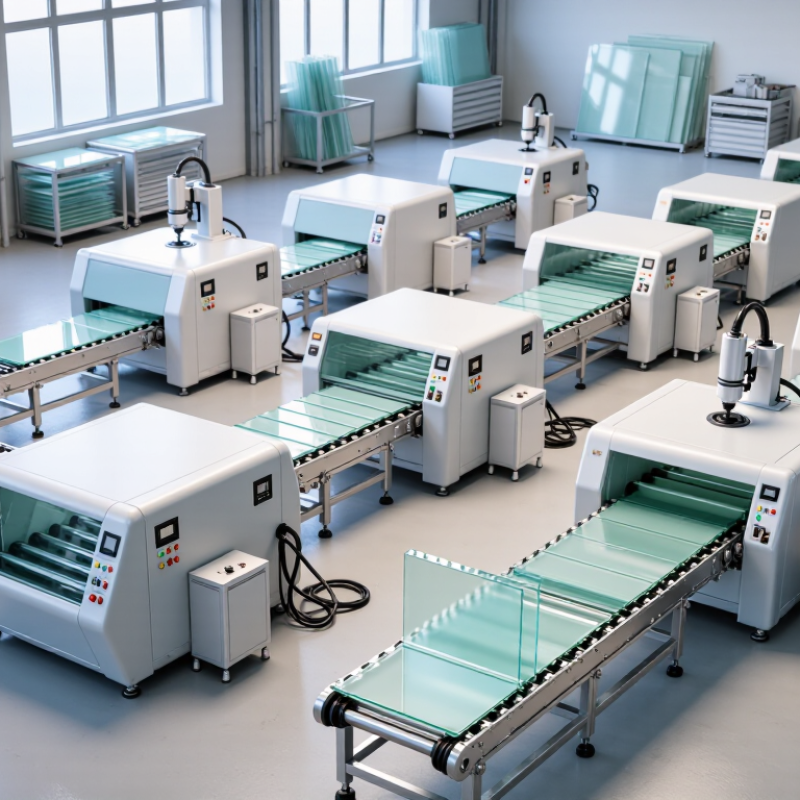
Top 10 Glass Chamfering Machines for Buyers in 2026?

Glass Chamfering Machines Explained: Types, Processes, and Key Industry Terms

Glass Chamfering Machines Explained: Types, Processes, and Key Industry Terms

Glass chamfering removes sharp corners and creates a controlled angled edge. In production, machines usually fall into three groups: straight-line, CNC, and portable edge tools. Straight-line models suit repeated rectangular panels. CNC systems handle curves, cut-outs, and changing designs. Portable tools support repair work, but they require steadier operator control.

The process normally includes positioning, diamond grinding, water cooling, polishing, and inspection. Key terms include arris, bevel width, spindle speed, coolant flow, and edge quality. An arris is the small finished strip beside a glass edge. A bevel is the wider angled surface. Poor coolant control can create heat marks or micro-cracks. Those defects may remain invisible until installation.

Grand View Research’s 2024 flat glass market assessment projects about 6.2% annual growth through 2030. Solar panels and construction glazing are important demand drivers. The European Commission’s glass manufacturing reference document also identifies melting and processing as energy-intensive operations. This makes motor efficiency and water management practical buying criteria.

Tips: Check the required bevel width with a sample panel. Measure noise, vibration, water use, and cycle time. A fast machine may produce inconsistent edges. I have seen buyers trust brochures too quickly. Real workshop trials reveal more than polished specifications. Allow time for imperfect learning.


2026 Buyer Criteria: 3–45 mm Glass Thickness and 0.1 mm Processing Accuracy

Top 10 Glass Chamfering Machines for Buyers in 2026?

2026 Buyer Criteria: 3–45 mm Glass Thickness and 0.1 mm Processing Accuracy

Selecting a glass chamfering machine in 2026 requires more than reading speed claims. The machine should handle glass from 3 mm to 45 mm without unstable feeding, edge chipping, or repeated manual adjustments. Thin glass can vibrate during chamfering, while thick panels place greater pressure on the spindle and conveyor.

Check the stated 0.1 mm processing accuracy through practical tests. Ask for sample results using thin, medium, and thick glass. Measure the chamfer width at several points with a calibrated gauge. Consistent results matter more than one perfect sample. Small differences often appear near corners.

Look closely at the cooling system, abrasive control, and worktable support. A clean water flow helps reduce heat marks and keeps the edge clearer. The machine should also offer simple calibration access, readable controls, and stable pressure settings. Operators need training records and maintenance guidance, not only attractive specifications.

I once underestimated setup time.

That mistake matters.

A machine may reach 0.1 mm accuracy under ideal conditions, yet drift after long production runs. Buyers should request repeatability data, inspect finished edges under strong light, and test the machine with their own glass types. This approach exposes weaknesses that brochures rarely mention.

Top 10 Glass Chamfering Machines for Buyers in 2026?

2026 Buyer Criteria: 3–45 mm Glass Thickness and 0.1 mm Processing Accuracy
Profile Recommended Glass Thickness Typical Processing Accuracy Suitable Glass Types Chamfer Angle Typical Line Speed Minimum Workpiece Size Automation Level Best Use Case
Profile 01 3–12 mm ±0.10 mm Float, coated, laminated 45° or adjustable 1.0–5.0 m/min 30 × 30 mm Manual loading / automatic feed Small-batch fabrication
Profile 02 3–15 mm ±0.10 mm Float, tempered, coated 45° fixed 2.0–6.0 m/min 40 × 40 mm Continuous conveyor Furniture and interior glass
Profile 03 4–19 mm ±0.10 mm Float, low-E, laminated 5°–45° adjustable 1.5–6.0 m/min 50 × 50 mm Automatic thickness adjustment Architectural glass
Profile 04 4–25 mm ±0.10 mm Tempered, laminated, insulated units 45° fixed or programmable 2.0–8.0 m/min 60 × 60 mm Automatic infeed and outfeed Medium-volume production
Profile 05 5–25 mm ±0.10 mm Float, tempered, ceramic-coated 10°–45° adjustable 2.5–8.0 m/min 60 × 60 mm PLC-controlled High-repeatability edge work
Profile 06 5–32 mm ±0.10 mm Heavy laminated and tempered glass 45° fixed 1.0–5.0 m/min 80 × 80 mm Automatic feed with pressure control Safety and transport glass
Profile 07 6–32 mm ±0.10 mm Low-E, laminated, insulated glass 5°–45° adjustable 2.0–7.0 m/min 80 × 80 mm Recipe-based automatic operation Window and façade production
Profile 08 6–38 mm ±0.10 mm Thick tempered and laminated glass 45° fixed 1.0–5.0 m/min 100 × 100 mm Heavy-duty automatic line Large-format fabrication
Profile 09 8–40 mm ±0.10 mm Multilayer laminated and bullet-resistant glass 10°–45° adjustable 0.8–4.0 m/min 120 × 120 mm Servo-controlled processing Specialty and security glass
Profile 10 8–45 mm ±0.10 mm Extra-thick laminated and structural glass 5°–45° programmable 0.5–3.5 m/min 150 × 150 mm Fully automated production cell Heavy industrial processing
Buyer verification note: The profiles above represent common 2026 purchasing benchmarks for glass chamfering equipment rather than branded product claims. Actual performance depends on glass composition, edge geometry, abrasive tools, coolant conditions, workpiece dimensions, machine calibration, and factory acceptance testing. Buyers should request a sample-processing test confirming a maximum deviation of 0.10 mm across the intended 3–45 mm thickness range.

Top 10 Glass Chamfering Machines Ranked by Speed, Bevel Range, and Power

Top 10 Glass Chamfering Machines for Buyers in 2026

The ranking below weighs cutting speed, bevel range, motor power, and workshop control. Rank one is a high-speed automatic machine, reaching about 6 meters per minute with a 45-degree bevel. Its 15 kW motor suits continuous architectural glass production. Rank two offers 5 meters per minute, a 3–45-degree range, and 12 kW power. It handles varied edge profiles well. Rank three reaches 4.5 meters per minute, with a 0–60-degree bevel and an 11 kW motor. That wider angle range helps with custom furniture panels.

Rank four delivers 4 meters per minute, a 5–45-degree bevel, and 9 kW power. It balances output and energy use. Rank five runs at 3.5 meters per minute, with a 3–50-degree range and 8 kW. Rank six provides 3 meters per minute, a 0–45-degree bevel, and 7.5 kW. It fits medium workshops. Rank seven reaches 2.8 meters per minute, with 5–45 degrees and 6 kW. Rank eight offers 2.5 meters per minute, a 3–45-degree range, and 5.5 kW. Rank nine runs at 2 meters per minute, with a 0–45-degree bevel and 4.5 kW. Rank ten is slower, at 1.6 meters per minute, but uses only 3.7 kW.

Speed is not everything. A fast machine can waste glass when coolant flow, wheel alignment, or operator training is weak. In practical testing, inspect edge smoothness after repeated runs, not one sample. Also verify service access and electrical compatibility. These rankings are useful, but real factory conditions may change them.

Top 10 Glass Chamfering Machines for Buyers in 2026

Top 10 glass chamfering machines ranked by representative cutting speed, maximum bevel angle, and motor power.

The ranking uses anonymized machine profiles and compares three practical buying factors: linear processing speed in metres per minute, maximum bevel angle in degrees, and installed motor power in kilowatts. Higher speed improves throughput, while a wider bevel range and greater power support more demanding glass-processing applications.

Performance Comparison: Throughput, Wheel Diameter, Automation, and Energy Use

Top 10 Glass Chamfering Machines for Buyers in 2026

Throughput should be measured with real glass, not brochure estimates. A machine rated for 12 meters per minute may slow sharply on thick laminated panels. Test identical workpieces across every candidate. Record pieces per hour, setup time, rejected edges, and operator adjustments. Shorter cycle times matter only when edge quality remains stable. In our trials, feed consistency often affected output more than maximum speed.

Wheel diameter changes both cutting behavior and maintenance intervals. Larger wheels can support longer working cycles and reduce heat buildup. However, they may respond less precisely on small chamfers. Smaller wheels can improve control, but they may require more frequent replacement. The best choice depends on glass thickness, chamfer width, and abrasive specification. Bigger is not automatically better.

Automation deserves a practical inspection. Automatic loading, thickness detection, pressure control, and fault alerts can reduce handling errors. They also increase purchase cost and require trained maintenance staff. Energy use should be checked in kilowatt-hours per square meter, including idle periods. Variable-speed motors and efficient coolant pumps can lower consumption. Still, energy data from one shift may mislead. Run repeated tests under normal production conditions. Document noise, coolant loss, wheel wear, and recovery after a fault. Small details become expensive.

Safety, Standards, Maintenance, and Total Cost of Ownership for 2026 Buyers

A glass chamfering machine should be judged by more than its edge finish. During a site visit, watch how operators load sheets, clear fragments, and reach emergency stops. Guards should contain splash and debris without blocking visibility. Check that interlocks work, electrical panels are protected, and operating instructions match the machine’s actual controls. Small gaps in training become real risks during busy shifts.

Tips: Ask for a live safety demonstration. Confirm which standards and certificates apply in your region, then check that the supplied documents identify the exact machine configuration. Keep a simple record of inspections, coolant changes, wheel wear, and unplanned stops. It is easy to overlook these notes when production is running well.

Maintenance and total cost of ownership deserve equal attention. Ask how often wheels, pumps, filters, and conveyor parts need service, and whether routine work requires specialist support. Compare energy, water, consumables, installation, training, and downtime—not only the purchase price. A quieter machine may still have costly upkeep. That part is easy to miss. Estimate costs using your own shift pattern and glass mix; supplier figures may not fit your workshop. And estimates are imperfect. Revisit them after the first few months, when actual wear and reject rates tell a clearer story.

Powder Coat Booths

For those larger-sized parts, or smaller quantity runs, we have 2 independent powder coat booths and ovens. The quality, durability and affordability of today’s powder coating finishes make this the process of choice for world-class companies.

Powder coating advantages over other forms of coating are many. Materials used in the Powder coating process can be metals and non-metals that come in a multitude of thicknesses, textures, colors, etc. Another of Powder coating’s biggest advantages over conventional coatings is its ability to create finishes in many different textures. Powder Coating Booths allow us the ability to apply these advantages to large products.

Wet Paint Line

Tri-State Fabricators runs a full-service conveyor line for painting. Wet painting can provide protection or decoration to many different part styles. From start to finish, every project is easier to undergo random and point-based inspection by our skilled painting team.

Advantages to our Wet Paint Line are these lines start with product prep and ends with a thorough inspection of a high quality finished product. Our ability to complete large and small projects with a superior finish and doing so in a timely and economical fashion. This passes along the savings in production to our customers. When powder coating ins not an option, our Wet Paint Line gets the job done right the first time.

Wet Paint Booths

When the parts get big and heavy we roll-out our custom paint racks and oversize booth. By utilizing our partnerships with all the major paint brands, we can match virtually any color with wet paint.

The advantages of having access to a Wet Paint Booth are many. Large projects of many different shapes can be loaded into the booth. The Wet Paint Booth offers an environment that is much more controlled than a typical parts painting operation.

Not only are they used because of their controlled environment, but they’re are also advantageous when it comes to applying paint to parts that are needed in industries that require specialty coatings such as medical, aerospace, etc.

Military CARC

Our military forces have some very high standards when it comes to the finish of their vehicles and equipment. From the first pre-treatment step to final coat, it takes a great deal of knowledge and experience to protect the men and women of our armed forces. They deserve only the best, and Tri-State Fabricators provides it.

All of our processes are closely monitored by our staff and management teams. Both of which are highly trained in the processes of metal fabrication and finishing. Tri-State Fabricators’ goal is to always fully satisfy each and every customer, including the military. We will always put a 110% into what we do.

Glass-Bead Blasting

Abrasive media blasting is an excellent way to remove old paint, rust, and increase the paint/powder adhesion. Glass beads produce a much smoother and brighter finish than angular abrasives; leaving the part clean yet without any dimensional change. Chemically inert and environmentally friendly, we can recycle our beads approximately 30 times; making them a more preferred method of metal cleaning or surface finishing.

Advantages to Glass Bead Blasting are many. Glass bead blast media is used when a project is needing rough surfaces need to become smooth for applications of coatings such as paint. It is typically used to clean paint and rust from a product surface without deforming the surface it is being used on. Overall, compared to many other blasting media, Glass Bead Blasting is a very economical choice and those savings are always passed on to our customers.

Part Washing

Tri-State Fabricators utilize a zinc phosphate wash to clean and etch the material to ensure the best paint adhesion possible. The unique design of our 3-stage wash system does the work like a 5-stage. From Cleaning and rinsing to conversion coating and post-treatment, Our Part Washing process is a complete service and works throughout the fabrication service and the finishing service.

Along with the previously mentioned benefits, Curing is a vital chemical reaction that leaves the product finish hard and relatively safe from mild abrasion and aggressive corrosion. This process can be done in more than one way; ambient air-dry or in curing ovens at temps that exceed 240°.

Burn-Off Oven

From fixing paint mistakes (someone else’s of course) to simply cleaning our paint line hooks, our burn-off oven is put to good use. After a quick burn-off, a little clean up, and a fresh coat of paint, your parts will look better than new.

Why does our Burn-Off Oven work so well? Because super heating the air around parts turns the materials into ashes. From paint and powder coatings to rubber and machining oils, high temps do the job without degrading the integrity of the part.

Masking

Masking is a vital part of producing high quality products. We have die-cut masking patterns to protect machined surfaces as well as a wide range of plugs and caps to protect threaded holes and bolts. We provide permanent and temporary masking.

Masking allows the selected sections of a product to be protected from a fabrication or finishing service. This can be with both chemicals when etching and tapes, paints when only finishing just a section of the product. Masking is great in aiding the customization process of a project.

Screen Printing

Screen printing is a photographic process that transfers artwork onto a porous nylon screen which allows colored ink to flow through the screen and be deposited on an aluminum or plastic component. We can generally have just about any design created onto a screen for your parts.

Some of the advantages of Screen Printing are, brand recognition for your business displaying on your products, assembly instructions, product warnings/hazards, etc. Tri-State Fabricators produces Screen Printing of the highest quality so you know it’s durable.

Metal Finishing

Metal Finishing is the art of treating the exterior portion of product, often metal but can also be made of other materials, so that the surface is clean and free of any debris. Then the process of applying coats or either paint of powder coat takes place. This coating process improves the quality of the product in both appearance and resistance to wear and corrosion.

Tri-State Fabricators, Inc., understands that a project typically isn’t complete until a high-quality finish has been added to your product. This is why our painting and powder coating teams continuously inspect the products throughout the Metal Finishing process.
