


China’s Paper Packaging Machinery sector is expanding with the global shift toward recyclable, fiber-based packaging. Smithers projects the global sustainable packaging market will reach approximately US$319 billion by 2028, up from about US$245 billion in 2023. This growth creates practical demand for faster and more flexible Paper Packaging Machine solutions.
China has become an important manufacturing base for corrugators, folder-gluers, die-cutters, paper bag machines, and printing systems. PMMI market research also identifies automation, labor efficiency, and connected equipment as major packaging investment drivers. These trends matter on the factory floor. A stable feeder, accurate glue line, and clean fold can reduce material waste during every production shift.
As PMMI Vice President Jorge Izquierdo has observed, “Automation is no longer a luxury; it is becoming essential for packaging competitiveness.” The statement reflects a real purchasing concern, although automation alone cannot solve poor maintenance or weak operator training. That is where supplier evaluation becomes complicated.
The leading Chinese manufacturers differ in machine speed, customization, export experience, after-sales service, and compliance documentation. Some perform strongly in high-volume carton production. Others provide better support for smaller converters or specialized paper bags. A polished brochure proves little. Field testing, spare-parts availability, and verified customer references matter more.
This guide examines China’s top 10 Paper Packaging Machine manufacturers through those practical criteria. The ranking is not absolute. Production needs vary, and even an impressive machine may disappoint when matched with the wrong board grade, workflow, or service capability.
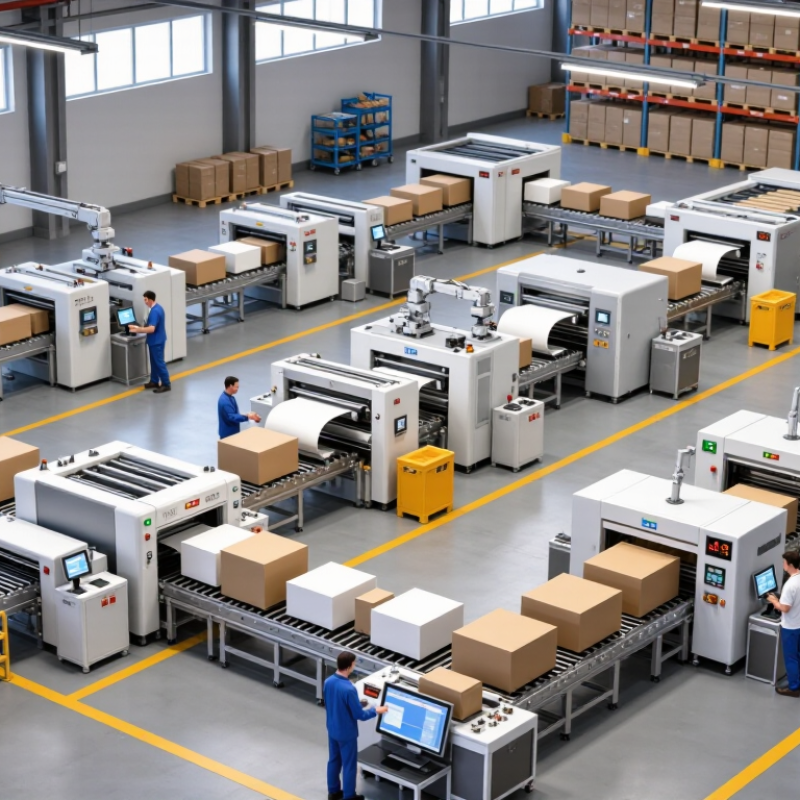
Paper packaging machine manufacturers in China design, produce, assemble, and service equipment for paper-based packaging production. Their scope includes corrugators, carton folder-gluers, die-cutters, paper bag machines, and printing systems. It also covers feeding units, drying sections, inspection devices, and factory automation. A machine maker is not simply a metal workshop. It must control accuracy, throughput, material waste, and operator safety.
Industry reports show why this definition matters. Smithers estimated the global paper-based packaging market would exceed 500 billion US dollars by 2028. China remains a major production and consumption center. The National Bureau of Statistics reported strong output from China’s paper and paperboard container sector in recent years. That demand supports equipment upgrades, especially for short runs, recyclable materials, and faster changeovers. The numbers are useful, but they do not reveal every factory’s real capability.
A credible top-ten assessment should examine installed equipment, export experience, testing standards, service response, and spare-parts availability. It should also separate complete-line suppliers from component specialists. Some manufacturers provide impressive catalogues but limited field evidence. That deserves caution. Practical evaluation should include sample cartons, machine videos, energy data, and customer references. Certification alone is not enough. Paper thickness, adhesive behavior, humidity, and local maintenance skills can change production results. A reliable manufacturer explains these limits before signing a contract.
Our ranking evaluates manufacturers through evidence, not advertising claims. We examine production facilities, engineering teams, machine drawings, and verified customer applications. Factory visits can reveal details that brochures hide, such as poor cable routing or inconsistent welding. We also review operating records from folding, gluing, die-cutting, and corrugating equipment. Practical experience matters here.
Technical performance receives the highest weight. We compare output speed, registration accuracy, changeover time, energy use, and material compatibility. Machines should process common paperboard grades without frequent stoppages. Safety design, control-system stability, and maintenance access are also measured. Testing should use realistic production conditions, not only an empty machine. That difference matters.
Service reliability shapes the final ranking. We assess installation support, spare-part availability, response times, training quality, and warranty clarity. Export experience is useful, but it does not replace engineering competence. We also check quality certifications, inspection procedures, and documented delivery performance. No ranking is perfect. Data may be incomplete, and a strong factory can still have an uneven service year. Price is reviewed through total ownership cost, including downtime, power consumption, tooling, and technician visits. A lower quotation may become expensive beside a busy production line.
China’s paper packaging machinery sector includes manufacturers with different strengths, factory scales, and technical histories. The top ten profiles should examine more than production volume. They should consider engineering experience, machine stability, service response, and documented customer applications. A reliable supplier explains specifications clearly and supports testing before delivery.
Several profiled manufacturers focus on flexographic printing and bag-making lines. Their equipment may handle kraft paper, coated paper, and recycled grades with adjustable tension control. Other companies specialize in corrugated board systems, die-cutting equipment, folding machines, or complete packaging lines. Practical details matter here. Look for servo-driven feeding, automatic alignment, waste reduction, and accessible maintenance points.
Some manufacturers invest heavily in research, while others build value through customization and responsive service. Their differences are important for buyers with varied production targets. However, published rankings can be imperfect. Factory visits, sample trials, and verification of after-sales records remain necessary. A polished brochure proves little. Ask about installation time, spare-part availability, operator training, and performance under continuous production. Energy use also deserves attention, especially when machines run for long shifts. The strongest profiles should present measurable capabilities without exaggeration, while acknowledging limits such as material compatibility, speed changes, and local service coverage. Experience on the factory floor often reveals more than impressive claims.
China’s paper packaging machinery market covers corrugated box lines, folding carton equipment, paper bag machines, and molded pulp systems. Each category serves different production pressures, from fast food cartons to heavy-duty shipping boxes. Buyers should match machine design with paper thickness, box size, and expected output.
Servo motors now improve feeding accuracy and reduce adjustment time. PLC controls coordinate printing, slotting, die-cutting, folding, and gluing. Vision inspection systems can detect missing print, poor registration, and damaged edges. Some machines also use automatic plate washing and ink circulation systems. These features reduce waste, especially during long production runs. However, automation does not remove the need for skilled operators.
Product categories differ in useful ways. Flexographic printer-slotters suit corrugated packaging and high-volume orders. Flatbed and rotary die-cutters handle complex shapes and stronger board. Folder-gluers support cartons with precise folding lines and stable adhesive application. Paper bag machines focus on tube forming, handle attachment, and bottom folding. Molded pulp equipment uses forming, hot pressing, and trimming for protective packaging. Energy use remains a concern. Some suppliers promote efficiency, but real performance depends on paper quality, maintenance, and factory conditions. This point is easy to overlook. No machine is perfect. Buyers should inspect sample output, service response, spare-part availability, and actual noise levels before signing a purchase agreement.
| Market Position | Manufacturer Profile | Primary Machine Category | Key Technologies | Typical Materials | Common Applications | Typical Automation Level | Main Market Advantage |
|---|---|---|---|---|---|---|---|
| 01 | Profile A | Corrugated Board Production Lines | High-speed corrugation, automatic paper splicing, steam-pressure control, synchronized drive systems | Kraft linerboard, testliner, fluting paper | Shipping cartons, industrial boxes, e-commerce packaging | High | Integrated production lines for high-volume carton plants |
| 02 | Profile B | Flexographic Printing and Folder-Gluer Machines | Servo registration, inline printing, slotting, folding, gluing, automatic bundle counting | Corrugated sheets, kraft board, coated linerboard | Printed shipping cases, retail cartons, transport packaging | Medium to High | Combines printing and converting in one continuous workflow |
| 03 | Profile C | Flatbed Die-Cutting and Creasing Equipment | Precision die cutting, stripping, waste removal, pneumatic clutch-brake systems | Corrugated board, folding carton board, laminated paperboard | Special-shaped boxes, display packaging, die-cut inserts | Medium to High | Suitable for complex carton structures and short production runs |
| 04 | Profile D | Rotary Die-Cutting Machines | Rotary tooling, inline stripping, vacuum conveying, automatic registration | Single-wall and double-wall corrugated board | High-volume shipping cases, agricultural boxes, logistics packaging | High | Continuous processing with strong productivity for standard designs |
| 05 | Profile E | Paper Bag Making Machines | Tube forming, bottom gluing, handle insertion, servo length control, automatic feeding | Kraft paper, bleached paper, recycled paper | Retail bags, takeaway bags, bakery bags, shopping bags | Medium to High | Supports the replacement of plastic carrier bags with fiber-based formats |
| 06 | Profile F | Folding Carton Gluing Machines | Multi-point folding, hot-melt and cold-glue application, inspection, automatic stacking | Folding boxboard, ivory board, coated paperboard | Food cartons, pharmaceutical cartons, cosmetic packaging | Medium to High | Efficient finishing for folding cartons with varied structures |
| 07 | Profile G | Paper Cup and Food Container Forming Machines | Ultrasonic or heat sealing, bottom knurling, leak testing, automatic cup counting | PE-coated paper, water-based coated paper, barrier paperboard | Cups, bowls, food trays, takeaway containers | High | High-speed forming for disposable foodservice packaging |
| 08 | Profile H | Coating, Laminating and Slitting Equipment | Water-based coating, extrusion or adhesive lamination, tension control, web slitting | Paper, film, foil, coated board, barrier substrates | Moisture-resistant wraps, food packaging, technical paper products | Medium to High | Improves barrier, sealing and printability performance of paper substrates |
| 09 | Profile I | Paperboard Printing Presses | Flexographic or offset printing, automatic plate alignment, color registration, drying control | Paperboard, folding carton board, corrugated sheets | Brand graphics, product information, promotional packaging | Medium to High | Provides high-quality graphics and variable print configurations |
| 10 | Profile J | Carton Erecting, Packing and End-of-Line Systems | Robotic loading, case erection, carton sealing, conveyors, vision inspection and traceability | Corrugated cases, folding cartons, paper-based retail packs | Automated warehousing, food and beverage packing, consumer goods logistics | High | Reduces manual handling and connects packaging equipment with smart factories |
Note: The manufacturer profiles are anonymized. The table summarizes major paper packaging machine categories, technologies and application segments commonly represented in the Chinese market; the positions are indicative market segments rather than a disclosed corporate ranking.
Choosing a Chinese paper packaging machine manufacturer requires more than comparing catalogue prices. FAOSTAT forestry data reports global paper and paperboard production at roughly 415 million tonnes in 2022. This scale creates strong manufacturing experience, but quality still varies between suppliers. Check factory history, audited quality procedures, export records, and technician qualifications. Request production videos with your paper grade, board thickness, dimensions, and target speed. A successful showroom trial may not match your actual material.
Compare measurable results, not impressive claims. Ask for waste rates, power consumption, changeover time, machine availability, and accepted tolerances. ISO 9001 certification can support process control, but it does not guarantee machine performance. Inspect welding, electrical cabinets, sensors, guarding, and software backups. Confirm whether critical spare parts are locally available. The Smithers market outlook identifies continued growth in paper-based packaging, increasing pressure for efficient and flexible equipment. However, higher output often exposes weak feeding systems and unstable registration.
Tips: Prepare a written acceptance test before payment. Include hourly output, defect limits, noise levels, safety functions, and training hours. Ask for three recent customer references in similar applications. Check whether the quoted speed is realistic for your board. It may not be. Keep a contingency budget for installation changes, because factory layouts, voltage, and operator skills can differ. A careful video inspection helps, but an independent pre-shipment inspection is more reliable.


For those larger-sized parts, or smaller quantity runs, we have 2 independent powder coat booths and ovens. The quality, durability and affordability of today’s powder coating finishes make this the process of choice for world-class companies.
Powder coating advantages over other forms of coating are many. Materials used in the Powder coating process can be metals and non-metals that come in a multitude of thicknesses, textures, colors, etc. Another of Powder coating’s biggest advantages over conventional coatings is its ability to create finishes in many different textures. Powder Coating Booths allow us the ability to apply these advantages to large products.
Tri-State Fabricators runs a full-service conveyor line for painting. Wet painting can provide protection or decoration to many different part styles. From start to finish, every project is easier to undergo random and point-based inspection by our skilled painting team.
Advantages to our Wet Paint Line are these lines start with product prep and ends with a thorough inspection of a high quality finished product. Our ability to complete large and small projects with a superior finish and doing so in a timely and economical fashion. This passes along the savings in production to our customers. When powder coating ins not an option, our Wet Paint Line gets the job done right the first time.
When the parts get big and heavy we roll-out our custom paint racks and oversize booth. By utilizing our partnerships with all the major paint brands, we can match virtually any color with wet paint.
The advantages of having access to a Wet Paint Booth are many. Large projects of many different shapes can be loaded into the booth. The Wet Paint Booth offers an environment that is much more controlled than a typical parts painting operation.
Not only are they used because of their controlled environment, but they’re are also advantageous when it comes to applying paint to parts that are needed in industries that require specialty coatings such as medical, aerospace, etc.
Our military forces have some very high standards when it comes to the finish of their vehicles and equipment. From the first pre-treatment step to final coat, it takes a great deal of knowledge and experience to protect the men and women of our armed forces. They deserve only the best, and Tri-State Fabricators provides it.
All of our processes are closely monitored by our staff and management teams. Both of which are highly trained in the processes of metal fabrication and finishing. Tri-State Fabricators’ goal is to always fully satisfy each and every customer, including the military. We will always put a 110% into what we do.
Abrasive media blasting is an excellent way to remove old paint, rust, and increase the paint/powder adhesion. Glass beads produce a much smoother and brighter finish than angular abrasives; leaving the part clean yet without any dimensional change. Chemically inert and environmentally friendly, we can recycle our beads approximately 30 times; making them a more preferred method of metal cleaning or surface finishing.
Advantages to Glass Bead Blasting are many. Glass bead blast media is used when a project is needing rough surfaces need to become smooth for applications of coatings such as paint. It is typically used to clean paint and rust from a product surface without deforming the surface it is being used on. Overall, compared to many other blasting media, Glass Bead Blasting is a very economical choice and those savings are always passed on to our customers.
Tri-State Fabricators utilize a zinc phosphate wash to clean and etch the material to ensure the best paint adhesion possible. The unique design of our 3-stage wash system does the work like a 5-stage. From Cleaning and rinsing to conversion coating and post-treatment, Our Part Washing process is a complete service and works throughout the fabrication service and the finishing service.
Along with the previously mentioned benefits, Curing is a vital chemical reaction that leaves the product finish hard and relatively safe from mild abrasion and aggressive corrosion. This process can be done in more than one way; ambient air-dry or in curing ovens at temps that exceed 240°.
From fixing paint mistakes (someone else’s of course) to simply cleaning our paint line hooks, our burn-off oven is put to good use. After a quick burn-off, a little clean up, and a fresh coat of paint, your parts will look better than new.
Why does our Burn-Off Oven work so well? Because super heating the air around parts turns the materials into ashes. From paint and powder coatings to rubber and machining oils, high temps do the job without degrading the integrity of the part.
Masking is a vital part of producing high quality products. We have die-cut masking patterns to protect machined surfaces as well as a wide range of plugs and caps to protect threaded holes and bolts. We provide permanent and temporary masking.
Masking allows the selected sections of a product to be protected from a fabrication or finishing service. This can be with both chemicals when etching and tapes, paints when only finishing just a section of the product. Masking is great in aiding the customization process of a project.
Screen printing is a photographic process that transfers artwork onto a porous nylon screen which allows colored ink to flow through the screen and be deposited on an aluminum or plastic component. We can generally have just about any design created onto a screen for your parts.
Some of the advantages of Screen Printing are, brand recognition for your business displaying on your products, assembly instructions, product warnings/hazards, etc. Tri-State Fabricators produces Screen Printing of the highest quality so you know it’s durable.
Metal Finishing is the art of treating the exterior portion of product, often metal but can also be made of other materials, so that the surface is clean and free of any debris. Then the process of applying coats or either paint of powder coat takes place. This coating process improves the quality of the product in both appearance and resistance to wear and corrosion.
Tri-State Fabricators, Inc., understands that a project typically isn’t complete until a high-quality finish has been added to your product. This is why our painting and powder coating teams continuously inspect the products throughout the Metal Finishing process.

