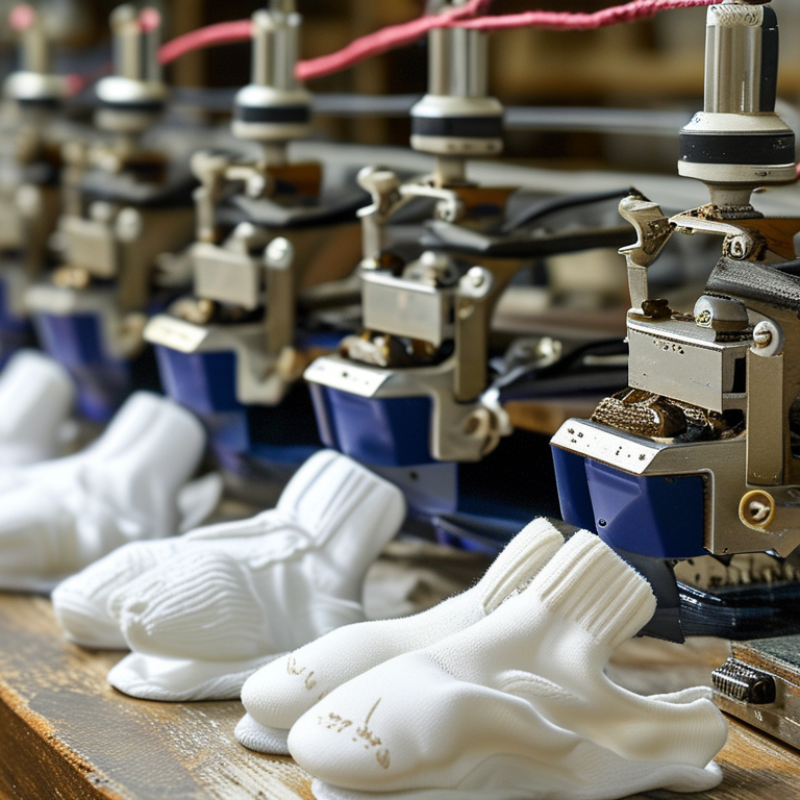
Choosing the right Socks Printer is rarely as simple as comparing machine prices. Global buyers face different fabrics, production volumes, artwork requirements, and maintenance conditions. A printer that performs beautifully on white polyester socks may struggle with cotton blends or dark colors. Small details matter, including ink absorption, curing temperature, print width, and heel alignment.
Luca Bianchi, a hosiery machinery consultant with practical factory experience, once said, “A printer must match the sock, not merely the artwork.” That principle shapes this guide. It examines ten major printer types, including direct-to-sock systems, sublimation printers, rotary machines, flatbed printers, and hybrid production units. Each category offers useful advantages, but none is perfect for every buyer. Some machines deliver vivid gradients. Others provide stronger output for long production runs. A few reduce setup time but require more careful calibration.
The evaluation also considers print durability, software compatibility, operator training, energy use, and after-sales support. These factors often decide whether a machine remains profitable after installation. A lower purchase price can become expensive when spare parts arrive slowly. That is the uncomfortable part.
Real production evidence matters. Buyers should request sample socks, inspect stretch recovery, and test washing performance before signing an order. This guide offers a practical comparison, not a universal verdict. Market conditions change, and technical claims deserve verification. The best choice depends on your factory’s actual workflow, not a polished showroom demonstration.
A sock printer is a specialized machine that creates or decorates socks with digital designs. The term can be confusing. Some machines knit patterns directly with colored yarn, while others print images onto finished socks. For global buyers, this difference affects equipment cost, fabric choice, production speed, and maintenance needs.
A digital knitting sock printer begins with a design file. Software converts the artwork into stitch instructions. The machine feeds several yarn colors through tiny guides while needles form a tube. It controls stretch, density, and pattern placement during rotation. Heel shaping and toe construction require careful programming. Small errors can create loose threads, uneven logos, or uncomfortable seams. In my experience, test samples reveal problems that software previews often miss.
Printing machines use another process. A prepared sock passes through a printing area, where ink reaches the fabric surface. Heat or another curing method helps fix the image. Polyester blends often support sharper, brighter results, but cotton-rich fabrics may feel softer. Results vary with moisture, fabric tension, and washing conditions. We once saw a clean design become slightly distorted after repeated stretching. That was not a machine failure alone. The file, fabric, and curing settings all needed review. Buyers should request wash tests, stretch tests, and production samples before choosing a machine type.
Global buyers usually compare four main sock-printer types. Direct-to-sock inkjet machines print artwork onto finished, stretched socks. Sublimation printers transfer designs onto polyester socks through heat. Rotary screen systems suit large orders with repeated colors. Flatbed or transfer systems print fabric panels before sewing. The categories overlap, and that is easy to miss.
Grand View Research estimated the global digital textile printing market at about USD 2.8 billion in 2023. It also projects a 12.1% compound annual growth rate from 2024 to 2030.
This growth supports demand for short runs, customized sportswear, and faster sampling. Smithers’ textile printing forecasts also identify apparel personalization as a continuing demand area through 2028.
However, market growth does not make every machine suitable for every sock.
Cotton requires different ink fixation than polyester. Reactive inks often need steaming and washing, while sublimation needs polyester fibers and controlled heat. Buyers should inspect heel alignment, toe coverage, curing temperature, and stretch recovery. A test pair can reveal more than a sales brochure. Ask for wash results using AATCC TM61 or an equivalent procedure. Check output after repeated stretching, not only when the sock is flat.
Throughput figures can also mislead. They may exclude setup, cleaning, drying, and rejected pairs. I would choose a slower printer when it delivers stable color and fewer alignment errors. That judgment is not perfect, but production reality matters.
Sock printing technologies differ most in ink behavior, fabric compatibility, speed, and design flexibility. Direct-to-sock digital printers apply images onto prepared cotton or blended socks. They handle gradients and small orders well, but color depth may vary near the heel.
Sublimation printers work best with polyester socks. Heat moves the dye into the fibers, creating sharp images and soft surfaces. However, they perform poorly on dark cotton.
Reactive digital printing suits cotton and other cellulose fibers. It offers strong wash resistance after steaming and washing, although the process needs more water and careful color control.
Pigment inkjet printing uses simpler finishing steps. It can print on several fabrics, but the surface may feel slightly coated.
Screen printing remains practical for large runs. Rotary screen systems produce consistent solid colors, while flatbed screen machines suit smaller batches and bold artwork. Both require screens, setup time, and limited color separation.
Heat-transfer printing is useful for short runs and personalized orders. Its printed layer can feel heavier, especially on thin socks.
Direct-to-garment equipment can create detailed designs, but sock stretching and tube-shaped surfaces require special fixtures.
Transfer film printing delivers vivid graphics, yet breathability may decrease.
Embroidery machines create raised textures rather than printed images and work best with simple logos.
My production tests often favor digital printing for samples and screen methods for volume.
Still, registration errors happen. A clean file cannot fix poor sock tension, uneven pretreatment, or careless curing.
Testing after repeated washing remains essential.
Choosing the right sock printer starts with the product, not the machine. Global buyers can compare sublimation, direct-to-garment, screen, rotary, and hybrid systems. Each type suits different fibers, designs, and production volumes. Polyester socks often need heat-based sublimation for bright, durable color. Cotton blends may require direct printing and careful pretreatment. A printer built for flat fabric may struggle with curved sock surfaces. Check whether the machine supports ankle, crew, and knee-high sizes.
Reliable selection requires practical testing. Ask for printed samples using your actual yarn blend, artwork, and sock dimensions. Inspect color accuracy around the heel and toe. These areas often reveal alignment problems. Measure printing speed under normal operating conditions, not only the advertised maximum. Also examine ink consumption, curing requirements, maintenance access, and operator training. A lower purchase price can become expensive when cleaning takes hours each week. No machine is perfect. That matters.
Tips: Compare total ownership cost over three years. Confirm local access to spare parts and technical support. Check software compatibility and file preparation needs. Request a written warranty with clear response times. Test wash resistance before signing an order. If possible, run a small production batch, because one sample can hide repeated defects. I would also leave room for uncertainty; new materials may print differently than expected. Record every test result, including failed settings, and let production evidence guide the final choice.
This comparison covers ten commonly used printing and transfer systems for socks. Scores from 1 to 5 indicate typical suitability for each use case: small-batch customization, all-over coverage, cotton compatibility, polyester compatibility, and high-volume production. The ratings are practical industry-use indicators rather than laboratory performance benchmarks.
Top 10 Types of Socks Printers for Global Buyers?
How to Evaluate Suppliers, Costs, and Production Needs
Choosing among sock printers requires more than comparing machine prices. Ask suppliers which fibers they support, including cotton, polyester, nylon, and blended yarns. Confirm print resolution, color consistency, sock size range, and daily output. A supplier should provide physical samples, not only digital images. Wash the samples several times. Check fading, stretching, bleeding, and heel alignment. Small defects can become expensive returns.
Request a detailed quotation with ink, maintenance, training, shipping, installation, and spare parts included. Compare total ownership costs over three years, rather than focusing on the lowest offer. Ask about minimum order quantities, payment terms, warranty coverage, and technical response times. Reliable suppliers explain limitations clearly. Vague promises deserve caution. A low-cost printer may consume more ink or require frequent calibration.
Match the equipment to your production plan. Digital printing suits detailed artwork and shorter runs, while other systems may perform better for repeated designs and larger volumes. Review your monthly demand, available floor space, power supply, ventilation, labor skills, and delivery deadlines. Request a test run using your actual artwork and yarn. It reveals problems early. One imperfect sample is useful; ignoring it is not. Keep written records of test results, service calls, and promised output. Supplier references can help, but your own testing remains more dependable.
| No. | Printer Type | Best-Fit Sock Material | Typical Production Use | Indicative Equipment Cost (USD) | Typical Output Level | Main Advantages | Key Limitations | Supplier Evaluation Priorities | Best Buyer Profile |
|---|---|---|---|---|---|---|---|---|---|
| 1 | Direct-to-Sock Dye-Sublimation Printer | Polyester and polyester-rich blends, generally white or light-colored socks | Full-color customized designs, sports socks, promotional orders, and short production runs | $3,000–$25,000 | Approximately 100–800 pairs per day, depending on printer width, fixtures, and operator workflow | Bright colors, low setup cost, fast artwork changes, and no screen preparation | Not suitable for most cotton socks; dark garments require a different process; color fastness depends on fabric and heat fixation | Verify sublimation temperature control, sock fixtures, ink certification, color-management software, and sample wash results | Online sellers, custom sportswear producers, promotional suppliers, and small-to-medium businesses |
| 2 | Direct-to-Sock Reactive Inkjet Printer | Cotton and other cellulose-based fibers | Premium cotton socks, detailed patterns, fashion collections, and medium-volume textile production | $40,000–$250,000 | Approximately 500–5,000 pairs per day, depending on print width, pretreatment, steaming, and washing capacity | Strong color penetration, soft hand feel, and high-quality results on cotton | Requires pretreatment, steaming, washing, drying, water management, and trained technical staff | Assess the complete process line, wastewater requirements, reactive ink support, printhead availability, and service response time | Established textile factories and buyers requiring durable cotton-sock production |
| 3 | Direct-to-Sock Pigment Inkjet Printer | Cotton, cotton blends, and selected synthetic blends with suitable pretreatment | On-demand designs, personalized socks, sampling, and small-batch production | $15,000–$120,000 | Approximately 150–2,000 pairs per day | Lower water consumption than reactive printing, simplified post-treatment, and flexible order sizes | May provide lower color penetration and wash durability than reactive printing; pretreatment quality is critical | Request wash-cycle testing, rub-fastness data, pretreatment consistency tests, and total ink consumption per pair | Custom-order businesses and factories seeking a lower-water digital process |
| 4 | Direct-to-Sock Acid Inkjet Printer | Nylon, polyamide, silk, and selected nylon-rich blends | Performance socks, hosiery, technical socks, and high-detail patterns on polyamide fabrics | $35,000–$220,000 | Approximately 400–4,000 pairs per day | Good color penetration and durable results on nylon-based materials | Needs controlled steaming and washing; inks and auxiliaries require careful chemical handling | Confirm compatibility with the exact nylon construction, fixation method, chemical safety documentation, and local wastewater rules | Hosiery manufacturers and performance-sock producers using nylon-rich fabrics |
| 5 | Rotary Screen Sock Printing Machine | Compatible cotton, polyester, nylon, and blended fabrics, subject to ink selection | Large-volume production with repeat designs and a limited number of colors | $30,000–$250,000 | Approximately 2,000–20,000 pairs per day | High productivity, consistent repeatability, and low unit cost at large volumes | High screen and setup costs; less economical for frequent artwork changes or highly detailed photographic designs | Review cylinder alignment, repeat length, registration accuracy, changeover time, spare parts, and operator training | Large factories producing stable, high-volume collections |
| 6 | Flatbed Screen Printing System with Sock Fixtures | Cotton, polyester, nylon, and blends, depending on ink chemistry | Simple logos, team orders, promotional socks, and medium-size batches | $8,000–$60,000 | Approximately 300–3,000 pairs per day | Relatively affordable, suitable for bold graphics, and easy to scale from manual to semi-automatic production | Lower throughput than rotary systems; registration and coverage can be difficult on curved sock surfaces | Check fixture design, maximum printable area, registration tolerance, curing equipment, and compatibility with stretch inks | Small and medium manufacturers with repeat logo or promotional orders |
| 7 | Sublimation Transfer Printer and Heat-Press System | White polyester and polyester-rich socks | Customized sports socks, names and numbers, samples, and small personalized orders | $2,000–$20,000 | Approximately 50–500 pairs per day | Low entry cost, easy artwork changes, and a wide range of commercially available transfer workflows | Requires transfer paper or film and accurate pressing; unsuitable for most cotton socks and dark bases | Evaluate press temperature uniformity, pressure consistency, transfer alignment, cycle time, and heat-related fabric distortion | Start-ups, print shops, e-commerce sellers, and sampling departments |
| 8 | Direct-to-Film Transfer System with Sock Press | Selected cotton, polyester, and blended socks; results vary with stretch and surface texture | Small logos, bright graphics, short runs, and designs requiring white ink on darker socks | $5,000–$35,000 | Approximately 100–1,200 pairs per day | Works on more color bases than sublimation and can produce strong graphic opacity | Transfer stretch, adhesion, breathability, and wash durability can vary significantly on ribbed or highly elastic socks | Require repeated stretch testing, wash testing, peel-strength data, powder consistency, and documented ink safety information | Custom-product suppliers handling graphic logos and short-to-medium runs |
| 9 | Cylindrical Direct-to-Garment Inkjet Printer | Knitted cotton, polyester, and blended socks when the machine fixture supports the construction | High-detail artwork, personalized products, samples, and limited-edition collections | $20,000–$150,000 | Approximately 100–1,000 pairs per day | Detailed variable-data printing, minimal screen preparation, and efficient handling of multiple designs | Productivity depends heavily on loading and unloading; toe, heel, seams, and uneven stretch can affect print quality | Test full-size sock samples, seam clearance, print repeatability, ink curing, maintenance procedures, and fixture changeover time | Premium customization businesses and factories with many designs but moderate volumes |
| 10 | Roll-to-Roll Textile Printer with Sock Cutting and Sewing Line | Polyester, cotton, nylon, and engineered blends according to the selected ink and finishing process | Industrial production of printed panels that are later cut, linked, and finished into socks | $80,000–$500,000+ | Approximately 5,000–50,000 pairs per day in a coordinated production line | High throughput, efficient material utilization, broad design capability, and integration with automated finishing | Highest capital requirement; requires pattern engineering, cutting accuracy, sewing or linking equipment, and production planning | Evaluate line balancing, fabric utilization, repeat accuracy, cutting tolerance, finishing quality, automation software, and local technical support | Large manufacturers and global buyers requiring scalable, repeatable production |

Cost and output figures are indicative equipment-only ranges for global procurement planning. Actual quotations vary by print width, automation level, ink system, pretreatment and finishing equipment, installation, freight, taxes, utilities, and after-sales service. Buyers should request production samples, wash-test reports, total cost of ownership calculations, warranty terms, spare-parts availability, and references from comparable installations before selecting a supplier.


For those larger-sized parts, or smaller quantity runs, we have 2 independent powder coat booths and ovens. The quality, durability and affordability of today’s powder coating finishes make this the process of choice for world-class companies.
Powder coating advantages over other forms of coating are many. Materials used in the Powder coating process can be metals and non-metals that come in a multitude of thicknesses, textures, colors, etc. Another of Powder coating’s biggest advantages over conventional coatings is its ability to create finishes in many different textures. Powder Coating Booths allow us the ability to apply these advantages to large products.
Tri-State Fabricators runs a full-service conveyor line for painting. Wet painting can provide protection or decoration to many different part styles. From start to finish, every project is easier to undergo random and point-based inspection by our skilled painting team.
Advantages to our Wet Paint Line are these lines start with product prep and ends with a thorough inspection of a high quality finished product. Our ability to complete large and small projects with a superior finish and doing so in a timely and economical fashion. This passes along the savings in production to our customers. When powder coating ins not an option, our Wet Paint Line gets the job done right the first time.
When the parts get big and heavy we roll-out our custom paint racks and oversize booth. By utilizing our partnerships with all the major paint brands, we can match virtually any color with wet paint.
The advantages of having access to a Wet Paint Booth are many. Large projects of many different shapes can be loaded into the booth. The Wet Paint Booth offers an environment that is much more controlled than a typical parts painting operation.
Not only are they used because of their controlled environment, but they’re are also advantageous when it comes to applying paint to parts that are needed in industries that require specialty coatings such as medical, aerospace, etc.
Our military forces have some very high standards when it comes to the finish of their vehicles and equipment. From the first pre-treatment step to final coat, it takes a great deal of knowledge and experience to protect the men and women of our armed forces. They deserve only the best, and Tri-State Fabricators provides it.
All of our processes are closely monitored by our staff and management teams. Both of which are highly trained in the processes of metal fabrication and finishing. Tri-State Fabricators’ goal is to always fully satisfy each and every customer, including the military. We will always put a 110% into what we do.
Abrasive media blasting is an excellent way to remove old paint, rust, and increase the paint/powder adhesion. Glass beads produce a much smoother and brighter finish than angular abrasives; leaving the part clean yet without any dimensional change. Chemically inert and environmentally friendly, we can recycle our beads approximately 30 times; making them a more preferred method of metal cleaning or surface finishing.
Advantages to Glass Bead Blasting are many. Glass bead blast media is used when a project is needing rough surfaces need to become smooth for applications of coatings such as paint. It is typically used to clean paint and rust from a product surface without deforming the surface it is being used on. Overall, compared to many other blasting media, Glass Bead Blasting is a very economical choice and those savings are always passed on to our customers.
Tri-State Fabricators utilize a zinc phosphate wash to clean and etch the material to ensure the best paint adhesion possible. The unique design of our 3-stage wash system does the work like a 5-stage. From Cleaning and rinsing to conversion coating and post-treatment, Our Part Washing process is a complete service and works throughout the fabrication service and the finishing service.
Along with the previously mentioned benefits, Curing is a vital chemical reaction that leaves the product finish hard and relatively safe from mild abrasion and aggressive corrosion. This process can be done in more than one way; ambient air-dry or in curing ovens at temps that exceed 240°.
From fixing paint mistakes (someone else’s of course) to simply cleaning our paint line hooks, our burn-off oven is put to good use. After a quick burn-off, a little clean up, and a fresh coat of paint, your parts will look better than new.
Why does our Burn-Off Oven work so well? Because super heating the air around parts turns the materials into ashes. From paint and powder coatings to rubber and machining oils, high temps do the job without degrading the integrity of the part.
Masking is a vital part of producing high quality products. We have die-cut masking patterns to protect machined surfaces as well as a wide range of plugs and caps to protect threaded holes and bolts. We provide permanent and temporary masking.
Masking allows the selected sections of a product to be protected from a fabrication or finishing service. This can be with both chemicals when etching and tapes, paints when only finishing just a section of the product. Masking is great in aiding the customization process of a project.
Screen printing is a photographic process that transfers artwork onto a porous nylon screen which allows colored ink to flow through the screen and be deposited on an aluminum or plastic component. We can generally have just about any design created onto a screen for your parts.
Some of the advantages of Screen Printing are, brand recognition for your business displaying on your products, assembly instructions, product warnings/hazards, etc. Tri-State Fabricators produces Screen Printing of the highest quality so you know it’s durable.
Metal Finishing is the art of treating the exterior portion of product, often metal but can also be made of other materials, so that the surface is clean and free of any debris. Then the process of applying coats or either paint of powder coat takes place. This coating process improves the quality of the product in both appearance and resistance to wear and corrosion.
Tri-State Fabricators, Inc., understands that a project typically isn’t complete until a high-quality finish has been added to your product. This is why our painting and powder coating teams continuously inspect the products throughout the Metal Finishing process.