


China Top 10 Substation With Transformer Manufacturers?

China’s substation manufacturing sector combines large-scale production with increasingly specialized engineering capabilities. This article examines ten leading manufacturers associated with Substation With Transformer projects across utility, industrial, renewable-energy, and commercial applications. Their solutions may include oil-immersed transformers, dry-type transformers, switchgear, protection systems, and complete turnkey substations.

A credible comparison requires more than company size or export claims. We consider transformer capacity, voltage ranges, temperature performance, factory testing, and documented project experience. Certifications such as ISO systems, IEC compliance, and relevant Chinese standards also matter. So does practical support after delivery. A reliable manufacturer should explain loading conditions, short-circuit withstand, cooling methods, noise levels, and maintenance access clearly.

Field experience reveals important details. Cable entries should remain accessible. Control cabinets should be labeled logically. A well-designed enclosure should resist dust, moisture, and harsh outdoor conditions. These details often influence downtime more than promotional specifications. However, no ranking is permanently perfect. Supplier capabilities change, project references may be limited, and regional service quality can vary. Buyers should verify test reports, inspect production facilities, and request recent customer references before signing contracts. Price alone can hide lifecycle costs, including spare parts, losses, training, and transformer replacement. This guide offers a practical starting point, not a substitute for technical due diligence.
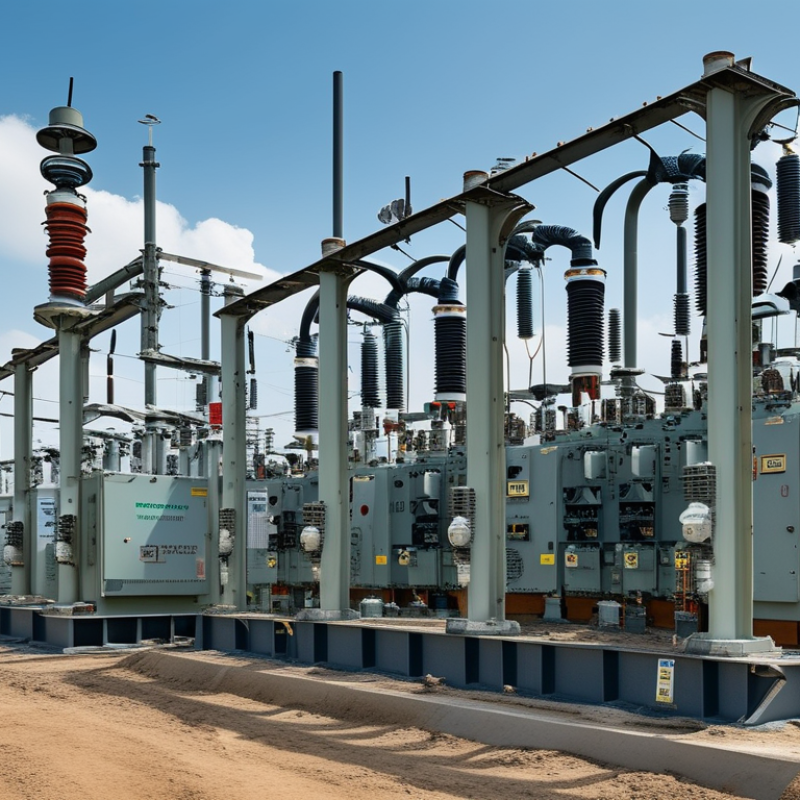
China Top 10 Substation With Transformer Manufacturers?

China’s Top 10 Substation Transformer Manufacturers: Scope and Ranking Criteria

China Top 10 Substation Transformer Manufacturers

China’s top ten substation transformer manufacturers should not be judged by factory size alone. This ranking focuses on proven substation experience, engineering depth, product reliability, and service capability. The scope includes oil-immersed and dry-type transformers used in power plants, industrial facilities, renewable projects, and utility substations.

Technical performance carries the greatest weight. We examine rated capacity, voltage range, temperature control, noise levels, insulation quality, and loss data. Compliance with applicable IEC and GB/T standards also matters. Factory testing should include routine checks, insulation tests, partial discharge assessment, and temperature-rise verification. Real project records are more useful than attractive brochures.

Delivery reliability is another key measure. We review production capacity, quality-control procedures, spare-parts support, installation guidance, and response times after commissioning. A manufacturer with experienced field engineers can identify a loose connection, unusual vibration, or rising oil temperature before a small issue becomes expensive. Customer references and audited records strengthen the ranking.

The process is not perfect. Public information varies between manufacturers, and some performance data is difficult to verify independently. Therefore, the ranking should be treated as a research shortlist, not a final purchasing decision. Factory visits, witness testing, contract reviews, and site-specific calculations remain necessary. A strong technical presentation can still hide weak after-sales support. That deserves attention.


2023 China Grid Investment and Transformer Demand: Key Industry Statistics

China Top 10 Substation With Transformer Manufacturers?

In 2023, China’s power grid investment reached approximately RMB 527.5 billion, according to public energy-sector data. This spending supported ultra-high-voltage projects, renewable connections, urban networks, and rural upgrades. Electricity consumption also exceeded 9.2 trillion kilowatt-hours, increasing pressure on transmission and distribution equipment.

Transformer demand grew with this investment.

New substations required power transformers, distribution transformers, reactors, and digital monitoring systems. Industry estimates suggest demand was strongest for high-capacity units used near renewable-energy bases and major load centers. However, demand was not evenly distributed. Coastal regions needed replacement capacity, while western provinces focused on long-distance transmission.

A practical top-10 manufacturer review should examine more than production volume. Buyers should check verified testing records, transformer efficiency, noise performance, delivery history, and after-sales response. Factory audits matter. So does field experience.

A warning is necessary.

Market statistics often combine different transformer categories, making direct comparisons difficult. Some reports also count planned projects as confirmed demand. That can distort purchasing decisions. A reliable assessment should compare completed orders, operating references, and transformer failure data. Technical documents should state voltage levels, rated capacity, cooling methods, insulation materials, and applicable standards clearly. These details reveal capability better than promotional rankings.

Top 10 Manufacturers by 110 kV–1,000 kV Substation Transformer Capability

China Top 10 Substation With Transformer Manufacturers

Top 10 Manufacturers by 110 kV–1,000 kV Substation Transformer Capability

China’s leading substation transformer manufacturers are best compared by voltage capability, testing depth, and project experience. At 110 kV, buyers often prioritize compact design, low losses, and dependable regional service. At 220 kV and 330 kV, insulation coordination and thermal performance become more demanding. The 500 kV and 1,000 kV classes require advanced engineering, strict quality control, and stable operation under heavy grid loads.

Real capability appears inside the factory. Engineers inspect winding alignment, oil circulation, bushings, core clamping, and moisture control. Large transformers may undergo heat-run tests, impulse tests, partial-discharge checks, and short-circuit verification. A reliable manufacturer should provide traceable test records and clear technical documents. Field support matters too. Installation teams must manage oil filling, vacuum treatment, grounding, and on-site commissioning with care.

A top-ten assessment should not rely on production volume alone. It should consider delivered voltage levels, operating history, failure-response systems, and long-term maintenance support. Public information is sometimes incomplete. That makes ranking difficult. It also makes independent verification necessary. Some manufacturers may show impressive laboratory results but limited experience at 1,000 kV sites. Others may perform strongly in harsh climates but offer weaker overseas support. The ranking should therefore remain evidence-based, transparent, and open to revision as new projects and test data become available.

China Top 10 Substation With Transformer Manufacturers? – Top 10 Manufacturers by 110 kV–1,000 kV Substation Transformer Capability
Rank Anonymous Manufacturer Profile Maximum Demonstrated Voltage Class Typical Transformer Application Representative Unit Rating Transformer Type Core and Winding Configuration Applicable Standards Factory Test Capability Primary Strength
1 Manufacturer Profile 01 1,000 kV AC Ultra-high-voltage bulk transmission substations 1,000 MVA class Single-phase autotransformer Three single-phase units with on-load tap changer IEC 60076; GB/T 6451; GB/T 1094 Routine and type testing UHV AC transformer engineering and grid-scale integration
2 Manufacturer Profile 02 1,000 kV AC Long-distance interregional transmission 1,000 MVA class Three-phase or single-phase autotransformer Low-loss core steel with forced-oil cooling IEC 60076; GB/T 6451; DL/T 272 Routine and special tests High-capacity UHV manufacturing and transport coordination
3 Manufacturer Profile 03 800 kV DC converter transformer Ultra-high-voltage direct-current converter stations 500–600 kV valve-side class Converter transformer Multiple valve-side windings with high insulation coordination IEC 61378; IEC 60076; relevant GB/T standards Impulse and partial-discharge testing HVDC converter transformer design and dielectric performance
4 Manufacturer Profile 04 750 kV AC UHV AC transmission and receiving substations 750–1,000 MVA class Autotransformer Single-phase bank with OLTC and auxiliary cooling groups IEC 60076; GB/T 6451; DL/T 272 Short-circuit and temperature-rise tests Large-scale AC grid substations and high-voltage insulation systems
5 Manufacturer Profile 05 550 kV AC / 500 kV DC Extra-high-voltage transmission networks 500–750 MVA class Power transformer or converter transformer Oil-immersed, forced-oil and forced-air cooling IEC 60076; IEC 61378; GB/T 6451 Routine and type testing Flexible production for AC and DC transmission projects
6 Manufacturer Profile 06 500 kV AC Regional backbone substations 240–750 MVA class Three-phase autotransformer High-permeability core with OLTC and directed-oil cooling IEC 60076; GB/T 6451; GB/T 1094 Routine, impulse and heat-run tests High-volume EHV power transformer production
7 Manufacturer Profile 07 420 kV AC Transmission and large industrial substations 180–500 MVA class Power transformer or autotransformer Three-phase oil-immersed design with conservator system IEC 60076; GB/T 6451 Routine and type testing Broad 220–500 kV product coverage
8 Manufacturer Profile 08 363 kV AC Urban grid, renewable-energy and industrial substations 120–400 MVA class Power transformer Oil-immersed, low-noise design with optional OLTC IEC 60076; GB/T 1094; GB/T 6451 Routine and temperature-rise tests Customized EHV equipment for domestic and export projects
9 Manufacturer Profile 09 345 kV AC Utility, renewable-energy and railway traction supply 100–300 MVA class Power transformer Three-phase core-form construction with mineral-oil insulation IEC 60076; GB/T 1094 Routine and selected type tests Cost-effective medium-to-high voltage solutions
10 Manufacturer Profile 10 330 kV AC Regional transmission and renewable integration substations 90–240 MVA class Power transformer Oil-immersed core-form transformer with optional OLTC IEC 60076; GB/T 6451; GB/T 1094 Routine testing Reliable 110–330 kV product range and project flexibility
Note: Voltage classes, ratings and testing references represent commonly specified technical capability ranges for Chinese high-voltage transformer manufacturing. Individual project specifications, certification scope and available test facilities should be verified directly before procurement.

Transformer Technologies: Oil-Immersed, Dry-Type, and 1,000 MVA Designs

When comparing China’s top ten substation transformer manufacturers, technology matters more than a polished catalog. Field experience shows oil-immersed units remain practical for high-voltage substations and outdoor yards. Their sealed tanks, radiators, conservators, and monitored bushings support long service under demanding loads. Yet oil systems require fire planning, leak control, and disciplined maintenance. Small details matter.

Dry-type transformers suit indoor substations, tunnels, and commercial facilities where fire safety and limited ventilation influence design. Cast-resin windings resist moisture better than older assumptions suggest. However, they still need clean airflow and thermal monitoring. Installation mistakes can cause overheating. A credible manufacturer should provide temperature-rise data, partial-discharge results, factory test records, and commissioning support.

A 1,000 MVA transformer demands more than a larger core. Engineers must coordinate insulation levels, short-circuit strength, cooling stages, transport limits, and grid stability studies. Transport is unforgiving. When assessing suppliers, I would inspect reference projects, maintenance response, spare-parts planning, and compliance with applicable IEC or national standards. Performance claims need independent verification, not attractive brochures. I would also ask how the design handles harmonics, ambient temperatures, overloads, and sudden load changes. No manufacturer gets every decision right. A stronger evaluation records failures, corrective actions, and lessons from commissioning.

Quality Standards, Testing Ratings, and Selection Metrics for Chinese Suppliers

China’s leading substation transformer manufacturers should be compared through evidence, not brochures. IEC 60076 defines core transformer requirements, including temperature rise, dielectric strength, losses, and short-circuit performance. Chinese suppliers commonly work with GB/T 1094, which aligns closely with this international series. Ask for current certificates, factory test records, and calibration dates. Old documents can hide new risks.

Testing ratings deserve close attention. Review no-load loss, load loss, impedance tolerance, insulation levels, partial discharge, temperature rise, and acoustic noise. For high-voltage units, request impulse tests and short-circuit verification under IEC or IEEE procedures. The IEA’s Electricity 2024 report expects global electricity demand to grow by about 4% annually through 2026. That growth increases pressure on grid reliability and delivery schedules. Yet, larger capacity does not always mean better service. A 63 MVA transformer with weak cooling records may be less suitable than a smaller, well-tested unit.

Tips: Build a weighted scorecard. Give quality 35%, testing 25%, lifecycle cost 20%, delivery 10%, and service 10%. Check three years of failure data, oil-analysis methods, spare-part access, and response times. Visit the factory if possible. Look for clean assembly areas, controlled winding storage, and traceable serial numbers. A perfect scorecard is unrealistic. I would also challenge unusually low loss figures, because measurement conditions may differ. Supplier selection needs judgment, not only paperwork.

Powder Coat Booths

For those larger-sized parts, or smaller quantity runs, we have 2 independent powder coat booths and ovens. The quality, durability and affordability of today’s powder coating finishes make this the process of choice for world-class companies.

Powder coating advantages over other forms of coating are many. Materials used in the Powder coating process can be metals and non-metals that come in a multitude of thicknesses, textures, colors, etc. Another of Powder coating’s biggest advantages over conventional coatings is its ability to create finishes in many different textures. Powder Coating Booths allow us the ability to apply these advantages to large products.

Wet Paint Line

Tri-State Fabricators runs a full-service conveyor line for painting. Wet painting can provide protection or decoration to many different part styles. From start to finish, every project is easier to undergo random and point-based inspection by our skilled painting team.

Advantages to our Wet Paint Line are these lines start with product prep and ends with a thorough inspection of a high quality finished product. Our ability to complete large and small projects with a superior finish and doing so in a timely and economical fashion. This passes along the savings in production to our customers. When powder coating ins not an option, our Wet Paint Line gets the job done right the first time.

Wet Paint Booths

When the parts get big and heavy we roll-out our custom paint racks and oversize booth. By utilizing our partnerships with all the major paint brands, we can match virtually any color with wet paint.

The advantages of having access to a Wet Paint Booth are many. Large projects of many different shapes can be loaded into the booth. The Wet Paint Booth offers an environment that is much more controlled than a typical parts painting operation.

Not only are they used because of their controlled environment, but they’re are also advantageous when it comes to applying paint to parts that are needed in industries that require specialty coatings such as medical, aerospace, etc.

Military CARC

Our military forces have some very high standards when it comes to the finish of their vehicles and equipment. From the first pre-treatment step to final coat, it takes a great deal of knowledge and experience to protect the men and women of our armed forces. They deserve only the best, and Tri-State Fabricators provides it.

All of our processes are closely monitored by our staff and management teams. Both of which are highly trained in the processes of metal fabrication and finishing. Tri-State Fabricators’ goal is to always fully satisfy each and every customer, including the military. We will always put a 110% into what we do.

Glass-Bead Blasting

Abrasive media blasting is an excellent way to remove old paint, rust, and increase the paint/powder adhesion. Glass beads produce a much smoother and brighter finish than angular abrasives; leaving the part clean yet without any dimensional change. Chemically inert and environmentally friendly, we can recycle our beads approximately 30 times; making them a more preferred method of metal cleaning or surface finishing.

Advantages to Glass Bead Blasting are many. Glass bead blast media is used when a project is needing rough surfaces need to become smooth for applications of coatings such as paint. It is typically used to clean paint and rust from a product surface without deforming the surface it is being used on. Overall, compared to many other blasting media, Glass Bead Blasting is a very economical choice and those savings are always passed on to our customers.

Part Washing

Tri-State Fabricators utilize a zinc phosphate wash to clean and etch the material to ensure the best paint adhesion possible. The unique design of our 3-stage wash system does the work like a 5-stage. From Cleaning and rinsing to conversion coating and post-treatment, Our Part Washing process is a complete service and works throughout the fabrication service and the finishing service.

Along with the previously mentioned benefits, Curing is a vital chemical reaction that leaves the product finish hard and relatively safe from mild abrasion and aggressive corrosion. This process can be done in more than one way; ambient air-dry or in curing ovens at temps that exceed 240°.

Burn-Off Oven

From fixing paint mistakes (someone else’s of course) to simply cleaning our paint line hooks, our burn-off oven is put to good use. After a quick burn-off, a little clean up, and a fresh coat of paint, your parts will look better than new.

Why does our Burn-Off Oven work so well? Because super heating the air around parts turns the materials into ashes. From paint and powder coatings to rubber and machining oils, high temps do the job without degrading the integrity of the part.

Masking

Masking is a vital part of producing high quality products. We have die-cut masking patterns to protect machined surfaces as well as a wide range of plugs and caps to protect threaded holes and bolts. We provide permanent and temporary masking.

Masking allows the selected sections of a product to be protected from a fabrication or finishing service. This can be with both chemicals when etching and tapes, paints when only finishing just a section of the product. Masking is great in aiding the customization process of a project.

Screen Printing

Screen printing is a photographic process that transfers artwork onto a porous nylon screen which allows colored ink to flow through the screen and be deposited on an aluminum or plastic component. We can generally have just about any design created onto a screen for your parts.

Some of the advantages of Screen Printing are, brand recognition for your business displaying on your products, assembly instructions, product warnings/hazards, etc. Tri-State Fabricators produces Screen Printing of the highest quality so you know it’s durable.

Metal Finishing

Metal Finishing is the art of treating the exterior portion of product, often metal but can also be made of other materials, so that the surface is clean and free of any debris. Then the process of applying coats or either paint of powder coat takes place. This coating process improves the quality of the product in both appearance and resistance to wear and corrosion.

Tri-State Fabricators, Inc., understands that a project typically isn’t complete until a high-quality finish has been added to your product. This is why our painting and powder coating teams continuously inspect the products throughout the Metal Finishing process.
