China Top Blind Rivet Manufacturers for Global Buyers
China has become a major sourcing base for industrial fastening products, including Blind Rivet systems used in transportation, construction, appliances, and enclosure assembly. The opportunity is substantial. Grand View Research’s Industrial Fasteners Market report estimates that the global market reached approximately USD 88 billion in 2023, with continued growth expected through 2030. Its analysis also highlights demand for lightweight, corrosion-resistant, and cost-efficient fastening solutions.
The market is not simple. Fastener categories often overlap, and published estimates differ by product definition, region, and application. That limitation deserves attention. A buyer should not treat one market figure as absolute truth. Instead, supplier evaluation should connect data with measurable production evidence. Important checks include alloy certificates, mandrel design, flange diameter, grip range, pull-out strength, shear performance, and salt-spray results. Small details matter. A loose mandrel can weaken an entire panel assembly.
This guide examines China’s leading Blind Rivet manufacturers for international buyers. It focuses on manufacturing capability, quality systems, export experience, customization, and communication reliability. The International Organization for Standardization identifies ISO 9001 as a framework for consistent quality management, but certification alone proves little about actual rivet performance. Factory audits, sample testing, and third-party inspections remain valuable. Reports from MarketsandMarkets and Research and Markets also indicate continued demand for advanced fastening solutions across automotive, aerospace, and industrial sectors. However, supplier rankings require careful judgment. A low quoted price may hide inconsistent dimensions, weak packaging, or unstable material sourcing. Buyers should compare total performance, not only unit cost. A strong supplier delivers repeatable rivets, clear documentation, and dependable support after shipment.
Blind Rivets: Types, Materials, and Common Industrial Uses
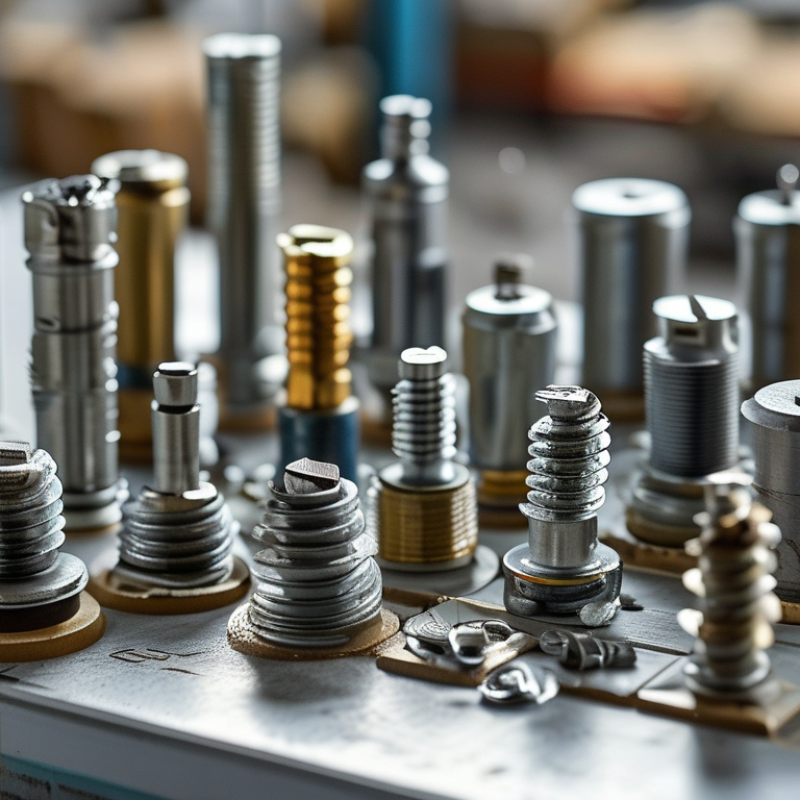
Blind rivets are practical fasteners for joining materials when only one side is accessible. They are widely used in industrial assembly, including sheet-metal enclosures, HVAC ducts, vehicle panels, lighting equipment, and warehouse structures.
Common types include open-end, closed-end, multi-grip, and structural blind rivets. Open-end models suit general fastening. Closed-end rivets help seal the joint against moisture and dust. Multi-grip designs handle different material thicknesses, reducing inventory pressure. Structural rivets provide stronger, more vibration-resistant joints. Some applications require countersunk heads for a smoother surface.
Material selection matters. Aluminum rivets are lightweight and resist corrosion in many indoor applications. Steel rivets offer higher strength, while stainless steel performs better in harsh or humid environments. The rivet body and mandrel should be compatible with the joined materials. Otherwise, galvanic corrosion may develop. This detail is often overlooked.
Tips: Measure the total grip thickness before ordering. Check hole diameter, head style, and mandrel material. A sample installation is wise. Factory claims may sound precise, but real panels can vary slightly. Test pull-out strength and appearance before mass production. Do not select only by the lowest price; inconsistent setting force can create loose joints, damaged surfaces, or wasted labor. Clear inspection records also help global buyers compare suppliers more reliably.
Blind Rivet Materials: Density Comparison
Approximate room-temperature density of common blind-rivet materials. Aluminum rivets are lightweight and widely used in sheet-metal and transportation applications, while steel and stainless-steel rivets provide higher strength and durability. Copper rivets are selected for electrical conductivity and corrosion resistance.
How to Evaluate China’s Blind Rivet Manufacturers
Choosing a blind rivet manufacturer in China requires more than comparing prices.
Start by checking alloy grades, mandrel strength, rivet dimensions, and surface treatment. Ask for material certificates and inspection records. A reliable factory should explain its testing process clearly, not hide behind general claims.
Request samples from different production batches. Test grip range, pull-out strength, shear resistance, and sealing performance on your actual materials.
Examine the rivet head under load. Small variations can affect installation quality. Factory experience matters, but documented quality control matters more.
A polished website is not proof. I have seen attractive samples fail when production volume increased.
Tips:
Visit the production site when possible. Check incoming material storage, automated sorting, gauge calibration, and final packing.
Ask how defective lots are isolated and recorded. Confirm lead times, minimum order quantities, packaging details, and traceability codes.
Communication speed is useful, but technical accuracy is more important. If answers remain vague, pause before ordering.
A capable supplier should provide dimensional reports and clarify applicable industry requirements. Review its export experience, worker training, and capacity during peak seasons.
Do not accept every certificate without verification. Some documents may be outdated.
A small trial order can reveal more than a long presentation. Record your test results and compare them with the agreed specifications.
Reliability is built through repeatable evidence, not promises.
Key Manufacturing Standards and Quality Control Practices
For global buyers evaluating Chinese production, blind rivet quality begins long before final inspection. Experienced manufacturers control aluminum, steel, or stainless steel wire through documented incoming checks. Material certificates should match the purchase specification, heat number, and supplier records. Production teams then verify body diameter, length, head shape, and mandrel fit with calibrated gauges. These details matter when a rivet must pass through a tight panel hole. They also reduce assembly problems in automated lines. ISO 9001-based procedures can support consistency, but certification alone proves little. The real evidence is controlled work.
A reliable quality plan tests more than appearance. Inspectors measure tensile and shear strength by production lot, using defined methods and recorded equipment settings. Mandrel retention, pull-up force, grip range, and head seating deserve close attention. Salt-spray or cyclic corrosion tests may be required for outdoor applications. Sampling levels should reflect risk, not convenience. Keep records clear. Each carton should link to a lot code, inspection report, and packing date. This traceability helps buyers investigate failures without guessing.
In practice, factory audits reveal the difference between a written standard and daily behavior. Look for calibrated instruments, segregated nonconforming parts, operator training, and corrective-action evidence. A supplier should explain how it handles mixed materials or unstable pull force. No inspection plan is perfect. Human checks can miss gradual tool wear. I would ask for trend charts, retained samples, and recent test data before approving repeat orders. Honest manufacturers also discuss limitations instead of promising zero defects.
Comparing China’s Leading Blind Rivet Suppliers for Global Buyers
Comparing China’s leading blind rivet suppliers requires more than checking unit prices. In factory visits and sample reviews, buyers often notice differences in material control, forming accuracy, and inspection records. Strong suppliers identify aluminum, steel, or stainless-steel grades clearly. They also provide dimensional reports, tensile tests, and batch traceability. Small details matter. A poorly formed mandrel can cause installation problems on the assembly line.
One supplier may offer broad standard sizes and faster production. Another may handle custom head shapes, colors, or packaging more carefully. Compare minimum order quantities, tooling charges, sample timelines, and production capacity. Ask how the supplier controls plating thickness and prevents mixed batches. Reliable factories usually explain their process without avoiding difficult questions. Their export documents should match the actual goods, not simply repeat old templates.
Price alone misleads. A cheaper quotation may exclude testing, packaging, or tooling. During evaluation, request samples from several suppliers and install them under realistic working conditions. Check grip length, pull strength, surface finish, and removal behavior. I have seen attractive samples fail when production tolerances became wider. That is a useful warning. Supplier ratings also deserve caution, because online information can be incomplete or outdated. A practical comparison should include factory communication, corrective-action speed, payment terms, and delivery consistency. The best choice is not always the largest factory. It is the supplier that documents limits honestly and improves when defects appear.





