


China Top Bridge Gantry Manufacturers for Global Buyers

China has become a major sourcing base for Bridge Gantry systems used in ports, shipyards, steel plants, precast yards, and heavy manufacturing facilities. Its manufacturers offer broad engineering capabilities, from compact workshop gantries to massive outdoor machines handling several hundred tonnes. Yet factory scale alone proves little. A reliable supplier must connect design calculations, fabrication control, inspection records, installation support, and long-term service.

W. Edwards Deming, a respected quality-management expert, said, “Quality comes not from inspection, but from the improvement of the production process.” That principle matters when evaluating Bridge Gantry manufacturers. Buyers should examine welding procedures, structural steel grades, trolley alignment, wheel loads, brake performance, electrical protection, and emergency-stop systems. Ask for load-test evidence. Request drawings before payment. Check how the supplier manages corrosion, wind exposure, temperature changes, and local power requirements.

The strongest Chinese manufacturers usually provide customized spans, lifting speeds, control modes, and duty classifications. They also understand that international projects require clearer documentation, practical communication, and dependable spare-parts planning. A supplier may quote an attractive price, but hidden costs can appear during commissioning. This is where careful comparison becomes essential. No shortlist is flawless. Even experienced buyers can overlook foundation tolerances or maintenance access. The best purchasing decision balances price with verified engineering competence, transparent production evidence, and responsive after-sales support. This guide introduces China’s leading Bridge Gantry manufacturers and explains how global buyers can assess them with greater confidence, fewer assumptions, and a more realistic view of project risk.
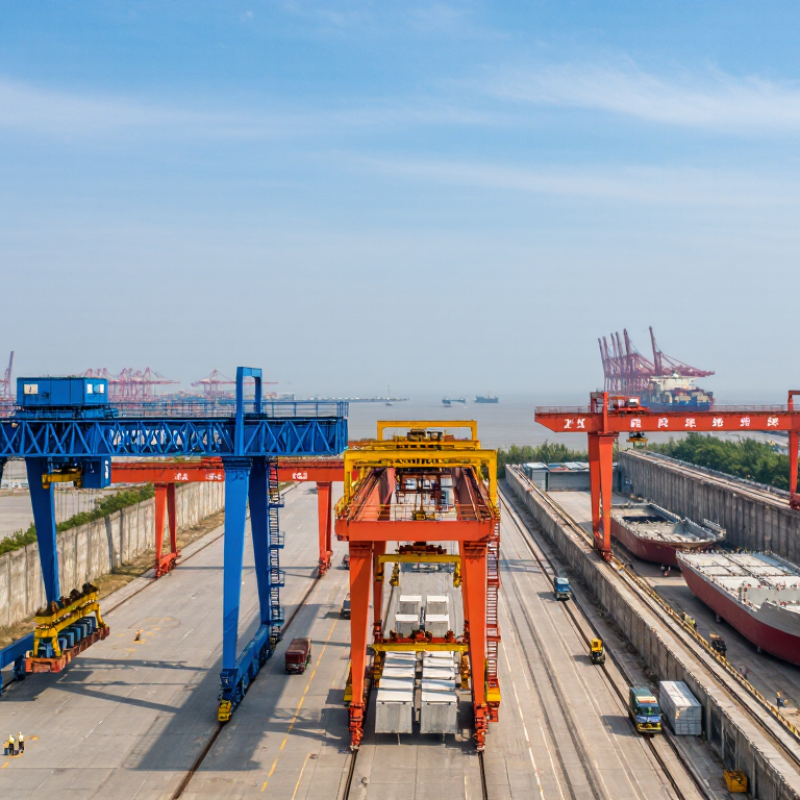
China Top Bridge Gantry Manufacturers for Global Buyers

Bridge Gantry Systems: Definition, Types, and Industrial Applications

Bridge gantry systems are overhead lifting structures with a movable bridge supported by legs or end trucks. They transfer loads across open work areas without relying on building columns. Unlike fixed cranes, gantry systems can operate outdoors, inside workshops, or across temporary sites. Common designs include single-girder, double-girder, rubber-tyred, and rail-mounted gantries. Single-girder models suit lighter loads and moderate spans. Double-girder systems handle heavier loads and demanding duty cycles. Rubber-tyred units offer flexible movement, while rail-mounted models provide precise travel.

Industrial applications are broad. Shipyards use gantries to position steel plates and engines. Construction sites lift precast sections, rebar cages, and equipment. Factories handle molds, coils, machining fixtures, and finished assemblies. Ports and logistics yards often require high lifting capacity, long travel distances, and reliable outdoor operation. The working environment matters. Salt air, dust, heat, and uneven ground can change the equipment specification significantly.

A practical warning: capacity alone is not enough. Buyers should check span, lifting height, duty class, travel speed, power supply, and emergency controls. Experienced manufacturers should provide load charts, inspection records, structural calculations, and clear maintenance instructions. Field assessments also help reveal blind spots, especially around foundation design and operator visibility. No layout is perfect. A low-cost choice may create expensive delays later. Buyers should compare engineering support, testing procedures, spare-part access, and documented quality controls before selecting a supplier for international delivery.

China Top Bridge Gantry Manufacturers for Global Buyers - Bridge Gantry Systems: Definition, Types, and Industrial Applications

Bridge gantry systems are overhead lifting systems supported by legs that run on floor-mounted rails or wheels. The specifications below summarize common industrial configurations and selection factors for global buyers. Actual performance depends on the engineered design, duty cycle, operating environment, and applicable safety standards.

System Type Definition and Structure Typical Rated Capacity Typical Span Typical Lift Height Travel Arrangement Common Applications
Single-Girder Gantry Crane One main girder supported by two legs, generally using a compact trolley and hoist. Approximately 1–20 tonnes Approximately 8–35 m Approximately 6–18 m Powered or manually guided long-travel movement on rails; cross travel through the trolley. Workshops, maintenance bays, warehouses, equipment assembly, and light-to-medium fabrication.
Double-Girder Gantry Crane Two parallel main girders provide greater rigidity, trolley support, and lifting headroom. Approximately 10–500 tonnes Approximately 10–40 m Approximately 9–30 m Motor-driven rail travel with an electric trolley and hoist; optional auxiliary hoist may be installed. Heavy manufacturing, steel handling, shipyards, power facilities, precast yards, and large machinery installation.
Rubber-Tyred Gantry Crane A mobile gantry mounted on rubber tyres, allowing movement without permanent floor rails. Approximately 10–100 tonnes Approximately 15–35 m Approximately 8–20 m Tyre steering and drive; may use battery-electric, diesel-electric, or hybrid power systems. Container yards, precast concrete handling, outdoor storage, shipbuilding, and flexible material movement.
Rail-Mounted Gantry Crane A fixed-path gantry supported by legs and wheels that run on parallel ground rails. Approximately 20–100 tonnes Approximately 20–40 m Approximately 10–30 m Electric long-travel drive on rails, with trolley travel along the bridge girder. Intermodal terminals, container depots, steel stockyards, heavy outdoor production, and logistics centers.
Portable Gantry Crane A lightweight, height-adjustable frame that can be assembled, dismantled, or moved within a work area. Approximately 0.5–10 tonnes Approximately 2–10 m Approximately 2–6 m Manual movement on casters or powered movement on small wheels; usually used indoors. Repair stations, laboratories, service areas, small workshops, and temporary lifting operations.
Container Gantry Crane A high-clearance gantry designed to lift standardized intermodal containers using a spreader beam. Approximately 30–70 tonnes under the spreader Approximately 20–40 m Approximately 12–30 m Rail-mounted or rubber-tyred travel, with powered trolley and container spreader. Ports, inland container terminals, rail freight yards, logistics hubs, and empty-container depots.
Shipyard Gantry Crane A large-span, high-capacity gantry used for ship sections, hull blocks, and oversized marine equipment. Approximately 50–1,200 tonnes Approximately 30–200 m Approximately 20–100 m Heavy-duty rail travel with synchronized multi-drive systems and one or more lifting trolleys. Shipbuilding, offshore structure fabrication, marine repair, and large-scale steel assembly.

Key Technical and Purchasing Dimensions

Dimension What It Measures Why It Matters to Buyers Typical Selection Considerations
Safe Working Load The maximum permitted lifted load under the specified operating conditions. Prevents overload and supports safe handling of the heaviest planned load. Include the load, lifting accessories, spreader, hooks, and any future capacity requirement.
Span The horizontal distance between the gantry legs or runway rails. Determines the coverage width and the required structural stiffness. Match the span to the operating area while allowing clearance for columns, vehicles, and stored materials.
Lift Height The vertical distance available for raising and positioning the load. Controls stacking height, vehicle clearance, and access to production equipment. Consider building height, roof obstructions, hook approach, container tiers, and required headroom.
Duty Classification The expected frequency, load spectrum, and operating intensity of the crane. Influences structural life, motor sizing, brakes, controls, and maintenance intervals. Specify working hours per day, lifting cycles per hour, average load, peak load, and operating environment.
Hoisting Speed The rate at which the hoist raises or lowers the load. Affects cycle time, positioning accuracy, and production throughput. Use variable-speed control when precise positioning or fragile loads are important.
Power Supply The electrical characteristics required by motors, controls, and auxiliary equipment. Ensures compatibility with the installation site and avoids costly electrical modifications. Confirm voltage, frequency, phase, grounding, cable management, and local electrical regulations.
Control System The method used to operate hoisting, trolley travel, gantry travel, and safety functions. Impacts operator visibility, positioning, productivity, and safety management. Choose pendant, radio remote, cabin, semi-automatic, or automated control according to the workflow.
Operating Environment The physical and climatic conditions in which the gantry will operate. Determines material protection, enclosure ratings, corrosion resistance, and temperature suitability. Assess indoor or outdoor use, wind, rain, dust, salt spray, explosive atmospheres, and ambient temperature.
Safety Features Devices and systems that limit unsafe motion or detect hazardous operating conditions. Reduces operational risk and supports compliance with workplace safety requirements. Consider overload protection, emergency stop, limit switches, anti-collision devices, brakes, alarms, and wind restraints.
Applicable Standards The engineering, manufacturing, inspection, and operational rules used for the crane. Provides a framework for design verification, testing, documentation, and acceptance. Confirm the required national or regional rules, such as ISO, EN, FEM, ASME, CMAA, or local regulations.

What Makes a Chinese Bridge Gantry Manufacturer a Top Global Supplier

A top Chinese bridge gantry manufacturer combines practical experience with disciplined engineering. Its team understands span length, lifting capacity, rail alignment, wind loads, and outdoor working conditions. These details matter when equipment operates in a busy yard or near saltwater.

Reliable manufacturers document every critical process. They use traceable steel, controlled welding procedures, and dimensional inspections. Weld maps and material records support accountability. Load tests reveal weak points. Shortcuts show later. Factory acceptance testing should include travel motion, braking, emergency stops, and overload protection. Clear inspection reports help global buyers verify performance before shipment.

Professional suppliers also adapt designs to local regulations and site conditions. They provide structural calculations, electrical drawings, operation manuals, and maintenance schedules in usable formats. Experienced engineers can support installation through video calls or on-site service. Spare parts planning is equally important, especially when a remote project cannot wait weeks for a small component.

No supplier is flawless. Even a strong manufacturer may underestimate communication delays or assume that a standard design fits every site. Honest project reviews, measurable delivery records, and responsive after-sales support reveal more than polished brochures. A dependable partner explains risks early, accepts technical questions, and improves its process when field feedback exposes a weakness.

Key Manufacturing, Safety, and Certification Standards for Buyers

For global buyers, a bridge gantry manufacturer must demonstrate more than lifting capacity. The ILO estimates that 2.78 million workers die annually from work-related causes, while about 374 million suffer non-fatal injuries. These figures make safety documentation essential, not decorative. Ask for design calculations, fatigue-life assumptions, emergency-stop layouts, and traceable material certificates. A 40-ton crane should not arrive with only a polished brochure.

Manufacturing should align with recognized standards, including ISO 4301-1 for crane classification, ISO 9927 for inspections, and ISO 12100 for machinery risk assessment. Electrical systems should follow applicable requirements such as IEC 60204-32. Buyers should also verify welding procedures, welder qualifications, brake testing, overload protection, and independent load-test records. Small details matter. A loose cable gland can expose a serious maintenance weakness.

Certification depends on the destination market. CE-related documentation, UKCA requirements, or North American safety rules may demand different technical files and assessments. The U.S. Bureau of Labor Statistics recorded 5,283 fatal occupational injuries in 2023, showing why local compliance cannot be treated casually. Factory acceptance tests should reproduce real operating conditions, including travel limits and uneven loading. Documentation can still contain gaps. Buyers should inspect the supplier’s quality system, interview the commissioning team, and keep a clear record of every correction. A certificate is evidence, not a guarantee.

Key Standards for Bridge Gantry Crane Buyers

The chart compares the publication years of widely referenced international, European, and Chinese standards covering crane design, machinery safety, classification, inspection, functional safety, and bridge crane requirements. Buyers should verify the applicable edition and certification scope for the destination market before placing an order.

References: ISO 12100:2010, ISO 4301-1:2016, ISO 9927-1:2013, EN 15011:2021, GB/T 3811-2008, and ISO 13849-1:2023.

How to Compare Capacity, Design, Pricing, and Service Support

When comparing Chinese bridge gantry manufacturers, capacity must mean more than rated lifting weight. Check safe working load, span, lifting height, duty class, wind loads, and duty cycles. ISO 4301-1 links crane classification to operating frequency and load spectrum. A 50-ton crane used occasionally differs greatly from one moving 40 tons every hour. Ask for load charts, structural calculations, test records, and recent project references. Paper capacity is not enough.

Design should fit the site, not a catalog. Measure runway alignment, headroom, ground bearing capacity, power supply, temperature, and corrosion exposure. For ports and steel yards, anti-corrosion systems and sealed electrical cabinets can prevent costly downtime. UNCTAD’s Review of Maritime Transport 2024 recorded 2.4% growth in global seaborne trade during 2023. That pressure makes dependable handling equipment more valuable. Still, projected demand does not justify oversized equipment.

Pricing needs a lifecycle view. Compare steel weight, motors, controls, installation, commissioning, training, spare parts, energy use, and warranty limits. The lowest quotation can become expensive after one failed drive. It happens. Service support deserves measurable terms: response time, technician coverage, remote diagnosis, spare-part availability, and language support. The World Bank’s Logistics Performance Index 2023 surveyed 4,090 professionals across 139 economies, highlighting reliability and timeliness as practical logistics concerns. Request factory acceptance testing and site acceptance records. A spreadsheet may look precise, while missing local installation costs. Reflect on that gap.

The Global Buying Process: From Supplier Selection to Final Delivery

China Top Bridge Gantry Manufacturers for Global Buyers

The Global Buying Process: From Supplier Selection to Final Delivery

Selecting a bridge gantry manufacturer requires more than comparing prices. Start with lifting capacity, span, lifting height, duty class, and operating environment. Share a clear equipment schedule with every shortlisted supplier. This reduces vague quotations.

Request factory records, engineering qualifications, export experience, and recent project references. Review drawings before discussing payment terms. Ask how the manufacturer controls welding, machining, electrical assembly, and load testing. A remote factory tour helps, but an independent inspection is stronger. Check certificates against your country’s safety and electrical requirements.

Details matter. Very much. Confirm steel grades, paint thickness, control voltage, spare parts, manuals, and warranty limits. Clarify whether installation support is included. A quotation may exclude rails, commissioning, inland transport, or customs costs. That surprise can damage the budget.

Use a written contract with approved drawings, inspection points, delivery dates, and acceptance criteria. Consider pre-shipment inspection before the final payment. Photograph serial plates, packed components, and container loading. Strong packaging protects motors, panels, and pendant controls from moisture and impact.

Shipping terms should match your team’s experience. Confirm port handling, insurance, documents, and import responsibilities. Keep communication records in one shared file. In practice, the process is rarely smooth. A missed measurement can force expensive changes. Recheck runway dimensions and local site conditions before production. Even experienced buyers sometimes approve drawings too quickly. That deserves reflection.

Powder Coat Booths

For those larger-sized parts, or smaller quantity runs, we have 2 independent powder coat booths and ovens. The quality, durability and affordability of today’s powder coating finishes make this the process of choice for world-class companies.

Powder coating advantages over other forms of coating are many. Materials used in the Powder coating process can be metals and non-metals that come in a multitude of thicknesses, textures, colors, etc. Another of Powder coating’s biggest advantages over conventional coatings is its ability to create finishes in many different textures. Powder Coating Booths allow us the ability to apply these advantages to large products.

Wet Paint Line

Tri-State Fabricators runs a full-service conveyor line for painting. Wet painting can provide protection or decoration to many different part styles. From start to finish, every project is easier to undergo random and point-based inspection by our skilled painting team.

Advantages to our Wet Paint Line are these lines start with product prep and ends with a thorough inspection of a high quality finished product. Our ability to complete large and small projects with a superior finish and doing so in a timely and economical fashion. This passes along the savings in production to our customers. When powder coating ins not an option, our Wet Paint Line gets the job done right the first time.

Wet Paint Booths

When the parts get big and heavy we roll-out our custom paint racks and oversize booth. By utilizing our partnerships with all the major paint brands, we can match virtually any color with wet paint.

The advantages of having access to a Wet Paint Booth are many. Large projects of many different shapes can be loaded into the booth. The Wet Paint Booth offers an environment that is much more controlled than a typical parts painting operation.

Not only are they used because of their controlled environment, but they’re are also advantageous when it comes to applying paint to parts that are needed in industries that require specialty coatings such as medical, aerospace, etc.

Military CARC

Our military forces have some very high standards when it comes to the finish of their vehicles and equipment. From the first pre-treatment step to final coat, it takes a great deal of knowledge and experience to protect the men and women of our armed forces. They deserve only the best, and Tri-State Fabricators provides it.

All of our processes are closely monitored by our staff and management teams. Both of which are highly trained in the processes of metal fabrication and finishing. Tri-State Fabricators’ goal is to always fully satisfy each and every customer, including the military. We will always put a 110% into what we do.

Glass-Bead Blasting

Abrasive media blasting is an excellent way to remove old paint, rust, and increase the paint/powder adhesion. Glass beads produce a much smoother and brighter finish than angular abrasives; leaving the part clean yet without any dimensional change. Chemically inert and environmentally friendly, we can recycle our beads approximately 30 times; making them a more preferred method of metal cleaning or surface finishing.

Advantages to Glass Bead Blasting are many. Glass bead blast media is used when a project is needing rough surfaces need to become smooth for applications of coatings such as paint. It is typically used to clean paint and rust from a product surface without deforming the surface it is being used on. Overall, compared to many other blasting media, Glass Bead Blasting is a very economical choice and those savings are always passed on to our customers.

Part Washing

Tri-State Fabricators utilize a zinc phosphate wash to clean and etch the material to ensure the best paint adhesion possible. The unique design of our 3-stage wash system does the work like a 5-stage. From Cleaning and rinsing to conversion coating and post-treatment, Our Part Washing process is a complete service and works throughout the fabrication service and the finishing service.

Along with the previously mentioned benefits, Curing is a vital chemical reaction that leaves the product finish hard and relatively safe from mild abrasion and aggressive corrosion. This process can be done in more than one way; ambient air-dry or in curing ovens at temps that exceed 240°.

Burn-Off Oven

From fixing paint mistakes (someone else’s of course) to simply cleaning our paint line hooks, our burn-off oven is put to good use. After a quick burn-off, a little clean up, and a fresh coat of paint, your parts will look better than new.

Why does our Burn-Off Oven work so well? Because super heating the air around parts turns the materials into ashes. From paint and powder coatings to rubber and machining oils, high temps do the job without degrading the integrity of the part.

Masking

Masking is a vital part of producing high quality products. We have die-cut masking patterns to protect machined surfaces as well as a wide range of plugs and caps to protect threaded holes and bolts. We provide permanent and temporary masking.

Masking allows the selected sections of a product to be protected from a fabrication or finishing service. This can be with both chemicals when etching and tapes, paints when only finishing just a section of the product. Masking is great in aiding the customization process of a project.

Screen Printing

Screen printing is a photographic process that transfers artwork onto a porous nylon screen which allows colored ink to flow through the screen and be deposited on an aluminum or plastic component. We can generally have just about any design created onto a screen for your parts.

Some of the advantages of Screen Printing are, brand recognition for your business displaying on your products, assembly instructions, product warnings/hazards, etc. Tri-State Fabricators produces Screen Printing of the highest quality so you know it’s durable.

Metal Finishing

Metal Finishing is the art of treating the exterior portion of product, often metal but can also be made of other materials, so that the surface is clean and free of any debris. Then the process of applying coats or either paint of powder coat takes place. This coating process improves the quality of the product in both appearance and resistance to wear and corrosion.

Tri-State Fabricators, Inc., understands that a project typically isn’t complete until a high-quality finish has been added to your product. This is why our painting and powder coating teams continuously inspect the products throughout the Metal Finishing process.

