


China Top Mahjong Table Pad Manufacturers for Global Buyers

Choosing a reliable Mahjong Table Pad manufacturer can shape the comfort, appearance, and lifespan of every gaming table. Global buyers often compare suppliers from China because the market offers broad production capacity, flexible customization, and competitive manufacturing support. Yet price alone is not enough.

A quality Mahjong Table Pad should feel stable under the tiles. Its surface should reduce noise without becoming sticky. The backing should resist slipping during repeated play. Buyers should also examine fabric density, edge finishing, moisture resistance, packaging, and color consistency. Experienced manufacturers can usually provide samples, material details, production photos, and clear inspection procedures. These practical signs reveal more than a polished online catalog.

No supplier is perfect. Some product claims may need verification. A sample can look excellent, while bulk production shows small differences. This is why communication, factory experience, and quality control deserve careful attention. Reliable manufacturers normally explain lead times, minimum order quantities, customization limits, and after-sales handling before cooperation begins. They should also understand export packaging and the handling needs of different markets.

This guide introduces leading China Mahjong Table Pad manufacturers for global buyers. It focuses on manufacturing capability, product quality, customization services, communication, and purchasing reliability. The goal is not to promote one supplier blindly. It is to help buyers ask sharper questions and avoid expensive assumptions. A thoughtful comparison may take more time. That effort often protects the final customer experience.
China Top Mahjong Table Pad Manufacturers for Global Buyers

Mahjong Table Pad Fundamentals: 144 Tiles, 4 Players, Materials, and Sizes

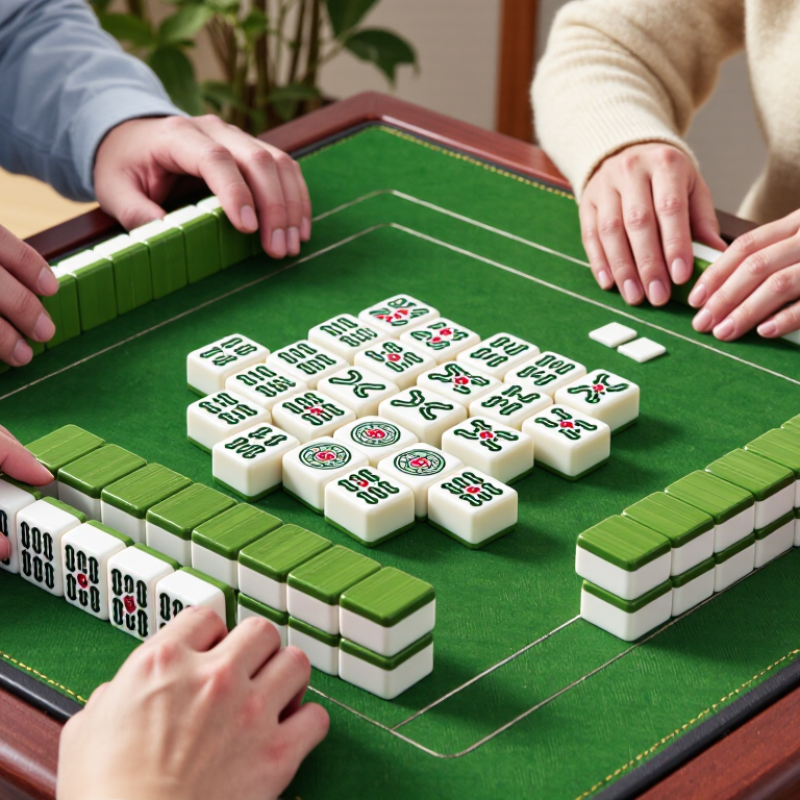
A mahjong table pad should support the complete play experience, not merely cover the tabletop. A standard game uses 144 tiles and four players, so the surface must provide enough room for tile walls, discards, and personal racks. A pad that feels cramped can slow dealing and cause accidental contact. Measure the table before ordering. Small differences matter.

Material affects comfort, noise, and service life. Felt offers a soft, quiet surface and helps tiles slide with controlled movement. Rubber-backed fabric improves grip and reduces shifting during play. Synthetic leather is easier to wipe, but it may feel warmer and less natural under the hands. Foam adds cushioning, although excessive thickness can make tile movement less precise. The ideal balance is not universal.

Size deserves careful attention. A compact pad may suit home tables, while larger formats work better for tournament-style layouts or folding tables. Leave enough border space for tile walls and player accessories. Check whether the pad folds, rolls, or stores flat. Creases can be frustrating. In practical use, a surface that looks attractive may still curl at the corners after storage. That weakness should be tested before large-scale purchasing. Global buyers should also confirm dimensions, backing quality, edge stitching, packaging protection, and cleaning instructions with the manufacturer.

China Supplier Benchmarks: MOQ, 15–30-Day Lead Times, and OEM Capacity

China Top Mahjong Table Pad Manufacturers for Global Buyers

For global buyers, supplier benchmarks matter more than polished catalogs. Standard mahjong table pads often start at 50–200 pieces per design. Custom colors, logos, edge stitching, and printed packaging may require 300–500 pieces. Ask whether the MOQ applies per color or to the entire order. That detail can change your budget quickly.

A realistic production window is 15–30 days after artwork, specifications, and deposit approval. Sampling usually takes several additional days. Confirm the exact starting date in writing. Reliable factories should explain material thickness, surface texture, backing, carton size, and packing protection. Request a physical sample before bulk production. Photos help, but they cannot show slipping, odor, or edge curling.

OEM capacity varies widely. Some workshops can adjust dimensions and packaging but cannot manage complex multi-color printing. Others maintain cutting, sewing, printing, and inspection teams in-house. Ask for recent production evidence, daily capacity, and a quality checklist. A pre-shipment inspection can verify measurements, color consistency, stitching, and carton counts. I have found that buyers often focus on the lowest MOQ and overlook replacement handling. That is a mistake. Supplier communication may also weaken during peak seasons, so allow a small schedule buffer. Perfect forecasts are rare.

China Top Mahjong Table Pad Manufacturers for Global Buyers - China Supplier Benchmarks: MOQ, 15–30-Day Lead Times, and OEM Capacity

Anonymous supplier benchmarks for buyers comparing standard, customized, and large-volume Mahjong table pad production in China.

Supplier Profile Typical Product Scope Common MOQ Sample Lead Time Bulk Lead Time OEM / ODM Capability Typical Material Options Quality-Control Focus Best Fit for Global Buyers
Stock-Based Export Supplier Ready-made folding Mahjong table pads with standard colors and dimensions 50–100 pcs 3–7 calendar days 15–20 calendar days Low to medium; logo printing and packaging changes are usually available PVC leather, felt, polyester fabric, foam padding Color consistency, folding performance, edge stitching, carton protection Trial orders, online retailers, seasonal promotions, and fast replenishment
Standard OEM Factory Custom-size table pads with buyer-selected colors, logos, labels, and packaging 100–300 pcs 7–12 calendar days 20–30 calendar days Medium to high; artwork, labels, packaging, and selected material combinations PVC, PU leather, rubber backing, polyester, EVA or PE foam Dimensional tolerance, surface flatness, logo placement, stitching strength Importers, distributors, specialty game retailers, and private-label programs
Integrated OEM / ODM Manufacturer New pad structures, premium finishes, bundled accessories, and retail-ready packaging 300–800 pcs 10–18 calendar days 25–35 calendar days High; product engineering, pattern development, material sourcing, and packaging design PU leather, microfiber, laminated fabric, high-density foam, anti-slip rubber Material certificates, abrasion resistance, odor control, assembly inspection, drop testing Premium brands, chain retailers, hospitality projects, and long-term product lines
Large-Volume Production Supplier High-volume standard or customized pads for distributors and promotional campaigns 500–2,000 pcs 12–20 calendar days 30–45 calendar days Medium to high; strong capacity for repeat production and multi-SKU orders PVC, synthetic leather, woven fabric, foam composites, custom printed textiles Batch uniformity, production scheduling, packaging accuracy, pre-shipment inspection National distributors, major marketplaces, event merchandise, and contract supply
Premium Hand-Finished Workshop Decorative, embroidered, stitched, or luxury-finish Mahjong table pads 100–500 pcs 15–25 calendar days 30–50 calendar days Medium; strong customization but lower automated production capacity Microfiber, premium PU, suede-like fabric, decorative textile, dense foam Surface finish, embroidery detail, seam alignment, color matching, workmanship Gift collections, premium hospitality, cultural products, and boutique retail

Benchmark note: MOQ and lead-time figures are indicative ranges commonly used for China export manufacturing. Actual terms vary by material availability, artwork approval, packaging requirements, order season, inspection standards, and shipping preparation. The stated 15–30-day window generally applies to confirmed bulk orders after sample approval and deposit receipt.

Product Quality Metrics: 3–5 mm Thickness, GSM, Friction, and Durability

China Top Mahjong Table Pad Manufacturers for Global Buyers

Product Quality Metrics: 3–5 mm Thickness, GSM, Friction, and Durability

For global buyers, a mahjong table pad should feel stable before it looks attractive. A 3–5 mm thickness usually balances cushioning, portability, and table protection. Thinner pads may transmit tile noise. Thicker pads can create storage and folding problems. That trade-off is easy to overlook.

GSM helps evaluate material density, but it does not prove quality alone. Ask suppliers for fabric weight records and compare them with physical samples. A heavier surface may feel stronger, yet excessive density can reduce flexibility. In my inspections, uneven GSM often appeared near stitched edges. Measure several points, not just the center.

Friction controls tile movement and player comfort. Request a friction test under dry and slightly humid conditions. Results should remain consistent after repeated sliding. Durability checks should include folding, surface abrasion, seam pulling, and moisture exposure. A pad that survives one laboratory test may still wrinkle during daily use. This is where buyer feedback matters.

Do not trust numbers blindly. Test samples from more than one production batch. Photograph defects under clear lighting. Record surface feel, edge flatness, and odor after unpacking. Some measurements remain imperfect, especially when testing equipment differs. Suppliers that explain these limits usually provide more reliable quality evidence.

China Mahjong Table Pad Quality Benchmarks for Global Buyers

Typical procurement benchmarks for thickness, material weight, surface friction, and durability across entry, standard, and premium pad specifications.

The benchmark values reflect commonly specified ranges for textile-backed and rubber-backed table pads. Friction is shown as coefficient of friction, while durability represents indicative repeated-use cycles under controlled testing conditions.

Global Buyer Audits: ISO 9001, Factory QC, Sampling, and Compliance Tests

China Top Mahjong Table Pad Manufacturers for Global Buyers

Global buyers should audit more than a supplier’s catalog. An ISO 9001 certificate shows a quality system, but it does not guarantee every table pad is consistent. Verify the certificate number, issuing body, scope, and validity date. Then inspect production records, worker training, incoming material checks, and corrective-action reports. A reliable factory can explain how it controls felt density, edge stitching, backing grip, and printed dimensions.

Factory QC should include checks at several stages. Inspect fabric before cutting. Measure finished pads with calibrated tools. Test folding recovery, surface smoothness, colorfastness, odor, and slip resistance. Sampling must follow a written plan, not personal preference. Buyers should approve a sealed reference sample and compare mass-production units against it. Small differences can become serious complaints.

Tips: Request random samples from different cartons. Record measurements with photos. Ask for failed-test records, too. They reveal more than polished presentations. Compliance testing should match the destination market and product materials. Depending on the order, consider chemical safety, flammability, packaging, labeling, and restricted-substance tests through an independent laboratory. Do not rely only on factory statements. A clean audit report is not proof of perfect production. One weakness remains: rushed sampling may miss defects hidden inside folded pads. Schedule follow-up checks before shipment, especially after material or process changes.

Sourcing Economics: Incoterms, 20-Foot Container Loads, Warranty, and ROI

China Top Mahjong Table Pad Manufacturers for Global Buyers

Sourcing Economics: Incoterms, 20-Foot Container Loads, Warranty, and ROI

A reliable sourcing plan starts with the landed cost, not the factory quotation. Request prices under identical Incoterms, such as FOB, CIF, or DDP. Each term shifts freight, insurance, customs, and delivery responsibilities. Confirm the named port and destination clearly. Small wording differences can create large invoices.

A 20-foot container may hold different quantities depending on pad thickness, folding design, cartons, and protective packaging. Ask for a carton packing list, product dimensions, gross weight, and loading photos. Do not rely on a simple unit estimate. Measure twice.

One poorly planned pallet can reduce usable space and raise freight costs. A trial load calculation is worth the time, although it may still change after final packaging.

Warranty terms should state the coverage period, repair process, replacement policy, and excluded damage. Clarify whether spare parts, return freight, and labor are included. A low-price pad may deliver weak ROI if edges curl or surfaces wear quickly.

Estimate ROI using purchase cost, freight, duties, expected service life, selling price, and replacement rate. I would not promise exact returns without market data. Sales forecasts are often optimistic. A practical buyer tests samples, records defects, and negotiates written remedies before ordering. Supplier audits, inspection reports, and consistent batch records also improve reliability.

Powder Coat Booths

For those larger-sized parts, or smaller quantity runs, we have 2 independent powder coat booths and ovens. The quality, durability and affordability of today’s powder coating finishes make this the process of choice for world-class companies.

Powder coating advantages over other forms of coating are many. Materials used in the Powder coating process can be metals and non-metals that come in a multitude of thicknesses, textures, colors, etc. Another of Powder coating’s biggest advantages over conventional coatings is its ability to create finishes in many different textures. Powder Coating Booths allow us the ability to apply these advantages to large products.

Wet Paint Line

Tri-State Fabricators runs a full-service conveyor line for painting. Wet painting can provide protection or decoration to many different part styles. From start to finish, every project is easier to undergo random and point-based inspection by our skilled painting team.

Advantages to our Wet Paint Line are these lines start with product prep and ends with a thorough inspection of a high quality finished product. Our ability to complete large and small projects with a superior finish and doing so in a timely and economical fashion. This passes along the savings in production to our customers. When powder coating ins not an option, our Wet Paint Line gets the job done right the first time.

Wet Paint Booths

When the parts get big and heavy we roll-out our custom paint racks and oversize booth. By utilizing our partnerships with all the major paint brands, we can match virtually any color with wet paint.

The advantages of having access to a Wet Paint Booth are many. Large projects of many different shapes can be loaded into the booth. The Wet Paint Booth offers an environment that is much more controlled than a typical parts painting operation.

Not only are they used because of their controlled environment, but they’re are also advantageous when it comes to applying paint to parts that are needed in industries that require specialty coatings such as medical, aerospace, etc.

Military CARC

Our military forces have some very high standards when it comes to the finish of their vehicles and equipment. From the first pre-treatment step to final coat, it takes a great deal of knowledge and experience to protect the men and women of our armed forces. They deserve only the best, and Tri-State Fabricators provides it.

All of our processes are closely monitored by our staff and management teams. Both of which are highly trained in the processes of metal fabrication and finishing. Tri-State Fabricators’ goal is to always fully satisfy each and every customer, including the military. We will always put a 110% into what we do.

Glass-Bead Blasting

Abrasive media blasting is an excellent way to remove old paint, rust, and increase the paint/powder adhesion. Glass beads produce a much smoother and brighter finish than angular abrasives; leaving the part clean yet without any dimensional change. Chemically inert and environmentally friendly, we can recycle our beads approximately 30 times; making them a more preferred method of metal cleaning or surface finishing.

Advantages to Glass Bead Blasting are many. Glass bead blast media is used when a project is needing rough surfaces need to become smooth for applications of coatings such as paint. It is typically used to clean paint and rust from a product surface without deforming the surface it is being used on. Overall, compared to many other blasting media, Glass Bead Blasting is a very economical choice and those savings are always passed on to our customers.

Part Washing

Tri-State Fabricators utilize a zinc phosphate wash to clean and etch the material to ensure the best paint adhesion possible. The unique design of our 3-stage wash system does the work like a 5-stage. From Cleaning and rinsing to conversion coating and post-treatment, Our Part Washing process is a complete service and works throughout the fabrication service and the finishing service.

Along with the previously mentioned benefits, Curing is a vital chemical reaction that leaves the product finish hard and relatively safe from mild abrasion and aggressive corrosion. This process can be done in more than one way; ambient air-dry or in curing ovens at temps that exceed 240°.

Burn-Off Oven

From fixing paint mistakes (someone else’s of course) to simply cleaning our paint line hooks, our burn-off oven is put to good use. After a quick burn-off, a little clean up, and a fresh coat of paint, your parts will look better than new.

Why does our Burn-Off Oven work so well? Because super heating the air around parts turns the materials into ashes. From paint and powder coatings to rubber and machining oils, high temps do the job without degrading the integrity of the part.

Masking

Masking is a vital part of producing high quality products. We have die-cut masking patterns to protect machined surfaces as well as a wide range of plugs and caps to protect threaded holes and bolts. We provide permanent and temporary masking.

Masking allows the selected sections of a product to be protected from a fabrication or finishing service. This can be with both chemicals when etching and tapes, paints when only finishing just a section of the product. Masking is great in aiding the customization process of a project.

Screen Printing

Screen printing is a photographic process that transfers artwork onto a porous nylon screen which allows colored ink to flow through the screen and be deposited on an aluminum or plastic component. We can generally have just about any design created onto a screen for your parts.

Some of the advantages of Screen Printing are, brand recognition for your business displaying on your products, assembly instructions, product warnings/hazards, etc. Tri-State Fabricators produces Screen Printing of the highest quality so you know it’s durable.

Metal Finishing

Metal Finishing is the art of treating the exterior portion of product, often metal but can also be made of other materials, so that the surface is clean and free of any debris. Then the process of applying coats or either paint of powder coat takes place. This coating process improves the quality of the product in both appearance and resistance to wear and corrosion.

Tri-State Fabricators, Inc., understands that a project typically isn’t complete until a high-quality finish has been added to your product. This is why our painting and powder coating teams continuously inspect the products throughout the Metal Finishing process.