

China Top Scaffold Plank Clamps Supplier for Global Buyers?
Scaffold Plank Clamps support temporary working platforms where secure connections matter. They help position scaffold planks, reduce movement, and improve platform consistency during installation. However, clamp quality depends on steel grade, forming accuracy, surface treatment, and inspection discipline. A bright finish alone proves little.
The International Labour Organization reports that work-related injuries and illnesses remain a serious global concern. Its safety research reinforces the need for reliable equipment, trained workers, and controlled procedures. OSHA 29 CFR 1926.451 also requires scaffold platforms to support expected loads and remain properly secured. In Europe, EN 12811-1 provides performance guidance for temporary scaffold structures. These references do not automatically approve one product. They establish useful evaluation points.
Global buyers should examine material certificates, load-test records, dimensional tolerances, packaging methods, and factory quality controls. Ask whether each batch receives visual and functional inspection. Request samples before placing a large order. Check the clamp against the intended plank size, scaffold system, and regional requirements. Small gaps can become serious concerns.
Supplier claims deserve verification.
A professional Chinese manufacturer should explain its production process clearly. It should provide traceable records, stable lead times, and practical after-sales support. Yet no article can replace an on-site assessment or competent installation. That limitation matters. This guide compares China-based Scaffold Plank Clamps suppliers through product consistency, technical communication, customization ability, export experience, and evidence-based quality management. The strongest supplier is not always the cheapest. It is the one that can repeatedly deliver the right clamp, with the right documents, for the right working conditions.
China Top Scaffold Plank Clamps Supplier for Global Buyers?
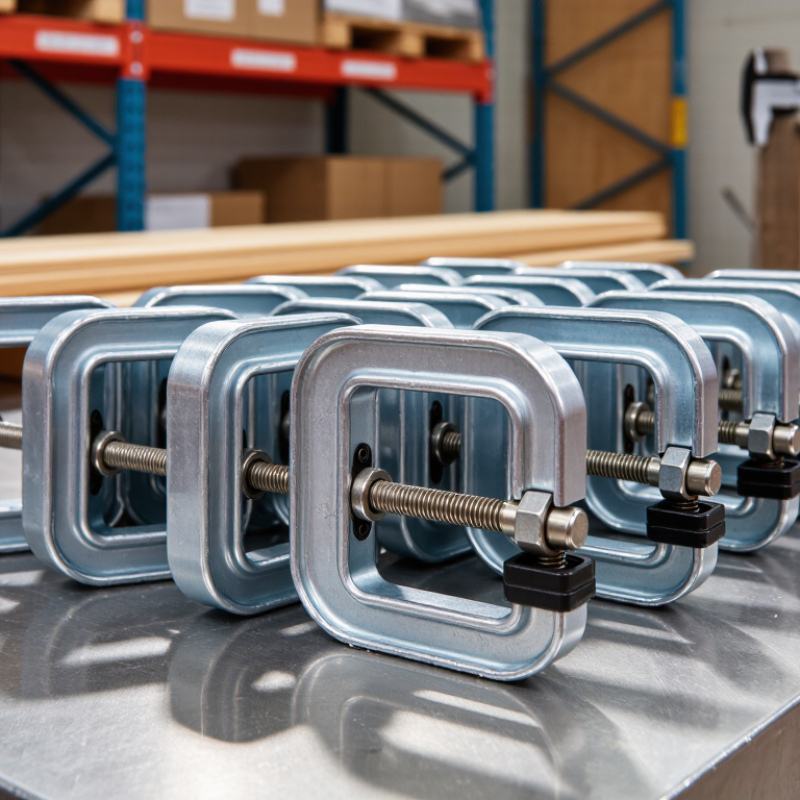
Scaffold plank clamps secure boards against movement, lifting, and accidental displacement. Common types include fixed clamps, swivel clamps, beam clamps, and board-retaining clips. Each type serves a different connection condition. Fixed clamps suit stable, straight layouts. Swivel designs help around angled or irregular structures. Beam clamps attach planks to supporting steel members. Board clips mainly limit sliding. Small differences matter.
EN 74-1 compatibility requires careful verification.
EN 74-1 mainly addresses scaffold couplers, including their strength, slip resistance, materials, and testing requirements. A plank clamp should not claim compliance without supporting test reports and technical documents. Check tube diameter, clamp opening, bolt grade, tightening torque, and working load. Inspect zinc coating thickness and weld quality too. These details affect service life outdoors.
Real construction sites are less tidy than drawings. Mud, impact, and repeated assembly can expose weak threads quickly. I would request dimensional drawings, batch traceability, sample testing, and inspection records before approving bulk production. One point is easy to miss: a clamp can fit perfectly yet fail under the wrong load direction. Supplier experience should include practical installation guidance, not only a catalogue. Compatibility depends on the complete scaffold system, site conditions, and local engineering review.
China’s production base supports scaffold plank clamp manufacturing with practical steel and finishing capabilities. Q235 steel is commonly selected for its workable strength and consistent forming performance. Experienced factories cut, press, weld, and inspect each component before packing. Small dimensional errors can affect plank stability, so fit checks matter.
Galvanizing protects clamps against moisture, transport exposure, and outdoor storage. Hot-dip galvanizing usually provides a thicker zinc layer than simple surface coating, but appearance alone cannot confirm durability. Buyers should request coating thickness records, salt-spray data where relevant, and batch traceability. ISO 9001 systems add controlled procedures for purchasing, production, inspection, and corrective action. They do not replace product testing. That distinction is often missed.
Tips: Ask for Q235 material certificates, dimensional drawings, sample clamps, and recent inspection records. Check bolt threads, jaw contact, weld consistency, and zinc coverage around corners. Confirm the supplier can meet your required scaffold standard and destination-market documentation. A pre-shipment inspection is sensible. It may feel excessive, yet one loose clamp can create costly delays. Suppliers should also explain packaging details, because poorly separated galvanized parts can rub during long transport. No process is flawless. Careful records make problems easier to trace and correct.
When global buyers assess scaffold plank clamps, load safety should come before price or delivery speed. In U.S. projects, OSHA requires each scaffold and component to support its own weight plus four times the maximum intended load. This is not simply a four-times plank rating. The calculation includes workers, tools, stored materials, and foreseeable movement across the platform.
The calculation includes workers, tools, stored materials, and foreseeable movement across the platform.
A practical review starts with the plank span, clamp position, material grade, and connection condition. For example, three workers carrying mortar can create a very different load from one worker using hand tools. A competent person should check supplier test data, installation instructions, and visible damage before use. Clamps must hold the plank securely without crushing its edges or creating unstable contact. Tightening a fastener harder does not automatically increase capacity.
Field conditions can be less predictable. Wet timber, bent components, uneven supports, and dropped materials may reduce the safety margin. A clean calculation is not enough. Inspectors should verify the actual setup, not only the paperwork.
Load limits should remain visible near the access point, and workers should avoid stacking materials outside the planned loading area. Some project specifications may require stricter controls than the basic OSHA rule.
That detail is easy to miss, especially when products cross borders. Reliable suppliers provide traceable test information and clear limits, while buyers should independently confirm suitability for the intended scaffold system.
Supplier verification should begin with test evidence, not product photographs. OSHA requires scaffold components to support at least four times their maximum intended load. The ILO reported 2.93 million work-related deaths worldwide in 2023. These figures make traceable clamp testing essential. Request batch-based load tests, material certificates, hardness results, and corrosion records. EN 74-1 can guide coupler performance checks, but the supplier must confirm the exact product classification.
Dimensional control matters on crowded scaffold frames. Ask for drawings showing tube diameter, jaw opening, bolt dimensions, and permitted tolerances. A practical audit should compare ten random pieces with calibrated gauges. One small mismatch can cause poor seating. Surface coating thickness should also be recorded, rather than described as “heavy galvanized.” Obtain inspection plans, packing photos, and a signed final report.
MOQ and lead time need written limits. Request separate figures for samples, trial orders, and mass production. A credible supplier should explain tooling charges, production capacity, and shipment buffers. Essential documents include commercial invoices, packing lists, certificates of origin, material reports, and conformity declarations. Our checklist is not infallible. Factory audits can still miss rushed batches, so retain samples and repeat checks after approval.
China Top Scaffold Plank Clamps Supplier for Global Buyers?
Global Buyer Selection: Comparing Compliance, Cost, Quality, and Risk
Selecting a scaffold plank clamps supplier requires more than comparing quotations. Experienced buyers check material certificates, dimensional reports, and traceability records for every production batch. The clamps should match the required plank size and intended scaffold system. Ask for documented load ratings, corrosion protection details, and inspection procedures. Certificates alone are not proof. Independent testing may reveal gaps.
Cost includes tooling, packaging, freight, duties, inspection, and replacement risks. A low factory price can become expensive after delays or damaged cartons. Compare samples under identical conditions. Check clamp weight, thread movement, edge finish, and locking performance. Small defects matter. A rough surface may damage planks or slow installation. However, the most expensive option is not automatically safer.
Risk control needs practical evidence. Review factory capacity, worker training, quality records, and corrective-action reports. Use a clear purchase contract with agreed tolerances and inspection rights. Pre-shipment inspection helps, but it cannot detect every hidden weakness. That is an uncomfortable limitation. Buyers should keep reserve time for retesting and communication delays. Local compliance requirements may differ, so a qualified engineer or testing body should confirm suitability before use. A supplier that answers technical questions clearly is often more reliable than one offering polished promises.
| Evaluation Dimension | Profile A Basic Export Factory | Profile B Standard-Focused Factory | Profile C High-Traceability Factory | Profile D Trading or Mixed-Source Supplier |
|---|---|---|---|---|
| Typical product scope | Carbon-steel scaffold plank clamps for general construction use. | Steel clamps produced against defined drawings, inspection plans, and packaging specifications. | Clamps with controlled material batches, product testing, and formal quality records. | Mixed products sourced from more than one production facility; factory origin must be verified. |
| Indicative FOB price Per pair; steel model; volume order | US$2.40–3.60 | US$3.20–4.80 | US$4.50–7.00 | US$2.80–5.50 |
| Material documentation | Basic material statement; heat or batch traceability may be limited. | Material specification and batch records normally available upon request. | Material certificates, batch identification, and retained production records. | Documentation depends on the actual subcontracted factory and may vary by shipment. |
| Common steel and finish | Low-carbon steel; electro-galvanized coating commonly around 8–12 μm. | Specified carbon steel; electro-galvanized or hot-dip galvanized finish according to purchase order. | Controlled steel grade; coating thickness and corrosion-resistance checks recorded by batch. | Finish and steel grade can differ between production sources unless contractually controlled. |
| Load and slip-test evidence | Sample testing may be available; test method and fixture details should be checked carefully. | Routine sample testing with documented test load, deformation, and slippage results. | Product-specific test reports linked to drawing revision, batch, and defined installation conditions. | Reports may be generic, outdated, or issued for a different factory or product configuration. |
| Relevant compliance references | Buyer should verify compatibility with the applicable scaffold-system requirements and local regulations. | Usually able to provide dimensional drawings, inspection records, and compliance declarations. | Better prepared for audits involving EN 12811-1 system requirements, BS 2482 timber-board interfaces, or OSHA project requirements where applicable. | Compliance responsibility and document ownership must be confirmed before purchase. |
| Dimensional consistency | Acceptable for standard applications, but variation in jaw opening, hole position, or bolt fit may occur. | Controlled using gauges and documented tolerances for critical dimensions. | Formal first-article approval, gauge calibration, and statistical checks for key dimensions. | Consistency depends on the source factory and the effectiveness of incoming inspection. |
| Quality-control package | Pre-shipment photos, quantity check, and basic visual inspection. | Inspection and Test Plan, dimensional report, coating check, and packing-list verification. | Full inspection records, traceability list, test results, nonconformance records, and retained samples. | Third-party inspection is advisable because internal records may be incomplete. |
| Typical production lead time | 15–25 calendar days after deposit and drawing approval. | 20–35 calendar days, including routine inspection and export packing. | 30–45 calendar days when testing, approval samples, or special coating is required. | 10–30 calendar days, but availability and source allocation should be confirmed in writing. |
| Minimum order quantity | Typically 500–1,000 pairs. | Typically 1,000–3,000 pairs. | Typically 2,000–5,000 pairs for customized or fully traceable production. | May offer lower quantities, subject to stock and supplier availability. |
| Packaging and transport risk | Moderate risk of surface damage, mixed counts, or insufficient moisture protection. | Palletized cartons, quantity labels, and loading photos generally reduce shipment risk. | Packaging validated for weight, corrosion protection, carton traceability, and container loading. | Higher risk if goods are consolidated from multiple sources or repacked before export. |
| Commercial risk | Medium | Low to Medium | Low | Medium to High |
| Best fit for global buyers | Price-sensitive buyers with strong independent inspection and technical capability. | Buyers seeking a practical balance between cost, documentation, and delivery reliability. | Infrastructure, rental, and regulated projects where traceability and repeatability are priorities. | Small trial orders or buyers that can manage supplier verification and incoming inspection. |
| Recommended buyer safeguard | Approve a golden sample, define acceptance tolerances, and perform pre-shipment inspection. | Make drawings, test method, coating requirement, and batch records contractual deliverables. | Use factory audit, first-article approval, lot traceability, and periodic independent load testing. | Verify manufacturing location, inspect every shipment, and avoid relying on generic certificates. |


For those larger-sized parts, or smaller quantity runs, we have 2 independent powder coat booths and ovens. The quality, durability and affordability of today’s powder coating finishes make this the process of choice for world-class companies.
Powder coating advantages over other forms of coating are many. Materials used in the Powder coating process can be metals and non-metals that come in a multitude of thicknesses, textures, colors, etc. Another of Powder coating’s biggest advantages over conventional coatings is its ability to create finishes in many different textures. Powder Coating Booths allow us the ability to apply these advantages to large products.
Tri-State Fabricators runs a full-service conveyor line for painting. Wet painting can provide protection or decoration to many different part styles. From start to finish, every project is easier to undergo random and point-based inspection by our skilled painting team.
Advantages to our Wet Paint Line are these lines start with product prep and ends with a thorough inspection of a high quality finished product. Our ability to complete large and small projects with a superior finish and doing so in a timely and economical fashion. This passes along the savings in production to our customers. When powder coating ins not an option, our Wet Paint Line gets the job done right the first time.
When the parts get big and heavy we roll-out our custom paint racks and oversize booth. By utilizing our partnerships with all the major paint brands, we can match virtually any color with wet paint.
The advantages of having access to a Wet Paint Booth are many. Large projects of many different shapes can be loaded into the booth. The Wet Paint Booth offers an environment that is much more controlled than a typical parts painting operation.
Not only are they used because of their controlled environment, but they’re are also advantageous when it comes to applying paint to parts that are needed in industries that require specialty coatings such as medical, aerospace, etc.
Our military forces have some very high standards when it comes to the finish of their vehicles and equipment. From the first pre-treatment step to final coat, it takes a great deal of knowledge and experience to protect the men and women of our armed forces. They deserve only the best, and Tri-State Fabricators provides it.
All of our processes are closely monitored by our staff and management teams. Both of which are highly trained in the processes of metal fabrication and finishing. Tri-State Fabricators’ goal is to always fully satisfy each and every customer, including the military. We will always put a 110% into what we do.
Abrasive media blasting is an excellent way to remove old paint, rust, and increase the paint/powder adhesion. Glass beads produce a much smoother and brighter finish than angular abrasives; leaving the part clean yet without any dimensional change. Chemically inert and environmentally friendly, we can recycle our beads approximately 30 times; making them a more preferred method of metal cleaning or surface finishing.
Advantages to Glass Bead Blasting are many. Glass bead blast media is used when a project is needing rough surfaces need to become smooth for applications of coatings such as paint. It is typically used to clean paint and rust from a product surface without deforming the surface it is being used on. Overall, compared to many other blasting media, Glass Bead Blasting is a very economical choice and those savings are always passed on to our customers.
Tri-State Fabricators utilize a zinc phosphate wash to clean and etch the material to ensure the best paint adhesion possible. The unique design of our 3-stage wash system does the work like a 5-stage. From Cleaning and rinsing to conversion coating and post-treatment, Our Part Washing process is a complete service and works throughout the fabrication service and the finishing service.
Along with the previously mentioned benefits, Curing is a vital chemical reaction that leaves the product finish hard and relatively safe from mild abrasion and aggressive corrosion. This process can be done in more than one way; ambient air-dry or in curing ovens at temps that exceed 240°.
From fixing paint mistakes (someone else’s of course) to simply cleaning our paint line hooks, our burn-off oven is put to good use. After a quick burn-off, a little clean up, and a fresh coat of paint, your parts will look better than new.
Why does our Burn-Off Oven work so well? Because super heating the air around parts turns the materials into ashes. From paint and powder coatings to rubber and machining oils, high temps do the job without degrading the integrity of the part.
Masking is a vital part of producing high quality products. We have die-cut masking patterns to protect machined surfaces as well as a wide range of plugs and caps to protect threaded holes and bolts. We provide permanent and temporary masking.
Masking allows the selected sections of a product to be protected from a fabrication or finishing service. This can be with both chemicals when etching and tapes, paints when only finishing just a section of the product. Masking is great in aiding the customization process of a project.
Screen printing is a photographic process that transfers artwork onto a porous nylon screen which allows colored ink to flow through the screen and be deposited on an aluminum or plastic component. We can generally have just about any design created onto a screen for your parts.
Some of the advantages of Screen Printing are, brand recognition for your business displaying on your products, assembly instructions, product warnings/hazards, etc. Tri-State Fabricators produces Screen Printing of the highest quality so you know it’s durable.
Metal Finishing is the art of treating the exterior portion of product, often metal but can also be made of other materials, so that the surface is clean and free of any debris. Then the process of applying coats or either paint of powder coat takes place. This coating process improves the quality of the product in both appearance and resistance to wear and corrosion.
Tri-State Fabricators, Inc., understands that a project typically isn’t complete until a high-quality finish has been added to your product. This is why our painting and powder coating teams continuously inspect the products throughout the Metal Finishing process.