What Are the Top China Transparent LED Display Suppliers?
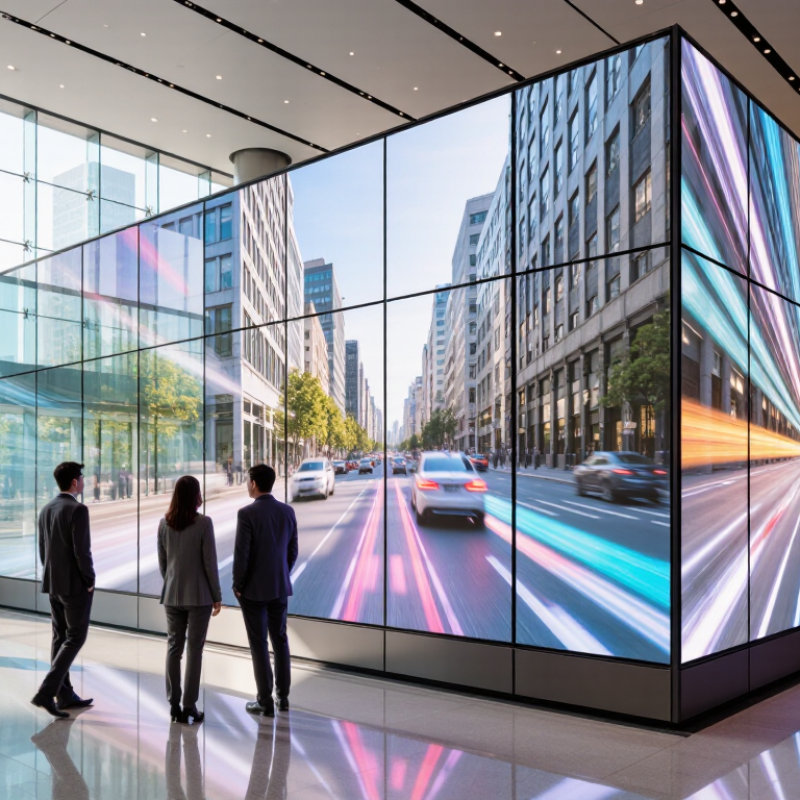
Transparent Led Display technology is changing how retail façades, airports, museums, and corporate lobbies communicate. Unlike conventional LED walls, transparent panels preserve daylight and interior visibility while showing bright, moving content. This balance makes supplier selection more demanding. A strong product must combine high transparency, stable brightness, accurate color, safe power management, and practical installation.
Industry research supports this growing interest. MarketsandMarkets’ LED Display Market report highlights fine-pitch development, energy efficiency, and demand for flexible visual systems as important market drivers. Grand View Research also identifies digital signage, retail modernization, and large-format commercial displays as key growth areas. These reports do not create a perfect ranking of manufacturers. Still, they offer useful signals for evaluating China’s leading suppliers.
Technical details matter more than showroom impressions. Look for measured transparency rates, brightness data in nits, refresh rates, pixel pitch, viewing distance, and protection ratings. Ask whether test results come from independent laboratories. Check cabinet weight, heat dissipation, maintenance access, and spare-parts availability. A transparent screen may appear elegant at three meters but show visible gaps at close range. That difference matters.
Supplier experience matters too. Companies with completed projects can explain installation limits, structural loads, weather exposure, and content calibration. Certifications, factory quality systems, warranty terms, and after-sales response should support every claim. No list is flawless. Pricing, regional service, and project complexity can change the final choice. This guide compares leading China Transparent Led Display suppliers through practical performance, documented expertise, reliability, and long-term value.
What Transparent LED Displays Are and How They Work
Transparent LED displays are digital screens designed to show images while allowing light and scenery to pass through. Their LED bars, circuit boards, and supporting frames leave visible gaps between pixels. From the street, a glass façade can still reveal indoor lighting, shelves, or architectural details.
Each LED pixel receives data from a control system. The system adjusts color, brightness, and timing across thousands of pixels. When the display plays a video, red, green, and blue diodes combine to create each image. The open structure reduces visual blockage and often weighs less than a solid LED wall. It also allows air to move through the installation. That matters on large windows.
Performance depends on more than pixel pitch. Bright shop windows may need high brightness, while indoor displays require gentler output. A practical test should check daytime visibility, viewing angles, refresh performance, and heat near the glass. Ask suppliers in China for real samples, measured transparency, installation drawings, warranty terms, and replacement procedures. Certifications and clear technical documents also improve purchasing confidence.
A common mistake is judging only by a showroom video. Cameras can hide glare, uneven brightness, or visible wiring. Test moving content at the intended distance. Check it at night, too. The result may look less dramatic than expected, but honest testing prevents costly changes later.
How to Evaluate China’s Transparent LED Display Suppliers
What Are the Top China Transparent LED Display Suppliers?
How to Evaluate China’s Transparent LED Display Suppliers
Choosing a supplier takes more than comparing brightness figures. Ask for a sample panel and inspect it in daylight and after dark. Look through the display from several angles. Check whether text stays readable and whether the supporting structure blocks too much of the view. Request measured data for transparency, brightness, pixel pitch, and power use. Numbers should come with test conditions, not just a neat table.
Review the supplier’s engineering process. Ask how panels connect, how cables are routed, and how technicians replace a failed module. A useful factory discussion includes installation drawings, control-system details, and realistic production timelines. Request references for projects with similar glass size and viewing distance. Photos help, but a live video call or site visit can reveal uneven color and visible seams. I would not rely on one impressive demonstration; lighting and camera settings can hide flaws.
Tips: Put your requirements in writing before comparing quotations. Confirm warranty coverage, spare-parts availability, and response times. Ask the supplier to explain any unusually low price. A rushed answer is a warning sign. Still, even careful checks cannot predict every installation issue, so leave time for a small pilot order and adjust the plan when actual site conditions differ.
How to Evaluate China’s Transparent LED Display Suppliers
Suggested evaluation weights for comparing suppliers—not supplier rankings or measured market data. Apply the same criteria and evidence requirements to every candidate.
Assess product performance using documented specifications and demonstrations; verify quality systems, project references, warranty terms, after-sales support, and delivery commitments during due diligence. The percentages are a practical scoring rubric and can be adjusted to fit project requirements.
Profiles of Leading Transparent LED Display Manufacturers in China
China’s transparent LED display suppliers generally fall into three groups: specialist screen makers, large-format display integrators, and export-focused manufacturers. Specialist makers often emphasize fine pixel pitches, high transparency, and custom cabinet dimensions. Integrators tend to combine LED panels with control systems, structural design, and installation support. Export-focused factories may offer broader configuration choices, but buyers should verify service coverage before ordering. A polished showroom sample is not enough.
The wider market provides useful context, though it does not measure transparent screens alone. Grand View Research estimated the global LED display market at about US$7.5 billion in 2023 and projected an 8.4% compound annual growth rate from 2024 to 2030. This points to sustained investment, not guaranteed supplier quality. Ask for measured brightness, transparency rate, refresh rate, and power consumption under stated test conditions. Request video of a working display in daylight, too. Small details matter.
A credible supplier should document module tolerances, spare-part availability, and warranty terms. Check whether the quoted transparency figure applies to the full installed screen or only the LED strips. That distinction can be easy to miss. Factory audits and a pilot installation can reveal uneven brightness, visible seams, or installation delays. Even experienced buyers sometimes underestimate maintenance access; transparent façades look light, but servicing them is not always simple.
What Are the Top China Transparent LED Display Suppliers? – Profiles of Leading Transparent LED Display Manufacturers in China
The table below compares supplier capabilities and product specifications that buyers commonly assess. It does not rank or identify individual companies. Specifications vary by model and should be confirmed in the supplier’s current datasheet and quotation.
| Supplier profile | Typical application focus | Key product characteristics | Information to verify |
| Architectural façade specialist | Building façades, curtain walls, and large outdoor installations | Emphasis on transparency, structural integration, outdoor visibility, and project-specific panel dimensions | Wind-load and mounting requirements, weather protection, maintenance access, applicable test reports, and local building-code requirements |
| Retail-window display specialist | Shopfronts, storefront windows, and commercial interiors | Designed to preserve visibility through glass while presenting digital content; installation and cabinet depth depend on the product design | Viewing distance, ambient-light performance, glass and frame compatibility, access for service, and content-control options |
| Rental and event-display specialist | Exhibitions, stages, temporary venues, and event production | May prioritize modular construction, repeated assembly, transport, and configuration flexibility | Locking and alignment system, panel weight, spare-parts availability, setup instructions, and warranty coverage for rental use |
| Custom-engineering supplier | Curved, irregular, or project-specific display installations | Engineering and production are adapted to the installation; achievable geometry and pixel layout are model-dependent | Approved drawings, prototype requirements, pixel mapping, tolerances, project schedule, and responsibility for on-site integration |
| Export-oriented OEM/ODM supplier | International distributors, integrators, and private-label projects | May offer configurable product specifications, packaging, documentation, and project support for overseas orders | Factory audit, quality-control records, product certifications relevant to the destination market, Incoterms, and after-sales process |
Specification checks for shortlisted products
| Specification | How to compare offers | Why it matters |
| Pixel pitch | Compare the stated pitch and the viewing distance recommended for the exact model. | Pixel pitch affects image detail and is not directly interchangeable across different product designs. |
| Transparency | Request the measurement method and the value for the quoted configuration. | Transparency can vary with LED layout, pixel pitch, supporting structure, and viewing angle. |
| Brightness | Check the rated value, test conditions, adjustment range, and suitability for the installation’s ambient light. | A quoted brightness figure should be assessed alongside transparency, content, viewing conditions, and power use. |
| Refresh rate and grayscale | Request datasheet values and, where relevant, test the display with the intended camera setup. | Performance can affect motion appearance and camera recording; results depend on the full display and control system. |
| Power consumption | Compare both maximum and typical consumption using the same stated measurement basis. | Electrical planning should use the product’s documented load requirements, not an assumed industry-wide figure. |
| Environmental rating | Confirm the rating for the complete installed product and clarify front, rear, and connection protection. | Protection depends on the product and installation; a component rating alone may not describe the full system. |
| Warranty and service | Review duration, exclusions, response process, spare-parts terms, and who provides local support. | Service commitments are supplier- and contract-specific and should be documented before purchase. |
How Supplier Technologies and Product Specifications Compare
China’s transparent LED suppliers differ less by headline brightness than by pixel pitch, transparency, cabinet weight, and serviceability. Compare these figures under the same test conditions: ambient light, viewing distance, and content. A 3.9 mm pitch may suit a retail window viewed from several metres, while closer viewing generally calls for finer pitch. Higher pixel density can reduce transparency and increase cost. There is a trade-off.
Fortune Business Insights valued the global transparent-display market at about USD 2.56 billion in 2023 and projected USD 10.71 billion by 2032. This forecast covers transparent display technologies broadly, not LED products alone, so it should not be treated as a supplier ranking. For LED products, request measured transparency, brightness in nits, refresh rate, power consumption, and front- or rear-service details. Ask for a full-size sample: narrow LED strips can look crisp in a brochure but create visible gaps across a large glass façade. Also check brightness uniformity and performance after dimming. Datasheets are useful, but not the whole story. Installation depth, control-system compatibility, and replacement-module availability can matter as much as peak brightness. Specifications are sometimes presented inconsistently; insist on written test methods before comparing quotations.
Applications, Customization, and Purchasing Considerations
Transparent LED displays suit retail windows, glass atriums, transport hubs, and event spaces where daylight and visibility both matter. Their open structure lets people see through the screen, but image clarity depends on pixel pitch, viewing distance, and ambient light. A 2023 MarketsandMarkets report valued the global LED display market at USD 7.1 billion and projected it to reach USD 12.6 billion by 2028. This broader category includes more than transparent products, so it offers context—not a precise measure of transparent-display demand.
Customization should start with the site, not a product catalog. Ask suppliers to assess glass dimensions, mounting points, ventilation, sunlight, and cable routes. Request a sample or on-site demonstration; a bright showroom image can hide weak contrast in a sunlit window. Specify pixel pitch, brightness, refresh rate, service access, and control-system compatibility in writing. Small details matter. A display that fits the glass but blocks a door sensor is still a poor fit.
Compare suppliers on engineering support, warranty terms, spare modules, and documented quality checks. Ask how technicians replace a failed panel without dismantling the entire installation. Also confirm power use and operating temperature under realistic conditions. I would not choose on price alone; however, supplier claims can be difficult to verify before installation. Ask for references from projects with similar glass exposure, then review the actual commissioning and maintenance records where available.