China Best EV Resistor Manufacturers for Global Buyers?
China has become a critical sourcing base for electric-vehicle components, including the Ev Resistor. Its scale is difficult to ignore. The China Association of Automobile Manufacturers reported 12.866 million new-energy vehicles sold in China during 2024, including 1.284 million exports. That volume creates strong demand for braking resistors, pre-charge resistors, discharge resistors, and battery thermal-management solutions.
Global buyers, however, need more than competitive pricing. The International Energy Agency’s Global EV Outlook 2025 reported that worldwide electric-car sales exceeded 17 million units in 2024. This growth increases pressure on suppliers to deliver stable resistance values, controlled temperature rise, long service life, and traceable production records. A reliable manufacturer should explain its alloy selection, insulation structure, pulse-loading performance, and protection against vibration and moisture. Factory audits matter. So do sample tests.
Look closely at the details. A resistor mounted near an inverter may face repeated thermal cycles, electromagnetic stress, and limited airflow. One weak weld can become a costly field problem. Manufacturers serving serious vehicle programs should demonstrate IATF 16949-based quality systems, relevant AEC-Q200 testing where applicable, and design practices aligned with automotive functional-safety expectations. Certifications alone are not proof.
That is the uncomfortable part. Supplier websites often present impressive specifications, but test conditions may differ between factories. Buyers should compare datasheets, inspection reports, customization capability, delivery history, and failure-analysis support. The best China EV resistor manufacturers are not simply the cheapest. They are technically transparent, responsive during validation, and consistent after mass production begins. Evidence matters more than slogans.
EV Resistors: Functions, Types, and Key Performance Requirements
EV Resistors: Functions, Types, and Key Performance Requirements
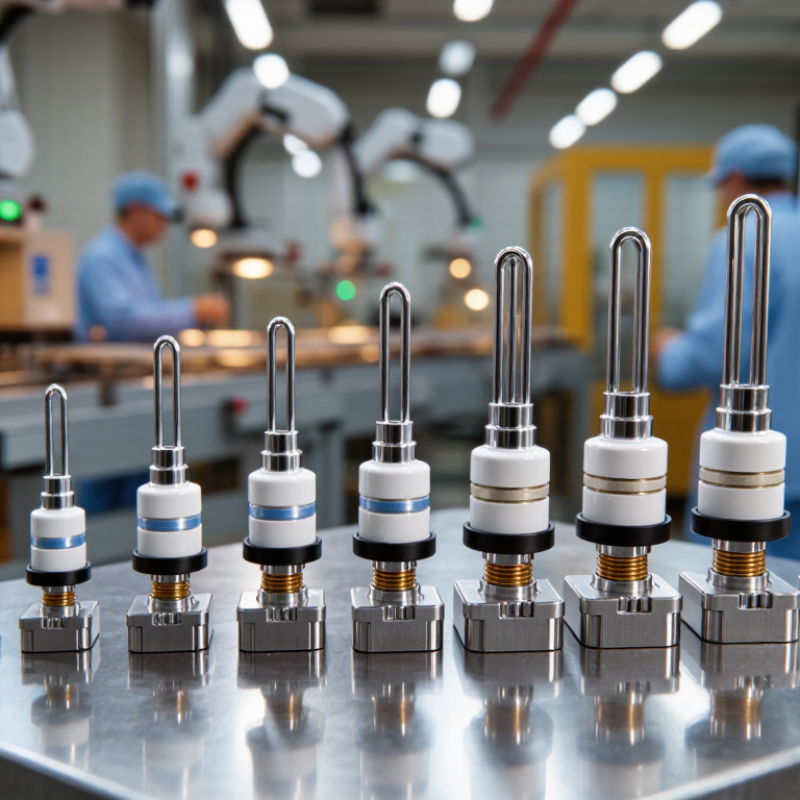
EV resistors manage current, voltage, heat, and safety across demanding electric vehicle systems. In pre-charge circuits, they limit inrush current before the battery connects to the inverter. This protects contactors and reduces electrical stress. Braking resistors absorb excess energy during regenerative braking. Discharge resistors safely release stored voltage after shutdown, improving service safety.
Common types include wire-wound, aluminum-housed, ceramic, and liquid-cooled resistors. Each design suits different thermal and space conditions. A wire-wound unit can provide stable resistance, while an aluminum-housed model often transfers heat efficiently to a metal frame. Key requirements include accurate resistance, high pulse capability, insulation strength, vibration resistance, and long-term thermal stability. Power ratings need careful review. A resistor may survive a short pulse but fail under repeated cycles. That detail is sometimes overlooked.
Tips: Ask for pulse-load curves, not only continuous wattage. Check resistance tolerance at both low and high temperatures. Confirm mounting torque, cooling method, ingress protection, and electrical test records. Request samples for real duty-cycle testing. Laboratory results can look excellent, yet vehicle vibration may expose weak terminals. Perfect specifications do not always guarantee perfect field performance. Supplier communication also matters, especially when drawings change late.
China Best EV Resistor Manufacturers for Global Buyers?
EV Resistors: Functions, Types, and Key Performance Requirements
This chart shows representative resistance ranges used in EV power-electronics applications. Precharge resistors limit DC-link inrush current, discharge resistors safely reduce stored capacitor voltage, dynamic-braking resistors absorb regenerative energy, and current-sensing shunts provide low-resistance measurement paths. Actual values depend on system voltage, peak power, pulse duration, thermal design, insulation requirements, and applicable safety standards.
How to Evaluate China-Based EV Resistor Manufacturers
China’s EV market creates a deep supplier base, but scale alone proves little. The IEA Global EV Outlook 2025 reported over 17 million electric cars sold worldwide in 2024. China produced more than 70% of global electric cars, increasing component demand and manufacturing capacity.
Evaluate each resistor manufacturer through documented engineering evidence. Request resistance tolerance, power derating curves, pulse capability, thermal-cycle results, and insulation data. Test it hot. A resistor rated at 25°C may perform differently near a battery enclosure or inverter. Check compliance with AEC-Q200 requirements and automotive quality systems such as IATF 16949. ISO 9001 certification helps, but it does not replace process verification.
Visit the factory, or appoint an independent auditor. Review incoming-material controls, laser-trimming records, lot traceability, and final inspection data. Ask for samples from three production lots, not only laboratory prototypes. Compare measured resistance after humidity, vibration, salt spray, and rapid temperature changes. The United Nations Economic Commission for Europe highlights rising safety expectations for vehicle electrical systems, making failure analysis essential. Request an 8D report for past defects. If every answer sounds perfect, investigate further. Real factories usually show some variation. That is not automatically dangerous; hiding it is. Check lead times, minimum order quantities, packaging, export experience, and engineering response times before signing a supply agreement.
Core Manufacturing Processes and Quality Control Standards
China Best EV Resistor Manufacturers for Global Buyers?
EV resistor quality begins with controlled materials and repeatable production. Manufacturers typically inspect resistance wire, ceramic cores, terminals, and insulating coatings before assembly. Automated winding controls wire tension and resistance length. Laser trimming then adjusts values within the specified tolerance. Each batch should receive traceable identification.
Thermal performance matters greatly in braking, pre-charge, and discharge applications. Engineers test temperature rise inside controlled chambers. They also check insulation resistance, dielectric strength, vibration, humidity, and overload endurance. Quality systems such as ISO 9001 and IATF 16949 can support consistent procedures. However, certification alone does not prove product reliability. Buyers should review actual test records, calibration dates, and process capability data.
Tips: Request samples from several production lots. Measure resistance at room temperature, then repeat after thermal cycling. Inspect welds under magnification. Ask how rejected parts are isolated and recorded. Clear answers often reveal stronger process discipline.
A dependable supplier should use incoming inspection, in-process checks, and final testing. Statistical process control can identify drift before failures reach assembly lines. Still, no factory is flawless. Even experienced teams may miss a weak coating or irregular weld. That possibility deserves honest discussion, not polished promises. Define acceptance criteria, inspection frequency, and change-notification rules before placing large orders. Supplier audits should include the production floor, storage area, and laboratory records.
Comparing Suppliers by Capacity, Pricing, Delivery, and Support
China Best EV Resistor Manufacturers for Global Buyers?
China’s EV resistor market should be judged by production evidence, not catalogue variety. The IEA’s Global EV Outlook 2025 reports over 17 million electric cars sold worldwide in 2024. That demand increases pressure on resistor suppliers to deliver stable volumes.
Compare verified monthly capacity, not installed equipment alone. Request recent output records, thermal-cycle data, and rejection rates. A practical quote should separate resistor cost, tooling, testing, packaging, and freight.
PRICE REVIEW Very low pricing deserves careful review. In sourcing evaluations, cheaper parts sometimes required extra inspection and caused assembly delays.
Delivery depends on more than factory location. UNCTAD’s Review of Maritime Transport 2024 highlights continuing freight-rate volatility and supply-chain uncertainty. Ask for safety-stock policies, lead-time history, and backup materials.
For technical support, assess response times, failure-analysis reports, and change-control procedures. Suppliers should provide traceability, PPAP documents, and test results aligned with AEC-Q200 requirements.
Sample testing matters. Engineers should check pulse capability, resistance drift, insulation performance, and heat dissipation under real vehicle conditions.
Capacity, price, delivery, and support rarely improve together; buyers may need to accept a higher unit cost for stronger process control.





