Buying a coil expander machine is a serious investment for metalworking, HVAC, and tube-processing operations. The Coil Expander Machine Price can vary widely, depending on capacity, expansion range, automation, tooling, and supplier support. A compact workshop model may cost several thousand dollars, while a high-capacity industrial system can require a much larger budget.
This guide introduces ten coil expander machine prices for global buyers. It compares typical market ranges, machine features, production capabilities, and ownership considerations. Prices should be treated as practical reference points, not fixed offers. Freight, installation, taxes, spare tooling, and commissioning may change the final purchase cost. Always request a detailed quotation.
Real purchasing experience shows that the lowest price is not always the best value. A cheaper machine may use simpler controls or offer limited adjustment accuracy. That matters when processing different tube diameters or delicate coil materials. Ask suppliers for machine videos, technical drawings, warranty terms, and customer references. Check the motor rating, expansion method, cycle time, and required maintenance.
Small details matter.
A reliable comparison should also consider operator training and after-sales response. Some suppliers communicate quickly before payment, then respond slowly after delivery. This risk deserves attention. Certification documents can support confidence, but they do not replace factory inspection or performance testing. Buyers should verify specifications independently and compare at least three quotations when possible.
The following ranking presents ten representative price levels and explains what each range may offer. Market conditions change, and regional pricing can be imperfect. Use the information as a buying framework, then confirm current costs directly with qualified manufacturers or authorized distributors.
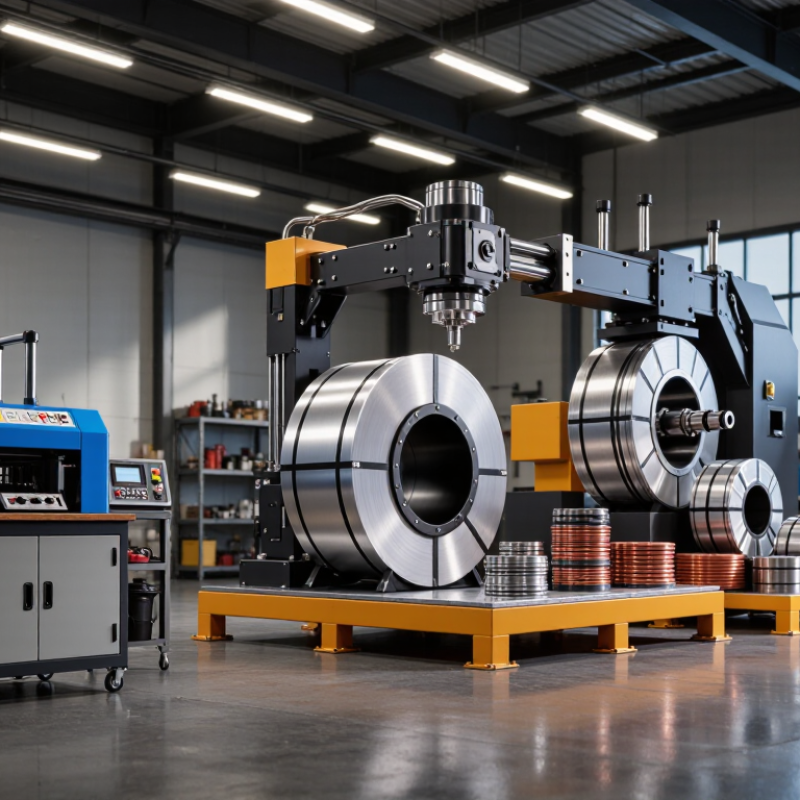
Coil expander machines enlarge coiled tubes or pipes with controlled force. They support heat exchangers, refrigeration systems, boilers, and selected fabrication lines. Their job is simple in theory: expand each tube evenly without damaging its wall. In practice, material hardness, tube diameter, and coil tension change the result.
Common types include hydraulic, mechanical, pneumatic, and servo-controlled expanders. Hydraulic models provide strong, steady pressure for thicker tubing. Mechanical units suit smaller workshops and simpler production tasks. Pneumatic systems offer quick cycling, while servo-controlled machines improve repeatability and process tracking. For tube coils, an internal mandrel pushes outward as the tool advances. Pressure and travel must match the tube material. Excessive force may create cracks or permanent distortion.
From equipment evaluations, operators usually inspect alignment, expansion range, cycle speed, and maintenance access before comparing prices. A lower machine price can hide tooling costs, setup time, or limited support. Ask for test results using your actual tube size. Small details matter. I have seen accurate machines perform poorly after rushed calibration. A perfect setting rarely exists; careful sampling and periodic measurement remain necessary. Purchase decisions should also consider operator training, spare parts, guarding, and long-term reliability.
Coil expander machine prices vary widely because specifications rarely match exactly. In my experience, capacity is the strongest cost driver. A unit handling thick steel coils needs a heavier frame, stronger hydraulic cylinders, and larger motors. These upgrades can raise the price substantially.
Automation also affects the quotation. Manual models usually cost less, while systems with programmable controls, sensors, automatic centering, and remote diagnostics require more investment. Working width, expansion range, coil weight, power supply, and safety guarding also matter. Stainless steel contact parts may increase costs in demanding environments. Shipping, import duties, installation, training, and spare parts should be included in the total budget. A low initial quote can become expensive later. That mistake is common.
Tips: Request ten comparable quotations, not ten random prices. Give every supplier the same coil dimensions, material, production speed, and voltage requirements. Ask for a line-by-line cost breakdown. Check the warranty, delivery schedule, testing procedure, and after-sales response time. Video testing is useful, but it cannot replace a clear acceptance standard. I would also verify actual performance references, where legally and commercially appropriate. Some buyers focus too heavily on the machine price and overlook maintenance access. That decision may save money today, but it can slow production tomorrow. Prices can change with steel costs, exchange rates, and freight conditions, so confirm validity before ordering.
Top 10 Coil Expander Machine Prices for Global Buyers
Top 10 Coil Expander Machine Prices for Global Buyers vary widely by capacity, control system, and forming accuracy. A practical 2024–2025 purchasing benchmark places entry-level manual units near USD 4,000. Semi-automatic models often reach USD 8,500. Servo-assisted machines cost about USD 13,000. Medium-duty hydraulic units range from USD 18,000 to USD 25,000. Automatic production machines usually fall between USD 30,000 and USD 42,000. Heavy-duty systems may cost USD 48,000. Precision models with digital monitoring approach USD 60,000. Custom lines can exceed USD 75,000. High-speed integrated systems may reach USD 95,000. Fully engineered installations can pass USD 120,000.
Prices need context. According to MarketsandMarkets, industrial automation demand is expanding steadily through 2027, increasing pressure for reliable controls and service support. The International Trade Centre also shows substantial machinery trade variation between exporting and importing regions. Freight, duties, installation, and spare tooling can add 15% to 35% to the quoted price. A machine advertised at USD 25,000 may require a larger foundation and three-phase power. Ask for expansion force, coil diameter range, cycle time, tolerances, and test records. Good documentation matters. I have seen low quotes become expensive after missing tooling was discovered. That weakness deserves attention. Buyers should compare total ownership cost, not only the first invoice. Pricing remains indicative, because steel costs, exchange rates, and customization can change quickly.
| Rank | Machine Configuration | Typical Coil Diameter Range | Expansion Method | Production Capacity | Automation Level | Estimated FOB Price (USD) | Typical Lead Time |
|---|---|---|---|---|---|---|---|
| 1 | Manual Coil Expander | 150–600 mm | Mechanical screw expansion | 20–35 coils/hour | Manual | $3,000–$7,000 | 15–25 days |
| 2 | Pneumatic Coil Expander | 200–800 mm | Pneumatic cylinder expansion | 30–50 coils/hour | Semi-automatic | $6,000–$12,000 | 20–30 days |
| 3 | Hydraulic Coil Expander | 250–1,000 mm | Hydraulic radial expansion | 35–60 coils/hour | Semi-automatic | $9,000–$18,000 | 25–40 days |
| 4 | Servo-Controlled Coil Expander | 200–1,200 mm | Servo-driven precision expansion | 45–75 coils/hour | Automatic | $16,000–$30,000 | 30–45 days |
| 5 | CNC Coil Expander | 250–1,500 mm | Programmable hydraulic expansion | 50–90 coils/hour | Automatic | $22,000–$42,000 | 35–55 days |
| 6 | High-Force Industrial Coil Expander | 400–1,800 mm | High-pressure hydraulic expansion | 30–65 coils/hour | Semi-automatic | $25,000–$48,000 | 40–60 days |
| 7 | Dual-Station Coil Expander | 200–1,200 mm | Independent dual-head expansion | 80–130 coils/hour | Automatic | $30,000–$55,000 | 45–65 days |
| 8 | Precision Heat-Exchanger Coil Expander | 300–1,600 mm | Servo-hydraulic controlled expansion | 45–80 coils/hour | Automatic | $32,000–$60,000 | 45–70 days |
| 9 | Integrated Coil Expanding and Forming Line | 250–1,500 mm | Automated expansion and forming | 70–120 coils/hour | Fully automatic | $48,000–$85,000 | 60–90 days |
| 10 | Custom Heavy-Duty Coil Expansion Line | 500–2,000 mm | Multi-axis hydraulic and servo expansion | 60–110 coils/hour | Fully automatic | $70,000–$130,000 | 75–120 days |
Prices are indicative FOB ranges in USD for new equipment and may vary according to coil dimensions, tube material, tooling, control system, safety features, production capacity, customization, packaging, freight, installation, and local taxes.

Comparing the top ten coil expander machine prices requires more than reading the quoted figure. Ask each supplier for the same production conditions, including coil diameter, tube material, expansion range, and daily output. A machine handling copper tubes may not deliver equal results with stainless steel. Request a live trial using your own coil samples. Ask for proof.
Review machine features beside the price. Check forming accuracy, control system, motor rating, tooling life, safety guarding, and changeover time. A faster changeover can save several labor hours each week. Confirm whether standard tooling fits your required sizes. Custom tooling often changes the final cost sharply. Price alone misleads.
Calculate the total purchase cost before comparing suppliers. Include packaging, inland transport, ocean freight, insurance, duties, commissioning, operator training, spare parts, and maintenance. Ask for a written warranty with response times and excluded parts. Small costs grow. One quote may appear cheaper because installation is missing. Another may include useful spare tooling but hide higher freight charges. A spreadsheet helps, yet its result depends on honest assumptions. I would also check production references, inspection records, electrical compatibility, and after-sales communication. A polished offer is not enough if technical answers remain vague. Compare delivered cost, measurable output, and service reliability together.
Machine price is only the opening figure. A top-ten comparison should separate equipment cost, freight, installation, and maintenance. Import expenses can add significantly to the quoted price. UNCTAD’s Review of Maritime Transport 2024 states that over 80% of global merchandise trade moves by sea. Freight delays, port charges, and protective crating therefore deserve careful attention. A cheaper machine may become expensive after arrival.
Ask each supplier for a detailed pro forma invoice and technical packing list. Confirm coil width, expansion range, control voltage, throughput, and foundation requirements. Electrical standards vary between markets. The World Bank’s Logistics Performance Index 2023 collected professional responses across 139 economies, highlighting major differences in customs and delivery reliability. Buyers should also verify tariff classification, insurance coverage, spare-part availability, and remote commissioning support. Small omissions create large delays.
Installation needs more than positioning the machine. Check floor strength, lifting access, pneumatic lines, guarding, and operator training before shipment. A practical acceptance test should record expansion accuracy, cycle time, noise, and emergency-stop performance. Maintenance planning is equally important. The U.S. Department of Energy’s Operations and Maintenance Best Practices Guide reports potential savings of 5–20% through effective maintenance programs. Keep bearings, seals, sensors, and control components in stock. I would not rely on a low-cost quote without these details. That judgment can be wrong, especially when local service capacity is limited.


For those larger-sized parts, or smaller quantity runs, we have 2 independent powder coat booths and ovens. The quality, durability and affordability of today’s powder coating finishes make this the process of choice for world-class companies.
Powder coating advantages over other forms of coating are many. Materials used in the Powder coating process can be metals and non-metals that come in a multitude of thicknesses, textures, colors, etc. Another of Powder coating’s biggest advantages over conventional coatings is its ability to create finishes in many different textures. Powder Coating Booths allow us the ability to apply these advantages to large products.
Tri-State Fabricators runs a full-service conveyor line for painting. Wet painting can provide protection or decoration to many different part styles. From start to finish, every project is easier to undergo random and point-based inspection by our skilled painting team.
Advantages to our Wet Paint Line are these lines start with product prep and ends with a thorough inspection of a high quality finished product. Our ability to complete large and small projects with a superior finish and doing so in a timely and economical fashion. This passes along the savings in production to our customers. When powder coating ins not an option, our Wet Paint Line gets the job done right the first time.
When the parts get big and heavy we roll-out our custom paint racks and oversize booth. By utilizing our partnerships with all the major paint brands, we can match virtually any color with wet paint.
The advantages of having access to a Wet Paint Booth are many. Large projects of many different shapes can be loaded into the booth. The Wet Paint Booth offers an environment that is much more controlled than a typical parts painting operation.
Not only are they used because of their controlled environment, but they’re are also advantageous when it comes to applying paint to parts that are needed in industries that require specialty coatings such as medical, aerospace, etc.
Our military forces have some very high standards when it comes to the finish of their vehicles and equipment. From the first pre-treatment step to final coat, it takes a great deal of knowledge and experience to protect the men and women of our armed forces. They deserve only the best, and Tri-State Fabricators provides it.
All of our processes are closely monitored by our staff and management teams. Both of which are highly trained in the processes of metal fabrication and finishing. Tri-State Fabricators’ goal is to always fully satisfy each and every customer, including the military. We will always put a 110% into what we do.
Abrasive media blasting is an excellent way to remove old paint, rust, and increase the paint/powder adhesion. Glass beads produce a much smoother and brighter finish than angular abrasives; leaving the part clean yet without any dimensional change. Chemically inert and environmentally friendly, we can recycle our beads approximately 30 times; making them a more preferred method of metal cleaning or surface finishing.
Advantages to Glass Bead Blasting are many. Glass bead blast media is used when a project is needing rough surfaces need to become smooth for applications of coatings such as paint. It is typically used to clean paint and rust from a product surface without deforming the surface it is being used on. Overall, compared to many other blasting media, Glass Bead Blasting is a very economical choice and those savings are always passed on to our customers.
Tri-State Fabricators utilize a zinc phosphate wash to clean and etch the material to ensure the best paint adhesion possible. The unique design of our 3-stage wash system does the work like a 5-stage. From Cleaning and rinsing to conversion coating and post-treatment, Our Part Washing process is a complete service and works throughout the fabrication service and the finishing service.
Along with the previously mentioned benefits, Curing is a vital chemical reaction that leaves the product finish hard and relatively safe from mild abrasion and aggressive corrosion. This process can be done in more than one way; ambient air-dry or in curing ovens at temps that exceed 240°.
From fixing paint mistakes (someone else’s of course) to simply cleaning our paint line hooks, our burn-off oven is put to good use. After a quick burn-off, a little clean up, and a fresh coat of paint, your parts will look better than new.
Why does our Burn-Off Oven work so well? Because super heating the air around parts turns the materials into ashes. From paint and powder coatings to rubber and machining oils, high temps do the job without degrading the integrity of the part.
Masking is a vital part of producing high quality products. We have die-cut masking patterns to protect machined surfaces as well as a wide range of plugs and caps to protect threaded holes and bolts. We provide permanent and temporary masking.
Masking allows the selected sections of a product to be protected from a fabrication or finishing service. This can be with both chemicals when etching and tapes, paints when only finishing just a section of the product. Masking is great in aiding the customization process of a project.
Screen printing is a photographic process that transfers artwork onto a porous nylon screen which allows colored ink to flow through the screen and be deposited on an aluminum or plastic component. We can generally have just about any design created onto a screen for your parts.
Some of the advantages of Screen Printing are, brand recognition for your business displaying on your products, assembly instructions, product warnings/hazards, etc. Tri-State Fabricators produces Screen Printing of the highest quality so you know it’s durable.
Metal Finishing is the art of treating the exterior portion of product, often metal but can also be made of other materials, so that the surface is clean and free of any debris. Then the process of applying coats or either paint of powder coat takes place. This coating process improves the quality of the product in both appearance and resistance to wear and corrosion.
Tri-State Fabricators, Inc., understands that a project typically isn’t complete until a high-quality finish has been added to your product. This is why our painting and powder coating teams continuously inspect the products throughout the Metal Finishing process.



