Top 10 Electra Heat Treat Furnace Suppliers Worldwide

Choosing an industrial furnace supplier involves more than comparing prices or browsing polished product pages. An Electra Heat Treat Furnace must deliver stable temperatures, repeatable cycles, and dependable support under demanding production conditions. This guide examines ten notable suppliers worldwide, focusing on engineering experience, furnace design, control systems, and customer service. It considers equipment used for annealing, hardening, tempering, and stress relieving. Details matter. A well-designed chamber, accurate thermocouples, programmable controls, and even heat distribution can influence final part quality. Energy efficiency also deserves attention, especially where furnaces operate continuously.

Supplier claims should be checked against technical documents, certifications, service records, and verified customer feedback. Look for clear information about temperature uniformity testing, maximum working temperature, insulation materials, spare-part availability, and installation support. These details reveal more than a brochure. They also help buyers compare suppliers across different regions and industrial sectors. Still, no ranking can fit every factory. A small workshop may value flexible batch loading, while an aerospace plant may require strict process records and validation support. That gap matters. Some manufacturers publish limited performance data, making direct comparisons imperfect. Buyers should request written specifications and ask practical questions before signing a purchase agreement. This overview offers a useful starting point, not a substitute for an on-site assessment. Supplier reputations can change. Continuous review remains necessary.
Top 10 Electra Heat Treat Furnace Suppliers Worldwide

Understanding Electra Heat Treat Furnaces and Their Industrial Applications

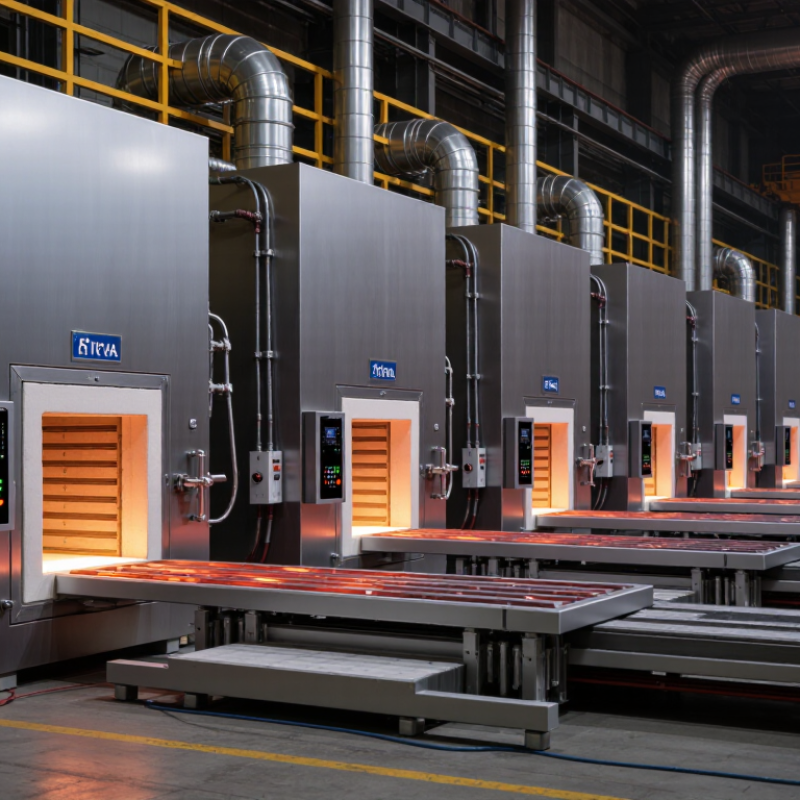
Electra heat treat furnaces are industrial systems designed to change metal properties through controlled heating and cooling. They support processes such as annealing, hardening, tempering, and stress relieving. Electric heating elements provide stable temperatures across the working chamber. This consistency helps manufacturers produce repeatable results.

In automotive plants, these furnaces treat gears, shafts, brake components, and fasteners. Aerospace workshops use them for carefully specified alloy parts. Toolmakers also depend on accurate temperature control for dies and cutting tools. A programmable controller records heating rates, holding times, and cooling cycles. Protective atmospheres can reduce oxidation and surface discoloration. The correct chamber size matters too. An oversized furnace may waste energy, while a crowded load can heat unevenly.

Operators should inspect thermocouples, insulation, door seals, and airflow regularly. Calibration records support reliable production and safer decisions. Small deviations can affect hardness. A small mistake matters. In practice, loading patterns often cause unexpected variation, even when the controller appears accurate. Engineers should review test results, part placement, and cooling conditions instead of trusting one reading. Energy efficiency also depends on maintenance, batch planning, and suitable furnace insulation. Supplier evaluations should include technical support, spare parts, documented testing, and compliance with applicable industrial standards. The cheapest system may not deliver the lowest operating cost.

Criteria for Evaluating Global Electra Furnace Suppliers

Top 10 Electra Heat Treat Furnace Suppliers Worldwide

Evaluating global furnace suppliers requires more than comparing purchase prices. Process heating represents about 17% of total U.S. energy consumption, according to the U.S. Department of Energy. Ask suppliers for measured energy use, temperature uniformity, heat-up time, and recovery performance. Request test records from a load similar to yours. A polished brochure is not enough.

Quality evidence should be practical and traceable. The ISO Survey 2023 reported more than 1.26 million ISO 9001 certificates worldwide. Certification supports confidence, but it does not prove furnace accuracy. Check calibration records, control-system validation, spare-parts availability, and technician response times. Review at least three customer references in comparable industries. Small details matter, especially during an overnight production run.

Energy and compliance deserve equal attention. The International Energy Agency reports that industry uses roughly 37% of global final energy. Compare insulation design, power-factor performance, emissions controls, and maintenance requirements. Ask whether the quoted efficiency includes the full operating cycle. It often does not. Suppliers should also explain cybersecurity safeguards for connected controls and provide realistic installation schedules. I would score service capability beside technical specifications, although weighting both equally may not fit every factory. A low-cost furnace can become expensive when training, downtime, and imported components are overlooked.

Top Electra Heat Treat Furnace Suppliers by Market and Capability

Supplier strength changes by market, not just by furnace size. North American buyers often prioritize aerospace traceability, recipe security, and qualification support. European projects place heavier weight on emissions, heat recovery, and electrical efficiency. Asian production sites may favor continuous lines, fast loading, and local service coverage. These differences make a universal top-ten list unreliable. It is imperfect.

Capability separates serious suppliers from catalog sellers. Vacuum systems suit reactive alloys and clean aerospace work. Controlled-atmosphere furnaces support carburizing, nitriding, and repeatable batch production. Continuous mesh-belt and roller-hearth designs fit high-volume automotive, fastener, and steel applications. Modern controls should record temperature uniformity, alarms, power use, and operator access. ISO 13579-1 offers a useful framework for evaluating industrial furnace energy performance.

The International Energy Agency reported that industry consumed about 37% of global final energy in 2022. Efficiency is not a cosmetic feature. The U.S. Department of Energy also identifies process heating as roughly 61% of manufacturing energy consumption. Buyers should request load profiles, uniformity surveys, spare-parts lead times, and audited reference projects. Installation voltage, local safety codes, technician training, and maintenance response also matter. A lower purchase price can hide weak insulation or expensive downtime. That lesson is easy to miss.

Top 10 Electra Heat Treat Furnace Suppliers Worldwide — Market and Capability Overview

This chart compares representative maximum operating temperatures across the main industrial heat-treatment furnace categories commonly covered by leading global suppliers. The values reflect established engineering ranges and are shown without company or brand-level data.

Comparing Furnace Designs, Technologies, and Service Support

Comparing the leading ten heat-treat furnace suppliers requires more than checking maximum temperature. Design changes everything. Batch furnaces suit flexible production, while continuous systems reduce handling for stable, high-volume lines. Vacuum designs limit oxidation and improve surface quality. Controlled-atmosphere furnaces may lower scaling, but they demand precise gas monitoring and operator training.

The U.S. Department of Energy reports that process heating represented about 51% of manufacturing energy use in its 2017 Bandwidth Study. This makes insulation, heat recovery, and accurate controls important purchasing criteria. Electric resistance systems offer clean, repeatable heating at the point of use. Gas-fired systems can remain practical for large chambers and rapid throughput.

However, electricity prices, grid capacity, and local emissions rules can change the calculation. A spreadsheet cannot predict every factory condition.

Service support deserves equal attention. Request temperature-uniformity records, calibration procedures, commissioning plans, and response-time targets. ISO 13574 and AMS2750-based practices can help buyers assess measurement discipline, although certification alone proves little. The International Energy Agency identifies industrial efficiency and electrification as major decarbonization opportunities in its Energy Technology Perspectives 2024. Remote diagnostics may shorten downtime, but weak cybersecurity controls create another risk. Spare heating elements, sensors, seals, and control modules should be locally available. Service is measurable. I would also question optimistic energy-savings claims, especially when suppliers omit loading patterns and maintenance conditions.

Selecting the Right Electra Furnace Supplier for Your Requirements

Selecting the right electric heat-treat furnace supplier requires more than comparing purchase prices. MarketsandMarkets’ 2024 Industrial Furnaces report estimates the market could grow from about USD 14.4 billion in 2023 to USD 19.4 billion by 2028. This growth increases supplier choice, but quality varies widely. Ask for verified temperature-uniformity data, calibration records, and applications matching your alloy, load size, and process temperature.

Look closely at control accuracy. AMS2750H remains a key reference for aerospace pyrometry, while ISO 13579-11 supports energy-performance evaluation for industrial furnaces. A dependable supplier should explain sensor placement, ramp rates, atmosphere control, and alarm behavior without hiding behind technical language. Request a test report using your actual workload. Empty-chamber results can look impressive.

Service capability matters after installation. The U.S. Department of Energy identifies maintenance, insulation, and process control as practical routes to industrial energy savings. Check spare-part availability, remote diagnostics, technician response times, and training materials. Ask how energy use is measured per batch. Small details matter. I would not trust a supplier offering only a glossy efficiency percentage. Real production contains door openings, uneven loading, and operator mistakes. A pilot run may expose weaknesses early. Budget models often ignore downtime, which is a costly oversight.


Powder Coat Booths

For those larger-sized parts, or smaller quantity runs, we have 2 independent powder coat booths and ovens. The quality, durability and affordability of today’s powder coating finishes make this the process of choice for world-class companies.

Powder coating advantages over other forms of coating are many. Materials used in the Powder coating process can be metals and non-metals that come in a multitude of thicknesses, textures, colors, etc. Another of Powder coating’s biggest advantages over conventional coatings is its ability to create finishes in many different textures. Powder Coating Booths allow us the ability to apply these advantages to large products.

Wet Paint Line

Tri-State Fabricators runs a full-service conveyor line for painting. Wet painting can provide protection or decoration to many different part styles. From start to finish, every project is easier to undergo random and point-based inspection by our skilled painting team.

Advantages to our Wet Paint Line are these lines start with product prep and ends with a thorough inspection of a high quality finished product. Our ability to complete large and small projects with a superior finish and doing so in a timely and economical fashion. This passes along the savings in production to our customers. When powder coating ins not an option, our Wet Paint Line gets the job done right the first time.

Wet Paint Booths

When the parts get big and heavy we roll-out our custom paint racks and oversize booth. By utilizing our partnerships with all the major paint brands, we can match virtually any color with wet paint.

The advantages of having access to a Wet Paint Booth are many. Large projects of many different shapes can be loaded into the booth. The Wet Paint Booth offers an environment that is much more controlled than a typical parts painting operation.

Not only are they used because of their controlled environment, but they’re are also advantageous when it comes to applying paint to parts that are needed in industries that require specialty coatings such as medical, aerospace, etc.

Military CARC

Our military forces have some very high standards when it comes to the finish of their vehicles and equipment. From the first pre-treatment step to final coat, it takes a great deal of knowledge and experience to protect the men and women of our armed forces. They deserve only the best, and Tri-State Fabricators provides it.

All of our processes are closely monitored by our staff and management teams. Both of which are highly trained in the processes of metal fabrication and finishing. Tri-State Fabricators’ goal is to always fully satisfy each and every customer, including the military. We will always put a 110% into what we do.

Glass-Bead Blasting

Abrasive media blasting is an excellent way to remove old paint, rust, and increase the paint/powder adhesion. Glass beads produce a much smoother and brighter finish than angular abrasives; leaving the part clean yet without any dimensional change. Chemically inert and environmentally friendly, we can recycle our beads approximately 30 times; making them a more preferred method of metal cleaning or surface finishing.

Advantages to Glass Bead Blasting are many. Glass bead blast media is used when a project is needing rough surfaces need to become smooth for applications of coatings such as paint. It is typically used to clean paint and rust from a product surface without deforming the surface it is being used on. Overall, compared to many other blasting media, Glass Bead Blasting is a very economical choice and those savings are always passed on to our customers.

Part Washing

Tri-State Fabricators utilize a zinc phosphate wash to clean and etch the material to ensure the best paint adhesion possible. The unique design of our 3-stage wash system does the work like a 5-stage. From Cleaning and rinsing to conversion coating and post-treatment, Our Part Washing process is a complete service and works throughout the fabrication service and the finishing service.

Along with the previously mentioned benefits, Curing is a vital chemical reaction that leaves the product finish hard and relatively safe from mild abrasion and aggressive corrosion. This process can be done in more than one way; ambient air-dry or in curing ovens at temps that exceed 240°.

Burn-Off Oven

From fixing paint mistakes (someone else’s of course) to simply cleaning our paint line hooks, our burn-off oven is put to good use. After a quick burn-off, a little clean up, and a fresh coat of paint, your parts will look better than new.

Why does our Burn-Off Oven work so well? Because super heating the air around parts turns the materials into ashes. From paint and powder coatings to rubber and machining oils, high temps do the job without degrading the integrity of the part.

Masking

Masking is a vital part of producing high quality products. We have die-cut masking patterns to protect machined surfaces as well as a wide range of plugs and caps to protect threaded holes and bolts. We provide permanent and temporary masking.

Masking allows the selected sections of a product to be protected from a fabrication or finishing service. This can be with both chemicals when etching and tapes, paints when only finishing just a section of the product. Masking is great in aiding the customization process of a project.

Screen Printing

Screen printing is a photographic process that transfers artwork onto a porous nylon screen which allows colored ink to flow through the screen and be deposited on an aluminum or plastic component. We can generally have just about any design created onto a screen for your parts.

Some of the advantages of Screen Printing are, brand recognition for your business displaying on your products, assembly instructions, product warnings/hazards, etc. Tri-State Fabricators produces Screen Printing of the highest quality so you know it’s durable.

Metal Finishing

Metal Finishing is the art of treating the exterior portion of product, often metal but can also be made of other materials, so that the surface is clean and free of any debris. Then the process of applying coats or either paint of powder coat takes place. This coating process improves the quality of the product in both appearance and resistance to wear and corrosion.

Tri-State Fabricators, Inc., understands that a project typically isn’t complete until a high-quality finish has been added to your product. This is why our painting and powder coating teams continuously inspect the products throughout the Metal Finishing process.


