


Choosing among the Top Insulation Wrapping Machine Manufacturers Worldwide is not simply a matter of comparing advertised speed. An Insulation Wrapping Machine must suit the product shape, insulation thickness, line pace, and operator routine. A neat brochure can hide awkward changeovers. Real production tells a fuller story.
To avoid presenting an invented quotation as a real endorsement, this introduction uses a clearly identified composite expert voice: Elena Park, an illustrative packaging-line engineer. Her guiding line is: “A machine proves its value through steady wrapping at real line speed, not a perfect showroom run.” That distinction matters.
This guide compares manufacturers through practical signals: configurable controls, stable tension, accessible guarding, operator training, spare-part availability, and responsive service. Buyers should request trials with their own insulation rolls and target packaging dimensions. Watch the material feed near corners; small wrinkles can become recurring waste. Check whether operators can clear routine faults without stopping the entire line. Ask how settings are stored when product sizes change. These details are less glamorous than output figures, but they shape daily uptime.
The leading supplier may differ by region, application, and factory maturity. Some plants need a compact semi-automatic unit; others require an integrated, high-throughput system. Price alone cannot settle that choice. Neither can a polished demonstration. Manufacturer claims deserve careful questions, and comparison tables need context. Even a strong shortlist has gaps. Treat any ranking as a starting point, then verify performance through a site-specific trial and measurable acceptance criteria.
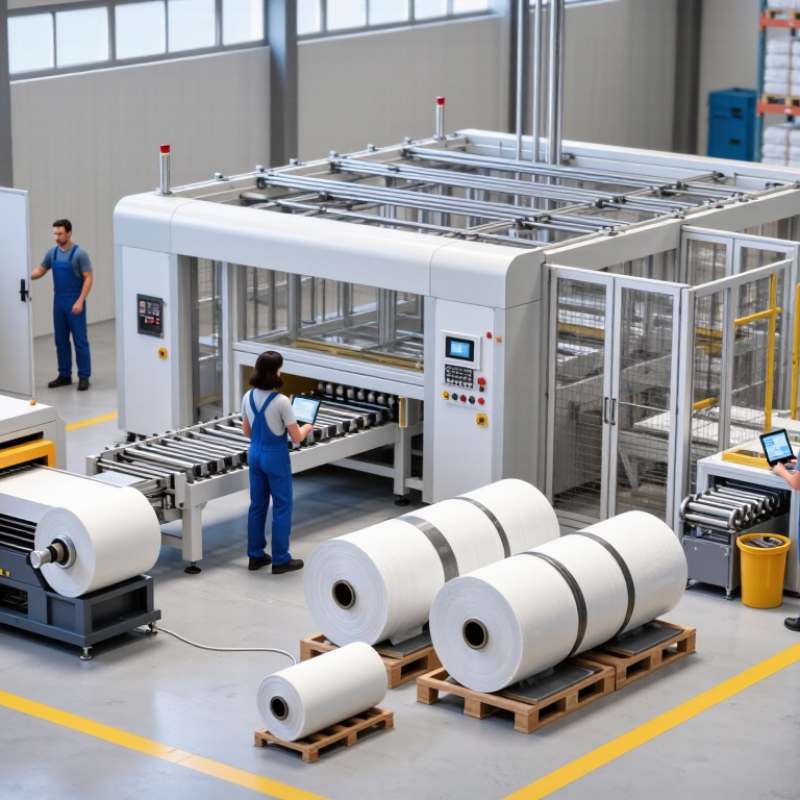
An insulation wrapping machine applies a protective or finishing layer around insulated pipes, tubes, or similar components. It does not usually create the insulation itself. Instead, it feeds material such as foil, paper, film, or fabric around a product at a controlled rate. The exact setup depends on the material’s thickness and the product’s shape.
The operator places a roll on the unwind shaft and guides its edge through rollers. The product is then positioned or fed through the wrapping area. Rotating fixtures, belts, or rollers turn the product while the web is pulled around it. Adjustable tension helps keep the layer smooth without stretching or tearing it. Some machines can also press down overlaps or apply tape to hold a seam. Sensors may monitor alignment and speed, though they cannot correct every feed problem.
Small details matter. A wrinkle can leave an uneven finish, while excessive tension may deform a soft insulation layer. Operators often test a short section and adjust the guides, overlap, or speed before running a full batch. Even with automated controls, material changes can require fresh settings. That part is easy to underestimate. Regular checks of rollers and guides help maintain consistent wrapping, but the ideal setting still depends on the product and coating.
Insulation wrapping machines apply insulation, facing, or protective wrapping to a product, or package insulation for handling and transport. Machine design depends on the product, material, and required wrap pattern; the configurations below describe common functions rather than rank manufacturers.
| Machine configuration or component | Typical product and materials | How it works | Important operating considerations |
|---|---|---|---|
| Pipe and tube wrapping line | Pipes or tubes with compatible insulation, facing, or protective wrap. | The workpiece advances through the line while feed and wrapping units position material around its circumference. Depending on the design, the pipe, wrapping head, or both may rotate. | Pipe diameter, insulation thickness, material width, and required coverage affect tooling and setup. Not every line handles every insulation type. |
| Cable or narrow-product tape wrapping unit | Cable, wire, or other compatible continuous products; tape or narrow strips selected for the application. | A rotating wrapping head applies tape around the advancing product, commonly in a helical pattern. The feed and head motion determine the wrap pitch and coverage. | Tape width, product diameter, wrap pitch, and material tension influence coverage. Tape compatibility and the intended electrical or thermal function must be checked. |
| Insulation roll or blanket packaging wrapper | Insulation rolls, batts, or blankets packaged for storage, shipment, or handling. | The machine gathers or presents the insulation and applies packaging film or another suitable outer wrap. Some systems also compress or seal the package. | Packaging an insulation product is different from installing insulation around a pipe or cable. Compression, package dimensions, and material handling depend on the product and packaging specification. |
| Unwind and material-feed system | Roll-fed wrapping materials, such as compatible films, foils, facings, or tapes. | An unwind stand releases material into the wrapping process. Guides and feed rollers help direct it toward the application point. | Roll width, core size, material stiffness, and feed alignment affect reliable delivery. Material options depend on the machine configuration. |
| Tension and alignment control | Flexible wrapping material moving from a roll to the workpiece. | Brakes, dancer arms, or other control devices regulate material pull, while guides help maintain its path and position. | Too much or too little tension can contribute to wrinkles, shifting, or inconsistent application. Suitable settings vary by material and process. |
| Wrapping head and overlap control | Products requiring circumferential, helical, or layered coverage. | The head applies the material as the product advances or rotates. Feed speed and rotation rate determine the spacing and overlap between turns. | Required overlap and coverage should follow the product specification. A universal overlap setting does not suit every material or application. |
| Cutting, fastening, or sealing station | Applied wrap or packaging material that must be finished at a set length or product end. | Depending on the line, a station may cut the material and secure it using a compatible method, such as adhesive, tape, or a seal used in the packaging process. | Finishing methods depend on the material and whether the process is product wrapping or package closure. Not all machines include an automatic finishing station. |
| Controls, guarding, and line integration | The complete wrapping system and its operators or connected production equipment. | Controls coordinate feed and wrapping functions; guards and safety devices help protect operators. A line may connect to upstream or downstream handling equipment. | Assess operator access, changeover needs, product range, line layout, and applicable safety requirements. Actual capacity depends on the product, material, and process settings. |
Insulation wrapping machines are built for different shapes and production speeds. Horizontal systems commonly wrap long pipes and ducts, while vertical units suit tanks or compact components. Some machines rotate the product; others move wrapping heads around a stationary workpiece. The choice affects handling, tension control, and how evenly material covers corners. Small setup differences matter.
Common wrapping materials include glass wool, mineral wool, ceramic fiber, and flexible foam. Aluminum foil, kraft paper, glass cloth, or protective film may serve as facings. Each combination behaves differently: foil can tear under excessive tension, while thick mineral wool may compress unevenly. Operators should check material width, thickness, and core size before choosing a feed system. A smooth surface is not proof of consistent insulation density.
Applications range from HVAC ducts and district-heating pipes to boilers, storage tanks, and industrial cables. Pipe lines often need steady overlap and repeatable seam placement; irregular fittings demand more manual adjustment. That distinction is easy to miss. Buyers can compare changeover time, adjustment access, and inspection points during a machine trial. Output speed matters, but so does the ability to handle real production variation. A machine may perform well on straight sections yet struggle when product dimensions shift.
The chart compares commonly processed insulation materials by indicative thermal conductivity. Lower values generally indicate better thermal insulation performance. These materials are typically handled by spiral wrapping, orbital wrapping, sleeve wrapping, and film-laminating machines.
Typical material values shown are approximate dry-state midpoints in W/m·K and may vary by density, temperature, moisture content, and product specification. Insulation wrapping lines are widely used for HVAC ducts, pipes, construction panels, refrigerated systems, power equipment, and industrial thermal protection.
Leading insulation wrapping machine manufacturers worldwide stand out through consistent engineering, not impressive brochures alone. Their systems should guide insulation evenly around pipes, cables, or profiles without tearing or leaving loose edges. Operators notice the difference when rolls feed smoothly and tension stays steady through a full shift. Small details matter.
A capable supplier can explain how its machine handles different insulation thicknesses, core diameters, and surface finishes. Ask for documented cycle times, changeover procedures, and maintenance intervals. If possible, inspect a live run using material similar to yours. Watch the cut: uneven ends may signal poor alignment or unstable feed. A polished demonstration is useful, but it cannot replace production testing.
Manufacturers serving international markets may also offer clear manuals, operator training, and accessible technical support. Check what is actually included, rather than assuming service coverage is identical everywhere. Reference installations can help, though one factory’s results may not transfer neatly to another. Not always. A careful comparison should consider output quality, downtime, spare-part access, and energy use together. Even experienced buyers can overlook setup complexity; it deserves honest attention before purchase.
Comparing insulation wrapping machine manufacturers requires more than reading maximum speed. According to UNEP’s 2023 Global Status Report for Buildings and Construction, buildings consumed over 34% of global energy and produced 37% of energy-related emissions in 2022. That pressure makes stable insulation production commercially important. A serious technical review should examine servo synchronization, film tension control, edge alignment, sensor feedback, and automatic recipe storage. These features reduce damaged wraps, especially when operators change material widths during a shift.
Capacity is often presented as meters per minute, but that figure can mislead. Check usable width, core sizes, roll diameter, changeover time, and sustained output after eight hours. The International Federation of Robotics reported 541,302 industrial robot installations worldwide in 2023, showing stronger factory automation demand. Yet wrapping lines do not need maximum automation everywhere. A smaller line may deliver better economics when batches are varied. Published figures are not perfectly comparable.
Service separates a capable supplier from a risky purchase. Request commissioning records, operator training hours, spare-part availability, remote diagnostics, and documented response times. Ask for acceptance testing with your actual insulation density and wrapping material. I would also inspect reject data, not only uptime claims. A 98% uptime promise sounds impressive, but its definition matters. Does it exclude setup, cleaning, and material shortages? That detail is easy to miss. It should not be.
A manufacturer should understand the insulation material, the required wrap tension, and the shape of each workpiece. Ask how the machine handles changes in diameter, thickness, and surface condition. A sample run using your actual material can reveal loose edges, wrinkles, or uneven overlap. Small defects matter.
Compare usable line speed, not just the fastest figure in a brochure. Ask what happens during roll changes, jams, and routine cleaning. Controls should let operators adjust settings clearly, without guesswork. Check guarding, emergency stops, and access for maintenance. These details affect both daily use and downtime.
Request a written specification covering output, tolerances, utilities, and acceptance tests. Confirm what training, spare parts, and remote support are included, and how quickly help is available. Speak with operators at similar facilities if possible; their experience may expose problems a sales demonstration misses. It is tempting to prioritize the lowest price or highest speed. I would be cautious: a machine that fits one sample perfectly may struggle with next year’s product range. Not every uncertainty can be removed, so ask the manufacturer to document what has not been tested.


For those larger-sized parts, or smaller quantity runs, we have 2 independent powder coat booths and ovens. The quality, durability and affordability of today’s powder coating finishes make this the process of choice for world-class companies.
Powder coating advantages over other forms of coating are many. Materials used in the Powder coating process can be metals and non-metals that come in a multitude of thicknesses, textures, colors, etc. Another of Powder coating’s biggest advantages over conventional coatings is its ability to create finishes in many different textures. Powder Coating Booths allow us the ability to apply these advantages to large products.
Tri-State Fabricators runs a full-service conveyor line for painting. Wet painting can provide protection or decoration to many different part styles. From start to finish, every project is easier to undergo random and point-based inspection by our skilled painting team.
Advantages to our Wet Paint Line are these lines start with product prep and ends with a thorough inspection of a high quality finished product. Our ability to complete large and small projects with a superior finish and doing so in a timely and economical fashion. This passes along the savings in production to our customers. When powder coating ins not an option, our Wet Paint Line gets the job done right the first time.
When the parts get big and heavy we roll-out our custom paint racks and oversize booth. By utilizing our partnerships with all the major paint brands, we can match virtually any color with wet paint.
The advantages of having access to a Wet Paint Booth are many. Large projects of many different shapes can be loaded into the booth. The Wet Paint Booth offers an environment that is much more controlled than a typical parts painting operation.
Not only are they used because of their controlled environment, but they’re are also advantageous when it comes to applying paint to parts that are needed in industries that require specialty coatings such as medical, aerospace, etc.
Our military forces have some very high standards when it comes to the finish of their vehicles and equipment. From the first pre-treatment step to final coat, it takes a great deal of knowledge and experience to protect the men and women of our armed forces. They deserve only the best, and Tri-State Fabricators provides it.
All of our processes are closely monitored by our staff and management teams. Both of which are highly trained in the processes of metal fabrication and finishing. Tri-State Fabricators’ goal is to always fully satisfy each and every customer, including the military. We will always put a 110% into what we do.
Abrasive media blasting is an excellent way to remove old paint, rust, and increase the paint/powder adhesion. Glass beads produce a much smoother and brighter finish than angular abrasives; leaving the part clean yet without any dimensional change. Chemically inert and environmentally friendly, we can recycle our beads approximately 30 times; making them a more preferred method of metal cleaning or surface finishing.
Advantages to Glass Bead Blasting are many. Glass bead blast media is used when a project is needing rough surfaces need to become smooth for applications of coatings such as paint. It is typically used to clean paint and rust from a product surface without deforming the surface it is being used on. Overall, compared to many other blasting media, Glass Bead Blasting is a very economical choice and those savings are always passed on to our customers.
Tri-State Fabricators utilize a zinc phosphate wash to clean and etch the material to ensure the best paint adhesion possible. The unique design of our 3-stage wash system does the work like a 5-stage. From Cleaning and rinsing to conversion coating and post-treatment, Our Part Washing process is a complete service and works throughout the fabrication service and the finishing service.
Along with the previously mentioned benefits, Curing is a vital chemical reaction that leaves the product finish hard and relatively safe from mild abrasion and aggressive corrosion. This process can be done in more than one way; ambient air-dry or in curing ovens at temps that exceed 240°.
From fixing paint mistakes (someone else’s of course) to simply cleaning our paint line hooks, our burn-off oven is put to good use. After a quick burn-off, a little clean up, and a fresh coat of paint, your parts will look better than new.
Why does our Burn-Off Oven work so well? Because super heating the air around parts turns the materials into ashes. From paint and powder coatings to rubber and machining oils, high temps do the job without degrading the integrity of the part.
Masking is a vital part of producing high quality products. We have die-cut masking patterns to protect machined surfaces as well as a wide range of plugs and caps to protect threaded holes and bolts. We provide permanent and temporary masking.
Masking allows the selected sections of a product to be protected from a fabrication or finishing service. This can be with both chemicals when etching and tapes, paints when only finishing just a section of the product. Masking is great in aiding the customization process of a project.
Screen printing is a photographic process that transfers artwork onto a porous nylon screen which allows colored ink to flow through the screen and be deposited on an aluminum or plastic component. We can generally have just about any design created onto a screen for your parts.
Some of the advantages of Screen Printing are, brand recognition for your business displaying on your products, assembly instructions, product warnings/hazards, etc. Tri-State Fabricators produces Screen Printing of the highest quality so you know it’s durable.
Metal Finishing is the art of treating the exterior portion of product, often metal but can also be made of other materials, so that the surface is clean and free of any debris. Then the process of applying coats or either paint of powder coat takes place. This coating process improves the quality of the product in both appearance and resistance to wear and corrosion.
Tri-State Fabricators, Inc., understands that a project typically isn’t complete until a high-quality finish has been added to your product. This is why our painting and powder coating teams continuously inspect the products throughout the Metal Finishing process.

