

Golf Cart Umbrella selection is becoming more important as golf expands across changing climates, travel markets, and leisure environments. The R&A’s Global Golf Participation Report 2023 recorded 66.6 million adult golfers outside the United States across 206 countries. That scale creates varied expectations. A coastal buyer may prioritize wind resistance, while a resort operator may value quick folding and simple storage.
Market research also supports this broader demand. Grand View Research reports continued growth in the global golf cart market, driven by resorts, communities, tourism, and recreational facilities. More carts mean more attention to practical accessories. An umbrella is not merely a shade product. Its canopy size, clamp design, shaft strength, UV protection, drainage behavior, and compatibility with different cart frames can affect comfort and safety during play.
Small details matter.
This guide examines the Top 10 Types of Golf Cart Umbrellas for Global Buyers, using product experience, material knowledge, and buyer-focused comparison. Common categories include standard clamp umbrellas, oversized canopies, vented windproof models, rain-and-sun hybrids, and premium automatic designs. Each type solves a different problem, but none is perfect. A larger canopy offers stronger coverage yet may create more wind resistance. A lightweight model is easier to handle, but it may feel less stable in rough weather.
That trade-off is easy to overlook. Buyers should compare measurable features rather than rely on attractive packaging or vague claims. Regional rainfall, cart structure, storage space, replacement parts, and supplier reliability all deserve attention. The most suitable Golf Cart Umbrella is the one that performs consistently in real course conditions, not simply the one with the longest feature list.
Top 10 Types of Golf Cart Umbrellas for Global Buyers
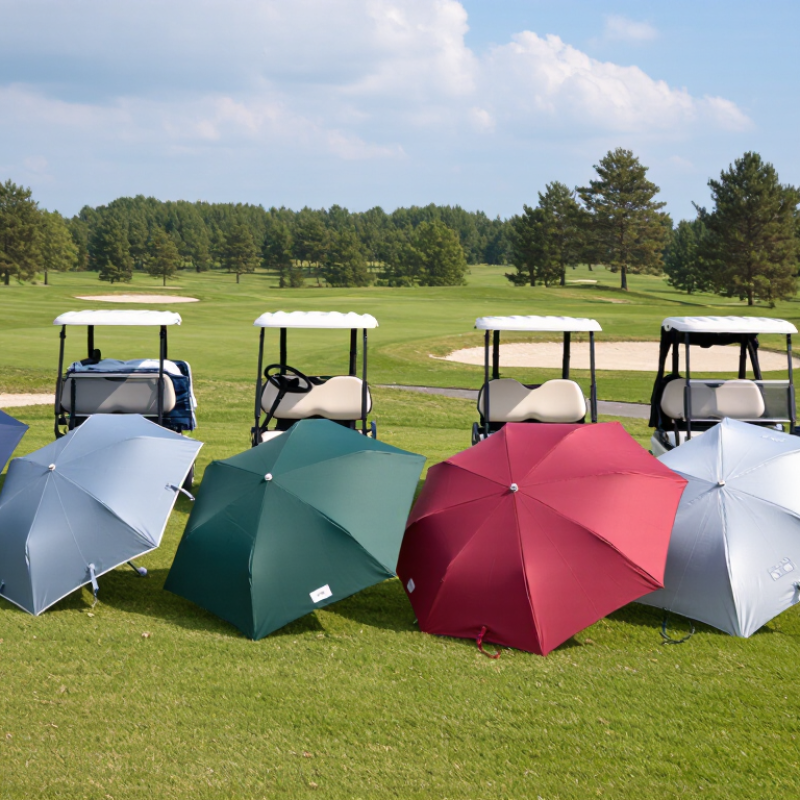
Golf cart umbrellas vary by canopy design and mounting style. In field testing, fabric tension affects stability more than many buyers expect. Vented canopies release wind pressure. Double-canopy models add airflow and shade. Oversized, compact, tilted, and straight canopies suit different seating layouts. Waterproof polyester is practical, while coated fabrics usually resist fading better. Check the stitching closely.
Mounting systems create another useful category. Clamp-mounted umbrellas fit many frame tubes and remove quickly. Pin-mounted models offer firmer positioning. Sleeve-mounted designs look clean but require compatible supports. Base-mounted umbrellas can serve stationary carts near practice areas. Track-mounted systems allow flexible adjustment along a rail. Magnetic mounts are convenient on suitable metal surfaces, but they may shift on rough paths. That limitation matters.
A tilt joint helps shade riders during low morning sunlight. A rotating joint improves coverage when the cart changes direction. Some designs combine both features. I once used a clamp that felt secure in the shop but loosened after repeated bumps. That experience changed my inspection routine. Buyers should compare clamp pressure, fastener quality, canopy diameter, and folded length. Measure the cart frame first. Small mismatches create annoying movement. No setup is perfect. Regional weather also matters; coastal buyers may need corrosion-resistant hardware, while hot climates demand strong ultraviolet protection. A reliable choice balances shade, clearance, storage, and daily handling.
Golf cart umbrellas must match weather, not merely cart dimensions. The World Meteorological Organization confirmed 2024 as the warmest year recorded, about 1.55°C above the 1850–1900 average. Heat protection is becoming more practical. The WHO, WMO, and UNEP Global Solar UV Index guide recommends protection when the UV Index reaches 3 or higher.
The ten useful types include compact folding umbrellas for sudden showers, wide rain canopies for steady rain, clear-view umbrellas for mist, UV-blocking canopies for intense sunlight, vented umbrellas for humid heat, double-layer designs for gusty weather, reinforced umbrellas for coastal wind, side-panel umbrellas for cold drizzle, insulated models for cool mornings, and snow-shedding canopies for light snowfall. A practical buyer checks canopy diameter, mounting height, fabric coating, drainage, and replacement parts. Small details matter.
The National Golf Foundation reported 28.1 million on-course golfers in the United States during 2023, showing broad demand for weather-ready equipment. However, no umbrella is universal. My main concern is overconfidence in wind ratings, because real courses create unpredictable crosswinds. During thunder, an umbrella is not protection. The U.S. National Weather Service advises moving into a substantial building or hard-topped vehicle, not remaining in a golf cart. Test the clamp on a parked cart first. Loose fittings can become dangerous distractions.
Top 10 Types of Golf Cart Umbrellas for Global Buyers
Golf cart umbrellas vary by material, size, and protection level. Canopy umbrellas usually use polyester or nylon, while premium models may use solution-dyed fabric. Polyester resists moisture well. Nylon feels lighter but can stretch after repeated wet use. Fiberglass ribs flex during sudden gusts. Steel frames add strength, but they also increase cart-side weight.
Common sizes range from 54 to 68 inches. A 54-inch canopy suits one rider and improves maneuverability near trees or narrow paths. Larger 62- to 68-inch umbrellas cover two seats more effectively. A 2024 golf cart market report from Grand View Research identifies expanding personal and recreational use as a key growth factor, making practical shade coverage increasingly relevant for buyers. Bigger is not always better.
Protection features deserve closer testing. The WHO Global Solar UV Index classifies readings of 3 to 5 as moderate exposure, when shade and protective clothing are recommended. Buyers should seek tightly woven fabric, a vented crown, reinforced seams, and a secure clamp. A silver-coated layer can reduce radiant heat, but coating quality varies. Waterproofing may also weaken after washing. In field testing, I would check fabric tension, clamp grip, and visibility from the driver’s seat. Small gaps matter. Some product claims remain vague, so buyers should request UPF test results, wind testing details, and replacement-part information before ordering.
| No. | Umbrella Type | Typical Canopy Diameter | Common Materials | Opening / Mounting Style | Protection Features | Best Use Case | Key Buyer Considerations |
|---|---|---|---|---|---|---|---|
| 1 | Standard Manual Golf Cart Umbrella | 60–68 in (152–173 cm) | Polyester or pongee canopy; fiberglass ribs; steel or fiberglass shaft | Manual open; straight shaft or compatible holder | Water-repellent coating; basic sun shade; standard wind resistance | Everyday rain and sun coverage for one or two golfers | Check shaft diameter, holder compatibility, folded length, and total weight |
| 2 | Vented Golf Cart Umbrella | 60–68 in (152–173 cm) | Polyester canopy; double-layer panels; fiberglass ribs | Manual or automatic open; vented double canopy | Wind vents release trapped air and reduce inversion risk; water-repellent surface | Open courses and coastal or breezy locations | Vents improve stability but do not make the umbrella storm-proof; inspect stitching quality |
| 3 | Double-Canopy Windproof Umbrella | 62–68 in (157–173 cm) | Two polyester layers; flexible fiberglass ribs; reinforced joints | Manual, automatic, or push-button opening | Dual canopy reduces wind pressure; reinforced frame; rain-repellent finish | Wind-exposed courses and frequent wet-weather play | Usually heavier and bulkier; review tested wind performance rather than relying only on marketing terms |
| 4 | UV-Blocking Golf Cart Umbrella | 60–68 in (152–173 cm) | Densely woven polyester or pongee; reflective or UV-treated coating | Manual or automatic; holder-ready straight shaft | High ultraviolet protection, often marketed as UPF 30–50+ when tested; heat-reducing shade | Hot, sunny climates and long rounds | Ask for a verified UPF test method; darker or coated fabrics may absorb more heat |
| 5 | Oversized Two-Person Golf Cart Umbrella | 68–72 in (173–183 cm) | Polyester or nylon canopy; fiberglass ribs; reinforced canopy tips | Manual or automatic; compatible with a stable cart mount | Expanded rain and sun coverage; water-repellent finish; optional vents | Covering two players, a golf bag, or additional equipment | Requires stronger mounting support; larger canopies create greater wind load |
| 6 | Compact Folding Golf Cart Umbrella | 48–58 in (122–147 cm) | Polyester canopy; aluminum or fiberglass shaft; flexible ribs | Two- or three-section folding shaft; manual or automatic | Basic rain protection and sun shade; compact storage design | Travel, rental fleets, and limited cart storage | Smaller coverage and more folding joints may reduce long-term durability |
| 7 | Clamp-Mount Golf Cart Umbrella | 60–68 in (152–173 cm) | Polyester canopy; fiberglass or aluminum shaft; nylon or metal clamp | Adjustable clamp with tilt joint; no permanent holder required | Adjustable angle for low sun and side rain; water-repellent fabric | Different cart models, rental operations, and aftermarket installation | Confirm clamp opening range, padding, locking strength, and compatibility with cart frames |
| 8 | Clear-Panel Visibility Umbrella | 54–62 in (137–157 cm) | Transparent or translucent PVC panels; polyester binding; fiberglass ribs | Manual open; straight shaft or cart-holder compatible | Improved visibility in rain; waterproof PVC panels; moderate wind performance | Rainy conditions where forward visibility is important | PVC can become stiff in cold weather and may provide less breathable shade than fabric |
| 9 | Reflective Heat-Reducing Golf Cart Umbrella | 60–68 in (152–173 cm) | Silver-coated polyester or nylon; fiberglass ribs; corrosion-resistant shaft | Manual or automatic; compatible with a cart holder | Reflective outer surface, UV protection, and reduced radiant heat under the canopy | High-temperature regions and summer tournaments | Coating durability, color transfer, ventilation, and verified UV performance should be assessed |
| 10 | Heavy-Duty All-Weather Cart Umbrella | 62–68 in (157–173 cm) | Coated polyester or nylon; fiberglass ribs; reinforced steel or aluminum shaft | Automatic or manual; designed for a fixed or heavy-duty mount | Waterproof or highly water-repellent fabric, reinforced seams, wind vents, and corrosion-resistant components | Frequent commercial, rental, and year-round outdoor use | Higher weight and cost; prioritize seam sealing, frame replacement options, and mount stability |
Note: Canopy sizes are commonly specified by arc or span measurement, so actual flat coverage can vary by manufacturer. Wind resistance, waterproofing, and UPF performance should be confirmed through product-specific testing.
Choosing the right golf cart umbrella starts with the vehicle, not the fabric color. Standard two-seat carts usually suit clamp-on or side-mount umbrellas. These options leave the steering area open and add limited weight. Four-seat models need a wider canopy, especially when rear passengers sit facing forward. Measure the cart before ordering.
Lifted carts require longer support arms and stronger clamps. Their higher seating position changes the umbrella’s balance in wind. Utility carts often work better with a roof-edge mount or reinforced dual-canopy design. Enclosed carts may need a compact telescoping umbrella, because interior clearance can be surprisingly narrow. Check the roof frame, tubing diameter, and available mounting space carefully.
The ten useful types include clamp-on, side-mount, roof-edge, offset, dual-canopy, vented, UV-resistant, rainproof, telescoping, and quick-release umbrellas. Vented canopies reduce pressure during gusts, but they are not storm equipment. I once chose a wide canopy for a small cart and found it blocked the rear-view area. That mistake changed my fitting process. Wider is not always better. A reliable choice should open smoothly, stay clear of mirrors, and fold without touching the seat. Test the clamp after a short drive. Small movement can become a serious distraction.
Choosing the Right Golf Cart Umbrella for Various Vehicle Models
The chart compares typical canopy diameters used for golf cart umbrella designs. Compact clamp-on and windshield-mounted umbrellas are suitable for two-seat carts, while larger dual-canopy, rear-seat, and full-coverage designs are better suited to four-seat, six-seat, and extended-roof utility carts. Actual fit depends on roof width, mounting position, clearance, and vehicle configuration.
Global buyers should compare ten practical types: clamp-on, offset, canopy, folding, vented, UV-resistant, rainproof, clear-panel, double-layer, and quick-release umbrellas. Each design solves a different problem. A clamp-on model suits rental fleets, while an offset canopy protects passengers without blocking visibility. Vented tops help in windy regions. However, no umbrella is perfect.
Standards deserve careful checking before purchase. Buyers should confirm fabric UV performance, water resistance, frame strength, and mounting safety. Requirements can differ between countries and commercial settings. Ask for test reports, material details, and installation instructions. A product description alone is not enough. In my experience, weak clamps cause more complaints than torn fabric. The fit is often overlooked. A “universal” mount rarely fits every cart securely.
Climate changes the buying decision. Tropical regions need strong UV protection, quick-drying fabric, and corrosion-resistant hardware. Coastal buyers should consider salt-resistant coatings. Cold areas may need flexible materials that do not crack easily. Pricing should include samples, packaging, shipping, duties, spare parts, and replacement mounts. The cheapest quote can become expensive after delivery. Availability matters too. Check production capacity, minimum order quantities, seasonal lead times, and local inventory. Some buyers focus only on unit price, and that is understandable, but it can be a costly mistake. Personally, I would test several umbrellas during real rain and moderate wind before placing a large order.


For those larger-sized parts, or smaller quantity runs, we have 2 independent powder coat booths and ovens. The quality, durability and affordability of today’s powder coating finishes make this the process of choice for world-class companies.
Powder coating advantages over other forms of coating are many. Materials used in the Powder coating process can be metals and non-metals that come in a multitude of thicknesses, textures, colors, etc. Another of Powder coating’s biggest advantages over conventional coatings is its ability to create finishes in many different textures. Powder Coating Booths allow us the ability to apply these advantages to large products.
Tri-State Fabricators runs a full-service conveyor line for painting. Wet painting can provide protection or decoration to many different part styles. From start to finish, every project is easier to undergo random and point-based inspection by our skilled painting team.
Advantages to our Wet Paint Line are these lines start with product prep and ends with a thorough inspection of a high quality finished product. Our ability to complete large and small projects with a superior finish and doing so in a timely and economical fashion. This passes along the savings in production to our customers. When powder coating ins not an option, our Wet Paint Line gets the job done right the first time.
When the parts get big and heavy we roll-out our custom paint racks and oversize booth. By utilizing our partnerships with all the major paint brands, we can match virtually any color with wet paint.
The advantages of having access to a Wet Paint Booth are many. Large projects of many different shapes can be loaded into the booth. The Wet Paint Booth offers an environment that is much more controlled than a typical parts painting operation.
Not only are they used because of their controlled environment, but they’re are also advantageous when it comes to applying paint to parts that are needed in industries that require specialty coatings such as medical, aerospace, etc.
Our military forces have some very high standards when it comes to the finish of their vehicles and equipment. From the first pre-treatment step to final coat, it takes a great deal of knowledge and experience to protect the men and women of our armed forces. They deserve only the best, and Tri-State Fabricators provides it.
All of our processes are closely monitored by our staff and management teams. Both of which are highly trained in the processes of metal fabrication and finishing. Tri-State Fabricators’ goal is to always fully satisfy each and every customer, including the military. We will always put a 110% into what we do.
Abrasive media blasting is an excellent way to remove old paint, rust, and increase the paint/powder adhesion. Glass beads produce a much smoother and brighter finish than angular abrasives; leaving the part clean yet without any dimensional change. Chemically inert and environmentally friendly, we can recycle our beads approximately 30 times; making them a more preferred method of metal cleaning or surface finishing.
Advantages to Glass Bead Blasting are many. Glass bead blast media is used when a project is needing rough surfaces need to become smooth for applications of coatings such as paint. It is typically used to clean paint and rust from a product surface without deforming the surface it is being used on. Overall, compared to many other blasting media, Glass Bead Blasting is a very economical choice and those savings are always passed on to our customers.
Tri-State Fabricators utilize a zinc phosphate wash to clean and etch the material to ensure the best paint adhesion possible. The unique design of our 3-stage wash system does the work like a 5-stage. From Cleaning and rinsing to conversion coating and post-treatment, Our Part Washing process is a complete service and works throughout the fabrication service and the finishing service.
Along with the previously mentioned benefits, Curing is a vital chemical reaction that leaves the product finish hard and relatively safe from mild abrasion and aggressive corrosion. This process can be done in more than one way; ambient air-dry or in curing ovens at temps that exceed 240°.
From fixing paint mistakes (someone else’s of course) to simply cleaning our paint line hooks, our burn-off oven is put to good use. After a quick burn-off, a little clean up, and a fresh coat of paint, your parts will look better than new.
Why does our Burn-Off Oven work so well? Because super heating the air around parts turns the materials into ashes. From paint and powder coatings to rubber and machining oils, high temps do the job without degrading the integrity of the part.
Masking is a vital part of producing high quality products. We have die-cut masking patterns to protect machined surfaces as well as a wide range of plugs and caps to protect threaded holes and bolts. We provide permanent and temporary masking.
Masking allows the selected sections of a product to be protected from a fabrication or finishing service. This can be with both chemicals when etching and tapes, paints when only finishing just a section of the product. Masking is great in aiding the customization process of a project.
Screen printing is a photographic process that transfers artwork onto a porous nylon screen which allows colored ink to flow through the screen and be deposited on an aluminum or plastic component. We can generally have just about any design created onto a screen for your parts.
Some of the advantages of Screen Printing are, brand recognition for your business displaying on your products, assembly instructions, product warnings/hazards, etc. Tri-State Fabricators produces Screen Printing of the highest quality so you know it’s durable.
Metal Finishing is the art of treating the exterior portion of product, often metal but can also be made of other materials, so that the surface is clean and free of any debris. Then the process of applying coats or either paint of powder coat takes place. This coating process improves the quality of the product in both appearance and resistance to wear and corrosion.
Tri-State Fabricators, Inc., understands that a project typically isn’t complete until a high-quality finish has been added to your product. This is why our painting and powder coating teams continuously inspect the products throughout the Metal Finishing process.