Top Mini Shop Refrigeration Suppliers for Global Buyers

Mini Shop Refrigeration is becoming a critical purchasing category for convenience stores, neighborhood markets, and compact food retailers worldwide. The demand is practical: chilled drinks, dairy products, fresh meals, and frozen goods must remain safe during long operating hours. A warm display cabinet can quickly damage inventory, customer trust, and profit margins.

The International Energy Agency’s The Future of Cooling report projects that global cooling energy demand could more than triple by 2050 without stronger efficiency measures. UNEP and the IEA also report that cooling already contributes roughly 10% of global greenhouse-gas emissions. These findings make compressor efficiency, refrigerant selection, insulation quality, and service access important supplier criteria. Toby Peters, Professor of Cold Economy at the University of Birmingham, has stated, “Cold chains are not a luxury; they are a necessity.” His point applies directly to small shops with limited storage and little tolerance for equipment failure.

This guide examines leading Mini Shop Refrigeration suppliers serving global buyers. It considers temperature stability, cabinet design, energy labels, spare-parts availability, warranty terms, and regional technical support. Look closely at the details. A bright glass door is useful, but poor sealing can waste energy every hour. A low purchase price may also hide expensive maintenance. Buyers should compare tested performance under realistic ambient conditions, especially in hot and humid markets. No supplier is perfect. That matters. Product claims still require verification through certifications, installation records, and customer experience.

Top Mini Shop Refrigeration Suppliers for Global Buyers

Understanding Mini Shop Refrigeration Equipment and Its Applications

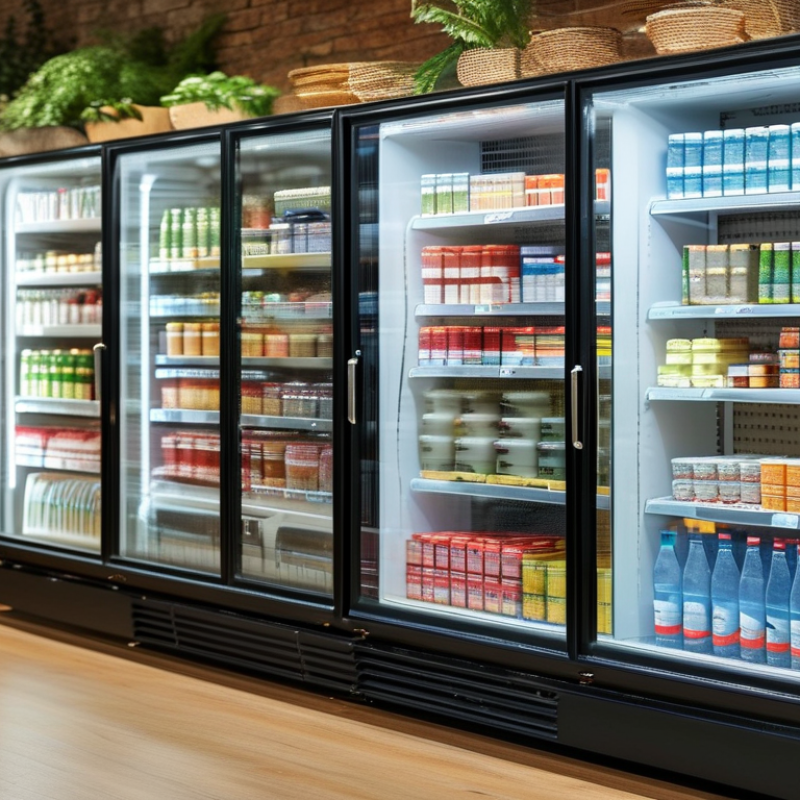
Mini shop refrigeration equipment keeps limited retail space productive without sacrificing product safety.

Common units include undercounter coolers, countertop display cases, glass-door merchandisers, and compact freezers. Each serves a different selling task.

A glass-door cooler supports drinks, dairy, and ready-to-eat foods, usually between 2°C and 8°C.

Compact freezers protect frozen products at temperatures near -18°C.

Choosing equipment requires more than checking external dimensions. Measure doorways, aisle clearance, and the space around the condenser. Poor ventilation can increase energy use and shorten compressor life.

In busy shops, adjustable shelves and bright interior lighting improve product access. Automatic defrost reduces maintenance, but it may briefly raise cabinet temperature. That detail is easy to overlook.

Global buyers should confirm voltage, frequency, plug requirements, and local service support before ordering. Reliable suppliers provide temperature testing, installation guidance, spare parts, and clear warranty terms.

Ask for food-contact materials and refrigerants that meet applicable regulations. Field checks often reveal another issue: the displayed temperature may differ from the product temperature. Use a calibrated thermometer during trial operation.

I have seen stores place hot stock directly inside, then blame the cabinet for slow cooling. That mistake is avoidable.

Still, real shops are imperfect. Doors open constantly, shelves become crowded, and cleaning schedules slip. Equipment selection should reflect those habits, not an ideal operating routine.

Key Factors for Evaluating Global Refrigeration Suppliers

Global buyers need more than a low quotation when choosing a mini shop refrigeration supplier. Evaluate cooling performance, build quality, service capacity, and documentation together. Ask for temperature records from comparable units, not only laboratory claims. A reliable supplier should explain compressor selection, insulation thickness, defrost control, and expected energy use. Request installation manuals and maintenance schedules. These details reveal practical experience. Check factory audit records, testing procedures, and technician training. Do not accept vague promises. A polished website proves little.

Tips: Compare three suppliers with one score sheet. Verify temperature stability under frequent door opening. Ask about spare parts availability near your market. Confirm voltage, plug requirements, packaging strength, and delivery timelines. Speak with recent commercial buyers when possible. Their experience may expose delays that brochures never mention.

After-sales support deserves equal attention. Review warranty coverage, response times, remote troubleshooting, and service procedures. Ask whether technicians can identify leaks, sensor faults, or uneven cooling quickly. Clear technical drawings also reduce installation mistakes. Supplier communication matters during urgent repairs. Test it before ordering. Send detailed questions and observe the answers. Do they provide measurements, evidence, and realistic limitations? I would not ignore a small documentation gap, but I would record it and request correction. Reliability is built through repeated proof, not confident language.

Top Mini Shop Refrigeration Suppliers for Global Buyers - Key Factors for Evaluating Global Refrigeration Suppliers

Evaluation Dimension Recommended Benchmark Why It Matters to Global Buyers Documents or Evidence to Request
Product Type Glass-door upright merchandisers, under-counter units, countertop display coolers, or compact chest freezers The correct cabinet format affects sales visibility, floor-space usage, loading capacity, and energy consumption. Product catalogue, dimensional drawings, installation guide, and application photos
Net Storage Capacity Approximately 80–700 litres for compact shop refrigeration, depending on cabinet format Net capacity is more useful than external volume when comparing usable retail space. Verified net-volume specification based on the applicable test standard
Chilled Operating Range Common commercial display-cooling range: approximately 0°C to +10°C; many beverage units operate around +2°C to +8°C Temperature suitability affects food safety, beverage quality, and compliance with local requirements. Factory test report, temperature-control settings, and climate-class rating
Frozen Operating Range Typically about −18°C to −24°C for compact commercial freezers Stable low-temperature performance is essential for frozen-food quality and inventory protection. Pull-down test, temperature-uniformity data, and rated ambient operating conditions
Refrigerant Low-global-warming-potential refrigerants such as R290 are widely used in suitable small commercial systems; refrigerant choice must match local regulations and safety requirements Refrigerant regulations vary by market, and flammable refrigerants require appropriate design, labeling, servicing, and installation controls. Refrigerant type, charge quantity, safety classification, and compliance declaration
Energy Performance Compare measured daily energy use in kWh/24 h under the same test conditions rather than relying only on nominal input power Electricity cost is a major part of lifetime ownership cost for continuously operating refrigeration. Energy test report, annual consumption estimate, rated power, and test ambient temperature
Climate-Class Capability Select equipment rated for the intended store environment; common commercial classes include 25°C, 30°C, and 35°C test conditions A cabinet designed for a mild indoor environment may lose performance in hot and humid retail locations. Climate-class marking, laboratory report, and maximum ambient-temperature specification
Electrical Compatibility Confirm voltage, frequency, plug type, phase, starting current, and protection requirements for each destination market Electrical mismatch can cause safety risks, failed inspections, warranty disputes, or installation delays. Electrical nameplate, wiring diagram, plug specification, and destination-market test report
Safety and Compliance Supplier should provide valid conformity documentation for the destination market, including electrical safety, electromagnetic compatibility, and refrigerant-related requirements where applicable Compliance documentation supports customs clearance, retail installation, insurance, and product-liability management. Declaration of conformity, safety certificates, EMC reports, and technical construction file
Temperature Recovery Request measured recovery time after door opening, product loading, or a defined power interruption Fast, stable recovery helps protect products during busy trading periods. Standardized recovery test with load quantity, ambient temperature, and test duration
Noise Level Ask for an acoustic rating measured under defined conditions; compact commercial units commonly require special attention in small shops and hospitality areas Lower operating noise improves customer comfort and is important where refrigeration is located near staff or seating areas. Sound-pressure measurement, test distance, background-noise conditions, and operating mode
Door and Glass Design Evaluate double glazing, anti-condensation performance, self-closing hardware, door durability, and replaceable seals Door design influences energy loss, product visibility, condensation control, and maintenance cost. Door-cycle test data, glass specification, gasket part numbers, and replacement procedure
Materials and Corrosion Protection Use corrosion-resistant cabinet finishes, coated or stainless internal surfaces, and materials suitable for humid commercial environments Material quality affects service life, hygiene, appearance, and suitability for coastal or high-humidity locations. Material specifications, coating thickness, salt-spray data where relevant, and cleaning instructions
Minimum Order Quantity Stock programs may allow small trial orders; customized production often requires a higher quantity agreed during quotation MOQ affects inventory exposure, cash flow, product testing, and the feasibility of market entry. Written MOQ by model, customization surcharge, packaging requirement, and sample-order terms
Production and Delivery Lead Time Separate sample lead time, standard production lead time, peak-season lead time, and international transit time A clear timeline supports store openings, promotional campaigns, and replenishment planning. Quotation validity, production schedule, shipping terms, port of loading, and historical on-time delivery data
Warranty Coverage Check separate coverage periods for the complete unit, compressor, control system, glass, and consumable parts Different component warranties can materially change the buyer’s repair risk and total ownership cost. Warranty policy, exclusions, claim procedure, labor coverage, and proof-of-purchase requirements
Spare-Parts Availability Prioritize suppliers able to identify and supply controllers, fans, sensors, door seals, shelves, lighting, and refrigeration components Long parts availability reduces downtime and prevents premature equipment replacement. Parts catalogue, recommended spare-parts list, stock policy, and service-part pricing
After-Sales Support Look for multilingual technical manuals, remote troubleshooting, service training, and defined response times Responsive support is especially important when the buyer has no local refrigeration engineering team. Support contact details, service-level agreement, troubleshooting flowchart, and training materials
Packaging and Export Readiness Packaging should protect glass, corners, doors, shelves, and refrigeration components during multimodal transport Effective export packaging reduces transit damage, claims, installation delays, and reverse-logistics costs. Packaging specification, drop or vibration test data, package dimensions, gross weight, and loading plan
Total Cost of Ownership Compare purchase price, freight, duties, installation, electricity, maintenance, spare parts, and expected service life The lowest purchase price may not produce the lowest long-term operating cost. Itemized quotation, energy data, maintenance schedule, parts pricing, and end-of-life provisions

Note: Performance figures should be compared only when the test method, ambient temperature, product load, voltage, and operating conditions are equivalent. Final requirements must be verified against the regulations and electrical standards of the destination market.

Leading Mini Shop Refrigeration Supplier Categories and Product Ranges

Mini shop refrigeration suppliers usually serve three core categories: upright glass-door coolers, undercounter units, and countertop display refrigerators. Upright models suit bottled drinks and packaged foods, with shelves often adjustable from 1.5 to 2.0 metres high. Undercounter cabinets save floor space behind a service counter. Countertop units support impulse sales near checkout areas.

Product ranges also include chest freezers, ice cream freezers, prep counters, and compact combination units. Grand View Research valued the global commercial refrigeration market at about USD 39 billion in 2023. It expects steady growth through 2030, driven by food retail expansion and stricter energy requirements. The International Energy Agency continues to identify refrigeration efficiency as an important way to reduce commercial electricity use. However, published market figures vary by product definition. Buyers should check the research scope.

Tips: Ask for temperature records, energy data, refrigerant details, door-test results, and spare-parts lead times. Confirm voltage and plug standards before ordering. A 220-volt cabinet may fail in a 110-volt shop. Small details matter.

From practical sourcing experience, product width is often overlooked. A 600-millimetre cabinet may block a narrow aisle after door opening. I still see buyers choose capacity over airflow. That choice can increase warm spots, especially when shelves are fully loaded. Suppliers with clear test reports and service procedures deserve closer attention.

International Purchasing, Compliance, and Logistics Considerations

International buyers should evaluate mini shop refrigeration suppliers beyond price and cooling capacity. A reliable supplier provides test reports, wiring diagrams, material specifications, and clear warranty terms. Request evidence for electrical safety, energy performance, noise levels, and refrigerant compliance in the destination market. Requirements can differ between regions. A unit designed for 220–240V may need changes for a 110–120V grid. Confirm plug type, frequency, door configuration, and ambient temperature ratings before ordering samples.

Compliance documents must match the exact model, not a similar cabinet. Check the product label, serial number, customs classification, and commercial invoice carefully. Some destinations require additional recycling, energy, or environmental declarations. Ask who handles inspection fees and corrective actions under the agreed Incoterm. In my procurement experience, vague answers often create larger costs later. A missing test page can delay customs clearance.

Logistics also deserves practical attention. Confirm crate dimensions, gross weight, pallet strength, and stacking limits before booking freight. Refrigeration units should remain upright, protected from moisture, and secured against compressor damage. Request factory photographs before loading. Include spare gaskets, shelves, wheels, and control parts in the shipment. This is often cheaper than urgent replacement orders. I once underestimated port storage charges; the mistake was avoidable. Build time for production testing, customs review, inland delivery, and possible seasonal delays. Keep one written specification sheet for purchasing, quality control, and the freight forwarder.

How to Select the Right Supplier for Your Retail Requirements

Top Mini Shop Refrigeration Suppliers for Global Buyers

How to Select the Right Supplier for Your Retail Requirements

Choosing a mini shop refrigeration supplier requires more than comparing cabinet prices. The U.S. Department of Energy’s Better Buildings program reports that refrigeration can consume 40–60% of a supermarket’s electricity. Energy performance therefore affects daily margins. Ask suppliers for tested energy data, temperature recovery results, and performance under your local ambient conditions.

Check cabinet dimensions, voltage, plug standards, noise levels, and usable shelf space. A unit that fits the doorway but wastes aisle space is not a practical purchase. UNEP’s 2023 Global Cooling Watch reports that cooling demand could more than triple by 2050 without stronger efficiency measures. Look for high-efficiency compressors, low-leakage doors, and refrigerants with lower climate impact. Request certificates and test methods, not vague claims.

Service quality matters just as much. Confirm spare-part availability, remote troubleshooting, technician training, and warranty response times. Ask for references from retailers operating in similar climates. A supplier should explain delivery risks, installation steps, and maintenance intervals clearly. I have seen buyers focus on the lowest quotation and overlook after-sales support. That decision can become expensive. Still, efficiency labels alone are not perfect; real results depend on loading, cleaning, door openings, and staff habits. Compare lifecycle cost, not only the invoice.

Powder Coat Booths

For those larger-sized parts, or smaller quantity runs, we have 2 independent powder coat booths and ovens. The quality, durability and affordability of today’s powder coating finishes make this the process of choice for world-class companies.

Powder coating advantages over other forms of coating are many. Materials used in the Powder coating process can be metals and non-metals that come in a multitude of thicknesses, textures, colors, etc. Another of Powder coating’s biggest advantages over conventional coatings is its ability to create finishes in many different textures. Powder Coating Booths allow us the ability to apply these advantages to large products.

Wet Paint Line

Tri-State Fabricators runs a full-service conveyor line for painting. Wet painting can provide protection or decoration to many different part styles. From start to finish, every project is easier to undergo random and point-based inspection by our skilled painting team.

Advantages to our Wet Paint Line are these lines start with product prep and ends with a thorough inspection of a high quality finished product. Our ability to complete large and small projects with a superior finish and doing so in a timely and economical fashion. This passes along the savings in production to our customers. When powder coating ins not an option, our Wet Paint Line gets the job done right the first time.

Wet Paint Booths

When the parts get big and heavy we roll-out our custom paint racks and oversize booth. By utilizing our partnerships with all the major paint brands, we can match virtually any color with wet paint.

The advantages of having access to a Wet Paint Booth are many. Large projects of many different shapes can be loaded into the booth. The Wet Paint Booth offers an environment that is much more controlled than a typical parts painting operation.

Not only are they used because of their controlled environment, but they’re are also advantageous when it comes to applying paint to parts that are needed in industries that require specialty coatings such as medical, aerospace, etc.

Military CARC

Our military forces have some very high standards when it comes to the finish of their vehicles and equipment. From the first pre-treatment step to final coat, it takes a great deal of knowledge and experience to protect the men and women of our armed forces. They deserve only the best, and Tri-State Fabricators provides it.

All of our processes are closely monitored by our staff and management teams. Both of which are highly trained in the processes of metal fabrication and finishing. Tri-State Fabricators’ goal is to always fully satisfy each and every customer, including the military. We will always put a 110% into what we do.

Glass-Bead Blasting

Abrasive media blasting is an excellent way to remove old paint, rust, and increase the paint/powder adhesion. Glass beads produce a much smoother and brighter finish than angular abrasives; leaving the part clean yet without any dimensional change. Chemically inert and environmentally friendly, we can recycle our beads approximately 30 times; making them a more preferred method of metal cleaning or surface finishing.

Advantages to Glass Bead Blasting are many. Glass bead blast media is used when a project is needing rough surfaces need to become smooth for applications of coatings such as paint. It is typically used to clean paint and rust from a product surface without deforming the surface it is being used on. Overall, compared to many other blasting media, Glass Bead Blasting is a very economical choice and those savings are always passed on to our customers.

Part Washing

Tri-State Fabricators utilize a zinc phosphate wash to clean and etch the material to ensure the best paint adhesion possible. The unique design of our 3-stage wash system does the work like a 5-stage. From Cleaning and rinsing to conversion coating and post-treatment, Our Part Washing process is a complete service and works throughout the fabrication service and the finishing service.

Along with the previously mentioned benefits, Curing is a vital chemical reaction that leaves the product finish hard and relatively safe from mild abrasion and aggressive corrosion. This process can be done in more than one way; ambient air-dry or in curing ovens at temps that exceed 240°.

Burn-Off Oven

From fixing paint mistakes (someone else’s of course) to simply cleaning our paint line hooks, our burn-off oven is put to good use. After a quick burn-off, a little clean up, and a fresh coat of paint, your parts will look better than new.

Why does our Burn-Off Oven work so well? Because super heating the air around parts turns the materials into ashes. From paint and powder coatings to rubber and machining oils, high temps do the job without degrading the integrity of the part.

Masking

Masking is a vital part of producing high quality products. We have die-cut masking patterns to protect machined surfaces as well as a wide range of plugs and caps to protect threaded holes and bolts. We provide permanent and temporary masking.

Masking allows the selected sections of a product to be protected from a fabrication or finishing service. This can be with both chemicals when etching and tapes, paints when only finishing just a section of the product. Masking is great in aiding the customization process of a project.

Screen Printing

Screen printing is a photographic process that transfers artwork onto a porous nylon screen which allows colored ink to flow through the screen and be deposited on an aluminum or plastic component. We can generally have just about any design created onto a screen for your parts.

Some of the advantages of Screen Printing are, brand recognition for your business displaying on your products, assembly instructions, product warnings/hazards, etc. Tri-State Fabricators produces Screen Printing of the highest quality so you know it’s durable.

Metal Finishing

Metal Finishing is the art of treating the exterior portion of product, often metal but can also be made of other materials, so that the surface is clean and free of any debris. Then the process of applying coats or either paint of powder coat takes place. This coating process improves the quality of the product in both appearance and resistance to wear and corrosion.

Tri-State Fabricators, Inc., understands that a project typically isn’t complete until a high-quality finish has been added to your product. This is why our painting and powder coating teams continuously inspect the products throughout the Metal Finishing process.