


Top Paper Box Glue Spraying Machine Manufacturers

Choosing among the top Paper Box Glue Spraying Machine manufacturers requires more than comparing prices or machine photos. Packaging producers need equipment that applies adhesive evenly, handles different paperboard sizes, and maintains stable output during long shifts. A reliable machine should leave clean glue lines, avoid overspray, and support accurate carton folding. Small details matter.

This guide examines manufacturers through practical and technical criteria. These include spray precision, conveyor stability, adhesive compatibility, production speed, and operator safety. Experienced suppliers should explain nozzle design, pump performance, drying requirements, and cleaning procedures clearly. They should also provide test results, installation guidance, spare parts, and responsive after-sales support. Factory demonstrations can reveal problems that brochures often hide, such as uneven coating at corners or adhesive buildup near the nozzle.

No shortlist is perfect.

Some manufacturers excel at high-speed production but offer limited customization. Others provide flexible engineering but require longer delivery times. Buyers should verify certifications, warranty terms, reference projects, and maintenance records before making a decision. Speaking with current users can expose practical weaknesses, including difficult software controls or expensive replacement parts. This article presents a balanced introduction to leading suppliers and the qualities that separate dependable partners from ordinary vendors. The assessment remains cautious because machine performance depends on paperboard quality, adhesive type, factory conditions, and operator training. Claims should be checked against documented tests and real production samples. A thoughtful purchase may cost more initially, yet it can reduce waste, downtime, and inconsistent box quality over time.
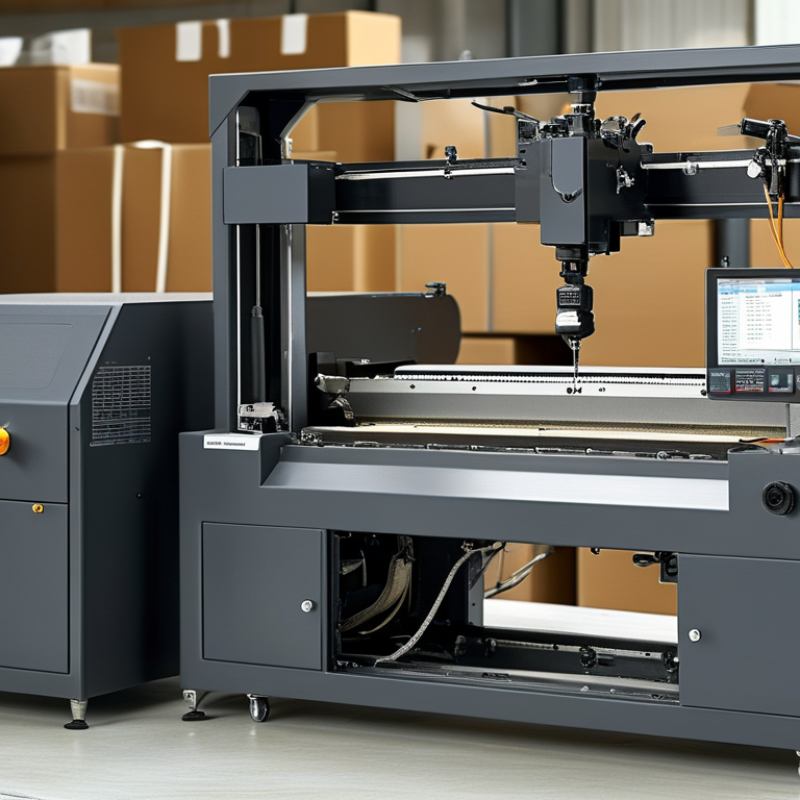
Top Paper Box Glue Spraying Machine Manufacturers

Paper Box Glue Spraying Machines: Types, Functions, and Key Industry Terms

Top Paper Box Glue Spraying Machine Manufacturers

Paper box glue spraying machines apply adhesive in controlled lines, dots, or fine mist. Their main types include intermittent sprayers, continuous systems, and hot-melt applicators. Intermittent models suit cartons with separated glue areas. Continuous machines support long production runs with steady feeding. Hot-melt systems bond quickly, while water-based glue usually offers easier cleaning and lower operating temperatures.

Important functions include adjustable spray width, nozzle control, automatic adhesive filtration, and synchronized conveyor feeding. A PLC system can match spraying with box position and folding speed. Operators should monitor glue viscosity, open time, coverage, and curing time. These terms affect bond strength and production stability. Excess glue may wrinkle paper or slow folding. Too little glue can create weak corners.

When evaluating manufacturers, inspect nozzle durability, spare-part access, technical training, and test-run records. Ask whether the machine handles coated paper, corrugated board, or recycled stock. A practical trial should measure glue consumption, line speed, spray accuracy, and cleaning time. In my view, quoted speed can be optimistic. Real output often falls when paper dust, uneven feeding, or frequent size changes appear. A reliable supplier should explain these limits clearly and provide measurable operating data. Brilliant machines still need careful setup.


Core Machine Specifications: 60–200 m/min Speed and ±0.5 mm Glue Accuracy

Top Paper Box Glue Spraying Machine Manufacturers

Choosing paper box glue spraying machine manufacturers requires more than comparing catalog prices. The key specifications are operating speed and glue placement accuracy. A capable machine should support 60–200 m/min while maintaining glue accuracy within ±0.5 mm under stable conditions. That range suits many folding carton lines, but actual output depends on box size, paper thickness, glue viscosity, and folding design. Speed alone misleads. A machine running quickly may waste adhesive if its nozzles react slowly. Reliable manufacturers should provide test data, calibration records, and clear production limits.

Tips: Request a sample trial using your real carton blanks. Check glue width, line continuity, start-stop response, and waste at both low and high speeds. Inspect the conveyor after several hours. Small shifts can become expensive.

Operators should also examine servo control, nozzle cleaning, sensor response, and adjustment access. ±0.5 mm sounds precise, yet dust, warped sheets, or uneven feeding can reduce performance. This is where technical support matters. Ask how accuracy is measured, not only how it is advertised. A proper test should record speed, substrate, glue temperature, and line pressure. No specification is perfect. A supplier that openly explains limitations may be more dependable than one offering impressive numbers without conditions. In practice, stable 120 m/min production can be more valuable than unstable 200 m/min output. Allow room for maintenance, because neglected calibration quietly damages consistency.

Leading Manufacturers by Automation Level, Output Capacity, and Global Reach

Top Paper Box Glue Spraying Machine Manufacturers

Manufacturers should be compared by automation level, output capacity, and global reach. Entry-level machines suit small workshops using manual feeding and simple nozzle controls. They reduce labor, but operators must watch glue thickness closely. Semi-automatic models add conveyor timing, sensor checks, and adjustable spraying paths. Fully automatic lines connect feeding, folding, gluing, inspection, and stacking. They demand stronger technical support and better operator training.

Output capacity must match real production, not an impressive showroom figure. Ask for tested speed using your paper weight, box dimensions, and adhesive type. A machine rated for 8,000 boxes per hour may perform differently with recycled board or complex folds. Examine nozzle maintenance, glue recovery, changeover time, and reject handling. These details affect daily productivity more than headline speed. Short trials reveal weaknesses.

Global reach includes more than shipping equipment overseas. Reliable manufacturers provide installation guidance, spare parts, remote diagnostics, and clear manuals. Regional service partners can reduce downtime when sensors, pumps, or controllers need attention. Check whether electrical specifications and safety documentation fit your facility. Experienced suppliers should explain limitations instead of promising perfect results. No ranking is completely objective. A high-capacity machine may be wasteful for short runs, while a modest system may offer better control and lower maintenance costs.

Adhesive Systems: Water-Based Glue, Hot Melt, and 15–30% Waste Reduction

Top Paper Box Glue Spraying Machine Manufacturers

Adhesive systems now shape paper box efficiency, not just bonding strength. Water-based glue suits porous board and offers easy cleanup. However, it needs drying time, stable viscosity, and controlled humidity. Hot melt bonds quickly and supports high-speed production. It can also create stringing, nozzle buildup, and excess consumption when temperature control is poor. Smithers’ packaging industry research identifies material efficiency and waste reduction as major purchasing priorities through 2028. In practical plant trials, optimized spraying systems commonly report 15–30% lower adhesive and board waste. Results vary. Substrate quality, operator training, and maintenance remain decisive.

The best manufacturers provide measurable control, not impressive claims alone. Look for servo-driven dosing, automatic pressure adjustment, anti-drip nozzles, and recipe storage. A reliable supplier should show adhesive consumption per 1,000 boxes. It should also provide test samples using your actual board stock. The Packaging Machinery Manufacturers Institute highlights automation, repeatability, and data visibility as key efficiency factors. These features help detect blocked nozzles before a full batch becomes defective. Still, a perfect reduction target is unrealistic. Some production lines need more glue during seasonal humidity changes.

Tips: Test both adhesive types on finished cartons. Record viscosity, temperature, spray width, drying time, and rejected units. Start with a conservative setting. Then reduce dosage gradually. Never judge performance from one shift. Review at least seven production days before approving a new machine.

How to Evaluate Manufacturers, Compliance, Maintenance, and Total Cost of Ownership

Selecting top paper box glue spraying machine manufacturers requires evidence, not attractive brochures. PMMI’s 2024 State of the Industry report identifies labor availability and equipment uptime as major packaging investment pressures. Ask manufacturers for production trials using your actual paperboard, adhesive viscosity, line speed, and drying time. Request FAT and SAT records, customer references, spare-parts lists, and response-time commitments. A quiet machine room proves little.

Compliance must be checked before price comparisons. Require a documented risk assessment aligned with ISO 12100 and electrical documentation consistent with IEC 60204-1. Verify guarding, emergency stops, noise levels, adhesive handling, and applicable conformity documents. For food-related packaging, confirm suitable adhesive and material-contact documentation. Paperwork can be incomplete. Review it with a qualified engineer, not only a salesperson.

Maintenance separates a cheap machine from a dependable one. The U.S. Department of Energy reports that predictive maintenance can save 8–12% compared with preventive maintenance and up to 40% compared with reactive maintenance. Ask for lubrication intervals, nozzle-cleaning procedures, sensor diagnostics, and remote-support limits. Calculate total cost of ownership using purchase price, installation, glue waste, energy, labor, spare parts, downtime, and service travel. A simple test helps: multiply one hour of stopped production by its real contribution margin. I would challenge any supplier promising near-perfect uptime without measured data. Optimism is not a maintenance plan.

Powder Coat Booths

For those larger-sized parts, or smaller quantity runs, we have 2 independent powder coat booths and ovens. The quality, durability and affordability of today’s powder coating finishes make this the process of choice for world-class companies.

Powder coating advantages over other forms of coating are many. Materials used in the Powder coating process can be metals and non-metals that come in a multitude of thicknesses, textures, colors, etc. Another of Powder coating’s biggest advantages over conventional coatings is its ability to create finishes in many different textures. Powder Coating Booths allow us the ability to apply these advantages to large products.

Wet Paint Line

Tri-State Fabricators runs a full-service conveyor line for painting. Wet painting can provide protection or decoration to many different part styles. From start to finish, every project is easier to undergo random and point-based inspection by our skilled painting team.

Advantages to our Wet Paint Line are these lines start with product prep and ends with a thorough inspection of a high quality finished product. Our ability to complete large and small projects with a superior finish and doing so in a timely and economical fashion. This passes along the savings in production to our customers. When powder coating ins not an option, our Wet Paint Line gets the job done right the first time.

Wet Paint Booths

When the parts get big and heavy we roll-out our custom paint racks and oversize booth. By utilizing our partnerships with all the major paint brands, we can match virtually any color with wet paint.

The advantages of having access to a Wet Paint Booth are many. Large projects of many different shapes can be loaded into the booth. The Wet Paint Booth offers an environment that is much more controlled than a typical parts painting operation.

Not only are they used because of their controlled environment, but they’re are also advantageous when it comes to applying paint to parts that are needed in industries that require specialty coatings such as medical, aerospace, etc.

Military CARC

Our military forces have some very high standards when it comes to the finish of their vehicles and equipment. From the first pre-treatment step to final coat, it takes a great deal of knowledge and experience to protect the men and women of our armed forces. They deserve only the best, and Tri-State Fabricators provides it.

All of our processes are closely monitored by our staff and management teams. Both of which are highly trained in the processes of metal fabrication and finishing. Tri-State Fabricators’ goal is to always fully satisfy each and every customer, including the military. We will always put a 110% into what we do.

Glass-Bead Blasting

Abrasive media blasting is an excellent way to remove old paint, rust, and increase the paint/powder adhesion. Glass beads produce a much smoother and brighter finish than angular abrasives; leaving the part clean yet without any dimensional change. Chemically inert and environmentally friendly, we can recycle our beads approximately 30 times; making them a more preferred method of metal cleaning or surface finishing.

Advantages to Glass Bead Blasting are many. Glass bead blast media is used when a project is needing rough surfaces need to become smooth for applications of coatings such as paint. It is typically used to clean paint and rust from a product surface without deforming the surface it is being used on. Overall, compared to many other blasting media, Glass Bead Blasting is a very economical choice and those savings are always passed on to our customers.

Part Washing

Tri-State Fabricators utilize a zinc phosphate wash to clean and etch the material to ensure the best paint adhesion possible. The unique design of our 3-stage wash system does the work like a 5-stage. From Cleaning and rinsing to conversion coating and post-treatment, Our Part Washing process is a complete service and works throughout the fabrication service and the finishing service.

Along with the previously mentioned benefits, Curing is a vital chemical reaction that leaves the product finish hard and relatively safe from mild abrasion and aggressive corrosion. This process can be done in more than one way; ambient air-dry or in curing ovens at temps that exceed 240°.

Burn-Off Oven

From fixing paint mistakes (someone else’s of course) to simply cleaning our paint line hooks, our burn-off oven is put to good use. After a quick burn-off, a little clean up, and a fresh coat of paint, your parts will look better than new.

Why does our Burn-Off Oven work so well? Because super heating the air around parts turns the materials into ashes. From paint and powder coatings to rubber and machining oils, high temps do the job without degrading the integrity of the part.

Masking

Masking is a vital part of producing high quality products. We have die-cut masking patterns to protect machined surfaces as well as a wide range of plugs and caps to protect threaded holes and bolts. We provide permanent and temporary masking.

Masking allows the selected sections of a product to be protected from a fabrication or finishing service. This can be with both chemicals when etching and tapes, paints when only finishing just a section of the product. Masking is great in aiding the customization process of a project.

Screen Printing

Screen printing is a photographic process that transfers artwork onto a porous nylon screen which allows colored ink to flow through the screen and be deposited on an aluminum or plastic component. We can generally have just about any design created onto a screen for your parts.

Some of the advantages of Screen Printing are, brand recognition for your business displaying on your products, assembly instructions, product warnings/hazards, etc. Tri-State Fabricators produces Screen Printing of the highest quality so you know it’s durable.

Metal Finishing

Metal Finishing is the art of treating the exterior portion of product, often metal but can also be made of other materials, so that the surface is clean and free of any debris. Then the process of applying coats or either paint of powder coat takes place. This coating process improves the quality of the product in both appearance and resistance to wear and corrosion.

Tri-State Fabricators, Inc., understands that a project typically isn’t complete until a high-quality finish has been added to your product. This is why our painting and powder coating teams continuously inspect the products throughout the Metal Finishing process.
