Top Vegetable Seasoning Powder Manufacturers Worldwide
The global market for Vegetable Seasoning Powder is expanding as food producers seek consistent flavor, clean processing, and efficient product development. Manufacturers now serve instant soups, snack coatings, sauces, ready meals, and home kitchens. Their products may contain dried onion, garlic, tomato, celery, mushroom, herbs, or blended vegetable extracts. Each ingredient changes the powder’s aroma, color, solubility, and storage performance.
This guide explores leading Vegetable Seasoning Powder manufacturers worldwide and the strengths that distinguish them. It considers ingredient sourcing, dehydration methods, blending accuracy, moisture control, packaging, and quality testing. Reliable suppliers usually provide clear specifications, allergen information, traceability records, and batch documentation. Certifications can support confidence, but they should not replace independent evaluation. A polished website proves little.
Practical experience matters. A powder that smells rich in a sample bag may lose intensity in hot broth. Fine particles can improve dispersion, while excessive dust may create handling problems. Buyers should compare sodium levels, carrier ingredients, microbiological controls, and shelf-life data before placing large orders. Regional taste preferences also influence product design. European buyers may request clean-label blends, while Asian manufacturers often prioritize umami depth and rapid solubility.
No supplier fits every application. That is worth remembering. Some manufacturers excel in custom blends, while others focus on high-volume production or organic ingredients. This overview offers a careful starting point for evaluating global suppliers, not a substitute for factory audits, laboratory testing, or small-scale trials.
What Vegetable Seasoning Powder Is and How It Is Used
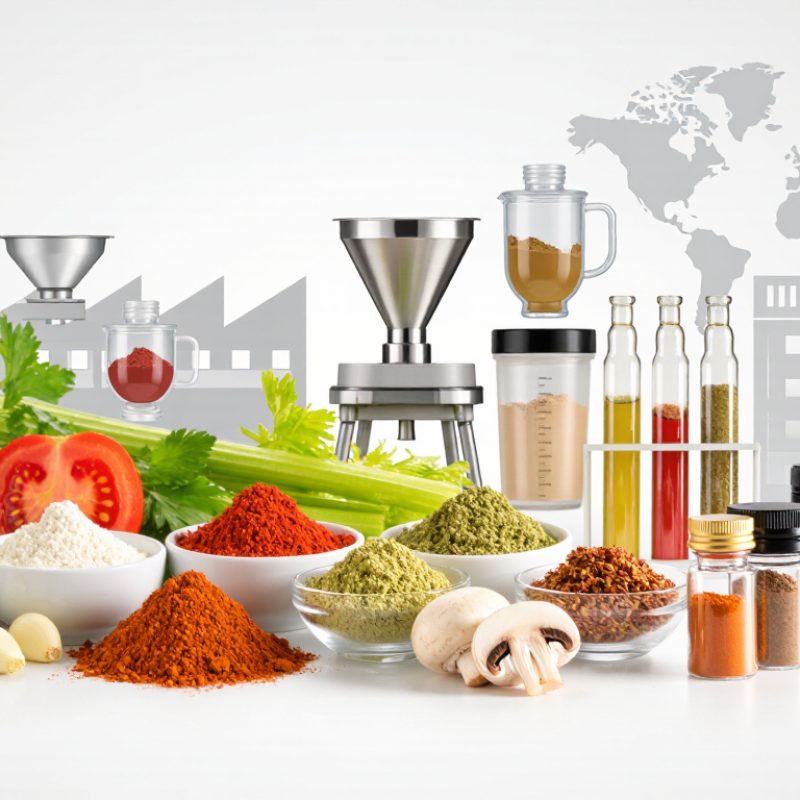
Vegetable seasoning powder is a dry blend made from dehydrated vegetables, herbs, spices, and sometimes salt. Manufacturers may use carrots, onions, tomatoes, celery, mushrooms, or leafy greens. The ingredients are cleaned, cut, dried, and milled into a fine powder. Gentle drying helps preserve color and aroma, although heat can reduce some sensitive nutrients.
In cooking, this powder adds savory flavor to soups, sauces, noodles, rice, marinades, and snack coatings. A small spoon can deepen a broth without adding chopped vegetables. It also mixes easily into dough, dips, and plant-based fillings.
Always check the label before use. Some formulas contain considerable sodium, starch, sugar, or food allergens. Vegetable powder is not automatically a healthy choice.
Reliable manufacturers usually control moisture, particle size, microbial safety, and ingredient traceability. These details affect shelf life and consistent flavor. In my experience, powder absorbs humidity quickly after opening, so an airtight container matters.
Freshness becomes less obvious over time. A practical test is simple: smell a small amount and inspect its color before cooking. If the aroma seems flat, the powder may need replacement. Yet judging quality by appearance alone is imperfect. Different vegetables naturally produce different shades and textures. Purpose matters too. A mild powder suits delicate sauces, while a roasted blend works better with grilled foods and hearty stews.
Key Ingredients and Production Standards in Vegetable Seasoning Powders
Top Vegetable Seasoning Powder Manufacturers Worldwide
Vegetable seasoning powders begin with carefully selected raw materials. Common ingredients include dehydrated onion, carrot, tomato, celery, garlic, mushroom, and leafy herbs. These vegetables should be cleaned, sorted, and dried under controlled temperatures. Excessive heat can weaken color, aroma, and sensitive nutrients.
Many formulas also use salt, starch, yeast extract, or plant-based umami ingredients. Each addition should serve a clear technical purpose. Salt improves flavor, while starch can support flow and prevent clumping. However, too much carrier material may dilute the vegetable character. That balance requires practical testing, not only a laboratory formula.
Reliable production depends on documented controls. Manufacturers should verify suppliers and test incoming ingredients for moisture, microbial contamination, pesticide residues, and heavy metals. HACCP-based procedures, good manufacturing practices, and traceable batch records strengthen product safety. Finished powders should be checked for particle size, water activity, color, flavor, and dispersibility. Small details matter. A powder that looks consistent may still develop hard lumps after storage.
Packaging also needs attention. Moisture-barrier materials help protect freshness during transport and warehouse handling. Clear allergen controls are essential when facilities process several seasoning formulas. No process is perfect. Sampling plans can miss a problem, and sensory evaluations may differ between trained panelists. Manufacturers should review complaints, retain samples, and adjust controls when evidence reveals weaknesses. That ongoing discipline supports dependable vegetable seasoning powders for professional food production.
Leading Manufacturers by Region and Product Specialization
Top Vegetable Seasoning Powder Manufacturers Worldwide
Leading manufacturers differ sharply by region and product specialization. Asia-Pacific producers often focus on onion, garlic, mushroom, seaweed, and mixed vegetable powders. Their strengths include broad raw-material access and high-volume spray drying. European manufacturers commonly emphasize clean-label blends, organic sourcing, and allergen control. North American suppliers often develop customized powders for snacks, soups, plant-based foods, and foodservice applications.
Market data supports this regional diversity. The MarketsandMarkets Spices and Seasonings report forecasts steady growth for the global sector, at roughly 5% annually in the coming years. Grand View Research also identifies convenience foods and natural flavor systems as important demand drivers. However, vegetable seasoning powder is classified differently across reports. Comparisons are not always perfect. Latin American manufacturers frequently specialize in chili, tomato, corn, and herb profiles. Middle Eastern producers often combine dried vegetables with savory spices and culinary extracts.
Tips: Buyers should request moisture content, microbiological results, pesticide records, and traceability documents. A practical benchmark is consistent color, aroma, particle size, and dispersibility across batches. Certifications such as HACCP or ISO 22000 add credibility, but they do not replace factory audits. Test the powder in the final recipe. It may perform differently after heating.
Quality, Safety, Sustainability, and Purchasing Considerations
Top Vegetable Seasoning Powder Manufacturers Worldwide
Quality begins with control, not attractive packaging. Buyers should request moisture limits, particle size, microbial results, allergen statements, and batch traceability. A certificate of analysis should match the delivered lot, not merely a standard template.
WHO estimates that contaminated food causes about 600 million illnesses worldwide each year. This makes pathogen testing and hygienic production essential. Check Salmonella, E. coli, yeast, mould, heavy metals, pesticide residues, and unauthorized additives.
Small details matter. A damp powder can cake inside a sealed pouch and weaken dosing accuracy.
Safety also depends on clear formulation records. Vegetable powders may contain onion, garlic, celery, salt, carriers, or processing aids. Suppliers should explain every ingredient and identify shared production lines.
ISO 22000 or HACCP-based systems can support confidence, but certification alone is not proof of daily discipline. Ask for recent audit findings, corrective actions, recall procedures, and retained samples.
I would not accept vague “natural” claims without specifications.
Sustainability requires measurable evidence. The FAO reported that 13.2% of food was lost after harvest and before retail in 2021. The UNEP Food Waste Index Report 2024 estimated 1.05 billion tonnes of food waste in 2022.
Manufacturers should show energy use, water practices, packaging weight, agricultural sourcing, and waste recovery data.
Compare freight distance, minimum order quantity, shelf life, and lead times before selecting a supplier. A lower unit price can become expensive when moisture causes rejected batches.
Some suppliers still provide incomplete carbon data. That weakness deserves careful questioning.





