


10 Trash Cabinet Buying Tips for Global Buyers?

When global buyers evaluate a Trash Cabinet, appearance is only part of the decision. A cabinet may look polished online, yet arrive with thin panels, weak hinges, or unclear assembly instructions. Practical buying experience shows that small details often create the largest costs. Measure the available space first. Then consider waste volume, cleaning routines, and local collection habits. A narrow cabinet can suit a city apartment. A larger commercial unit may need reinforced doors and adjustable shelves.

This guide presents ten buying tips for comparing products, suppliers, and total ownership value. It examines material quality, odor control, ventilation, capacity, safety, customization, packaging, lead times, and after-sales support. Buyers should request drawings, finish samples, test information, and recent production photographs. Supplier claims deserve verification. Check dimensions twice. A few millimeters can affect installation. Stainless steel, coated steel, wood-based panels, and recycled plastics perform differently in humid or high-traffic settings. The right choice depends on use, not fashion.

Global sourcing also requires clear communication. Confirm unit measurements, delivery terms, spare parts, warranty coverage, and inspection procedures before payment. Requirements vary by building type and market. Local waste-handling practices should guide the design. Do not assume the cheapest quotation offers the best value. Nor is the most expensive option automatically reliable. Some recommendations may need adjustment after real-world testing. That is worth admitting. A careful comparison reduces surprises and supports a cleaner, more efficient purchasing decision.
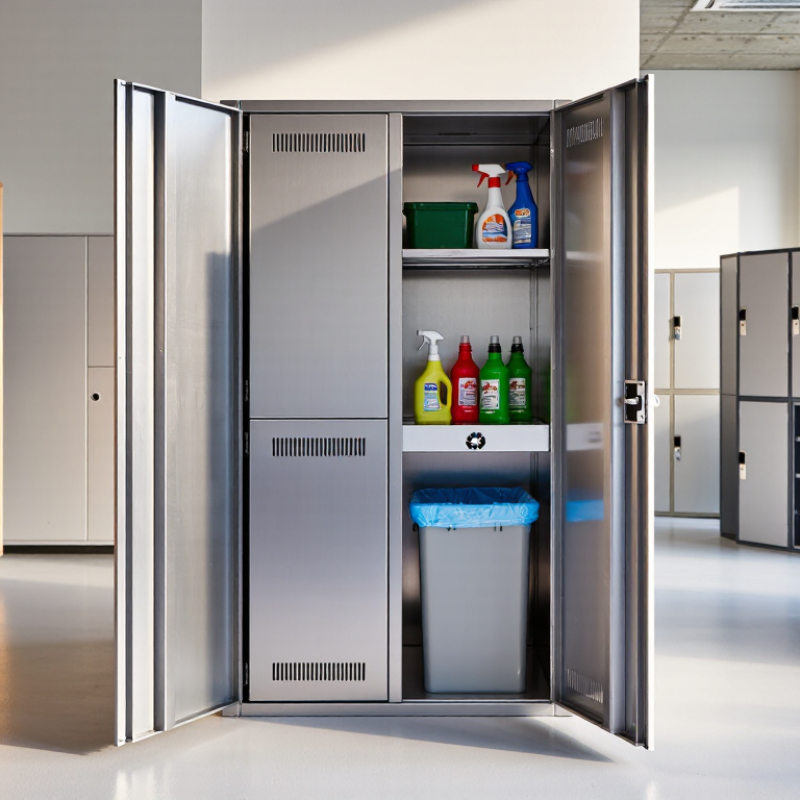
10 Trash Cabinet Buying Tips for Global Buyers?

Understanding Trash Cabinet Types and Global Buyer Requirements

Choosing the right trash cabinet starts with understanding its type and location. Indoor pull-out cabinets suit kitchens with limited floor space. Freestanding units work better in utility rooms, offices, and rental properties. Wall-mounted designs keep bins away from wet floors. Outdoor cabinets need weather-resistant panels, sealed joints, and stable anchors.

Capacity should match local waste habits, not only the number of household members. A 30-liter cabinet may suit a small apartment, while a larger family may need separate compartments for general waste, food scraps, and recyclables. Check the opening size, liner compatibility, door clearance, and ventilation. Small details matter. A beautiful cabinet can fail if the bin cannot slide out fully.

Global buyers also need to review dimensions in metric units, installation instructions, packaging strength, and replacement-part access. Materials should tolerate the destination’s humidity, temperature changes, and cleaning products. Stainless steel handles moisture well, while coated wood-based panels need careful edge protection. Confirm product test reports and material declarations from the supplier. Requirements vary by market, so local waste rules and building conditions should be checked before purchase. In my experience, buyers often focus on appearance and underestimate shipping damage. I have also seen oversized cabinets create avoidable installation problems. Rechecking measurements feels slow, but it prevents expensive returns.

10 Trash Cabinet Buying Tips for Global Buyers - Understanding Trash Cabinet Types and Global Buyer Requirements

No. Buying Tip Cabinet Type Typical Specification Global Buyer Requirement Key Verification Point
1 Match the capacity to the waste volume Single-bin cabinet Common internal bin capacities include approximately 20–30 L for compact indoor use, 40–60 L for general household or office use, and 80–120 L for higher-traffic areas. Select capacity according to local collection frequency, available floor space, and the expected volume of dry or mixed waste. Confirm both the usable bin volume and the external cabinet dimensions. The advertised capacity may refer only to the removable liner or container.
2 Choose the correct waste-separation layout Multi-compartment cabinet Two- and three-compartment layouts are widely used for separating general waste, recyclables, paper, glass, or organic waste. The compartment labels, colors, and icons should be adaptable to the destination market’s recycling system and language requirements. Check whether each opening leads to a dedicated container and whether the internal partitions prevent cross-contamination during removal.
3 Compare indoor and outdoor construction Indoor or outdoor cabinet Indoor models commonly use powder-coated steel, stainless steel, wood-based panels, or plastic components. Outdoor models require weather-resistant finishes and corrosion-resistant hardware. Outdoor installations may need resistance to rain, ultraviolet exposure, humidity, temperature changes, and wind. Indoor products should prioritize appearance and easy cleaning. Request coating information, corrosion-test details where applicable, drainage provisions, and evidence that hinges and fasteners are suitable for the intended environment.
4 Evaluate fire-safety needs Fire-resistant cabinet Fire-resistant designs may include steel construction, self-closing doors, restricted openings, heat-resistant seals, and internal containers made from non-combustible materials. Requirements vary by building type and jurisdiction. Offices, hotels, transport facilities, healthcare sites, and public buildings may impose additional fire-safety rules. Do not treat a metal exterior alone as a fire rating. Request the applicable test report or certification and verify acceptance with the local authority or project consultant.
5 Check accessibility and operating height Front-opening or top-opening cabinet Front-opening doors support removable bins and easier servicing. Top openings are useful for high-traffic disposal points but should be positioned for comfortable reach. Public and commercial projects may require accessible openings, clear approach space, readable symbols, and operating features usable by people with limited mobility. Review the opening height, door force, handle design, clearance, and local accessibility rules before approving the final layout.
6 Prioritize hygiene and cleaning performance Hygienic or sealed cabinet Useful features include smooth non-porous surfaces, rounded corners, removable liners, concealed hinges, leak-resistant containers, and touch-free or foot-operated access. Food-service, healthcare, hospitality, and humid environments generally require frequent cleaning and materials that tolerate approved detergents or disinfectants. Ask for cleaning instructions, chemical-resistance information, replacement-seal details, and confirmation that liquid leakage will not damage the cabinet base.
7 Confirm material and corrosion protection Steel or stainless-steel cabinet Steel cabinets are often powder-coated for appearance and protection. Stainless-steel cabinets provide strong corrosion resistance when the correct grade and finish are selected. Coastal, tropical, and industrial locations may require improved corrosion resistance, while indoor dry locations may permit more economical materials. Verify sheet thickness, stainless-steel grade when specified, coating process, edge protection, weld quality, and compatibility with the destination climate.
8 Plan installation, mobility, and anchoring Freestanding, wall-mounted, or mobile cabinet Freestanding units offer flexible placement; wall-mounted units save floor space; mobile units may use casters for servicing but need stable brakes. Global projects may involve different floor types, wall structures, seismic conditions, delivery routes, and installation practices. Confirm the total loaded weight, fixing hardware, wall or floor load requirements, caster load rating, access for maintenance, and packaging protection during transport.
9 Review labels, colors, and language Recycling or sorting station Labels may use text, pictograms, color coding, or a combination. Clear icons are useful when several languages are used at one site. Waste categories and color conventions differ by country and municipality. Local rules should take priority over a generic international color scheme. Approve artwork, translations, icon meanings, label durability, printing method, and replacement options before mass production.
10 Calculate total landed cost and compliance Project or custom cabinet The purchase cost may include the cabinet, internal bins, labels, accessories, packaging, freight, import charges, installation, and future replacement parts. Buyers should account for destination-country product rules, electrical requirements for sensor-equipped models, customs documentation, warranty terms, and after-sales support. Request a complete specification sheet, packing dimensions, net and gross weight, harmonized tariff classification support, inspection documents, spare-parts list, and clearly defined warranty coverage.

Assessing Size, Capacity, Materials, and Functional Features

10 Trash Cabinet Buying Tips for Global Buyers

Measure twice. Cabinet dimensions must fit the installation site, door swing, cleaning path, and local waste container. Add clearance for liners and hand movement. A cabinet that fits only on paper becomes frustrating in daily use.

Calculate capacity from actual waste volume, not appearance. The World Bank’s What a Waste 2.0 reports 2.01 billion tonnes of municipal waste generated worldwide in 2016, with global waste expected to reach 3.40 billion tonnes by 2050.

For offices, kitchens, and hospitality spaces, record waste for seven days. Then add roughly 15% reserve capacity. That buffer may be imperfect, but under-sizing causes overflow faster than expected.

Material selection should match moisture, chemicals, impact, and cleaning frequency. Stainless steel supports demanding wet areas, while powder-coated steel can reduce cost when coatings remain intact. Recycled plastic may resist corrosion, but buyers should verify impact ratings and temperature limits.

Check hinges, ventilation, removable bins, lid dampers, and liner retention. These details affect noise, hygiene, and service time. The U.S. Environmental Protection Agency recorded 292.4 million tons of municipal solid waste in 2018, showing why durable, serviceable equipment matters.

Ask for load tests, material specifications, replacement-part availability, and documented cleaning instructions. Soft-close hardware sounds minor. It can prevent repeated slamming. Regional standards, voltage requirements, and language-specific safety labels also deserve review before purchase.

Checking Hygiene, Safety, Durability, and Environmental Standards

10 Trash Cabinet Buying Tips for Global Buyers

A trash cabinet should be inspected like a hygiene product, not merely furniture. In practical checks, I look for smooth interiors, sealed edges, and removable liners. These details prevent residue from hiding in joints. Avoid porous surfaces near wet waste. A damp corner can produce odor quickly. Ask how the cabinet is cleaned and whether common detergents damage its finish. Test the lid and pedal with gloved hands. Both should work without touching the waste container.

Safety deserves physical testing. The base should resist tipping when a full bin is pulled forward. Hinges need guards, and edges should feel rounded rather than sharp. A soft-closing lid reduces trapped fingers and sudden noise. For shared buildings, check ventilation needs and fire-related material documentation. Requirements differ across countries, so request current test reports, material declarations, and installation guidance. Do not accept claims such as “safe worldwide.” They are too vague.

Durability appears in small hardware. Inspect hinge screws, pedal joints, welds, and replacement-part availability. A cabinet may look solid yet fail during its first wet season. Ask about corrosion testing and expected service life. Environmental performance needs equal honesty. Look for recycled content, repairable components, efficient packaging, and transparent disposal instructions. A certification is useful only when its scope and validity are clear. I have seen attractive units with excellent finishes but poor repair options. That weakness deserves reflection before a large purchase. Samples, maintenance records, and a written warranty reveal more than polished sales language.

Comparing Suppliers, Customization Options, Pricing, and Lead Times

10 Trash Cabinet Buying Tips for Global Buyers

Supplier comparison should begin with evidence, not glossy photographs. Request material certificates, weld details, corrosion tests, factory capacity, and recent export references. The World Bank’s What a Waste 2.0 report estimates global municipal waste could reach 3.4 billion tonnes annually by 2050. Durable cabinets must therefore support heavier, more frequent use. Check hinges, caster load ratings, liner compatibility, and cleaning access. A small design weakness becomes expensive across hundreds of units.

Tip: Compare like-for-like specifications. A lower quotation may exclude powder coating, inner bins, packaging, or delivery insurance. Ask for a full landed-cost breakdown, including tooling, samples, freight, duties, and replacement parts. The United Nations Environment Programme’s Global Waste Management Outlook 2024 projects municipal waste growth from 2.3 billion tonnes in 2023 to 3.8 billion tonnes by 2050. This supports investing in repairable construction, though not every site needs premium steel. I sometimes over-specify cabinets early. That mistake increases cost without improving daily performance.

Customization affects both price and lead time. Confirm dimensions, access openings, colors, logos, locking systems, sensor cutouts, and drainage requirements in one approved drawing. Standard models may ship within two to four weeks, while tooling and custom finishes can extend production beyond eight weeks. These ranges vary by season and destination.

Tip: Require a sample before mass production. Record approval dates, inspection points, tolerance limits, and remedies for defects. Ask suppliers to separate prototype time from production time. That detail prevents optimistic schedules from becoming procurement surprises.

Verifying Quality, Shipping Terms, Installation, and After-Sales Support

Tip 1: Verify quality before comparing prices. Request clear photos of hinges, welds, drawer tracks, seals, and inner surfaces. A polished sample can still hide weak joints. Ask for material specifications, load capacity, finish thickness, and inspection records. If possible, order one sample and test it with daily waste loads. Small scratches and loose handles often appear only after repeated use.

Tip 2: Confirm shipping terms in writing. Check the delivery location, packaging method, insurance responsibility, lead time, and customs documents. Ask whether the quoted price includes export handling or only factory loading. Wooden crates and corner protection matter because cabinet edges can arrive dented. Do not rely on vague promises like “fast delivery.” One missed detail can delay a whole project.

Tip 3: Plan installation and after-sales support before payment. Request an installation guide, hardware list, wall requirements, and video instructions. Clarify who pays for replacement parts and how claims are documented. Response time should be stated, not assumed. Keep photos, serial details, and inspection notes. A supplier may answer quickly before purchase, then respond slowly later. That possibility deserves honest consideration.

10 Trash Cabinet Buying Tips for Global Buyers

Recommended evaluation weight for quality, logistics, installation, and after-sales support

Quality verification receives the highest weighting because material durability, load capacity, corrosion resistance, and inspection records directly affect service life. Buyers should also confirm Incoterms, packaging, delivery responsibilities, installation requirements, spare parts, warranty coverage, and response times before placing an order.

Powder Coat Booths

For those larger-sized parts, or smaller quantity runs, we have 2 independent powder coat booths and ovens. The quality, durability and affordability of today’s powder coating finishes make this the process of choice for world-class companies.

Powder coating advantages over other forms of coating are many. Materials used in the Powder coating process can be metals and non-metals that come in a multitude of thicknesses, textures, colors, etc. Another of Powder coating’s biggest advantages over conventional coatings is its ability to create finishes in many different textures. Powder Coating Booths allow us the ability to apply these advantages to large products.

Wet Paint Line

Tri-State Fabricators runs a full-service conveyor line for painting. Wet painting can provide protection or decoration to many different part styles. From start to finish, every project is easier to undergo random and point-based inspection by our skilled painting team.

Advantages to our Wet Paint Line are these lines start with product prep and ends with a thorough inspection of a high quality finished product. Our ability to complete large and small projects with a superior finish and doing so in a timely and economical fashion. This passes along the savings in production to our customers. When powder coating ins not an option, our Wet Paint Line gets the job done right the first time.

Wet Paint Booths

When the parts get big and heavy we roll-out our custom paint racks and oversize booth. By utilizing our partnerships with all the major paint brands, we can match virtually any color with wet paint.

The advantages of having access to a Wet Paint Booth are many. Large projects of many different shapes can be loaded into the booth. The Wet Paint Booth offers an environment that is much more controlled than a typical parts painting operation.

Not only are they used because of their controlled environment, but they’re are also advantageous when it comes to applying paint to parts that are needed in industries that require specialty coatings such as medical, aerospace, etc.

Military CARC

Our military forces have some very high standards when it comes to the finish of their vehicles and equipment. From the first pre-treatment step to final coat, it takes a great deal of knowledge and experience to protect the men and women of our armed forces. They deserve only the best, and Tri-State Fabricators provides it.

All of our processes are closely monitored by our staff and management teams. Both of which are highly trained in the processes of metal fabrication and finishing. Tri-State Fabricators’ goal is to always fully satisfy each and every customer, including the military. We will always put a 110% into what we do.

Glass-Bead Blasting

Abrasive media blasting is an excellent way to remove old paint, rust, and increase the paint/powder adhesion. Glass beads produce a much smoother and brighter finish than angular abrasives; leaving the part clean yet without any dimensional change. Chemically inert and environmentally friendly, we can recycle our beads approximately 30 times; making them a more preferred method of metal cleaning or surface finishing.

Advantages to Glass Bead Blasting are many. Glass bead blast media is used when a project is needing rough surfaces need to become smooth for applications of coatings such as paint. It is typically used to clean paint and rust from a product surface without deforming the surface it is being used on. Overall, compared to many other blasting media, Glass Bead Blasting is a very economical choice and those savings are always passed on to our customers.

Part Washing

Tri-State Fabricators utilize a zinc phosphate wash to clean and etch the material to ensure the best paint adhesion possible. The unique design of our 3-stage wash system does the work like a 5-stage. From Cleaning and rinsing to conversion coating and post-treatment, Our Part Washing process is a complete service and works throughout the fabrication service and the finishing service.

Along with the previously mentioned benefits, Curing is a vital chemical reaction that leaves the product finish hard and relatively safe from mild abrasion and aggressive corrosion. This process can be done in more than one way; ambient air-dry or in curing ovens at temps that exceed 240°.

Burn-Off Oven

From fixing paint mistakes (someone else’s of course) to simply cleaning our paint line hooks, our burn-off oven is put to good use. After a quick burn-off, a little clean up, and a fresh coat of paint, your parts will look better than new.

Why does our Burn-Off Oven work so well? Because super heating the air around parts turns the materials into ashes. From paint and powder coatings to rubber and machining oils, high temps do the job without degrading the integrity of the part.

Masking

Masking is a vital part of producing high quality products. We have die-cut masking patterns to protect machined surfaces as well as a wide range of plugs and caps to protect threaded holes and bolts. We provide permanent and temporary masking.

Masking allows the selected sections of a product to be protected from a fabrication or finishing service. This can be with both chemicals when etching and tapes, paints when only finishing just a section of the product. Masking is great in aiding the customization process of a project.

Screen Printing

Screen printing is a photographic process that transfers artwork onto a porous nylon screen which allows colored ink to flow through the screen and be deposited on an aluminum or plastic component. We can generally have just about any design created onto a screen for your parts.

Some of the advantages of Screen Printing are, brand recognition for your business displaying on your products, assembly instructions, product warnings/hazards, etc. Tri-State Fabricators produces Screen Printing of the highest quality so you know it’s durable.

Metal Finishing

Metal Finishing is the art of treating the exterior portion of product, often metal but can also be made of other materials, so that the surface is clean and free of any debris. Then the process of applying coats or either paint of powder coat takes place. This coating process improves the quality of the product in both appearance and resistance to wear and corrosion.

Tri-State Fabricators, Inc., understands that a project typically isn’t complete until a high-quality finish has been added to your product. This is why our painting and powder coating teams continuously inspect the products throughout the Metal Finishing process.

