
A 3D Sock Knitting Machine is a computerized knitting system designed to shape yarn into a sock, rather than produce a flat fabric panel that must be extensively sewn. Depending on its configuration, it can form the leg, heel, foot, and toe in a programmed sequence. Needles move around a cylinder, while yarn feeders supply different yarns or colors. The result is a shaped garment made with fewer assembly steps. “3D” describes the forming process; it does not guarantee that every sock is completely seamless.
Industry reports help explain why this equipment attracts attention, though they do not measure this machine category alone. Textile Exchange’s Materials Market Report 2024 estimates that global fiber production reached 124 million tonnes in 2023. That scale puts pressure on manufacturers to understand material use, production efficiency, and waste—not just machine speed. ITMF’s International Textile Machinery Shipment Statistics tracks machinery shipments across textile sectors, including knitting equipment. Its scope is broader than 3D sock production, so it should not be treated as a direct market-size estimate. That distinction matters.
For buyers, the practical questions are concrete: What sock styles can the machine make? How quickly can operators change yarn or size settings? What skills are needed to maintain it? A demo sock can look perfect, yet ordinary production may reveal tension issues or downtime. That is easy to overlook. This guide explains how a 3D Sock Knitting Machine works, which components shape its output, and what to check before choosing one. The term itself can sound more precise than the real-world differences between models.
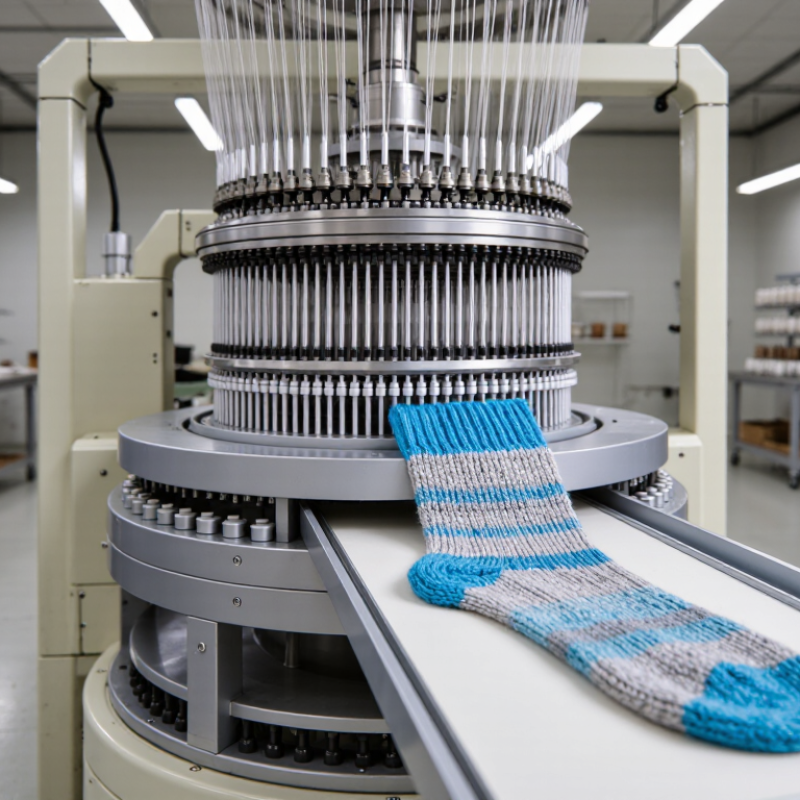
A 3D sock knitting machine forms a sock directly on a circular knitting system. Needles arranged around a cylinder catch yarn and create interlocking loops. Those loops build the leg and foot as a connected textile. Not a printer. Here, “3D” refers to the sock’s volume and shaping, rather than a flat piece later sewn into a tube.
On many machines, needle selection and movement help shape the heel and toe. The machine can also vary stitch structure, making areas feel tighter or more open. For example, the fabric over the instep may be lighter, while the heel needs extra durability. Exact capabilities differ by machine and setup, so the term does not guarantee a particular fit or feature. A technician may adjust yarn tension and stitch settings after checking a sample sock. Small changes matter: a loop that looks even on the cylinder can feel rough against a toe. The label “3D” is useful, but not perfectly precise. The knitted structure itself explains more.
A 3D sock knitting machine forms a sock directly from yarn, rather than knitting a flat piece for later assembly. A circular bed of needles creates connected loops as the cylinder turns. Each needle catches yarn, pulls it through an earlier loop, and adds another stitch. The fabric grows as a tube, with changes in stitch size and yarn helping create different zones. A firmer rib may sit at the cuff; softer stitches can shape the leg and foot.
The heel requires a change in direction. Instead of knitting continuously around the cylinder, the machine can work back and forth across part of the needle bed. These shorter rows build extra fabric into a heel pocket, then circular knitting resumes. For the toe, programmed needle actions reduce the fabric gradually toward its end. Some machines close the toe during knitting; others leave an opening for a separate joining step. That detail is easy to overlook. Small changes matter. Yarn tension, needle condition, and stitch settings can affect the fit, even when the pattern stays the same. The machine creates the three-dimensional form, but it does not guarantee a perfect sock every time. A finished sock still deserves a close check for loose loops, uneven shaping, and comfort on the foot.
| Dimension or Stage | What the Machine Does | How the Sock Takes Shape | Practical Detail |
|---|---|---|---|
| Machine type | Uses a circular needle arrangement and yarn-feeding system to knit hosiery. | Loops are formed into a knitted tube rather than cut from flat fabric and sewn into a tube. | “3D” describes the sock’s shaped, wearable form; it does not mean that the sock is made by 3D printing. |
| Cuff and leg | Feeds yarn to needles around the cylinder while the machine forms successive courses. | The fabric grows as a tube, creating the cuff and leg section. | Rib structures can be knitted at the cuff to help it stretch and stay in place. |
| Foot section | Continues knitting the tube, with stitch and yarn choices set by the sock design. | The tube extends from the leg into the foot, forming the upper and sole as connected fabric. | Different yarns or stitch structures can be used in selected areas, depending on the machine and program. |
| Heel shaping | On machines equipped for shaped heels, needle selection and reciprocating knitting form a heel pocket. | Shorter rows add depth and shape the fabric around the heel. | Heel construction varies by machine capability and sock design; not every sock machine uses the same method. |
| Toe shaping | Controls knitting and stitch formation near the end of the foot to shape the toe. | The fabric narrows or is otherwise shaped to fit around the toes. | Many knitted socks leave a small opening that is closed in a separate toe-linking or seaming operation. |
| Finished structure | Produces a knitted sock blank that is removed from the machine for any required finishing. | The cuff, leg, foot, heel, and toe form a connected three-dimensional garment. | Finishing may include toe closure, washing, boarding to set the shape, inspection, and packaging. |
In short: A 3D sock knitting machine creates a sock-shaped knitted structure by forming loops in a tube and shaping areas such as the heel and toe through controlled needle action.
A 3D sock knitting machine uses coordinated parts to shape fabric around the foot, heel, and toe. The needle cylinder holds rows of needles; cams guide their movement to form stitches. Yarn feeders deliver each strand, while tension devices help prevent loose loops or breaks. Sinkers hold the fabric as needles rise, keeping the knitted surface stable. Small parts matter.
Pattern-selection mechanisms choose which needles knit, helping create ribs, color patterns, or shaped sections. A take-down system pulls finished fabric downward at a controlled rate. Sensors and the control unit monitor settings such as speed and stitch length. Some machines knit a closed toe; others leave it open for a separate closing operation. Check the machine configuration before assuming the toe is seamless.
Material handling matters, too. Textile Exchange’s Materials Market Report 2024 estimates that global fiber production reached 124 million tonnes in 2023 and may rise to 169 million tonnes by 2030. This broad industry trend makes consistent yarn feeding and low-waste setup increasingly relevant, though the report does not measure sock-machine performance directly. One limitation is easy to miss: precise controls cannot fully correct uneven yarn or poor maintenance. A slight tension mismatch can show up as a visible stripe or a loose heel.
What Is a 3D Sock Knitting Machine?
Materials, Stitch Structures, and Production Features
A 3D sock knitting machine builds a shaped, tubular sock on a circular needle bed. Needles form the leg, heel, foot, and toe sections by changing stitch patterns and fabric dimensions. Many machines still require a separate toe-closing step, so “3D” does not always mean completely seamless. Not always seamless.
Yarn choice shapes comfort and durability. Cotton feels familiar against skin, while nylon adds abrasion resistance and elastane helps cuffs and arches recover after stretching. Wool and recycled polyester are also used, depending on the intended warmth, moisture handling, and product claims. Textile Exchange’s Materials Market Report 2024 estimates that global fiber production reached 124 million tonnes in 2023, with polyester representing about 57 percent. That broad figure is not sock-specific, but it shows why synthetic yarns matter in textile production.
Stitch structures change the feel underfoot. Ribbing grips the calf; terry loops create a cushioned sole; mesh zones allow more airflow. Small details matter. During production, operators monitor yarn tension, needle condition, and stitch density, because a small tension shift can create a visible stripe or uneven heel. In practice, extra cushioning may improve comfort but make a shoe feel tighter. That trade-off is easy to overlook.
A 3D sock knitting machine forms a sock as a shaped, three-dimensional garment. Materials and stitch structures can vary by design; the chart shows example stitch structures used across common sock zones.
Values count the example stitch structures listed for each zone: rib, plain knit, terry, and mesh. These are illustrative placements, not a universal machine specification. Sock designs may use different materials, structures, and construction methods.
Common Uses and Practical Limitations
A 3D sock knitting machine forms a sock through controlled needle movements, shaping the heel, toe, and leg as it knits. Despite the name, it does not print fabric. Its value is in building different stitch structures and shaping directly into a knitted tube, often with fewer seams. This suits sports socks, patterned styles, and small production runs where fit or cushioning zones matter. Small runs are possible. Textile Exchange’s 2024 Materials Market Report estimates that global fiber production reached 124 million tonnes in 2023, with polyester accounting for 57%. That scale matters: material choice affects cost, feel, durability, and the machine settings needed.
Practical limits show up quickly. A new sock design may need careful programming, sampling, and adjustments to yarn tension. Fine changes in yarn or sizing can alter stretch and fit. The machine also does not guarantee a perfect sock; heel placement, toe closure, and comfort still need hands-on checks. More design flexibility can mean more setup time, not faster output. Very small orders may struggle to justify that time. And “seamless” does not always mean a completely smooth feel: some toe closures can still rub. Operators should test samples on real feet and after washing. A little disappointing, perhaps, but essential.


For those larger-sized parts, or smaller quantity runs, we have 2 independent powder coat booths and ovens. The quality, durability and affordability of today’s powder coating finishes make this the process of choice for world-class companies.
Powder coating advantages over other forms of coating are many. Materials used in the Powder coating process can be metals and non-metals that come in a multitude of thicknesses, textures, colors, etc. Another of Powder coating’s biggest advantages over conventional coatings is its ability to create finishes in many different textures. Powder Coating Booths allow us the ability to apply these advantages to large products.
Tri-State Fabricators runs a full-service conveyor line for painting. Wet painting can provide protection or decoration to many different part styles. From start to finish, every project is easier to undergo random and point-based inspection by our skilled painting team.
Advantages to our Wet Paint Line are these lines start with product prep and ends with a thorough inspection of a high quality finished product. Our ability to complete large and small projects with a superior finish and doing so in a timely and economical fashion. This passes along the savings in production to our customers. When powder coating ins not an option, our Wet Paint Line gets the job done right the first time.
When the parts get big and heavy we roll-out our custom paint racks and oversize booth. By utilizing our partnerships with all the major paint brands, we can match virtually any color with wet paint.
The advantages of having access to a Wet Paint Booth are many. Large projects of many different shapes can be loaded into the booth. The Wet Paint Booth offers an environment that is much more controlled than a typical parts painting operation.
Not only are they used because of their controlled environment, but they’re are also advantageous when it comes to applying paint to parts that are needed in industries that require specialty coatings such as medical, aerospace, etc.
Our military forces have some very high standards when it comes to the finish of their vehicles and equipment. From the first pre-treatment step to final coat, it takes a great deal of knowledge and experience to protect the men and women of our armed forces. They deserve only the best, and Tri-State Fabricators provides it.
All of our processes are closely monitored by our staff and management teams. Both of which are highly trained in the processes of metal fabrication and finishing. Tri-State Fabricators’ goal is to always fully satisfy each and every customer, including the military. We will always put a 110% into what we do.
Abrasive media blasting is an excellent way to remove old paint, rust, and increase the paint/powder adhesion. Glass beads produce a much smoother and brighter finish than angular abrasives; leaving the part clean yet without any dimensional change. Chemically inert and environmentally friendly, we can recycle our beads approximately 30 times; making them a more preferred method of metal cleaning or surface finishing.
Advantages to Glass Bead Blasting are many. Glass bead blast media is used when a project is needing rough surfaces need to become smooth for applications of coatings such as paint. It is typically used to clean paint and rust from a product surface without deforming the surface it is being used on. Overall, compared to many other blasting media, Glass Bead Blasting is a very economical choice and those savings are always passed on to our customers.
Tri-State Fabricators utilize a zinc phosphate wash to clean and etch the material to ensure the best paint adhesion possible. The unique design of our 3-stage wash system does the work like a 5-stage. From Cleaning and rinsing to conversion coating and post-treatment, Our Part Washing process is a complete service and works throughout the fabrication service and the finishing service.
Along with the previously mentioned benefits, Curing is a vital chemical reaction that leaves the product finish hard and relatively safe from mild abrasion and aggressive corrosion. This process can be done in more than one way; ambient air-dry or in curing ovens at temps that exceed 240°.
From fixing paint mistakes (someone else’s of course) to simply cleaning our paint line hooks, our burn-off oven is put to good use. After a quick burn-off, a little clean up, and a fresh coat of paint, your parts will look better than new.
Why does our Burn-Off Oven work so well? Because super heating the air around parts turns the materials into ashes. From paint and powder coatings to rubber and machining oils, high temps do the job without degrading the integrity of the part.
Masking is a vital part of producing high quality products. We have die-cut masking patterns to protect machined surfaces as well as a wide range of plugs and caps to protect threaded holes and bolts. We provide permanent and temporary masking.
Masking allows the selected sections of a product to be protected from a fabrication or finishing service. This can be with both chemicals when etching and tapes, paints when only finishing just a section of the product. Masking is great in aiding the customization process of a project.
Screen printing is a photographic process that transfers artwork onto a porous nylon screen which allows colored ink to flow through the screen and be deposited on an aluminum or plastic component. We can generally have just about any design created onto a screen for your parts.
Some of the advantages of Screen Printing are, brand recognition for your business displaying on your products, assembly instructions, product warnings/hazards, etc. Tri-State Fabricators produces Screen Printing of the highest quality so you know it’s durable.
Metal Finishing is the art of treating the exterior portion of product, often metal but can also be made of other materials, so that the surface is clean and free of any debris. Then the process of applying coats or either paint of powder coat takes place. This coating process improves the quality of the product in both appearance and resistance to wear and corrosion.
Tri-State Fabricators, Inc., understands that a project typically isn’t complete until a high-quality finish has been added to your product. This is why our painting and powder coating teams continuously inspect the products throughout the Metal Finishing process.