What Are Dinosaur Outdoor Decorations Used For?
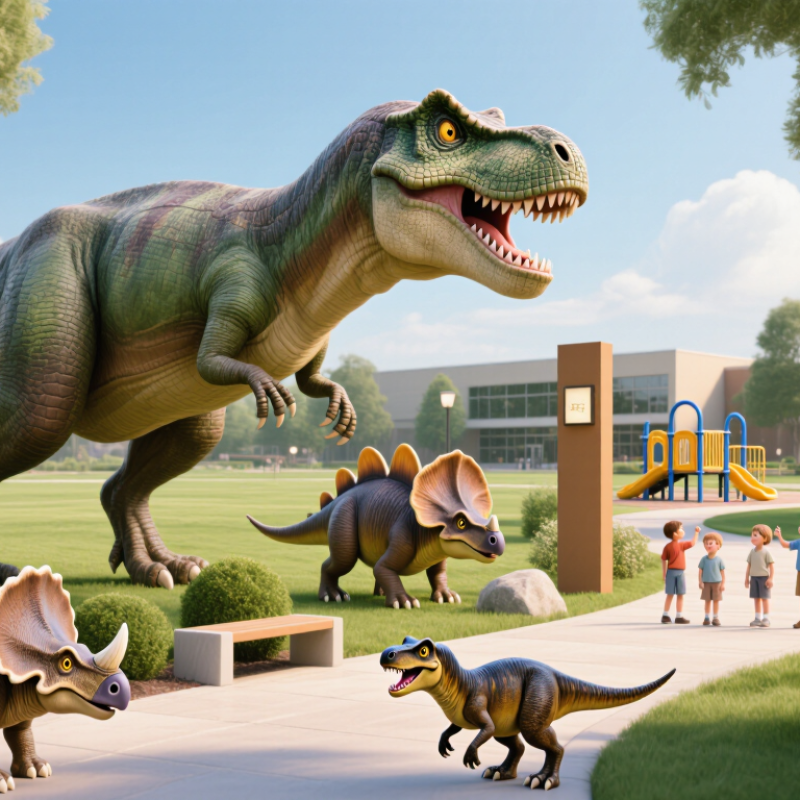
dinosaur outdoor decorations turn ordinary gardens, parks, schools, and commercial spaces into memorable prehistoric scenes. They are used to attract attention, support themed events, and create engaging photo opportunities. A large Tyrannosaurus near an entrance can guide visitors naturally. Smaller dinosaur figures can make a garden feel playful without overwhelming the landscape. The purpose changes with the setting.
Maya Chen, an outdoor exhibit designer with more than fifteen years of project experience, says, “The best dinosaur display combines visual excitement with a clear purpose, safe placement, and believable detail.” Her observation reflects practical industry standards. Effective Dinosaur Outdoor Decorations should withstand sunlight, rain, wind, and repeated public contact. Materials, anchoring systems, surface finishes, and maintenance plans all matter. A striking model may fail if its paint fades quickly or its base becomes unstable.
They also support informal learning. Schools and museums can use footprints, species labels, and size comparisons beside each figure. Families may understand scale better beside a life-sized model than through a textbook image. Businesses can use themed decorations to strengthen branding and encourage visitor sharing. Still, decoration alone does not guarantee interest. Too many figures can create visual clutter. An inaccurate pose may confuse rather than educate. Even experienced designers sometimes prioritize dramatic appearance over long-term upkeep. That deserves reflection. Good planning considers age groups, walking paths, lighting, accessibility, and local weather conditions. The strongest installations feel exciting, understandable, and responsibly maintained. They invite people to look closer. That is their lasting value.
Classify Dinosaur Outdoor Decorations by Size, Material, and Display Context
What Are Dinosaur Outdoor Decorations Used For?
Dinosaur outdoor decorations create playful focal points for gardens, entrances, parks, and themed events. Their purpose changes with size, material, and display context. Small figures, under 60 centimeters, suit balconies, flower beds, and children’s activity corners. Medium models, around 60 to 150 centimeters, can guide visitors along paths. Large sculptures become visual landmarks near gates or commercial displays. They need wider spacing and stronger anchoring.
Material affects realism, maintenance, and safety. Fiberglass offers detailed scales and moderate weight. Resin works well for smaller figures but may crack after repeated freezing. Powder-coated metal provides structural strength, although its surface can become hot in direct sunlight. The Global Outdoor Furniture Market report by Grand View Research valued this adjacent market at approximately 23.3 billion dollars in 2023. That growth reflects wider interest in durable outdoor environments, not dinosaur products specifically. This distinction matters.
Display context should guide the design. A garden display benefits from earthy colors and low silhouettes. A public event may need brighter finishes and taller forms. I have found that viewers often notice placement before craftsmanship. Poor positioning can make an expensive model look accidental. The 2024 Houzz & Home Study also identifies outdoor living upgrades as a continuing homeowner priority.
Tips: Measure the viewing distance first. Leave clear walking space. Check wind exposure, drainage, and surface temperature. Secure tall models carefully. Avoid placing small pieces where children may trip. Even realistic displays can feel excessive; a quieter arrangement may work better.
Support Science Learning with Fossil and Timeline Data from the NPS
Dinosaur outdoor decorations can turn a garden, schoolyard, or museum entrance into a practical science-learning space. Their strongest use is not simple decoration. They can help learners explore fossils, extinction, adaptation, and geological time through visible, memorable objects. A child may notice a dinosaur’s teeth, posture, or foot shape before reading a single fact.
The National Park Service provides reliable fossil and timeline information that can guide these displays. Educators can place dinosaur figures beside signs showing the Triassic, Jurassic, and Cretaceous periods. A simple timeline could compare dinosaur survival with changing climates, plants, and shallow seas.
Fossil evidence may also explain that different species lived in different regions. A small sign might connect a footprint replica to trace fossils, while another shows how bones are identified and studied.
Details matter. A weathered-looking footprint beside gravel can invite students to measure length and compare walking patterns.
Questions work well “What evidence supports this reconstruction?” or “What remains uncertain?”
The display should not pretend every dinosaur image is exact. Scientists revise interpretations when new fossils appear. Some colors, sounds, and behaviors remain guesses.
I have found that learners remember better when they can walk, observe, and question. Yet too many figures may create confusion.
Clear labels and accurate dates are essential. A useful display leaves room for doubt, not just excitement.
Increase Visitor Engagement Using IAAPA Attendance and Dwell-Time Metrics
What Are Dinosaur Outdoor Decorations Used For?
Dinosaur outdoor decorations can turn a quiet pathway into a measurable visitor experience. Their value is not limited to visual appeal. A life-sized dinosaur near an entrance can create photo opportunities, guide movement, and encourage families to pause together. IAAPA reported more than 40,000 attendees at its 2023 Expo, showing the scale of professional interest in attraction design and visitor behavior. However, attendance alone does not prove engagement.
Measure the details.
Operators should compare attendance, repeat visits, queue movement, and dwell time before and after installation. The TEA/AECOM 2023 Theme Index reported 243.6 million visits across the world’s top 25 theme parks, a 23.1% increase from 2022. That recovery highlights a practical challenge: more visitors can increase congestion without improving experience. A dinosaur placed beside a shaded seating area may extend dwell time, while one blocking a narrow path may reduce comfort. Simple sensors, timed observations, and ticketing data can reveal the difference.
The evidence may remain imperfect. Weather, school holidays, and special events can distort results. A three-day comparison is weak. Use several comparable weeks. Track photo interactions, average pause duration, and movement between nearby attractions. If visitors stop for eight seconds but leave immediately, the display attracts attention without creating deeper engagement. That finding still matters. It can guide better placement, clearer interpretation panels, and safer circulation planning.
Design Safe Installations Under ASTM F2374 and Accessibility Standards
Dinosaur outdoor decorations are often installed as visual attractions, photo points, or themed wayfinding features. Their purpose changes when children can climb, touch, enter, or interact with them. In those cases, the installation needs more than visual appeal. ASTM F2374 provides design, operation, inspection, and maintenance guidance for inflatable amusement devices. It becomes especially relevant when a dinosaur is inflatable and supports play or public interaction. A static fiberglass figure may fall outside its scope, but its surrounding hazards still require careful control.
Start with a firm, level surface and secure every movable element against wind and tipping. Keep anchors, ropes, and electrical leads outside walking paths. The U.S. Access Board’s ADA Standards specify a 36-inch minimum accessible route width in many conditions. Provide a 60-inch turning space where visitors must change direction or maneuver around the display.
The Consumer Product Safety Commission reports more than 200,000 emergency-department-treated playground injuries annually, showing why nearby play-like features deserve serious review. Use impact-absorbing surfacing where climbing is foreseeable, even if climbing was not intended. Children rarely follow the designer’s plan.
Inspect seams, ballast, sharp edges, drainage, and nighttime visibility before opening. Log weather closures and repeated repairs. A warning sign cannot correct a blocked route or unstable base. I would also test the layout with a wheelchair, stroller, and mobility cane; drawings can hide awkward gaps. The design may look polished, yet still exclude visitors or invite unsafe shortcuts.
Evaluate ROI Through IAAPA Cost, Maintenance, and Replacement Data
Dinosaur outdoor decorations create visual anchors for parks, museums, family venues, and seasonal attractions. They guide visitors, encourage photographs, and make entrance areas feel more memorable. Their value, however, depends on more than appearance. Operators should evaluate purchase price, freight, installation, anchoring, inspections, and seasonal storage.
IAAPA industry resources can support a practical cost review, but they should not replace site-specific quotes. Compare the decoration’s installed cost with expected visitor engagement, ticket influence, retail activity, and photography-related exposure. A simple ROI estimate divides measurable annual return by total ownership cost. Include cleaning, repainting, lighting repairs, weather protection, and labor. Replacement data also matters. A cheaper model may require earlier refurbishment. A durable structure may cost more initially, yet reduce downtime and disposal costs. The figures can still be uncertain.
Some assumptions will be wrong. Visitor interest may decline after repeated exposure. Storm damage may exceed the maintenance allowance. Review performance quarterly using inspection records, repair invoices, visitor counts, and staff observations. IAAPA benchmarks can provide context, while internal records create stronger decisions.
Tips: Photograph each unit during inspections. Record cracks, fading, loose fasteners, and water entry. Set a replacement threshold before problems become visible to visitors. Test one decoration in a high-traffic area before expanding the collection. Keep a contingency budget for unexpected repairs. Even a strong-looking dinosaur can become an expensive liability when maintenance is ignored.
What Are Dinosaur Outdoor Decorations Used For? — Evaluate ROI Through IAAPA Cost, Maintenance, and Replacement Data
Five-year planning scenario for an outdoor dinosaur display. Costs are shown in USD and should be replaced with project quotations before investment decisions.
The model separates acquisition and installation, routine maintenance, and replacement exposure from potential incremental revenue. IAAPA does not publish a standardized public cost series specifically for dinosaur decorations, so these figures are transparent planning assumptions rather than company or brand data. In this mid-range scenario, five-year cost is approximately $35,000; a $50,000 incremental-revenue outcome would produce an estimated ROI of about 43%.





