


Choosing the right Packing Covers is not simply a matter of selecting the thickest material. A cover must match the product, storage conditions, handling method, and expected service life. A lightweight polyethylene cover may suit indoor pallets, while laminated or reinforced fabric may perform better outdoors. Details matter.
Packaging specialist Dr. Jay Singh offers a useful principle: “A package must protect the product, communicate value, and perform reliably.” This idea applies directly to Packing Covers. Protection includes more than blocking dust. Covers may need to resist rain, sunlight, abrasion, stretching, and repeated removal. In a busy warehouse, a poorly fitted cover can snag on pallets or tear against sharp corners. That small failure can expose equipment, furniture, or materials to moisture and dirt.
The best choice depends on actual conditions. Start with dimensions, weight, surface shape, and handling frequency. Then consider ventilation, fastening points, and cleaning requirements. Do not assume thicker always means stronger. Some heavy covers are difficult to install and may create unnecessary labor. Others look durable but fail around seams or eyelets.
There is room for judgment. No single cover works everywhere. A reusable PVC-coated cover may be dependable, yet excessive weight can reduce practicality. A breathable fabric cover may reduce condensation, but it may not stop heavy rain. This guide compares common Packing Covers by protection, durability, usability, and value, helping readers make a more informed choice.
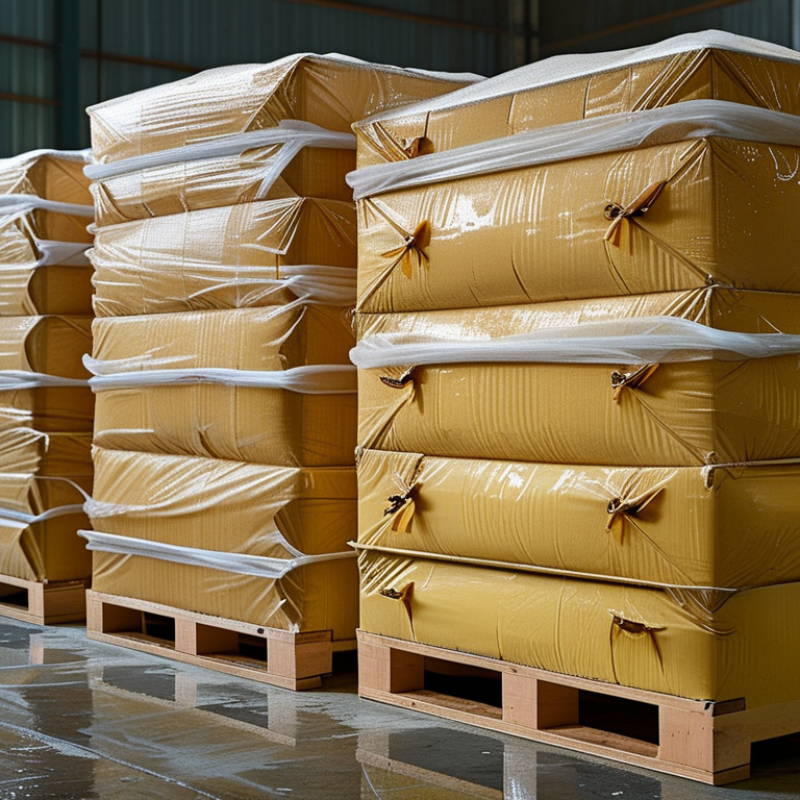
Packing cover types are easiest to compare by material, use, and protection level. Polyethylene covers suit short-term storage and moving because they resist dust, light moisture, and rough handling. They are practical for boxed furniture or stacked supplies. However, thin plastic can tear against sharp corners.
Canvas covers offer stronger abrasion resistance. Their woven surface feels more dependable around timber, machinery, and workshop equipment. Some canvas covers include water-resistant treatments, but they are not always waterproof. A damp cover can trap moisture underneath. That detail is easy to miss.
Laminated fabric provides a useful middle option. It combines flexibility with better resistance to rain, oil splashes, and surface scuffs. These covers work well during transport or outdoor staging.
For delicate items, choose padded covers with foam or quilted layers. They reduce dents from vibration and accidental knocks. Breathable fabric may be safer for long storage, especially in changing temperatures. It helps reduce condensation, though it cannot correct a wet item packed inside.
Protection level should match the actual risk. Dust protection needs less material than impact protection. A light indoor cover may be enough for clean shelving, while outdoor transport needs sealed edges, strong fasteners, and reinforced corners.
Measure the item with its fittings attached. Covers that fit too tightly can split at the seams. Covers that are too loose may catch wind or slide during handling. There is no perfect choice; real conditions often expose weaknesses that a product sheet does not mention.
ISO 527 testing helps compare tensile strength, elongation, and stiffness in packing cover materials. PE usually offers strong flexibility and practical tear resistance. PP often feels stiffer and can retain shape better under load. PVC may provide good toughness and weather resistance, but its results depend heavily on formulation and thickness. Fabric covers are different. Their woven structure, coating, and seam design can change the result significantly.
Test conditions matter. Cut specimens from consistent areas, avoiding seams unless seam strength is the target. Condition samples before testing, because humidity and temperature can alter elongation. Use the correct ISO 527 method for the material. A coated fabric should not be treated like a simple plastic film. Watch the stress-strain curve, not only the final breaking force. A higher tensile value does not automatically mean better cover performance.
Tips: Record thickness at several points, inspect grip slippage, and repeat tests across the roll. Small variations can be important. A neat material ranking is tempting, but it can mislead. In practice, PE may win for flexible handling, while PP suits firmer support. PVC can perform well in demanding exposure, yet its environmental and handling requirements deserve review. Fabric may be the strongest choice for repeated use, though stitching can become the weak point. That detail is easy to miss.
What Type of Packing Covers Are Best?
Selecting Cover Thickness Using ASTM D882 Tensile-Strength Data
Choosing packing cover thickness should begin with the load, contact surface, and handling conditions. ASTM D882 provides useful tensile data for plastic films and thin sheets. It measures force, elongation, and sometimes tensile strength at break. These results help compare materials under controlled conditions.
Check both machine-direction and cross-direction values. Film can resist pulling well in one direction but perform poorly in the other. A 50-micrometre cover may suit clean, light packages with smooth edges. A thicker 100-micrometre cover may be safer around corners, repeated handling, or outdoor storage. Thickness alone is not protection. Tear resistance matters.
Use real test data.
During material reviews, I compare ASTM D882 results with the package’s actual weight and handling pattern. A strong film can still puncture when a sharp edge presses against it. Temperature also changes performance, especially in cold warehouses. Ask whether testing used conditioned samples, because moisture and temperature may affect the results. Test samples should match the proposed thickness, not a different laboratory grade.
A common mistake is selecting the highest tensile value without checking elongation. High strength with low stretch may cause sudden failure around a corner. I prefer a balanced result, supported by small-scale trials using the actual packing line. Record tearing, slipping, and seal damage. These observations may challenge the original specification.
Evaluating Tear Resistance and Durability Through ASTM D1004 Testing
The best packing cover depends on how it will be handled, stored, and transported. A cover facing sharp corners needs strong tear resistance. One exposed to sunlight or repeated folding needs broader durability.
ASTM D1004 provides a practical way to measure initial tear resistance in plastic film and sheeting. During testing, a prepared specimen is pulled under controlled conditions. The recorded force shows how much energy is needed to start a tear. That detail matters. A cover may appear thick, yet fail quickly after a small cut begins.
In real packaging work, I would inspect thickness, flexibility, seams, and edge protection alongside the test result. A warehouse cover can rub against a wooden pallet for weeks. A tiny puncture near the corner may then spread across the sheet. ASTM D1004 helps compare materials, but it does not predict every field condition. It does not fully measure weathering, abrasion, puncture resistance, or long-term fatigue.
Test preparation also deserves attention. Samples should come from different areas of the roll, because material properties may vary. Temperature and humidity can influence results. Small testing errors matter.
A high tear value is useful, not conclusive. The most reliable choice combines ASTM D1004 data with handling trials, storage observations, and realistic load conditions. I would also repeat testing when the cover design changes. That step is easy to overlook.
Packing covers should match the dominant exposure, not simply the product shape. For moisture, choose coated fabric or polyethylene film with sealed seams. ISO 2233 conditioning procedures can expose packages to 90% relative humidity, revealing weak closures and trapped condensation. Leave a small ventilation path when temperature changes are likely. A fully sealed cover can become a humidity trap. That mistake is easy to make.
UV exposure needs more than a dark color. The World Health Organization’s Global Solar UV Index identifies levels of 3 or higher as requiring protection. Use UV-stabilized material when covers remain outdoors, especially for rubber, painted surfaces, and pale plastics. Inspect folded edges first. They often fade before broad panels. NOAA’s ultraviolet monitoring data also shows that exposure varies sharply by season, latitude, and cloud conditions, so indoor storage assumptions may fail near open loading areas.
Dust control depends on fabric weave, closure design, and handling discipline. For electronics, use antistatic or conductive covers that align with IEC 61340-5-1 practices. Ordinary plastic may accumulate charge during removal. The 2024 Global E-waste Monitor reports 62 million tonnes of electronic waste generated in 2022, making protection during storage increasingly important. Still, static control is not automatic. Grounding, clean surfaces, and trained handling remain necessary. I would not specify one cover for every warehouse; real site measurements should challenge the first choice.


For those larger-sized parts, or smaller quantity runs, we have 2 independent powder coat booths and ovens. The quality, durability and affordability of today’s powder coating finishes make this the process of choice for world-class companies.
Powder coating advantages over other forms of coating are many. Materials used in the Powder coating process can be metals and non-metals that come in a multitude of thicknesses, textures, colors, etc. Another of Powder coating’s biggest advantages over conventional coatings is its ability to create finishes in many different textures. Powder Coating Booths allow us the ability to apply these advantages to large products.
Tri-State Fabricators runs a full-service conveyor line for painting. Wet painting can provide protection or decoration to many different part styles. From start to finish, every project is easier to undergo random and point-based inspection by our skilled painting team.
Advantages to our Wet Paint Line are these lines start with product prep and ends with a thorough inspection of a high quality finished product. Our ability to complete large and small projects with a superior finish and doing so in a timely and economical fashion. This passes along the savings in production to our customers. When powder coating ins not an option, our Wet Paint Line gets the job done right the first time.
When the parts get big and heavy we roll-out our custom paint racks and oversize booth. By utilizing our partnerships with all the major paint brands, we can match virtually any color with wet paint.
The advantages of having access to a Wet Paint Booth are many. Large projects of many different shapes can be loaded into the booth. The Wet Paint Booth offers an environment that is much more controlled than a typical parts painting operation.
Not only are they used because of their controlled environment, but they’re are also advantageous when it comes to applying paint to parts that are needed in industries that require specialty coatings such as medical, aerospace, etc.
Our military forces have some very high standards when it comes to the finish of their vehicles and equipment. From the first pre-treatment step to final coat, it takes a great deal of knowledge and experience to protect the men and women of our armed forces. They deserve only the best, and Tri-State Fabricators provides it.
All of our processes are closely monitored by our staff and management teams. Both of which are highly trained in the processes of metal fabrication and finishing. Tri-State Fabricators’ goal is to always fully satisfy each and every customer, including the military. We will always put a 110% into what we do.
Abrasive media blasting is an excellent way to remove old paint, rust, and increase the paint/powder adhesion. Glass beads produce a much smoother and brighter finish than angular abrasives; leaving the part clean yet without any dimensional change. Chemically inert and environmentally friendly, we can recycle our beads approximately 30 times; making them a more preferred method of metal cleaning or surface finishing.
Advantages to Glass Bead Blasting are many. Glass bead blast media is used when a project is needing rough surfaces need to become smooth for applications of coatings such as paint. It is typically used to clean paint and rust from a product surface without deforming the surface it is being used on. Overall, compared to many other blasting media, Glass Bead Blasting is a very economical choice and those savings are always passed on to our customers.
Tri-State Fabricators utilize a zinc phosphate wash to clean and etch the material to ensure the best paint adhesion possible. The unique design of our 3-stage wash system does the work like a 5-stage. From Cleaning and rinsing to conversion coating and post-treatment, Our Part Washing process is a complete service and works throughout the fabrication service and the finishing service.
Along with the previously mentioned benefits, Curing is a vital chemical reaction that leaves the product finish hard and relatively safe from mild abrasion and aggressive corrosion. This process can be done in more than one way; ambient air-dry or in curing ovens at temps that exceed 240°.
From fixing paint mistakes (someone else’s of course) to simply cleaning our paint line hooks, our burn-off oven is put to good use. After a quick burn-off, a little clean up, and a fresh coat of paint, your parts will look better than new.
Why does our Burn-Off Oven work so well? Because super heating the air around parts turns the materials into ashes. From paint and powder coatings to rubber and machining oils, high temps do the job without degrading the integrity of the part.
Masking is a vital part of producing high quality products. We have die-cut masking patterns to protect machined surfaces as well as a wide range of plugs and caps to protect threaded holes and bolts. We provide permanent and temporary masking.
Masking allows the selected sections of a product to be protected from a fabrication or finishing service. This can be with both chemicals when etching and tapes, paints when only finishing just a section of the product. Masking is great in aiding the customization process of a project.
Screen printing is a photographic process that transfers artwork onto a porous nylon screen which allows colored ink to flow through the screen and be deposited on an aluminum or plastic component. We can generally have just about any design created onto a screen for your parts.
Some of the advantages of Screen Printing are, brand recognition for your business displaying on your products, assembly instructions, product warnings/hazards, etc. Tri-State Fabricators produces Screen Printing of the highest quality so you know it’s durable.
Metal Finishing is the art of treating the exterior portion of product, often metal but can also be made of other materials, so that the surface is clean and free of any debris. Then the process of applying coats or either paint of powder coat takes place. This coating process improves the quality of the product in both appearance and resistance to wear and corrosion.
Tri-State Fabricators, Inc., understands that a project typically isn’t complete until a high-quality finish has been added to your product. This is why our painting and powder coating teams continuously inspect the products throughout the Metal Finishing process.

