


Choosing the right Filter Cartridges can determine whether a process runs smoothly or fails quietly. A cartridge may look simple, yet its media, pore rating, housing fit, and chemical compatibility affect every result. Clear water does not always mean clean water.
The main options include sediment, pleated, melt-blown, string-wound, activated carbon, and membrane cartridges. Each type solves a different problem. Sediment cartridges capture sand, rust, and visible particles. Pleated designs provide greater surface area and longer service life. Melt-blown cartridges offer graded depth filtration, while string-wound models handle uneven particle loads effectively. Activated carbon reduces chlorine, odors, and some organic compounds. Membrane cartridges deliver finer separation when microbial or submicron control matters.
Dr. Nicholas Cheremisinoff, a recognized water-treatment and filtration author, has expressed a practical principle: “The best filter is selected for the process, not for the specification alone.” That idea deserves attention. A five-micron rating may sound precise, but it does not explain flow demand, contaminant shape, pressure loss, or cartridge loading. Real systems are less tidy.
A cartridge that performs well in a laboratory may clog quickly in a workshop. It may also release carbon dust, swell under heat, or fail against aggressive chemicals. Selection requires evidence. Check the fluid, temperature, flow rate, pressure, target contaminant, and replacement interval. Do not trust marketing language alone.
There is no universal winner. The “top” cartridge depends on the application. This guide compares the leading types, their strengths, their limitations, and the practical mistakes that buyers often overlook.
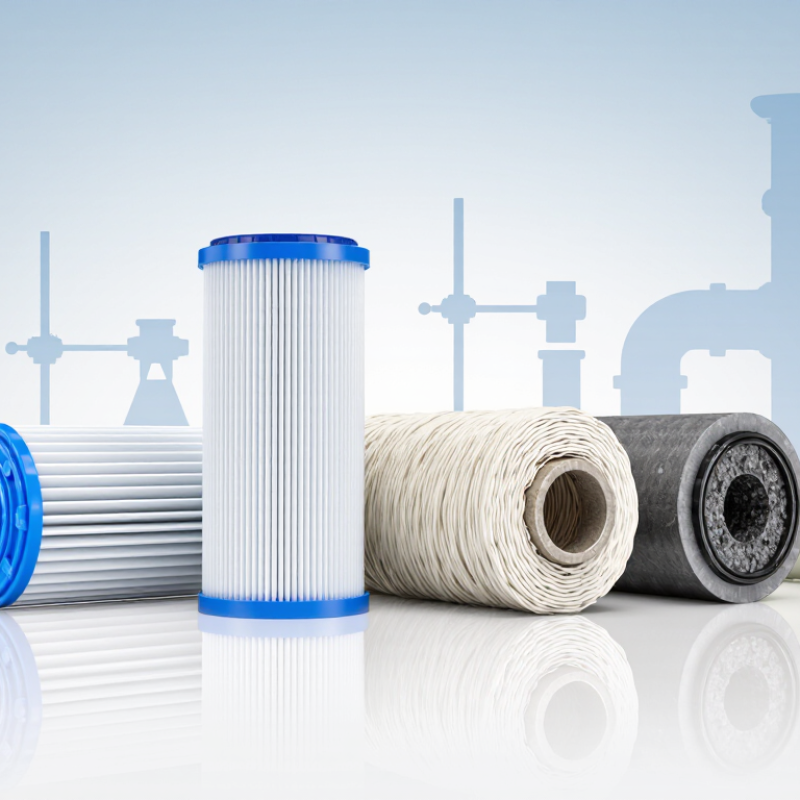
Filter cartridges are best classified by filtration mechanism and micron rating. Depth cartridges trap particles throughout layered media, making them useful for sediment-heavy water. Pleated cartridges capture particles on a larger surface, often extending service life. Activated carbon cartridges reduce chlorine, odors, and some organic compounds through adsorption. Membrane cartridges use fine pores and can target microorganisms, depending on their validated rating.
Micron labels need careful reading. A nominal 5-micron cartridge may allow some smaller particles through, while an absolute 1-micron cartridge applies a stricter retention claim. The CDC notes that filters labeled 1 micron absolute can remove Cryptosporidium from drinking water.
However, cartridge performance depends on flow rate, pressure, installation, and maintenance. A smaller rating is not always better. It can cause rapid pressure loss. The 2024 WHO/UNICEF JMP report estimated that 2.2 billion people lacked safely managed drinking water in 2022, so reliable selection matters beyond household convenience.
Tips: Match the mechanism to the contaminant, not the product shape. Check independent test data, rated capacity, and replacement intervals. In field maintenance, I have seen clear water still carry dissolved chemicals. That is an easy mistake. Also, “0.2 micron” may describe nominal or absolute performance; the label alone remains incomplete. Consider testing the source water before choosing a cartridge.
Sediment and depth cartridges are common choices for removing particles from water and process liquids. Their ratings usually range from 1 to 100 microns. A 100-micron cartridge can capture visible grit, rust flakes, and larger sand. A 1-micron option targets much finer particles. Micron size alone does not tell the whole story.
Depth cartridges trap particles throughout their layered material, rather than only on the outer surface. This design can hold a heavier sediment load before flow becomes restricted. In practical use, a 25-micron cartridge may protect a finer 5-micron cartridge upstream. That arrangement often extends service life and reduces sudden pressure loss. Small pores matter.
Choosing the correct cartridge requires more than guessing the smallest rating. Water with iron residue may need staged filtration, while clear supply water may need only light sediment control. Check the starting pressure, flow rate, temperature, and expected particle level. A cartridge rated at 1 micron is not automatically better; it may clog quickly and increase operating costs. I have found that pressure readings reveal problems earlier than appearance alone. A cartridge can look clean and still restrict flow. Replace it according to pressure change and performance, not just a calendar date. Some systems need adjustment after real-world testing, because published ratings cannot predict every water condition.
Comparison of common sediment and depth cartridge designs used for suspended-particle reduction
| Cartridge Type | Typical Micron Range | Filtration Mechanism | Particle Removal Profile | Dirt-Holding Capacity | Common Applications | Important Considerations |
|---|---|---|---|---|---|---|
| String-Wound Depth Cartridge | 1–100 µm | Particles become trapped within the progressively denser winding structure. | Effective for sand, rust, silt, and other irregular suspended solids across a broad size range. | High; the depth structure uses much of the cartridge volume for contaminant storage. | Pretreatment, well water, process water, and general sediment reduction. | Usually disposable; actual service life depends on flow rate, sediment concentration, and water quality. |
| Melt-Blown Depth Cartridge | 1–100 µm | Thermally bonded microfibers form a graded-density depth matrix. | Captures suspended solids through the depth of the media rather than only at the surface. | High to very high, particularly when the cartridge has multiple density zones. | Drinking-water pretreatment, food and beverage processing, chemicals, and light industrial water. | Nonwoven media can provide consistent filtration, but the cartridge is commonly replaced rather than cleaned. |
| Pleated Sediment Cartridge | 1–100 µm | Pleated surface or shallow-depth media provides a large filtration area. | Good for relatively uniform particles, including silt, scale, and fine rust. | Moderate to high; capacity is increased by the pleated surface area. | Residential water treatment, irrigation, cooling water, and low-viscosity process liquids. | Can offer lower initial pressure drop than compact surface media, but heavy or sticky solids may block the pleats. |
| Cellulose Depth Cartridge | 5–100 µm | Natural cellulose fibers create a porous matrix that retains suspended solids. | Suitable for general clarification and removal of relatively coarse particles. | Moderate to high, depending on media density and cartridge dimensions. | Industrial liquids, coatings, inks, and selected water-treatment duties. | Compatibility should be checked because cellulose can be affected by prolonged exposure to water, chemicals, or high temperatures. |
| Polypropylene Depth Cartridge | 1–100 µm | Polymer fibers form a graded or uniform depth-filtering structure. | Removes suspended solids while offering broad chemical compatibility in many aqueous applications. | High when a graded-density design is used. | Water treatment, pharmaceuticals, food processing, chemicals, and laboratory filtration. | Verify temperature, chemical compatibility, and whether the stated micron rating is nominal or absolute. |
| Washable or Reusable Screen Cartridge | 20–100 µm | A screen or mesh retains particles primarily at the surface. | Best for larger, relatively coarse particles such as sand, scale, and pipe debris. | Low to moderate before cleaning, but the cartridge can be reused after suitable cleaning. | Irrigation, cooling systems, equipment protection, and high-sediment water lines. | Not generally the first choice for fine particles; cleaning frequency rises as solids loading increases. |
| Graded-Density Depth Cartridge | 1–50 µm | A coarse outer region followed by finer internal layers distributes particle loading through the media. | Broad-spectrum sediment removal with improved use of the available filter volume. | High to very high, depending on cartridge size, media volume, and particle concentration. | High-quality water pretreatment, process fluids, and applications requiring stable particle reduction. | The selected rating should match the downstream equipment and the required flow rate; finer ratings generally increase pressure drop. |
Pleated filter cartridges use folded media to create a large filtration area inside a compact housing. This structure captures particles from about 0.1 to 50 microns, depending on the media and cartridge design. A 0.1-micron cartridge targets very fine particles, while a 25- or 50-micron option suits heavier sediment removal. The stated rating needs careful reading. Some ratings are nominal, while others are absolute, so performance can differ significantly.
In practical water treatment work, pleated cartridges are useful when flow demand changes during the day. Their extended surface area can hold more dirt than a flat filter of similar size. However, a cartridge with finer pores may create higher pressure loss, especially when muddy water enters directly. I check the initial pressure, flow rate, fluid temperature, and chemical compatibility before selection. Small details matter.
A clear housing helps.
For example, a cartridge handling silty process water may begin with a pressure drop of 0.1 bar and rise steadily as the folds collect particles. Replacing it too late can reduce flow and stress downstream equipment. Replacing it too early wastes media and operating costs. I have also seen poor results caused by damaged seals, not unsuitable filter media. That detail is easy to overlook. Regular inspection, correct installation, and verified test data make pleated filtration more reliable.
Activated carbon cartridges are widely used for reducing chlorine, improving taste, and controlling unpleasant odors. Under NSF/ANSI 42, chlorine reduction is treated as an aesthetic performance claim, not a microbiological safety claim. The standard evaluates specific contaminant reduction under controlled test conditions. It does not mean every carbon cartridge performs equally in every home.
Flow rate matters. Too much water can shorten contact time and reduce chlorine removal. A cartridge rated for a certain capacity may also perform differently with warmer water, high chlorine levels, or irregular usage. It is not a purifier. Chloramine removal requires a separate, clearly stated performance claim. Labels can mislead when users ignore these details.
In practical installations, a sediment prefilter can protect the carbon block from dirt and premature clogging. The cartridge should be replaced according to tested capacity, pressure loss, or the supplier’s schedule. Waiting for taste or odor to return is unreliable. A cartridge can look clean and still be exhausted. Stagnant water after long periods of nonuse deserves attention, so flushing the cartridge before drinking is sensible. I have seen maintenance plans fail because replacement dates were not recorded. That small oversight can undermine otherwise sound filtration.
Among the top filter cartridge types, membrane cartridges provide the finest separation. Reverse osmosis membranes commonly have effective pores near 0.0001 microns. That scale is far smaller than typical sediment filter openings. It can reduce many dissolved salts, metals, and microorganisms when the complete system operates correctly.
The membrane is usually placed after sediment and carbon cartridges. Those prefilters protect its thin surface from grit, chlorine, and organic compounds. In practice, water pressure matters greatly. Low pressure may reduce production and leave more dissolved material in the treated water. A small pressure gauge, a TDS meter, and a clean housing can reveal problems quickly. Do not judge performance by water appearance alone.
NSF/ANSI 58 addresses residential reverse osmosis drinking water treatment systems and their performance claims. A membrane cartridge should not be described as compliant merely because it has extremely small pores. Certification applies to specific products, configurations, and tested claims. Check the certification record and installation instructions. Replacement timing also depends on feed-water quality and daily use. A cartridge may look clean while its rejection performance declines. That is easy to miss. Even careful operators can overlook pressure loss, channeling, or a damaged seal. Water testing remains the more reliable check.


For those larger-sized parts, or smaller quantity runs, we have 2 independent powder coat booths and ovens. The quality, durability and affordability of today’s powder coating finishes make this the process of choice for world-class companies.
Powder coating advantages over other forms of coating are many. Materials used in the Powder coating process can be metals and non-metals that come in a multitude of thicknesses, textures, colors, etc. Another of Powder coating’s biggest advantages over conventional coatings is its ability to create finishes in many different textures. Powder Coating Booths allow us the ability to apply these advantages to large products.
Tri-State Fabricators runs a full-service conveyor line for painting. Wet painting can provide protection or decoration to many different part styles. From start to finish, every project is easier to undergo random and point-based inspection by our skilled painting team.
Advantages to our Wet Paint Line are these lines start with product prep and ends with a thorough inspection of a high quality finished product. Our ability to complete large and small projects with a superior finish and doing so in a timely and economical fashion. This passes along the savings in production to our customers. When powder coating ins not an option, our Wet Paint Line gets the job done right the first time.
When the parts get big and heavy we roll-out our custom paint racks and oversize booth. By utilizing our partnerships with all the major paint brands, we can match virtually any color with wet paint.
The advantages of having access to a Wet Paint Booth are many. Large projects of many different shapes can be loaded into the booth. The Wet Paint Booth offers an environment that is much more controlled than a typical parts painting operation.
Not only are they used because of their controlled environment, but they’re are also advantageous when it comes to applying paint to parts that are needed in industries that require specialty coatings such as medical, aerospace, etc.
Our military forces have some very high standards when it comes to the finish of their vehicles and equipment. From the first pre-treatment step to final coat, it takes a great deal of knowledge and experience to protect the men and women of our armed forces. They deserve only the best, and Tri-State Fabricators provides it.
All of our processes are closely monitored by our staff and management teams. Both of which are highly trained in the processes of metal fabrication and finishing. Tri-State Fabricators’ goal is to always fully satisfy each and every customer, including the military. We will always put a 110% into what we do.
Abrasive media blasting is an excellent way to remove old paint, rust, and increase the paint/powder adhesion. Glass beads produce a much smoother and brighter finish than angular abrasives; leaving the part clean yet without any dimensional change. Chemically inert and environmentally friendly, we can recycle our beads approximately 30 times; making them a more preferred method of metal cleaning or surface finishing.
Advantages to Glass Bead Blasting are many. Glass bead blast media is used when a project is needing rough surfaces need to become smooth for applications of coatings such as paint. It is typically used to clean paint and rust from a product surface without deforming the surface it is being used on. Overall, compared to many other blasting media, Glass Bead Blasting is a very economical choice and those savings are always passed on to our customers.
Tri-State Fabricators utilize a zinc phosphate wash to clean and etch the material to ensure the best paint adhesion possible. The unique design of our 3-stage wash system does the work like a 5-stage. From Cleaning and rinsing to conversion coating and post-treatment, Our Part Washing process is a complete service and works throughout the fabrication service and the finishing service.
Along with the previously mentioned benefits, Curing is a vital chemical reaction that leaves the product finish hard and relatively safe from mild abrasion and aggressive corrosion. This process can be done in more than one way; ambient air-dry or in curing ovens at temps that exceed 240°.
From fixing paint mistakes (someone else’s of course) to simply cleaning our paint line hooks, our burn-off oven is put to good use. After a quick burn-off, a little clean up, and a fresh coat of paint, your parts will look better than new.
Why does our Burn-Off Oven work so well? Because super heating the air around parts turns the materials into ashes. From paint and powder coatings to rubber and machining oils, high temps do the job without degrading the integrity of the part.
Masking is a vital part of producing high quality products. We have die-cut masking patterns to protect machined surfaces as well as a wide range of plugs and caps to protect threaded holes and bolts. We provide permanent and temporary masking.
Masking allows the selected sections of a product to be protected from a fabrication or finishing service. This can be with both chemicals when etching and tapes, paints when only finishing just a section of the product. Masking is great in aiding the customization process of a project.
Screen printing is a photographic process that transfers artwork onto a porous nylon screen which allows colored ink to flow through the screen and be deposited on an aluminum or plastic component. We can generally have just about any design created onto a screen for your parts.
Some of the advantages of Screen Printing are, brand recognition for your business displaying on your products, assembly instructions, product warnings/hazards, etc. Tri-State Fabricators produces Screen Printing of the highest quality so you know it’s durable.
Metal Finishing is the art of treating the exterior portion of product, often metal but can also be made of other materials, so that the surface is clean and free of any debris. Then the process of applying coats or either paint of powder coat takes place. This coating process improves the quality of the product in both appearance and resistance to wear and corrosion.
Tri-State Fabricators, Inc., understands that a project typically isn’t complete until a high-quality finish has been added to your product. This is why our painting and powder coating teams continuously inspect the products throughout the Metal Finishing process.

