What Is a Seawater Desalination Membrane?

A Seawater Desalination Membrane is the working barrier inside a modern reverse osmosis system. It separates dissolved salts from seawater under high pressure. Most commercial membranes use a thin polyamide layer supported by porous materials. Water passes through this dense surface. Salt ions, microorganisms, and many dissolved contaminants remain behind.

The process looks simple. It is not. A seawater intake may carry sand, algae, oil traces, and organic matter. Pretreatment must reduce these threats before the water reaches the membrane. Inside a spiral-wound pressure vessel, feedwater moves across the membrane surface. Freshwater emerges through the membrane. Concentrated brine leaves through another path. Small design choices matter, including pressure, temperature, recovery rate, and cleaning frequency.

Professor Menachem Elimelech has warned, “Desalination is not a silver bullet for water scarcity.” His statement deserves attention. A reliable Seawater Desalination Membrane can achieve high salt rejection, but it cannot remove every environmental or operational concern. Energy consumption remains significant. Brine management also requires careful planning. Membrane fouling can slowly reduce production, even when the equipment appears normal. Operators often discover problems through rising pressure or declining permeate flow. That practical detail is easy to overlook. I may sound cautious, but caution protects drinking-water quality. The best membrane is not simply the one with the highest rejection rate. It must also deliver stable performance, manageable cleaning, long service life, and responsible brine control. This article examines how these membranes work, where they fail, and why material science matters.

What Is a Seawater Desalination Membrane?

Definition and Role of a Seawater Desalination Membrane

What Is a Seawater Desalination Membrane?

Definition and Role of a Seawater Desalination Membrane

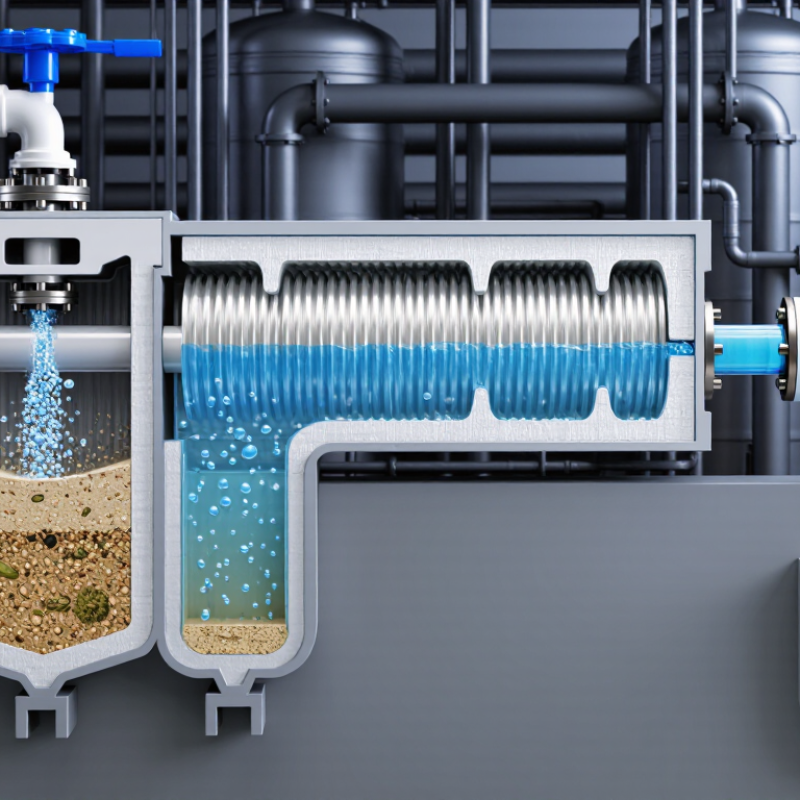
A seawater desalination membrane is a selective barrier used to separate dissolved salts from seawater. Most modern systems use reverse osmosis. High-pressure pumps push seawater across a thin membrane surface. Water molecules pass through. Salt ions, microorganisms, and many impurities remain in the concentrated stream. The product water is called permeate. The remaining flow is brine.

The membrane does more than remove salt. It helps control water quality, energy demand, and recovery rates. Seawater usually requires pressures of about 55 to 70 bar, depending on temperature and salinity. Membrane performance depends on pretreatment, pressure stability, and regular monitoring. Suspended solids can block the surface. Organic matter may cause fouling. Scaling can also reduce water flow.

It is not a magic filter.

Plant operators often track conductivity, permeate flow, pressure differences, and salt rejection. These figures reveal gradual damage before output changes become obvious. A well-designed pretreatment stage protects the membrane from sediment and biological growth. Cleaning schedules still require judgment. Over-cleaning can shorten membrane life, while delayed cleaning may cause permanent fouling. That balance is easy to underestimate. Manufacturers publish performance data, but real sites differ in temperature, feed quality, and operating habits. Membrane selection should therefore follow verified water analysis, pilot testing, and local operating records.

Membrane Materials and Structural Design

What Is a Seawater Desalination Membrane?

Membrane Materials and Structural Design

A seawater desalination membrane is a selective barrier that separates fresh water from dissolved salts. Modern reverse osmosis membranes usually use a thin polyamide layer. This active layer blocks most salt ions and many dissolved impurities. Beneath it, a porous support carries water without creating excessive resistance. A fabric backing provides mechanical strength during high-pressure operation. The layers work together.

Material selection involves difficult trade-offs. Polyamide offers strong salt rejection and high water permeability, but it can react with certain oxidizing chemicals. Support layers must remain porous, stable, and tightly bonded. If their pores collapse, water flow decreases. If the surface is uneven, the active layer may become thinner and less reliable. Some membranes use surface modifications to reduce fouling, although laboratory results may not match field performance.

Structural design also controls practical efficiency. Thin active layers reduce transport resistance. Carefully shaped feed spacers improve mixing and limit stagnant zones. However, spacers can increase pressure loss and create local turbulence. Small design details matter. A membrane may perform well in controlled testing yet foul quickly in real seawater containing algae, organic matter, and fine particles. Engineers therefore examine salt rejection, permeate flow, pressure, cleaning tolerance, and long-term aging. Predictive models help, but they are not perfect. Temperature changes and uneven fouling can still challenge an otherwise careful design.

How Seawater Desalination Membranes Remove Salt

What Is a Seawater Desalination Membrane?

How Seawater Desalination Membranes Remove Salt

A seawater desalination membrane is a thin, semi-permeable barrier used in reverse osmosis systems. It allows water molecules to pass while rejecting most dissolved salts, minerals, and other unwanted particles. High-pressure pumps push pretreated seawater against the membrane surface. This pressure overcomes seawater’s natural osmotic pressure. Fresh water then moves through microscopic membrane layers, while concentrated brine remains on the feed side. The membrane does not “catch” salt like a filter screen. Instead, its dense structure limits the movement of hydrated ions and larger dissolved compounds.

Real operating conditions are less perfect. Temperature, pressure, water chemistry, and membrane age can change salt rejection. Pretreatment is especially important because oil, algae, sediment, and microorganisms may cause fouling. A fouled membrane produces less water and often needs more energy. Cleaning schedules must follow measured performance, not guesswork. Even careful systems may allow small amounts of salt to pass. That detail is easy to overlook.

Tips: Keep feedwater pretreatment stable. Monitor pressure, conductivity, and flow regularly. A sudden conductivity increase may indicate membrane damage or poor sealing. Avoid relying on pressure alone; excessive pressure can raise energy use without improving water quality. Record seasonal changes, too. Colder seawater usually passes through the membrane more slowly. Good records make small problems easier to find.

Main Membrane Technologies and Their Applications

What Is a Seawater Desalination Membrane?

Main Membrane Technologies and Their Applications

A seawater desalination membrane is a selective barrier. It allows water molecules to pass while rejecting salts, microorganisms, and many dissolved contaminants. The most widely used technology is reverse osmosis, or RO. It uses pressure to push seawater through thin, semi-permeable layers. The process usually requires less energy than thermal desalination, although electricity demand remains significant.

The International Desalination Association and Global Water Intelligence report more than 120 million cubic metres of desalinated water capacity worldwide. Reverse osmosis supplies a growing share of this capacity. It serves coastal cities, industrial facilities, hotels, and remote communities. Pretreatment is essential. Fine screens, filters, and chemical control reduce fouling on the membrane surface. Even small particles can reduce output.

Thermal technologies, including multi-stage flash and multiple-effect distillation, use heat instead of pressure-driven membranes. They remain useful where low-cost waste heat is available. Electrodialysis is more suitable for brackish water, because its energy use rises with salinity. The International Energy Agency has noted that desalination can increase electricity demand in water-stressed regions.

No membrane works perfectly. RO systems reject most salts, but they also create concentrated brine. Poorly managed brine can damage sensitive marine habitats. Membrane life also depends on cleaning practices, feedwater quality, and operating pressure. Some project designs still underestimate maintenance. That deserves more honest attention.

What Is a Seawater Desalination Membrane? - Main Membrane Technologies and Their Applications
Membrane Technology Primary Separation Mechanism Typical Operating Pressure or Driving Force Typical Salt Removal Typical Energy Requirement Main Applications Key Advantages Main Limitations and Pretreatment Needs
Seawater Reverse Osmosis (SWRO) Pressure-driven solution-diffusion through a dense, semipermeable membrane. Water passes through while dissolved salts are retained. Approximately 55–80 bar for seawater, depending on salinity, temperature, recovery, and membrane design. Typically 99.5% or higher for total dissolved salts; boron removal is lower and may require a second pass or pH adjustment. Typically about 2.5–4.5 kWh per cubic metre for the complete modern seawater desalination process, excluding unusual site conditions. Municipal drinking-water supply, industrial process water, water reuse, and decentralized coastal desalination. High salt rejection, modular equipment, mature operation, and comparatively low energy use among thermal and membrane desalination options. Sensitive to fouling, scaling, oil, suspended solids, and biofouling. Requires effective intake screening, clarification or flotation when needed, cartridge filtration, and usually ultrafiltration or other advanced pretreatment.
Nanofiltration (NF) Pressure-driven transport through a membrane with very small pores. Separation combines size exclusion and charge-based ion rejection. Approximately 5–25 bar, depending on feed quality and target removal. High removal of multivalent ions, hardness, sulfate, color, and many organic compounds; lower rejection of monovalent salts than reverse osmosis. Often about 0.5–2.5 kWh per cubic metre, depending on feedwater and system configuration. Seawater pretreatment, sulfate reduction, hardness reduction, partial desalination of brackish water, and protection of downstream reverse osmosis systems. Lower pressure than SWRO, effective hardness and sulfate control, and useful reduction of some organic contaminants. Usually does not produce drinking water from seawater in a single pass because sodium chloride rejection is insufficient. Membrane fouling and scaling control remain necessary.
Electrodialysis (ED) An electric field drives dissolved ions through alternating cation-exchange and anion-exchange membranes. Low hydraulic pressure; the main driving force is direct electrical voltage across the membrane stack. Commonly suitable for partial desalination, with salt removal often around 50–90% per pass depending on configuration and feed concentration. Approximately 0.5–2.5 kWh per cubic metre for suitable brackish-water applications; energy rises as feed salinity increases. Brackish-water desalination, industrial water recovery, and selective removal of ionic contaminants. Energy use is related mainly to the amount of salt removed; useful for lower-salinity feeds and can provide selective ion separation. Generally less economical for high-salinity seawater. Does not remove uncharged dissolved substances, and the process requires control of scaling, fouling, and electrode reactions.
Electrodialysis Reversal (EDR) Uses the same ion-selective membrane principle as ED while periodically reversing electrical polarity and ion flow. Low hydraulic pressure with alternating electrical polarity, commonly reversed several times per hour. Often about 50–90% per pass for appropriate brackish-water feeds, depending on recovery and operating conditions. Typically around 0.5–2.5 kWh per cubic metre for brackish-water treatment. Municipal brackish-water treatment, industrial process water, cooling-water makeup, and water reuse. Polarity reversal helps reduce buildup of scale and foulants, allowing more tolerant operation with some difficult feeds. Best suited to brackish water rather than open-ocean seawater. Pretreatment is still required for suspended solids, oil, biological matter, and excessive hardness.
Forward Osmosis (FO) Water moves across a semipermeable membrane because of an osmotic-pressure difference created by a concentrated draw solution. Osmotic driving force rather than high hydraulic pressure; external energy is required to regenerate or separate the draw solution. High rejection of many dissolved salts and particulates, but actual product-water quality depends strongly on reverse solute flux and draw-solution recovery. There is no single standard value; total energy depends mainly on draw-solution regeneration and can be significant. Concentrating difficult industrial streams, wastewater treatment, emergency water production, and hybrid desalination systems. Low hydraulic pressure, potentially lower fouling tendency than some pressure-driven processes, and suitability for high-osmotic-pressure feeds. Draw solute can diffuse back into the feed, and extracting it from the diluted draw solution adds complexity. Large-scale seawater desalination remains mainly application-specific and hybrid.
Membrane Distillation (MD) Water vapor passes through hydrophobic microporous membranes, while liquid water and nonvolatile salts are retained. Low hydraulic pressure; driven by a vapor-pressure difference created by a temperature gradient. Generally greater than 99% salt rejection when the membrane remains unwetted. Electrical demand varies widely; thermal energy is also required. Waste heat or solar heat can improve overall efficiency. High-salinity brines, zero-liquid-discharge systems, concentrated seawater, and desalination integrated with low-grade waste heat. Can treat feeds near or above the osmotic-pressure limit of RO, offers very high salt rejection, and can use low-temperature heat sources. Lower flux than RO in many systems, temperature polarization, membrane wetting, scaling, and potential heat loss. Stable hydrophobic membranes and careful pretreatment are essential.
Ultrafiltration (UF) Pressure-driven size exclusion through porous membranes that retain suspended solids, colloids, bacteria, and many macromolecules. Approximately 0.5–5 bar, depending on module design and operating mode. Negligible removal of dissolved salts; it is a pretreatment technology rather than a standalone seawater desalination process. Typically about 0.05–0.3 kWh per cubic metre, depending on flux, backwashing, and feedwater quality. Seawater pretreatment before SWRO, surface-water clarification, wastewater reuse, and removal of turbidity and microorganisms. Consistent particle and microorganism removal, compact footprint, and effective protection of downstream RO membranes. Does not remove sodium chloride or other dissolved ions. Requires backwashing, periodic cleaning, and control of organic fouling and biofouling.
Microfiltration (MF) Low-pressure size exclusion through relatively large pores that remove suspended particles and many microorganisms. Approximately 0.1–3 bar, depending on membrane type and filtration mode. Negligible removal of dissolved salts; used for clarification and pretreatment rather than desalination. Typically about 0.03–0.2 kWh per cubic metre, depending on filtration conditions and cleaning requirements. Seawater intake pretreatment, removal of suspended solids, wastewater polishing, and protection of downstream NF or RO membranes. Low pressure, simple operation, and effective reduction of turbidity and larger particles. Limited removal of dissolved organics, viruses, and salts. Performance can decline rapidly when exposed to high organic loads, algae, oil, or fine colloids.
Values are representative engineering ranges rather than universal specifications. Actual performance depends on feedwater salinity and temperature, recovery rate, membrane selection, pretreatment, cleaning, and system design.

Performance Factors, Maintenance, and Environmental Considerations

What Is a Seawater Desalination Membrane?

A seawater desalination membrane is a selective barrier used in reverse osmosis systems. It allows water molecules to pass while retaining most salts, particles, and microorganisms. Its performance depends on feed pressure, temperature, salinity, and pretreatment quality. A small temperature change can alter water output noticeably. Fouling can also raise pressure demand and reduce salt rejection. Operators should track flow, conductivity, pressure, and differential pressure together. One reading rarely explains the whole problem. Real plant data matters more than a brochure specification.

Maintenance begins before water reaches the membrane. Screens, filters, and careful chemical dosing reduce the load on the membrane surface. Cleaning should follow measured symptoms, not habit alone. Acidic cleaners may target scale, while alkaline solutions can address organic fouling. Incorrect concentration or contact time can damage membrane materials. Rushed cleaning often creates a second problem. Environmental performance also depends on energy use and brine management. Efficient pumps lower emissions, but concentrated brine still requires responsible discharge planning. Local marine conditions deserve attention.

Tips: Keep a clear operating log. Compare current readings with baseline values. Inspect sudden changes early. Do not ignore gradual conductivity increases. Review cleaning results, because weak recovery may signal deeper fouling or aging. Some maintenance decisions remain uncertain. Independent testing can prevent confident but costly mistakes.

What Is a Seawater Desalination Membrane?

A seawater desalination membrane is a semi-permeable barrier, most commonly used in reverse osmosis, that allows water molecules to pass while rejecting dissolved salts and many contaminants.

How to read the chart: Seawater reverse osmosis (SWRO) generally uses substantially less energy than thermal desalination, while achieving higher water recovery than MSF and MED processes. Typical SWRO energy use is about 2.5–4.0 kWh per cubic metre of product water, with recovery commonly around 35–50%. Actual performance depends on feed salinity, temperature, pressure, pretreatment, membrane condition, and energy-recovery equipment.
Maintenance and environmental considerations: Effective pretreatment reduces fouling and scaling. Regular monitoring, flushing, and clean-in-place procedures help preserve salt rejection and flow. Membrane replacement, concentrate management, electricity consumption, and chemical use should be included in the environmental assessment.

Powder Coat Booths

For those larger-sized parts, or smaller quantity runs, we have 2 independent powder coat booths and ovens. The quality, durability and affordability of today’s powder coating finishes make this the process of choice for world-class companies.

Powder coating advantages over other forms of coating are many. Materials used in the Powder coating process can be metals and non-metals that come in a multitude of thicknesses, textures, colors, etc. Another of Powder coating’s biggest advantages over conventional coatings is its ability to create finishes in many different textures. Powder Coating Booths allow us the ability to apply these advantages to large products.

Wet Paint Line

Tri-State Fabricators runs a full-service conveyor line for painting. Wet painting can provide protection or decoration to many different part styles. From start to finish, every project is easier to undergo random and point-based inspection by our skilled painting team.

Advantages to our Wet Paint Line are these lines start with product prep and ends with a thorough inspection of a high quality finished product. Our ability to complete large and small projects with a superior finish and doing so in a timely and economical fashion. This passes along the savings in production to our customers. When powder coating ins not an option, our Wet Paint Line gets the job done right the first time.

Wet Paint Booths

When the parts get big and heavy we roll-out our custom paint racks and oversize booth. By utilizing our partnerships with all the major paint brands, we can match virtually any color with wet paint.

The advantages of having access to a Wet Paint Booth are many. Large projects of many different shapes can be loaded into the booth. The Wet Paint Booth offers an environment that is much more controlled than a typical parts painting operation.

Not only are they used because of their controlled environment, but they’re are also advantageous when it comes to applying paint to parts that are needed in industries that require specialty coatings such as medical, aerospace, etc.

Military CARC

Our military forces have some very high standards when it comes to the finish of their vehicles and equipment. From the first pre-treatment step to final coat, it takes a great deal of knowledge and experience to protect the men and women of our armed forces. They deserve only the best, and Tri-State Fabricators provides it.

All of our processes are closely monitored by our staff and management teams. Both of which are highly trained in the processes of metal fabrication and finishing. Tri-State Fabricators’ goal is to always fully satisfy each and every customer, including the military. We will always put a 110% into what we do.

Glass-Bead Blasting

Abrasive media blasting is an excellent way to remove old paint, rust, and increase the paint/powder adhesion. Glass beads produce a much smoother and brighter finish than angular abrasives; leaving the part clean yet without any dimensional change. Chemically inert and environmentally friendly, we can recycle our beads approximately 30 times; making them a more preferred method of metal cleaning or surface finishing.

Advantages to Glass Bead Blasting are many. Glass bead blast media is used when a project is needing rough surfaces need to become smooth for applications of coatings such as paint. It is typically used to clean paint and rust from a product surface without deforming the surface it is being used on. Overall, compared to many other blasting media, Glass Bead Blasting is a very economical choice and those savings are always passed on to our customers.

Part Washing

Tri-State Fabricators utilize a zinc phosphate wash to clean and etch the material to ensure the best paint adhesion possible. The unique design of our 3-stage wash system does the work like a 5-stage. From Cleaning and rinsing to conversion coating and post-treatment, Our Part Washing process is a complete service and works throughout the fabrication service and the finishing service.

Along with the previously mentioned benefits, Curing is a vital chemical reaction that leaves the product finish hard and relatively safe from mild abrasion and aggressive corrosion. This process can be done in more than one way; ambient air-dry or in curing ovens at temps that exceed 240°.

Burn-Off Oven

From fixing paint mistakes (someone else’s of course) to simply cleaning our paint line hooks, our burn-off oven is put to good use. After a quick burn-off, a little clean up, and a fresh coat of paint, your parts will look better than new.

Why does our Burn-Off Oven work so well? Because super heating the air around parts turns the materials into ashes. From paint and powder coatings to rubber and machining oils, high temps do the job without degrading the integrity of the part.

Masking

Masking is a vital part of producing high quality products. We have die-cut masking patterns to protect machined surfaces as well as a wide range of plugs and caps to protect threaded holes and bolts. We provide permanent and temporary masking.

Masking allows the selected sections of a product to be protected from a fabrication or finishing service. This can be with both chemicals when etching and tapes, paints when only finishing just a section of the product. Masking is great in aiding the customization process of a project.

Screen Printing

Screen printing is a photographic process that transfers artwork onto a porous nylon screen which allows colored ink to flow through the screen and be deposited on an aluminum or plastic component. We can generally have just about any design created onto a screen for your parts.

Some of the advantages of Screen Printing are, brand recognition for your business displaying on your products, assembly instructions, product warnings/hazards, etc. Tri-State Fabricators produces Screen Printing of the highest quality so you know it’s durable.

Metal Finishing

Metal Finishing is the art of treating the exterior portion of product, often metal but can also be made of other materials, so that the surface is clean and free of any debris. Then the process of applying coats or either paint of powder coat takes place. This coating process improves the quality of the product in both appearance and resistance to wear and corrosion.

Tri-State Fabricators, Inc., understands that a project typically isn’t complete until a high-quality finish has been added to your product. This is why our painting and powder coating teams continuously inspect the products throughout the Metal Finishing process.