


What Is the Best Carbon Monoxide Detector?

Choosing the best Carbon Monoxide Detector is not about finding the loudest alarm. It is about dependable sensing, correct placement, certified performance, and clear warnings.

Carbon monoxide has no color or smell. It can build quietly beside a sleeping family, especially when a furnace, fireplace, generator, or gas appliance malfunctions. The Centers for Disease Control and Prevention reports that unintentional carbon monoxide poisoning causes more than 400 deaths and over 100,000 emergency department visits in the United States each year. Those figures make detector quality a practical safety decision, not a shopping detail.

The U.S. Consumer Product Safety Commission recorded an average of 169 non-fire carbon monoxide deaths annually from 2019 through 2021. Its safety guidance recommends alarms near sleeping areas and on every level of a home. UL Solutions safety expert John Drengenberg has called carbon monoxide “a silent, invisible killer.” That phrase remains uncomfortable, but accurate.

This guide compares sensor technology, battery life, digital displays, replacement warnings, and certifications such as UL 2034. It also considers real household experience: a detector should be heard through a closed bedroom door and understood quickly at 2 a.m. Placement still matters. Even an excellent alarm can fail its purpose when installed behind furniture or too far from sleeping rooms.

No detector is perfect. I might even overvalue smart features when a basic, certified alarm offers stronger protection. That is worth questioning. The best Carbon Monoxide Detector is the one that meets recognized standards, receives regular testing, and remains ready before an invisible threat enters the room.

What Is the Best Carbon Monoxide Detector?

Definition and Role of Carbon Monoxide Detectors

What Is the Best Carbon Monoxide Detector?

A carbon monoxide detector is a safety device that senses carbon monoxide in indoor air. Carbon monoxide is colorless, odorless, and potentially deadly. It can come from faulty heaters, blocked vents, fireplaces, generators, or fuel-burning appliances. It is invisible.

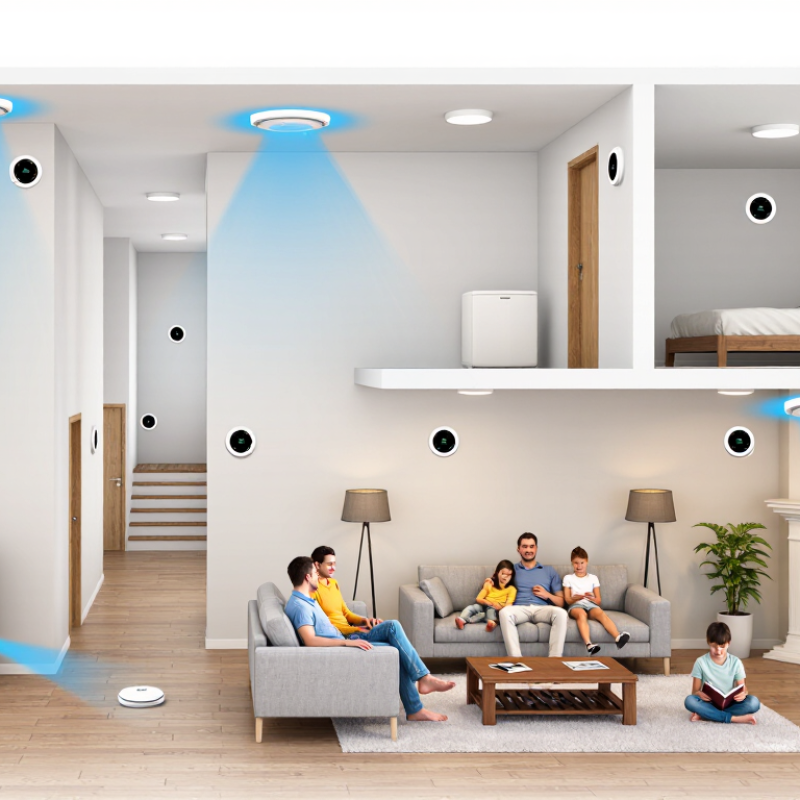
The detector’s role is to monitor carbon monoxide levels and sound an alarm before exposure becomes severe. Many units use electrochemical sensors, which measure gas concentration over time. This timing matters because a low level may still become dangerous after prolonged exposure. Place detectors near sleeping areas and on each household level, while following local safety guidance. Placement matters. Avoid hiding one behind curtains or furniture.

During home checks, I would press the test button regularly and replace batteries when needed. A detector should also be replaced according to its service life, since sensors can weaken. A carbon monoxide detector does not detect every danger. It cannot remove the gas, repair an appliance, or replace professional inspection. That gap matters. People may trust a quiet detector too much, especially when batteries are low or the device is poorly positioned. If the alarm sounds, move outdoors immediately and contact emergency services or qualified professionals. Never assume a false alarm without checking the source.

How Carbon Monoxide Detectors Sense and Measure the Gas

A carbon monoxide detector does not smell or visually identify the gas. It measures an electrical change caused by carbon monoxide inside its sensor. Many household alarms use an electrochemical cell. When CO reaches the sensing electrode, it reacts and produces a small current. The detector converts that current into a concentration reading, usually expressed in parts per million.

The measurement is not a simple instant reading. The circuit checks gas levels over time. A low concentration may require longer exposure before the alarm sounds, while a higher level can trigger it quickly. Temperature, humidity, sensor age, and airflow can affect accuracy. Good detectors use compensation software, but no sensor is perfect. That limitation deserves attention.

During a practical check, press the test button and listen for the alarm pattern. This tests the battery, speaker, and electronics, not necessarily the sensor’s ability to detect CO. Never use exhaust or another gas as a homemade test. It creates an uncertain concentration and may cause harm. Place the detector near sleeping areas and follow the installation instructions carefully. A blocked vent, a dead battery, or a sensor past its service life can make a reliable-looking device less reliable. I once assumed a silent detector meant clean air; it only proved that the alarm had not activated.

How Carbon Monoxide Detectors Sense and Measure CO

Carbon monoxide alarms are designed to respond more quickly as CO concentration increases. The response windows shown below follow the alarm timing requirements defined in UL 2034: a compliant alarm must sound within the specified minimum and maximum time ranges at each concentration.

Reference: UL 2034 residential carbon monoxide alarm response requirements. Actual performance depends on sensor condition, placement, airflow, temperature, and maintenance.

Key Features That Determine Detector Performance

What Is the Best Carbon Monoxide Detector? Key Features That Determine Detector Performance

The best carbon monoxide detector is not simply the loudest model. Its sensor, alarm logic, power supply, and maintenance features matter more. The CDC reports that unintentional carbon monoxide poisoning causes more than 400 deaths and over 100,000 emergency visits annually in the United States. That makes dependable detection a practical safety requirement, not a convenience.

Look for an electrochemical sensor, which is widely valued for accurate carbon monoxide measurement. The device should meet a recognized standard, such as UL 2034, and display concentration levels clearly. A loud alarm helps, but an 85-decibel rating at ten feet is more meaningful than vague marketing language. Digital peak memory can reveal overnight exposure after the alarm stops. That detail is easy to overlook.

Power reliability matters too. Choose sealed backup power or replaceable batteries with clear low-battery warnings. End-of-life alerts are essential because sensors degrade over time. Install detectors near sleeping areas and on each home level, following the manufacturer’s instructions. The CPSC recommends testing alarms monthly, yet many households forget this simple step. I have found that a detector can appear reassuring while its battery is already weak. No detector replaces ventilation, appliance inspection, or attention to symptoms such as headache and dizziness. Some guidance can feel overly cautious, but carbon monoxide is invisible, odorless, and difficult to judge without functioning equipment.

Comparing Detector Types, Power Sources, and Installation Options

The best carbon monoxide detector depends on sensing technology, power, and placement. Electrochemical sensors are widely used because they measure carbon monoxide through a chemical reaction and respond accurately at low concentrations. Metal-oxide and biomimetic sensors are alternatives, but temperature, humidity, and ventilation can affect performance. Look for certification to UL 2034, the main residential performance standard.

Power choices create different maintenance risks. Replaceable-battery alarms are inexpensive, but they can become silent after missed replacements. Sealed ten-year batteries reduce that failure point. Plug-in models are convenient near bedrooms, yet they may fail during a power outage unless they include battery backup. Hardwired systems offer dependable integration, though installation may require an electrician. The U.S. Consumer Product Safety Commission reports that unintentional carbon monoxide poisoning sends more than 100,000 people to emergency departments annually. That makes battery status a safety issue, not a minor convenience.

Installation matters as much as the detector itself. NFPA guidance recommends alarms outside sleeping areas and on every level of a home. Place them where occupants can hear them, including near basement sleeping spaces, but keep them away from fuel-burning appliances and direct airflow. A practical check includes testing the alarm monthly and checking its replacement date. People often install one detector and assume coverage is complete. That assumption needs reconsideration, especially in larger homes or buildings with attached garages.

How to Choose the Best Carbon Monoxide Detector for Your Home

What Is the Best Carbon Monoxide Detector?

How to Choose the Best Carbon Monoxide Detector for Your Home

Choosing the best carbon monoxide detector starts with placement, certification, and daily practicality. Look for a detector tested to the safety standard required in your country. A visible certification mark matters more than a clever product description. Choose a model with a loud alarm, clear status lights, and an easy test button. A digital display can show carbon monoxide levels, but it should not replace an audible warning.

Place alarms near sleeping areas and on every level of your home. Keep them away from windows, doors, vents, and fuel-burning appliances. These locations may affect how gas reaches the sensor. Follow the installation guide carefully. It sounds simple. It is often overlooked.

Power choice also deserves attention. Battery-only units remain useful during power failures, while hardwired models may offer battery backup and interconnection. Check the battery regularly, and test each alarm monthly. Replace the unit when its manufacturer states, not only when it stops working. Dust can weaken performance, so gentle cleaning helps.

A detector cannot fix a faulty furnace, stove, fireplace, or generator. Have fuel-burning equipment inspected by a qualified professional, especially after unusual odors, repairs, or ventilation changes. I would avoid choosing only by price. A cheaper unit may seem practical today, yet missing features can create uncertainty during an emergency. Even reliable alarms need maintenance and a household plan. Know where to go, whom to call, and never ignore an alarm.


Powder Coat Booths

For those larger-sized parts, or smaller quantity runs, we have 2 independent powder coat booths and ovens. The quality, durability and affordability of today’s powder coating finishes make this the process of choice for world-class companies.

Powder coating advantages over other forms of coating are many. Materials used in the Powder coating process can be metals and non-metals that come in a multitude of thicknesses, textures, colors, etc. Another of Powder coating’s biggest advantages over conventional coatings is its ability to create finishes in many different textures. Powder Coating Booths allow us the ability to apply these advantages to large products.

Wet Paint Line

Tri-State Fabricators runs a full-service conveyor line for painting. Wet painting can provide protection or decoration to many different part styles. From start to finish, every project is easier to undergo random and point-based inspection by our skilled painting team.

Advantages to our Wet Paint Line are these lines start with product prep and ends with a thorough inspection of a high quality finished product. Our ability to complete large and small projects with a superior finish and doing so in a timely and economical fashion. This passes along the savings in production to our customers. When powder coating ins not an option, our Wet Paint Line gets the job done right the first time.

Wet Paint Booths

When the parts get big and heavy we roll-out our custom paint racks and oversize booth. By utilizing our partnerships with all the major paint brands, we can match virtually any color with wet paint.

The advantages of having access to a Wet Paint Booth are many. Large projects of many different shapes can be loaded into the booth. The Wet Paint Booth offers an environment that is much more controlled than a typical parts painting operation.

Not only are they used because of their controlled environment, but they’re are also advantageous when it comes to applying paint to parts that are needed in industries that require specialty coatings such as medical, aerospace, etc.

Military CARC

Our military forces have some very high standards when it comes to the finish of their vehicles and equipment. From the first pre-treatment step to final coat, it takes a great deal of knowledge and experience to protect the men and women of our armed forces. They deserve only the best, and Tri-State Fabricators provides it.

All of our processes are closely monitored by our staff and management teams. Both of which are highly trained in the processes of metal fabrication and finishing. Tri-State Fabricators’ goal is to always fully satisfy each and every customer, including the military. We will always put a 110% into what we do.

Glass-Bead Blasting

Abrasive media blasting is an excellent way to remove old paint, rust, and increase the paint/powder adhesion. Glass beads produce a much smoother and brighter finish than angular abrasives; leaving the part clean yet without any dimensional change. Chemically inert and environmentally friendly, we can recycle our beads approximately 30 times; making them a more preferred method of metal cleaning or surface finishing.

Advantages to Glass Bead Blasting are many. Glass bead blast media is used when a project is needing rough surfaces need to become smooth for applications of coatings such as paint. It is typically used to clean paint and rust from a product surface without deforming the surface it is being used on. Overall, compared to many other blasting media, Glass Bead Blasting is a very economical choice and those savings are always passed on to our customers.

Part Washing

Tri-State Fabricators utilize a zinc phosphate wash to clean and etch the material to ensure the best paint adhesion possible. The unique design of our 3-stage wash system does the work like a 5-stage. From Cleaning and rinsing to conversion coating and post-treatment, Our Part Washing process is a complete service and works throughout the fabrication service and the finishing service.

Along with the previously mentioned benefits, Curing is a vital chemical reaction that leaves the product finish hard and relatively safe from mild abrasion and aggressive corrosion. This process can be done in more than one way; ambient air-dry or in curing ovens at temps that exceed 240°.

Burn-Off Oven

From fixing paint mistakes (someone else’s of course) to simply cleaning our paint line hooks, our burn-off oven is put to good use. After a quick burn-off, a little clean up, and a fresh coat of paint, your parts will look better than new.

Why does our Burn-Off Oven work so well? Because super heating the air around parts turns the materials into ashes. From paint and powder coatings to rubber and machining oils, high temps do the job without degrading the integrity of the part.

Masking

Masking is a vital part of producing high quality products. We have die-cut masking patterns to protect machined surfaces as well as a wide range of plugs and caps to protect threaded holes and bolts. We provide permanent and temporary masking.

Masking allows the selected sections of a product to be protected from a fabrication or finishing service. This can be with both chemicals when etching and tapes, paints when only finishing just a section of the product. Masking is great in aiding the customization process of a project.

Screen Printing

Screen printing is a photographic process that transfers artwork onto a porous nylon screen which allows colored ink to flow through the screen and be deposited on an aluminum or plastic component. We can generally have just about any design created onto a screen for your parts.

Some of the advantages of Screen Printing are, brand recognition for your business displaying on your products, assembly instructions, product warnings/hazards, etc. Tri-State Fabricators produces Screen Printing of the highest quality so you know it’s durable.

Metal Finishing

Metal Finishing is the art of treating the exterior portion of product, often metal but can also be made of other materials, so that the surface is clean and free of any debris. Then the process of applying coats or either paint of powder coat takes place. This coating process improves the quality of the product in both appearance and resistance to wear and corrosion.

Tri-State Fabricators, Inc., understands that a project typically isn’t complete until a high-quality finish has been added to your product. This is why our painting and powder coating teams continuously inspect the products throughout the Metal Finishing process.
