


What Is the Best Laser Cleaning Technology?

Choosing the best Laser Cleaning Technology is not simply a matter of selecting the highest power. The right system must match the material, contaminant, surface condition, and production target. Rust on carbon steel behaves differently from paint on aluminium. Oil, oxide, soot, and thermal scale also absorb laser energy in different ways. A carefully tuned pulse can remove contamination while leaving the base surface unchanged. An excessive setting may discolor, roughen, or weaken it.

Dr. John F. Ready, a respected researcher in laser-material interactions, stated, “The effect of laser radiation depends on the material, the wavelength, and the exposure time.” This principle remains highly relevant. A modern system may use pulsed fiber lasers, continuous-wave lasers, or short-pulse sources. Each option offers different advantages in speed, precision, heat control, and operating cost. However, no single technology wins every application. That assumption needs questioning.

The best solution usually appears after practical testing. Measure the surface before cleaning. Record pulse energy, scanning speed, focus distance, and residue levels. Watch the beam move across a scratched metal panel. Check the cleaned area under magnification. Then test adhesion, roughness, and corrosion resistance. These details build reliable evidence.

Laser cleaning can reduce abrasives, chemical waste, and secondary surface damage. It can also create dust and fumes when coatings vaporize. Proper extraction, shielding, training, and risk assessment remain essential. Performance claims should be supported by trials, not attractive brochures. The sections ahead compare major Laser Cleaning Technology options and explain where each one performs well, where it struggles, and why the “best” choice may depend on one overlooked detail.
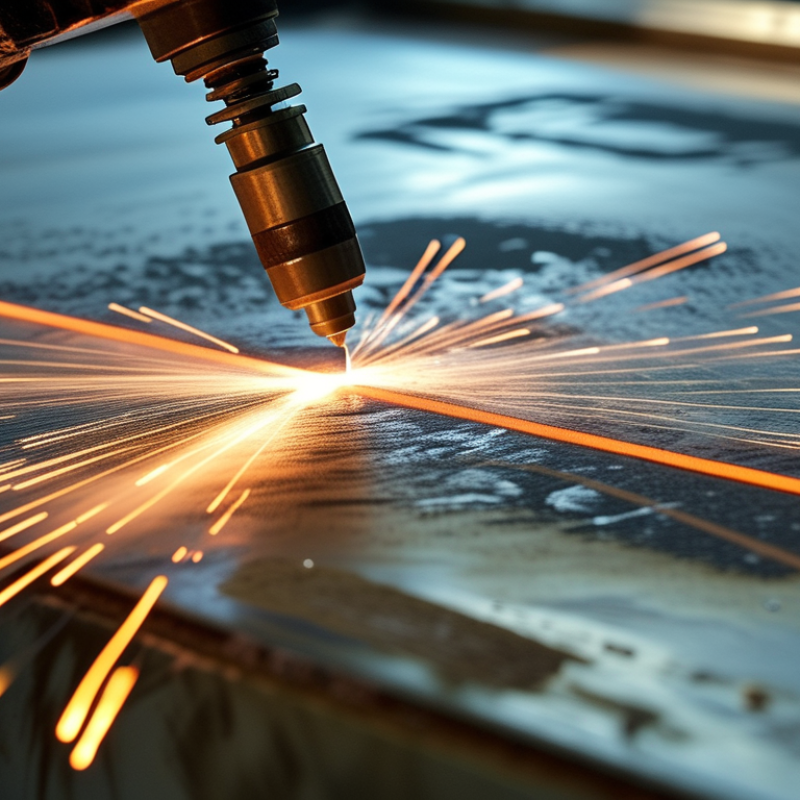
What Is the Best Laser Cleaning Technology?

What Is Laser Cleaning Technology?

Laser cleaning technology removes rust, paint, oil, and oxide layers with controlled laser energy. A focused beam strikes the unwanted layer, causing rapid heating, vaporization, or mechanical separation. The base material should absorb less energy than the contaminant. That balance is the core principle.

Pulsed lasers usually suit delicate surfaces, detailed parts, and thin coatings. Their short bursts limit heat transfer into the substrate. Continuous-wave systems can process larger areas faster, but they may create discoloration or thermal distortion. The best choice depends on wavelength, pulse duration, power density, scanning speed, and surface reflectivity. It is not simply a power contest.

MarketsandMarkets estimated the laser cleaning market at about 587 million dollars in 2024, with projections approaching 1.1 billion dollars by 2029. Such growth reflects wider industrial testing, not universal process success.

In practical trials, technicians first measure coating thickness and inspect the substrate under magnification. They then begin with low fluence and increase it gradually. A visible color change can signal excessive heat. Dust extraction, enclosure design, and operator protection also matter. ISO 11553-1:2020 addresses laser-processing safety requirements, including protective controls and risk management. A clean surface is not automatically a successful result. Residual particles may remain inside pores, while an apparently bright finish may hide microscopic damage. This is where the technology still demands judgment, careful records, and honest rework.


How Does Laser Cleaning Remove Surface Contaminants?

What Is the Best Laser Cleaning Technology?

Laser cleaning removes surface contaminants by delivering controlled light energy onto a material. The contaminant absorbs the laser pulse more strongly than the underlying surface. It heats, expands, and separates from the substrate. Some layers vaporize. Others break into tiny particles and lift away through photomechanical force.

The process is highly selective. Rust, paint, oil, carbon, and oxide films each respond differently to wavelength, pulse duration, and energy density. Short pulses can remove thin contamination while limiting heat transfer. Longer pulses may clean faster, but they can discolor or deform sensitive materials. The wrong setting causes damage. It happens quickly.

During practical evaluation, technicians usually test a small hidden area first. They inspect the surface under strong lighting and, when necessary, use magnification or coating-thickness measurements. Air extraction is also important because loosened particles and fumes may become hazardous. Protective barriers and suitable eye protection remain essential, even when the beam is fully enclosed.

The best technology depends on the contaminant and the substrate, not simply on maximum power. A steel component with heavy corrosion needs different treatment from painted aluminum or delicate tooling. Real results can vary across the same part. Uneven coating thickness, fingerprints, and previous repairs complicate the process. Laser cleaning is precise, but it is not magic. Careful parameter adjustment still matters.

What Types of Laser Cleaning Systems Are Available?

Laser cleaning systems are available in several forms, and each suits a different working condition.
Pulsed laser systems remove rust, paint, oxide layers, and oil with short energy bursts. They limit heat transfer into the base material. This matters for molds, thin sheets, and detailed components.
Continuous-wave systems deliver a steady beam. They clean large steel surfaces faster, but operators must control heat carefully. Excessive heat can discolor metal or change its surface properties.

Handheld systems offer flexibility around machinery, welds, and irregular parts. Operators can adjust scanning speed and beam width during cleaning. In field work, this control often saves setup time. It also introduces inconsistency between operators.
Automated systems use robotic arms, fixed scanners, or conveyor lines. They provide repeatable paths and more uniform results. They need accurate programming, stable fixtures, and reliable surface inspection. That preparation is sometimes underestimated.

Enclosed systems place the laser, extraction unit, and safety controls inside a protected chamber. They fit laboratories, factories, and repeat production tasks. Mobile systems work better for large structures or on-site maintenance.
A qualified technician should check reflectivity, coating thickness, substrate condition, and dust behavior before choosing equipment. Different surfaces respond differently.
There is no universal best system. A powerful laser may clean quickly, yet a lower-energy pulsed unit could protect delicate edges more effectively. I would also test a small area first. Real surfaces are rarely as consistent as specifications suggest.
Safety interlocks, protective eyewear, ventilation, and documented training remain essential.

Which Materials and Applications Suit Laser Cleaning Best?

The best laser cleaning technology depends on the material beneath the contamination. Metals usually respond well, especially steel, aluminum, copper, and cast iron. Rust, paint, oil, oxide layers, and soot can be removed without abrasive contact. Short-pulse lasers suit delicate surfaces because they limit heat transfer. Continuous-wave systems can handle thicker contamination, but they require tighter process control.

Laser cleaning works well in weld preparation, mold maintenance, machinery repair, and historic metal restoration. It can expose a bright metal surface around a weld joint, or remove residue from narrow grooves and textured parts. Stone and some ceramics may also benefit, especially when surface deposits are clearly separated from the substrate. Clean edges matter. The operator should adjust power, scanning speed, frequency, and focal distance for each surface.

Transparent materials, heat-sensitive plastics, layered coatings, and highly reflective surfaces need more caution. A low-power test area should come first, with magnification used to check discoloration, pitting, or gloss changes. I once assumed stronger cleaning would always improve productivity. That approach can overheat thin metal and damage valuable finishes. The substrate matters more than the stain. Proper fume extraction and laser safety controls are also essential, because removed coatings may release hazardous dust or vapors. No single setting works everywhere, and real production surfaces are often less uniform than laboratory samples.

What Is the Best Laser Cleaning Technology?

Laser cleaning is best suited to applications where contaminants must be removed selectively without chemicals, abrasives, or direct tool contact. The suitability scores below are practical relative ratings based on material durability, contaminant removal efficiency, process control, and risk of surface damage.

How Can Laser Cleaning Performance, Safety, and Cost Be Compared?

What Is the Best Laser Cleaning Technology?

The best laser cleaning technology depends on the surface, contaminant, and production target. In practical trials, performance should be measured on test panels first. Check cleaning speed, residue levels, surface temperature, and coating damage. A fast system is not truly efficient if it roughens metal or leaves dust behind. Pulse duration, beam control, and adjustable energy strongly affect results. Shorter pulses may remove thin contamination precisely, but they can require more careful setup.

Safety must be compared with equal attention. A suitable enclosure, interlocks, extraction, and protective eyewear reduce exposure risks. Operators also need documented training and clear maintenance procedures. Dust can be hazardous, even when the cleaning process looks clean. Airflow should be tested, not assumed. This is where some evaluations fall short. Cost includes equipment, electricity, ventilation, consumables, training, downtime, and service. A lower purchase price may create higher operating costs. Total cost per cleaned part gives a more honest comparison.

Tips: Run the same sample with several energy settings. Measure cleaning time and surface change. Record rejected parts, filter replacement, and operator adjustments. Ask whether the system handles real production variation, not only perfect samples. Leave room for uncertainty. Small test results can mislead when contamination thickness changes. A reliable decision combines measured performance, controlled safety practices, and realistic lifetime costs.

What Is the Best Laser Cleaning Technology? - How Can Laser Cleaning Performance, Safety, and Cost Be Compared?
Technology Type Typical Wavelength Typical Power Range Best-Suited Materials and Contaminants Cleaning Performance Heat-Affected Zone and Substrate Risk Typical Productivity Safety Considerations Relative Equipment Cost Overall Use Case
Pulsed Fiber Laser Approximately 1,030–1,070 nm 20–500 W average power Rust, oxide layers, paint, oil, grease, carbon deposits, and coatings on steel, stainless steel, aluminum, and many engineered components Very high precision
Short pulses can remove surface contamination while preserving much of the underlying substrate.
Low when correctly adjusted; pulse energy, repetition rate, scanning speed, and overlap must be matched to the material. Low to medium for delicate work; medium to high for general industrial cleaning. Actual removal rate depends strongly on contaminant thickness and adhesion. Usually a Class 4 laser system. Requires guarding or enclosure, interlocks, beam protection, controlled access, suitable eyewear, and fume extraction. Medium to high Best general-purpose option when surface selectivity, low thermal load, and finish quality are important.
Continuous-Wave Fiber Laser Approximately 1,030–1,070 nm 500 W–6 kW or higher Thick rust, heavy scale, robust paint layers, large steel structures, molds, and large-area industrial surfaces High bulk-removal capability
High power supports fast treatment of large or heavily contaminated surfaces.
Medium to high thermal risk. Excessive heat input can discolor, melt, warp, or alter the metallurgy of thin or heat-sensitive substrates. High for large-area cleaning and heavy contamination; generally less suitable for delicate or precision surfaces. Class 4 laser hazards, reflected-beam hazards, hot surfaces, sparks, and airborne fumes. Requires robust enclosure, extraction, and fire-risk controls. High Best for high-throughput cleaning where the substrate can tolerate greater heat input.
CO₂ Laser Approximately 9.3–10.6 µm 100 W–10 kW or higher Organic coatings, paint, rubber residues, contaminants on glass, ceramics, stone, wood, and selected non-metallic surfaces High on suitable non-metallic materials
Long-wavelength absorption varies significantly between the contaminant and substrate.
Medium to high depending on absorption. Some metals reflect much of the radiation, while non-metallic materials may absorb strongly and heat rapidly. Medium to high on compatible materials; performance is highly material-dependent. Class 4 laser hazards, invisible infrared radiation, fire risk, reflected radiation, and process fumes. Enclosure and wavelength-specific protection are essential. Medium to high Strong option for selected coatings and non-metallic surfaces, but material testing is essential before production use.
Ultraviolet Pulsed Laser Approximately 266–355 nm 5–30 W typical industrial range Fine coatings, residues, polymers, electronics, optics, medical components, and other heat-sensitive or high-value surfaces Very high selectivity
Short ultraviolet pulses can promote photochemical removal and reduce thermal penetration.
Very low to low when process parameters are controlled; excessive fluence can still damage coatings, polymers, or optical surfaces. Low to medium; commonly selected for precision rather than maximum bulk-removal speed. Serious eye and skin hazards, including risks from invisible or weakly visible UV radiation. Requires fully enclosed beam paths, interlocks, UV-rated viewing windows, and fume control. High Best for precision cleaning where minimal thermal impact and high surface quality are more important than throughput.
Green Pulsed Laser Approximately 515–532 nm 10–100 W typical industrial range Copper, brass, gold, selected reflective metals, thin films, and precision components High on selected reflective materials
Shorter wavelengths can couple more effectively with some materials than near-infrared systems.
Low to medium; material absorption and pulse settings determine the risk of discoloration or surface modification. Low to medium, depending on contamination and required finish. Visible green radiation can create an aversion response, but direct and reflected exposure remains hazardous. Class 4 controls, enclosure, interlocks, and protective eyewear are required. High Useful for reflective or precision applications where near-infrared absorption is insufficient.
Comparison note: The “best” technology depends on contaminant type, substrate material, contamination thickness, required surface finish, allowable heat input, cleaning area, and production rate. Power ranges, productivity, and costs are typical industry ranges rather than guaranteed specifications. All open industrial laser systems may present Class 4 hazards and require a documented laser-safety assessment, suitable guarding, interlocks, operator training, and effective fume extraction.

Powder Coat Booths

For those larger-sized parts, or smaller quantity runs, we have 2 independent powder coat booths and ovens. The quality, durability and affordability of today’s powder coating finishes make this the process of choice for world-class companies.

Powder coating advantages over other forms of coating are many. Materials used in the Powder coating process can be metals and non-metals that come in a multitude of thicknesses, textures, colors, etc. Another of Powder coating’s biggest advantages over conventional coatings is its ability to create finishes in many different textures. Powder Coating Booths allow us the ability to apply these advantages to large products.

Wet Paint Line

Tri-State Fabricators runs a full-service conveyor line for painting. Wet painting can provide protection or decoration to many different part styles. From start to finish, every project is easier to undergo random and point-based inspection by our skilled painting team.

Advantages to our Wet Paint Line are these lines start with product prep and ends with a thorough inspection of a high quality finished product. Our ability to complete large and small projects with a superior finish and doing so in a timely and economical fashion. This passes along the savings in production to our customers. When powder coating ins not an option, our Wet Paint Line gets the job done right the first time.

Wet Paint Booths

When the parts get big and heavy we roll-out our custom paint racks and oversize booth. By utilizing our partnerships with all the major paint brands, we can match virtually any color with wet paint.

The advantages of having access to a Wet Paint Booth are many. Large projects of many different shapes can be loaded into the booth. The Wet Paint Booth offers an environment that is much more controlled than a typical parts painting operation.

Not only are they used because of their controlled environment, but they’re are also advantageous when it comes to applying paint to parts that are needed in industries that require specialty coatings such as medical, aerospace, etc.

Military CARC

Our military forces have some very high standards when it comes to the finish of their vehicles and equipment. From the first pre-treatment step to final coat, it takes a great deal of knowledge and experience to protect the men and women of our armed forces. They deserve only the best, and Tri-State Fabricators provides it.

All of our processes are closely monitored by our staff and management teams. Both of which are highly trained in the processes of metal fabrication and finishing. Tri-State Fabricators’ goal is to always fully satisfy each and every customer, including the military. We will always put a 110% into what we do.

Glass-Bead Blasting

Abrasive media blasting is an excellent way to remove old paint, rust, and increase the paint/powder adhesion. Glass beads produce a much smoother and brighter finish than angular abrasives; leaving the part clean yet without any dimensional change. Chemically inert and environmentally friendly, we can recycle our beads approximately 30 times; making them a more preferred method of metal cleaning or surface finishing.

Advantages to Glass Bead Blasting are many. Glass bead blast media is used when a project is needing rough surfaces need to become smooth for applications of coatings such as paint. It is typically used to clean paint and rust from a product surface without deforming the surface it is being used on. Overall, compared to many other blasting media, Glass Bead Blasting is a very economical choice and those savings are always passed on to our customers.

Part Washing

Tri-State Fabricators utilize a zinc phosphate wash to clean and etch the material to ensure the best paint adhesion possible. The unique design of our 3-stage wash system does the work like a 5-stage. From Cleaning and rinsing to conversion coating and post-treatment, Our Part Washing process is a complete service and works throughout the fabrication service and the finishing service.

Along with the previously mentioned benefits, Curing is a vital chemical reaction that leaves the product finish hard and relatively safe from mild abrasion and aggressive corrosion. This process can be done in more than one way; ambient air-dry or in curing ovens at temps that exceed 240°.

Burn-Off Oven

From fixing paint mistakes (someone else’s of course) to simply cleaning our paint line hooks, our burn-off oven is put to good use. After a quick burn-off, a little clean up, and a fresh coat of paint, your parts will look better than new.

Why does our Burn-Off Oven work so well? Because super heating the air around parts turns the materials into ashes. From paint and powder coatings to rubber and machining oils, high temps do the job without degrading the integrity of the part.

Masking

Masking is a vital part of producing high quality products. We have die-cut masking patterns to protect machined surfaces as well as a wide range of plugs and caps to protect threaded holes and bolts. We provide permanent and temporary masking.

Masking allows the selected sections of a product to be protected from a fabrication or finishing service. This can be with both chemicals when etching and tapes, paints when only finishing just a section of the product. Masking is great in aiding the customization process of a project.

Screen Printing

Screen printing is a photographic process that transfers artwork onto a porous nylon screen which allows colored ink to flow through the screen and be deposited on an aluminum or plastic component. We can generally have just about any design created onto a screen for your parts.

Some of the advantages of Screen Printing are, brand recognition for your business displaying on your products, assembly instructions, product warnings/hazards, etc. Tri-State Fabricators produces Screen Printing of the highest quality so you know it’s durable.

Metal Finishing

Metal Finishing is the art of treating the exterior portion of product, often metal but can also be made of other materials, so that the surface is clean and free of any debris. Then the process of applying coats or either paint of powder coat takes place. This coating process improves the quality of the product in both appearance and resistance to wear and corrosion.

Tri-State Fabricators, Inc., understands that a project typically isn’t complete until a high-quality finish has been added to your product. This is why our painting and powder coating teams continuously inspect the products throughout the Metal Finishing process.
